
Vegan porridge add-ins: boost flavour and nutrition naturally
TL;DR:
- Effective vegan porridge relies on balanced, nutrient-dense add-ins like seeds, nuts, fruits, and spices.
- Nuts and seeds provide protein, healthy fats, fiber, and improve satiety, supporting sustained energy.
- Variety and moderation in toppings help cover nutritional gaps and prevent calorie excess.
A plain bowl of porridge is a blank canvas. The problem is that most vegan versions end up one of two things: tasty but not filling, or nutritious but dull enough to make you reach for something else by mid-morning. The good news is that the right combination of add-ins can completely change that. From protein-rich seeds to antioxidant-packed spices, this guide walks you through the best evidence-backed vegan porridge add-ins, how to choose them wisely, and how to build a morning bowl that genuinely fuels your day.
Table of Contents
- How to select the healthiest vegan porridge add-ins
- Nuts and seeds: protein, healthy fats, and crunch
- Fruits: fresh, dried, and flavourful energy
- Nut butters and plant yoghurts: creamy, protein-packed add-ins
- Superfoods and spices: boosting antioxidants and flavour
- Comparison: best vegan porridge add-ins at a glance
- Why not all vegan porridge add-ins are created equal
- Upgrade your vegan porridge with nutrient-dense essentials
- Frequently asked questions
Key Takeaways
| Point | Details |
|---|---|
| Balance your bowl | Combine proteins, fibre, and wholefood flavours to keep vegan porridge tasty, filling, and energising. |
| Prioritise whole foods | Choose unprocessed nuts, seeds, and fruits for maximum nutrients and lasting satiety. |
| Mix textures and flavours | Pair crunchy seeds with creamy add-ins and sweet fruits for the best breakfast experience. |
| Watch portions | Stick to 2-3 tablespoons of rich add-ins like nuts to balance nutrition with calorie control. |
| Prep for convenience | Batch-prepare toppings or mixes so a nutritious vegan breakfast is always within reach. |
How to select the healthiest vegan porridge add-ins
Not every topping deserves a place in your bowl. Before you start piling things on, it helps to have a simple framework for making smart choices. The goal is balance: flavour, texture, protein, fibre, and satiety all working together without tipping into calorie excess.
Here is what to keep in mind when building your bowl:
- Prioritise whole, unprocessed foods. Nuts, seeds, and fresh fruit deliver far more nutritional value than flavoured granola clusters or syrup-drenched dried fruit.
- Aim for 2-3 protein and fibre boosters. Think chia seeds, hemp seeds, or a spoonful of nut butter alongside your oats.
- Add 1-2 fruits for natural sweetness, vitamins, and texture contrast.
- Soak chia or flaxseeds overnight. This improves digestibility and makes nutrients easier to absorb.
- Toast nuts and seeds lightly before adding them. It deepens flavour and extends their shelf life in a batch-prepped container.
- Watch your portions. Nuts and nut butters are calorie-dense. A little goes a long way.
- Batch prep your toppings. Spend ten minutes on Sunday portioning nuts, seeds, and spice blends into small jars. Busy mornings become far easier.
As a useful rule of thumb, balance 2-3 nutrient boosters with 1-2 fruits and a drizzle or spice for optimal nutrition, texture, and digestion. The BBC Good Food oatmeal guide also reinforces the importance of layering flavours and textures rather than relying on a single topping.
If you are new to adding protein to porridge, start with one or two additions and build from there. Exploring vitamin-rich add-ins alongside protein sources gives you the most nutritionally rounded result.
Pro Tip: Pre-mix a “porridge booster jar” with equal parts hemp seeds, ground flaxseed, and cinnamon. One tablespoon stirred in each morning adds protein, omega-3s, and flavour in seconds.
Nuts and seeds: protein, healthy fats, and crunch
Now that you know what to look for in an add-in, start with one of the most nutrient-dense options: nuts and seeds. These are the workhorses of a well-built vegan porridge bowl, delivering protein, healthy fats, fibre, and a satisfying crunch that plain oats simply cannot provide on their own.
Nuts and seeds like almonds, walnuts, chia, hemp, flax, and pumpkin seeds provide protein, healthy fats, fibre, omega-3s, magnesium, zinc, and vitamin E. These nutrients support everything from muscle recovery to sustained mental focus.
| Nut or seed | Protein per 30g | Fibre per 30g | Key fat type |
|---|---|---|---|
| Hemp seeds | 9.5g | 1.2g | Omega-3 and omega-6 |
| Chia seeds | 4.7g | 10.6g | Omega-3 (ALA) |
| Almonds | 6.3g | 3.5g | Monounsaturated |
| Walnuts | 4.5g | 2g | Omega-3 (ALA) |
| Pumpkin seeds | 8.5g | 1.8g | Polyunsaturated |
| Flaxseeds | 5.1g | 7.7g | Omega-3 (ALA) |
Adding nuts and seeds also reduces glycaemic response by up to 35%, meaning your blood sugar rises more slowly and you stay fuller for longer. That is a significant benefit for anyone trying to avoid the mid-morning energy slump.
Best combinations to try:
- Almonds and chia seeds: protein and omega-3 pairing with great texture contrast
- Walnuts and ground flaxseed: brain-friendly fats with extra fibre
- Pumpkin seeds and hemp seeds: a zinc and magnesium boost in one go
Pro Tip: Aim for 2-3 tablespoons of mixed nuts and seeds per bowl. Beyond that, calories can climb quickly without adding much extra nutritional benefit.
For more vegan protein breakfast ideas or a deeper look at vegan protein sources, both resources are worth bookmarking if you are building a consistently protein-rich morning routine.
Fruits: fresh, dried, and flavourful energy
While seeds and nuts provide protein and crunch, fruit add-ins elevate both taste and nutritional diversity. Whether you reach for fresh berries or a few chopped dates, fruit brings natural sweetness, colour, and a range of vitamins that complement your oats beautifully.
Fruits such as berries, bananas, apples, pears, and dried figs add antioxidants, vitamins, and fibre while providing natural sweetness. Fresh berries in particular are remarkable: a 100g serving of blueberries delivers around 2.4g of fibre and a substantial hit of vitamin C and anthocyanins, the antioxidants linked to reduced inflammation.
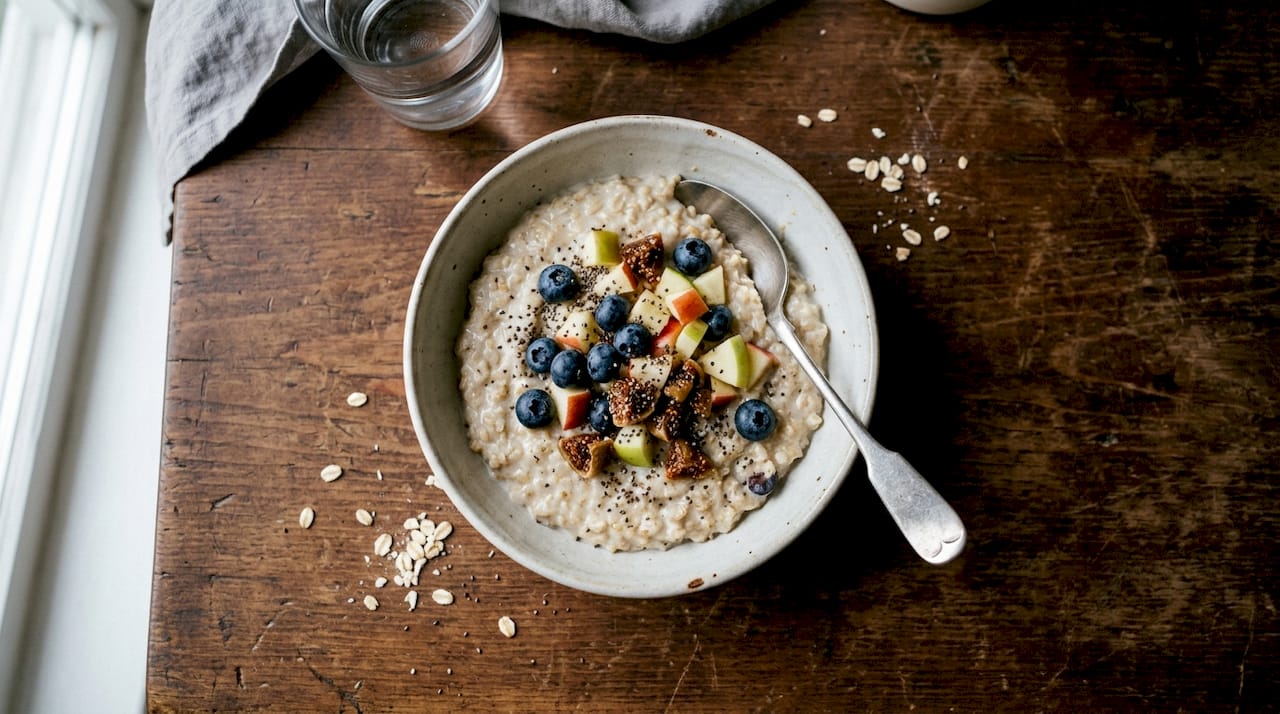
| Fruit | Key nutrient | Best paired with | Notes |
|---|---|---|---|
| Blueberries | Anthocyanins, vitamin C | Chia seeds | Use fresh or frozen |
| Banana | Potassium, slow-release carbs | Almond butter | Adds natural creaminess |
| Apple | Quercetin, soluble fibre | Walnuts | Slice thinly or grate |
| Pear | Fibre, vitamin K | Hemp seeds | Mild, sweet flavour |
| Dried figs | Calcium, iron | Tahini | Use 1-2 pieces only |
| Medjool dates | Natural sugars, magnesium | Cacao nibs | Sticky sweetness, use sparingly |
Tips for using fruit wisely:
- Fresh or frozen berries are the best daily choice. Low in sugar, high in antioxidants.
- Bananas and apples are easy to prep the night before and hold their texture well.
- Dried fruit is concentrated in nutrients and natural sugars. One or two pieces add flavour without overloading your bowl with calories.
For more inspiration on porridge fruit alternatives and creative combinations, there are plenty of ideas to keep your mornings varied. The oatmeal fruit inspiration resource from Healthline also offers practical recipe formats if you want to mix things up through the week.
The best fruit add-in is the one you will actually eat every morning. Consistency beats perfection every time.
Nut butters and plant yoghurts: creamy, protein-packed add-ins
For those craving creaminess without dairy, nut butters and plant yoghurts elevate porridge nutrition and texture. They also solve one of the most common complaints about vegan porridge: that it feels thin or unsatisfying despite being technically nutritious.
Nut butters and plant-based yoghurts add creaminess, protein, probiotics, and healthy fats in one spoonful. Almond butter brings monounsaturated fats and vitamin E. Peanut butter is one of the most affordable high-protein options available. Cashew butter has a milder flavour that blends seamlessly into the oats themselves. Tahini, made from sesame seeds, offers a slightly savoury depth that works surprisingly well with cinnamon and banana.
Key options and their benefits:
- Almond butter: High in vitamin E, monounsaturated fats, and magnesium
- Peanut butter: Strong protein content (around 8g per 2 tablespoons), affordable and filling
- Cashew butter: Creamy texture, mild flavour, good source of copper and zinc
- Tahini: Rich in calcium, sesame lignans, and anti-inflammatory compounds
- Coconut yoghurt: Adds probiotic cultures and a lightly sweet creaminess
- Soy yoghurt: Higher in protein than most plant yoghurts, closest to dairy in texture
A 2-tablespoon serving of nut butter per bowl keeps calories in check while delivering a meaningful protein and fat contribution. Stir it directly into warm oats for a silky consistency, or swirl it on top for visual contrast.
Pro Tip: Try vegan protein oatmeal recipes that combine soy yoghurt with hemp seeds for a double protein hit without any powders or supplements.
Superfoods and spices: boosting antioxidants and flavour
Beyond basics, superfoods and spices add even more health and flavour depth to your morning bowl. These are the add-ins that separate a good porridge from a genuinely great one.
Superfoods like cacao nibs, cinnamon, ginger, and coconut flakes boost antioxidants, provide fibre, and enhance flavour in ways that processed toppings simply cannot replicate. Cacao nibs, for instance, contain flavanols that support cardiovascular health and are far lower in sugar than chocolate chips. A teaspoon of ground cinnamon has been shown to support blood sugar regulation, making it one of the most functional spices you can add to oats.
Top superfood and spice add-ins:
- Cacao nibs: Bitter, crunchy, rich in fibre and antioxidants. Pair with berries.
- Ground cinnamon: Warming, anti-inflammatory, supports blood sugar balance. Pair with apple.
- Ground ginger: Digestive support, anti-inflammatory. Pair with pear or banana.
- Nutmeg: A pinch adds warmth and depth. Pair with coconut and banana.
- Coconut flakes (unsweetened): Texture, medium-chain triglycerides, low sugar. Pair with mango or banana.
- Turmeric: Anti-inflammatory curcumin, best activated with a pinch of black pepper.
For more ideas on vegan protein porridge methods that incorporate these ingredients, or a ready-to-follow high-protein oatmeal recipe, both are practical starting points.
A pinch of cinnamon and a handful of cacao nibs costs almost nothing but transforms the nutritional and sensory experience of your bowl completely.
For a more elaborate take, the creamy vegan porridge recipe from Red Online shows how spices and superfoods combine beautifully with cashew-based porridge.
Comparison: best vegan porridge add-ins at a glance
To help you decide which add-ins to try first, see the head-to-head summary below. This table covers the four main categories discussed so you can match your choices to your personal goals.
| Category | Protein | Satiety | Antioxidants | Prep time | Best for |
|---|---|---|---|---|---|
| Nuts and seeds | High | High | Moderate | Low (batch prep) | Protein, healthy fats |
| Fresh fruit | Low | Moderate | High | Very low | Vitamins, natural sweetness |
| Nut butters | High | High | Low | Very low | Creaminess, sustained energy |
| Plant yoghurt | Moderate | Moderate | Low | Very low | Gut health, texture |
| Superfoods/spices | Low | Low | Very high | Very low | Flavour, anti-inflammatory |
Adding nuts, seeds, and fibre-rich toppings reduces glycaemic response by 20-35%, increases satiety index, and lowers blood glucose spikes. That is a compelling reason to move beyond plain oats.
Quick decision guide for busy mornings:
- Short on time? Stir in nut butter and frozen berries. Done in 90 seconds.
- Post-workout? Go heavy on hemp seeds, soy yoghurt, and banana.
- Need anti-inflammatory support? Cinnamon, ginger, cacao nibs, and blueberries.
- Want maximum satiety? Chia seeds soaked overnight, almond butter, and sliced apple.
Mixing add-ins across categories gives you the broadest nutritional coverage. A bowl with seeds, fruit, and a spice is always going to outperform a bowl with just one category, however generous the portion.
Why not all vegan porridge add-ins are created equal
Here is something worth saying plainly: the most visually impressive porridge bowls you see online are often not the most nutritious. A bowl piled high with coconut flakes, granola, a drizzle of maple syrup, and a scattering of goji berries looks extraordinary. But it can also be surprisingly low in protein and high in sugar, which is the opposite of what most people are actually looking for at breakfast.
Nut-heavy bowls risk calorie excess, and plant-only add-ins may need variety to cover complete protein needs. The solution is not to avoid any single ingredient but to rotate deliberately. Use hemp seeds one day, chia the next. Swap almond butter for tahini mid-week. Add savoury add-ins like pumpkin seeds and a pinch of smoked paprika occasionally. This keeps your amino acid profile varied and your mornings interesting.
At Granavitalis, we see this pattern regularly. People start strong with a well-chosen combination, then gradually drift toward the same two or three toppings out of habit. Variety is not just about enjoyment. It is how you cover the nutritional gaps that any single ingredient leaves behind. Explore complete protein tips to understand how to build a truly balanced bowl over time.
Upgrade your vegan porridge with nutrient-dense essentials
Ready to put these ideas into action? At Granavitalis, we have made it straightforward to source the exact add-ins discussed in this guide, all vegan-friendly, minimally processed, and selected for real nutritional impact.
Our nut and seed butter box is a brilliant starting point if you want to explore almond, cashew, and other premium butters without committing to a single jar. For antioxidant and flavour depth, our superfoods mix brings together the kind of wholefood power-ups your morning bowl deserves. And if you want that satisfying crunch, our nibbed hazelnuts are ready to scatter straight from the bag. Simple, purposeful, and rooted in real nutrition.
Frequently asked questions
What are the healthiest vegan porridge toppings?
The healthiest toppings combine nuts, seeds, fresh berries, and a plant-based yoghurt, chosen for nutritional balance and synergy. As a guide, nuts, seeds, and fruits offer fibre, protein, vitamins, and minerals essential for a balanced vegan breakfast.
How much nut or seed should I add to my porridge?
Aim for 2-3 tablespoons of mixed nuts and seeds per serving. Portion control at 2-3 tbsp per bowl helps avoid excess calories from these dense foods.
Can I use dried fruit as a vegan porridge add-in?
Yes, but use it sparingly. Dried fruits are concentrated in nutrients and natural sugars, so one or two pieces per bowl adds flavour without a significant sugar spike.
Do vegan add-ins help keep me fuller for longer?
Absolutely. Nuts, seeds, and fibre-rich toppings reduce glycaemic response by up to 35% and raise the satiety index compared to plain porridge.
What is best for a high-protein vegan breakfast porridge?
Hemp seeds, chia seeds, nut butters, and soy yoghurt are your strongest options. Hemp and chia seeds offer complete protein, while nut butters contribute extra protein alongside healthy fats.
Recommended
- How to make vegan protein oatmeal: 8g protein per cup – Granavitalis
- How to Add Protein to Porridge Naturally for Lasting Energy – Granavitalis
- 7 Vegan Meals High in Protein for a Healthy Diet – Granavitalis
- Porridge nutrition: ancient grains for plant-based breakfasts – Granavitalis
- The Ultimate Guide to Vegan Multivitamins: Finding Optimal Nutrition