
Modern Ancient Grain Recipes for Energising Breakfasts
Over 60 percent of people struggle to find a breakfast that offers both lasting energy and genuine nutrition. Ancient grains stand out as natural powerhouses packed with fibre, plant-based protein, and essential minerals. By learning how to prepare and combine these grains, you can turn a simple morning meal into a satisfying foundation for your day. This guide will help you build the perfect breakfast bowl with real nourishment in every bite.
Table of Contents
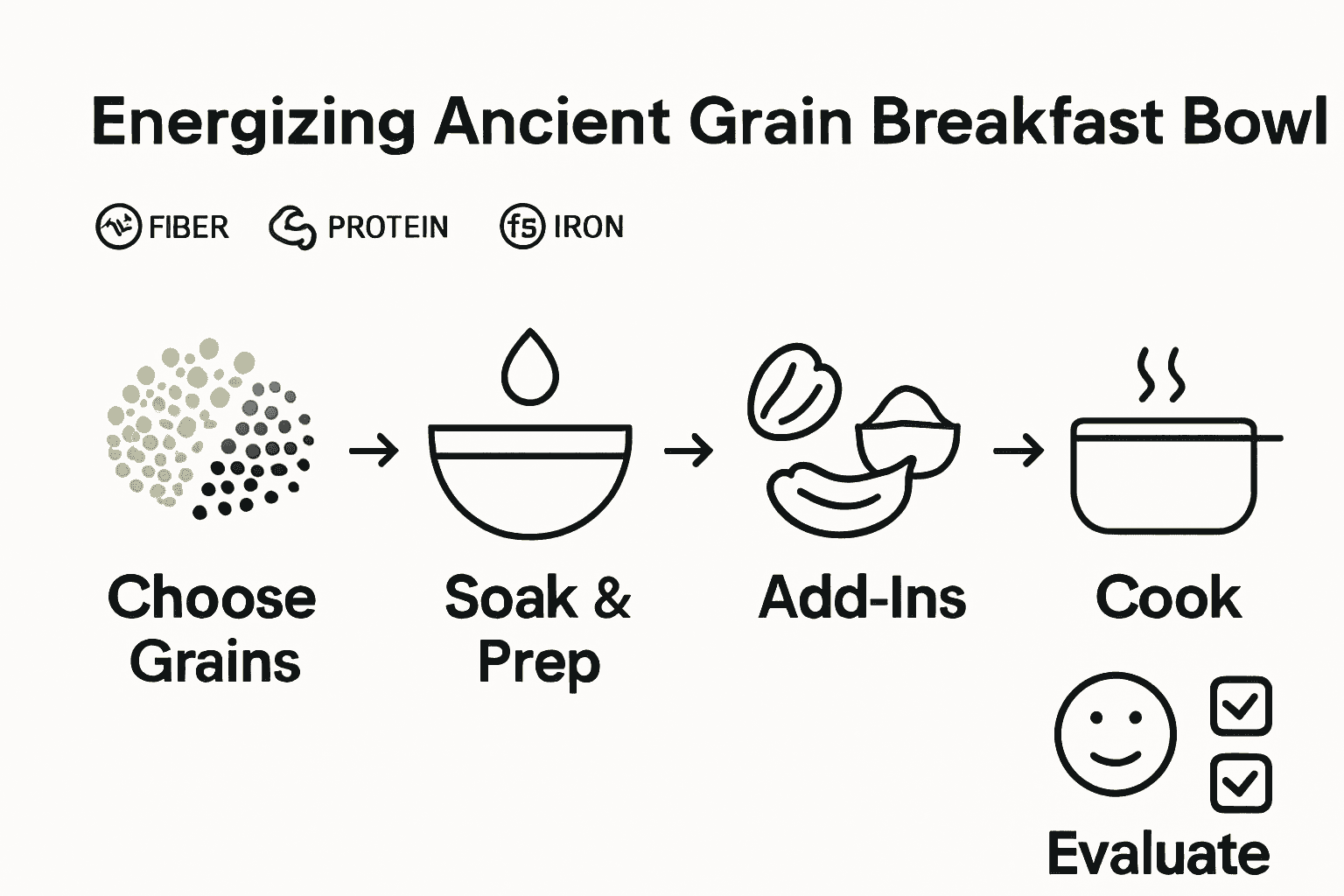
- Step 1: Select Nutrient-Rich Ancient Grains For Your Recipe
- Step 2: Soak And Prepare Grains For Optimal Nutrition
- Step 3: Combine Grains With High-Protein And Flavourful Add-Ins
- Step 4: Cook Your Modern Ancient Grain Meal To Perfection
- Step 5: Verify Texture, Taste, And Nutritional Balance
Quick Summary
| Key Point | Explanation |
|---|---|
| 1. Choose nutrient-dense ancient grains | Select grains like quinoa, millet, and chia seeds for their high nutritional values and health benefits. |
| 2. Soak grains for better nutrition | Soaking enhances the digestibility and nutritional absorption of grains like quinoa and millet. |
| 3. Combine with protein-rich add-ins | Pair grains with ingredients like chia seeds, nuts, or protein powder to boost nutrition and flavor. |
| 4. Use proper cooking techniques | Cook ancient grains carefully to preserve their nutrients; avoid overcooking to maximize benefits. |
| 5. Assess texture, flavor, and nutrition | Ensure your dish has a pleasing texture, balanced flavor, and a rich array of nutrients for a satisfying meal. |
Step 1: Select nutrient-rich ancient grains for your recipe
Choosing the right ancient grains can transform your breakfast from a basic meal to a nutritional powerhouse. In this step, we will explore how to select the most nutrient-dense grains that provide sustained energy and exceptional health benefits.
When selecting ancient grains, look for options with high nutritional profiles. According to research from cnh, grains like millet offer remarkable health advantages, particularly in blood sugar regulation and fibre content. Focus on varieties that provide multiple nutrients:
- Quinoa: Complete protein with all nine essential amino acids
- Millet: High in magnesium and fibre
- Chia seeds: Excellent omega-3 fatty acid source
- Wheat germ: Rich in iron and B vitamins
The Quadram Institute highlights that certain ancient grains like wheat germ are excellent plant-based iron sources, which is crucial for maintaining energy levels and supporting overall metabolic functions.
Pro tip: When purchasing ancient grains, always choose organic and whole grain varieties to maximise nutritional benefits. Check packaging for minimal processing and look for grains that are unrefined and closest to their natural state.
Ready to explore how to use ancient grains naturally in your breakfast recipes? Let’s move on to preparing these nutritional powerhouses.
Step 2: Soak and prepare grains for optimal nutrition
Soaking ancient grains is a critical step in unlocking their full nutritional potential and improving digestibility. In this section, you will learn how to properly prepare your grains to maximise their health benefits and create a delicious breakfast foundation.
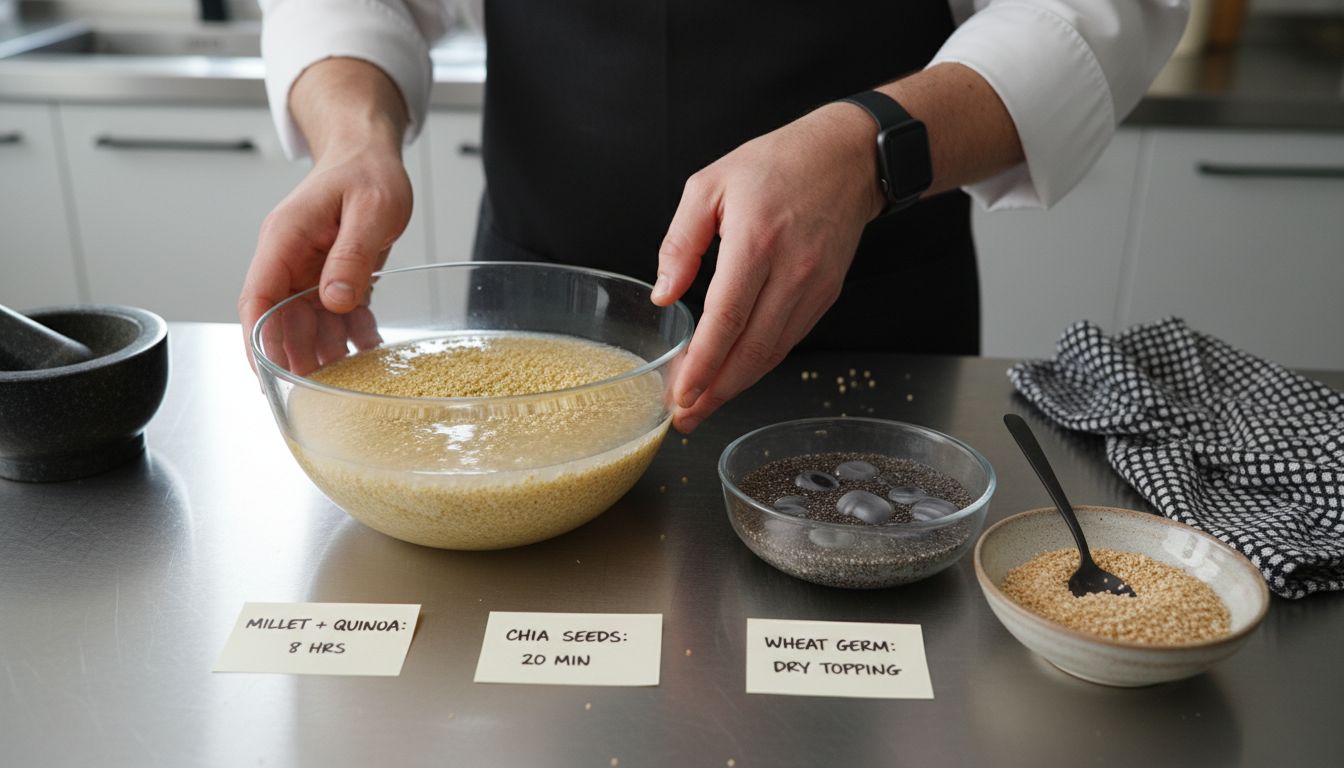
According to NHSProfessionals, home cooking allows you to control ingredients and portion sizes perfectly. Start by measuring your chosen ancient grains and placing them in a clean bowl. For most whole grains, follow this simple soaking process:
- Quinoa: Rinse thoroughly, then soak for 15 minutes
- Millet: Soak for 8 hours or overnight in cool water
- Chia seeds: No soaking required just hydrate when using
- Wheat germ: Sprinkle directly into recipes
Research from cnh highlights that proper preparation can enhance the grains fibre content and improve blood sugar regulation. After soaking, drain and rinse your grains to remove any phytic acid that might inhibit nutrient absorption.
Pro tip: Use filtered water for soaking and always store soaked grains in the refrigerator to prevent bacterial growth. Pat grains dry with a clean kitchen towel before cooking to ensure optimal texture.
Ready to explore more ancient grain preparation techniques? Check out our guide on incorporating ancient grains naturally for additional insights into creating nutritious meals.
Step 3: Combine grains with high-protein and flavourful add-ins
Transforming your ancient grain breakfast from basic to extraordinary requires strategic ingredient combinations that boost nutrition and tantalize your taste buds. In this step, you will learn how to elevate your morning meal with protein-rich and flavourful additions that complement your carefully prepared grains.
Research from the Quadram Institute highlights the importance of incorporating diverse plant-based protein sources. Consider these powerful protein and nutrient combinations:
- Chia seeds: Add 2 tablespoons for omega-3 and iron boost
- Almonds or walnuts: Sprinkle 1 handful for healthy fats and protein
- Plant-based protein powder: Mix 1 scoop for additional amino acids
- Hemp hearts: Scatter 3 tablespoons for complete protein profile
According to cnh, ancient grains like millet already provide impressive fibre content, and pairing them with protein-dense ingredients can help stabilise blood sugar levels and provide sustained energy throughout the morning.
Pro tip: Experiment with flavour combinations by adding fresh fruits, spices like cinnamon, or a drizzle of honey to make your breakfast both nutritious and delicious. The key is balancing macronutrients while keeping your meal interesting.
Ready to dive deeper into creating protein-packed breakfasts? Explore our high-protein porridge guide for more inspiration and innovative recipes.
Step 4: Cook your modern ancient grain meal to perfection
Cooking ancient grains is an art that requires precision and patience to unlock their full nutritional potential. In this final step, you will master the techniques to transform your soaked grains into a delectable and nourishing breakfast that maximises both flavour and nutrition.
Research from cnh emphasises that proper cooking can enhance the natural benefits of ancient grains like millet. Here are foolproof cooking methods for different grains:
- Quinoa: Simmer 1 part grain to 2 parts water for 15 minutes
- Millet: Cook with 3 parts water to 1 part grain for 20 minutes
- Chia seeds: Mix directly into liquid or let sit for 10 minutes to gel
- Wheat germ: Sprinkle on top of hot porridge after cooking
The Quadram Institute highlights that maintaining proper cooking techniques helps preserve the iron and nutrient content of plant based grains. Always use low to medium heat and avoid overcooking to retain maximum nutritional value.
Pro tip: Invest in a heavy bottomed pot and stir frequently to prevent burning. Different grains have unique water absorption rates, so adjust liquid quantities accordingly and taste test for perfect consistency.
Want to explore more about the fascinating world of ancient grains? Check out our guide to understanding ancient grains for deeper insights into these nutritional powerhouses.
Step 5: Verify texture, taste, and nutritional balance
The final checkpoint in creating the perfect ancient grain breakfast is ensuring your meal meets sensory and nutritional expectations. This critical step transforms your carefully prepared grains from a simple recipe into a truly nourishing morning experience.
According to research from cnh, ancient grains like millet offer remarkable potential for blood sugar regulation. When assessing your breakfast, consider these key evaluation criteria:
- Texture: Smooth and creamy without being too mushy
- Flavour: Balanced and not overly bland
- Consistency: Not too thick or watery
- Nutritional complexity: Rich in diverse nutrients
The Quadram Institute emphasises the importance of diverse nutrient intake, recommending that your grain mixture should provide a comprehensive range of plant based minerals and proteins.
Pro tip: Use a food scale to measure ingredients precisely and maintain nutritional consistency. Taste as you go and adjust liquid or seasoning to create a breakfast that not only nourishes but genuinely delights your palate.
Ready to dive deeper into understanding the nutritional landscape of ancient grains? Explore our guide to understanding ancient grains for comprehensive insights into these remarkable ingredients.
Elevate Your Breakfast with Nutrient-Packed Ancient Grains and Protein Power
If you have been searching for a way to turn your breakfast into an energising, nourishing experience, you are not alone. Many struggle with breakfasts that leave them feeling hungry soon after or cause unstable blood sugar levels. This article highlights how carefully selecting and preparing ancient grains combined with high-quality protein can make all the difference to your mornings. It is time to replace empty calories with meals that support sustained energy, fibre intake, and vital nutrients.

Discover how Granavitalis can help you take charge of your breakfast routine with our premium range of All Flours and concentrated nutrition from our Protein Power Packs. Rooted in ancient tradition and crafted for modern wellness, Granavitalis provides wholesome ingredients that transform your morning meals into balanced, delicious fuel for the day ahead. Start your journey to stronger, more resilient mornings today at Granavitalis and experience the true power of ancestral nourishment.
Frequently Asked Questions
How do I select the best ancient grains for energizing breakfasts?
Choosing nutrient-dense ancient grains like quinoa, millet, or chia seeds can enhance your breakfast’s health benefits. Focus on organic and whole grain varieties to maximize nutrition; for example, opt for quinoa for its complete protein content or millet for its high magnesium levels.
What is the soaking process for ancient grains before cooking?
Soaking ancient grains helps unlock their nutritional potential and improves digestibility. For instance, rinse quinoa and soak it for 15 minutes, while millet requires 8 hours or overnight soaking in cool water.
What high-protein add-ins can I mix with ancient grains for breakfast?
Boost your breakfast’s protein content by adding ingredients like chia seeds, almond slices, or plant-based protein powder. For example, adding 2 tablespoons of chia seeds can introduce omega-3 fatty acids along with essential iron to your meal.
What are the best cooking methods for preparing ancient grains?
To achieve the perfect texture, follow precise water ratios and cooking times for each grain. Simmer quinoa with a 1:2 grain-to-water ratio for about 15 minutes, while millet should cook with a 3:1 ratio for 20 minutes to retain nutrients.
How can I ensure my ancient grain breakfast is nutritionally balanced?
Evaluate your breakfast by checking for smooth texture, balanced flavor, and a rich variety of nutrients. Aim for a mix of grains and add-ins that provide a comprehensive range of proteins and minerals, ensuring it not only nourishes but also delights your palate.
What are some tips for adjusting the flavor of my ancient grain breakfast?
Experiment with flavor by adding fresh fruits, spices like cinnamon, or a drizzle of honey. For example, adding a handful of berries or a sprinkle of cinnamon can enhance both the taste and nutritional profile of your breakfast, making it more enjoyable.