
Complete Guide to Digestibility of Ancient Grains
Most British consumers are surprised to learn that ancient grains have remained largely unchanged for thousands of years, offering nutritional benefits modern grains often lack. With increasing interest in plant-based and whole food diets, understanding the distinct digestibility of these crops matters now more than ever. This article sheds light on how ancient grains differ from common varieties, what makes them digestible, and why they are gaining ground with those seeking naturally nutritious choices.
Table of Contents
- Defining Ancient Grains And Digestibility
- Types Of Ancient Grains And Key Differences
- Factors Influencing Grain Digestibility
- Health Impacts For Modern Diets
- Improving Digestibility In Everyday Eating
Key Takeaways
| Point | Details |
|---|---|
| Nutritional Superiority of Ancient Grains | Ancient grains offer enhanced nutritional profiles, including higher protein, dietary fibre, and micronutrient content compared to modern grains. |
| Impact on Digestibility | Unique molecular structures of ancient grains contribute to more effective nutrient absorption and potentially easier digestion for many individuals. |
| Health Benefits | Incorporating ancient grains into diets can support cardiovascular health, improve metabolic function, and reduce inflammation markers. |
| Preparation Techniques | Employing methods such as soaking, sprouting, and fermentation can significantly enhance the digestibility of ancient grains, maximising their health benefits. |
Defining Ancient Grains and Digestibility
Ancient grains represent a fascinating category of agricultural crops that have remained genetically unchanged for thousands of years, offering remarkable nutritional profiles far beyond conventional modern grains. These extraordinary food sources include varieties of grains that have not undergone significant human breeding such as quinoa, amaranth, millet, teff, sorghum, and several wheat subspecies like spelt and einkorn.
While digestibility encompasses how effectively our bodies can break down and absorb nutrients from food, ancient grains present unique characteristics that distinguish them from industrially processed alternatives. Genetic properties maintained from wild ancestors contribute to their enhanced nutritional integrity, including higher protein content, increased dietary fibre, and more complex micronutrient compositions. This means these grains often provide more comprehensive nutritional benefits compared to highly refined modern grain products.
Key characteristics of ancient grains that impact digestibility include:
- Higher protein content compared to conventional grains
- More complex carbohydrate structures
- Greater dietary fibre concentration
- Enhanced micronutrient profiles
- Natural resistance to agricultural modifications
Understanding the digestive process of these grains requires recognising their unique molecular structures. Unlike heavily processed grains, ancient grains maintain closer connections to their original botanical forms, which can potentially mean more predictable and gentler interactions with human digestive systems. Their robust nutritional profile suggests they might offer more balanced energy release and potentially easier metabolic processing for many individuals.
Types of Ancient Grains and Key Differences
Ancient grains represent a diverse family of nutritional powerhouses, each with unique characteristics that set them apart from modern commercial grains. Comparative studies reveal fascinating differences in nutritional profiles across various ancient grain varieties, highlighting their remarkable genetic diversity and potential health benefits.
Some prominent ancient grain varieties include:
-
Wheat Subspecies:
- Spelt: Higher protein and mineral content
- Einkorn: Smaller starch granules, more compact protein structures
- Kamut: Enhanced nutritional density
-
Pseudocereals:
- Quinoa: Complete protein profile
- Amaranth: High mineral content
- Buckwheat: Gluten-free alternative
-
Traditional Grains:
- Millet: Excellent digestibility
- Sorghum: Drought-resistant
- Teff: Micronutrient-rich
Research examining ancient wheat varieties demonstrates significant variations in nutritional composition. Einkorn, for instance, demonstrates remarkable characteristics including higher protein and ash content, which distinguishes it from conventional wheat varieties. These grains often feature more complex nutritional structures, offering potential advantages in digestibility and nutrient absorption.
The key differences between ancient and modern grains extend beyond mere nutritional metrics. Ancient grains have maintained closer genetic connections to their original botanical forms, resulting in more robust nutritional profiles. Their natural resistance to agricultural modifications means they typically contain higher concentrations of essential nutrients, more diverse protein structures, and potentially more straightforward metabolic interactions with human digestive systems.
Factors Influencing Grain Digestibility
Digestibility represents a complex interplay of nutritional, processing, and physiological factors that significantly impact how our bodies break down and absorb nutrients from grains. The sifting degree of grain flours plays a crucial role in determining their chemical and nutritional properties, directly influencing metabolic responses and nutrient absorption.
Key factors affecting grain digestibility include:
-
Processing Methods:
- Fermentation duration
- Milling techniques
- Flour refinement levels
-
Grain Characteristics:
- Protein structure
- Starch composition
- Fibre content
-
Preparation Techniques:
- Soaking
- Sprouting
- Cooking methods
Scientific research demonstrates that sourdough fermentation and specific wheat varieties can significantly enhance bread’s nutritional profile and digestibility. Extended fermentation processes help break down complex carbohydrate structures, making nutrients more accessible and reducing potential digestive complications.
The intricate relationship between grain processing and digestibility extends beyond simple mechanical manipulation. Factors like amylose-to-amylopectin ratios, protein bond configurations, and molecular structures all contribute to how efficiently our digestive systems can extract and utilise nutritional components. Understanding these nuanced interactions allows individuals to make more informed dietary choices that support optimal nutrient absorption and metabolic health.
Health Impacts for Modern Diets
The integration of ancient grains into contemporary dietary patterns represents a profound nutritional strategy with significant health implications. Systematic reviews of randomised controlled trials reveal compelling evidence of their potential therapeutic benefits, particularly for metabolic health conditions like diabetes mellitus.
Key health benefits of ancient grains include:
-
Cardiovascular Support:
- Reduction in LDL cholesterol
- Lowered total cholesterol levels
- Improved lipid profiles
-
Metabolic Health:
- Better blood sugar regulation
- Enhanced insulin sensitivity
- Reduced inflammation markers
-
Nutritional Density:
- Higher micronutrient content
- Complex carbohydrate structures
- More diverse protein compositions
Research comparing bread made from different grain types demonstrates that ancient grains offer more than traditional nutritional metrics. Cellular studies indicate distinctive biological responses when consuming ancient grain products, suggesting these grains interact with human physiology in uniquely beneficial ways.
Modern dietary challenges increasingly highlight the importance of returning to nutrient-dense, minimally processed food sources. Ancient grains represent more than a nostalgic food trend; they embody a holistic approach to nutrition that prioritises whole-food integrity, complex nutritional profiles, and potential therapeutic potential for contemporary health concerns.
Improving Digestibility in Everyday Eating
Transforming ancient grains into easily digestible meals requires strategic preparation techniques that unlock their nutritional potential. Sourdough fermentation and specific processing methods can significantly enhance bread’s digestibility, demonstrating how simple cooking approaches can optimise nutrient absorption.
Practical strategies for improving grain digestibility include:
-
Preparation Techniques:
- Soaking grains overnight
- Sprouting before cooking
- Using fermentation processes
-
Cooking Methods:
- Slow cooking
- Gentle simmering
- Low-temperature baking
-
Combination Approaches:
- Mixing different ancient grains
- Pairing with complementary proteins
- Adding digestive-friendly herbs
Research examining carbohydrate processing reveals that different grain types interact uniquely with cooking methods, suggesting that mindful preparation can dramatically improve nutrient availability. For instance, grains like spelt, millet, and sorghum respond differently to various cooking techniques, offering individuals multiple approaches to enhance digestibility.
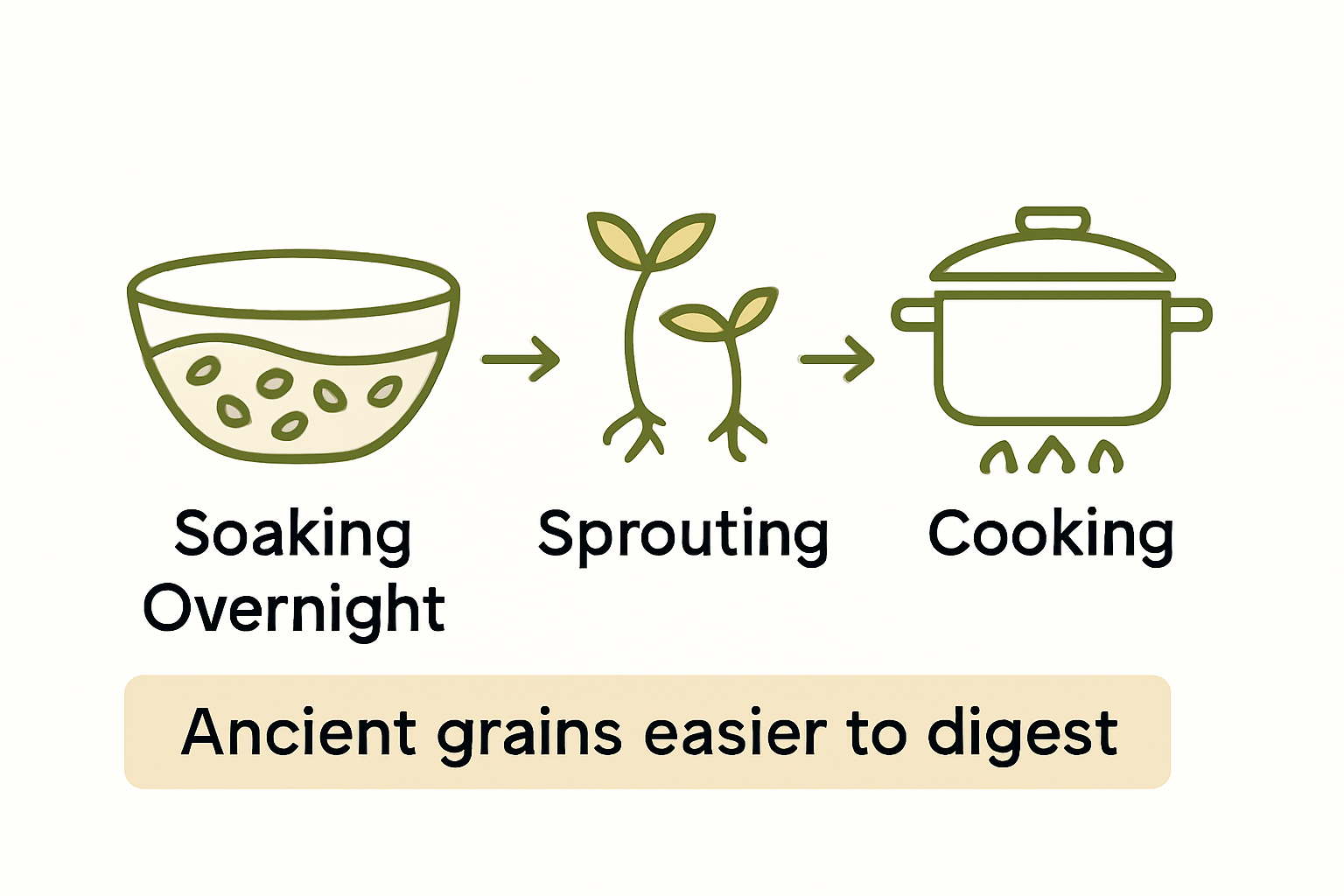
Ultimately, improving digestibility is about understanding each grain’s unique characteristics and applying thoughtful preparation methods. By experimenting with soaking, sprouting, fermenting, and mindful cooking, individuals can transform ancient grains from potentially challenging foods into nutritious, easily absorbed dietary staples that support overall metabolic health.
Embrace the Power of Ancient Grains for Better Digestibility and Health
Discover how ancient grains with their unique protein structures, fibre content and natural nutritional profiles can transform your everyday meals into easily digestible, nutrient-rich experiences. If you are looking to overcome common challenges like poor nutrient absorption or seeking balanced energy release, unlocking the benefits of traditional grains could be the key. At Granavitalis, we honour these ancient grains rooted in time to fuel your modern lifestyle with purity and purposeful nutrition.
Explore our thoughtfully sourced Grains – Granavitalis selection to find varieties that complement your digestive needs and support your metabolic health goals.

Take charge of your health today by choosing whole food solutions crafted for superior digestibility and sustained energy. Visit Granavitalis to shop ancient grain flours, including specialised Gluten Free Flours – Granavitalis, and elevate your nutrition with authenticity and clarity. Your journey to clean living and vibrant wellness starts here.
Frequently Asked Questions
What are ancient grains?
Ancient grains are varieties of grains that have remained genetically unchanged for thousands of years, such as quinoa, amaranth, millet, teff, and certain wheat subspecies like spelt and einkorn.
Why are ancient grains considered more digestible than modern grains?
Ancient grains often have complex carbohydrate structures and maintain closer genetic connections to their original forms, potentially leading to more predictable and gentler interactions with the digestive system, improving overall digestibility.
How can I improve the digestibility of ancient grains in my meals?
You can enhance the digestibility of ancient grains by using techniques such as soaking overnight, sprouting before cooking, and employing fermentation methods. Gentle cooking techniques like slow cooking or simmering also aid in nutrient absorption.
What are the health benefits of incorporating ancient grains into my diet?
Ancient grains can support cardiovascular health, improve blood sugar regulation, and offer higher micronutrient content compared to modern grains, making them a valuable addition to a healthy diet.
Recommended
- Understanding Ancient Grains and Gut Health – Granavitalis
- Complete Guide to Differences Among Ancient Grains – Granavitalis
- Ancient Grains Preparation Guide: Step-by-Step Mastery – Granavitalis
- Understanding How Ancient Grains Support Wellness – Granavitalis
- What Ingredients to Avoid in Dog Food for Healthier Pups – Ultimate Pet Foods
- Fermented Plant Foods: Complete Guide for Wellness – naturessoulshop