
Cheap vegan protein powder: best budget picks 2026
TL;DR:
- Affordable vegan protein powders provide complete amino acids and meet the leucine threshold for muscle synthesis. Blended pea and rice proteins offer the best value, combining affordability with amino acid completeness. Buying in bulk or through subscriptions reduces costs while maintaining quality and effectiveness.
Cheap vegan protein powder is a plant-based supplement that delivers essential amino acids at an affordable price to support muscle growth and recovery without animal products. The industry term is “plant-based protein powder,” and the best budget options do far more than cut costs. They meet the leucine threshold of 2.5g or more per serving required for effective muscle protein synthesis, carry certifications such as the Vegan Society mark or NSF Certified for Sport, and provide a complete amino acid profile. Granavitalis recommends treating the nutritional label as your primary buying tool, not the marketing copy on the front of the bag.
What to look for in cheap vegan protein powder
The single most important number on any label is leucine content. Plant proteins match whey for muscle protein synthesis when each serving contains at least 2.5g of leucine. That fact changes how you shop: a powder priced at £1.20 per serving with adequate leucine beats a £0.60 option that falls short.
Protein source matters
The three most common sources in affordable plant-based protein powder are pea, rice, and soy. Each has a distinct profile:
- Pea protein delivers a strong amino acid profile and is easy to digest, though it is low in methionine.
- Brown rice protein is high in methionine but low in lysine, making it the natural partner for pea.
- Soy protein is the only single-ingredient plant protein that is genuinely complete across all essential amino acids.
- Blends combining pea and rice form a complete amino acid profile and are widely recommended for plant-based muscle building.
Texture, flavour, and digestibility
Gritty texture is the most common complaint about budget plant protein. Pea protein isolate processes more finely than concentrate and reduces grittiness noticeably. Digestive enzymes such as bromelain or protease, listed in the ingredients, improve absorption and reduce bloating. Flavoured powders often use natural sweeteners like stevia or coconut sugar, which keep the ingredient list clean without spiking the cost significantly.
Quality markers to check
Certifications like Vegan Society and NSF Certified for Sport confirm that a product meets ethical and safety standards. Organic certification adds another layer of assurance about ingredient sourcing. Vitamin B12 fortification is a useful bonus, since it addresses a common nutritional gap in vegan diets.
Pro Tip: Flip the bag and read the amino acid breakdown, not just total protein grams. A powder with 25g protein but poor leucine content will underdeliver on muscle recovery.
Top 6 affordable vegan protein powders in the UK
The UK market offers strong budget options across different protein sources. Each entry below is assessed on protein per serving, cost per serving, amino acid completeness, and flavour quality.
1. Soy protein isolate (unflavoured, 1kg)
A high-protein, low-cost staple. One well-known example provides 27g of protein per 30g serving with minimal carbohydrates and fats, at around £11.79 for 1kg. That works out to roughly £0.35 per serving, making it one of the lowest cost-per-gram options available. Soy is a complete protein, so no blending is required. The unflavoured version mixes into smoothies, porridge, and vegan protein powders for breakfast without altering taste.
2. Pea and rice blend (flavoured, 1kg)
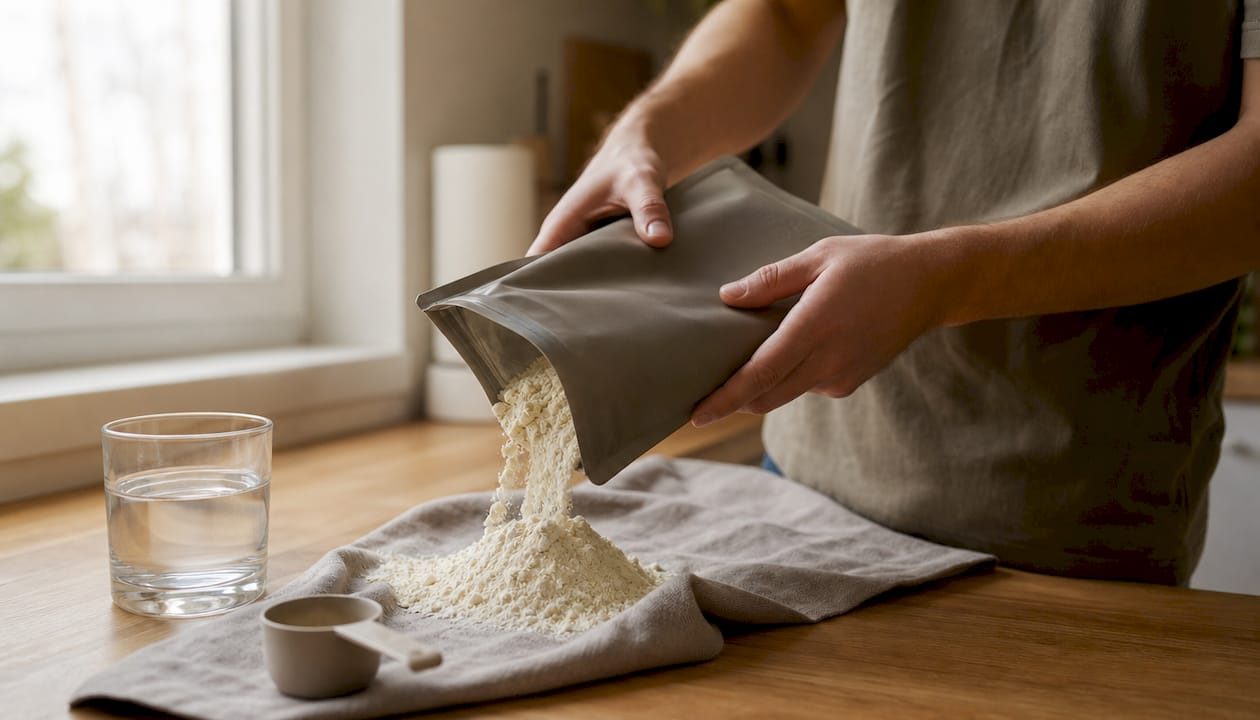
Blends built on pea and rice proteins are the gold standard for amino acid completeness in plant-based powders. A quality 1kg flavoured blend typically costs between £18 and £25, delivering around 22–25g of protein per serving. The pea-rice combination covers the methionine gap in pea and the lysine gap in rice, producing a profile close to a complete protein. Flavour options such as vanilla and chocolate make these powders easy to use as vegan protein powders for breakfast in smoothies or overnight oats.
3. Pea protein isolate (unflavoured, 1kg)
Pea protein isolate is the most widely available single-ingredient option in the UK. A 1kg bag typically costs £15–£20 and provides 20–24g of protein per serving. It is naturally free from the top 14 allergens, making it suitable for people with soy or gluten sensitivities. The texture is finer than pea concentrate, which reduces the chalky mouthfeel that puts many beginners off plant protein. Pair it with a rice-based food source to round out the amino acid profile.
4. Pea, rice, and pumpkin seed blend (caramel flavour)
MyVegan Plant Protein Superblend is frequently cited as a best budget choice, offering 23g of protein per serving with a notably well-received caramel flavour. The three-source blend adds pumpkin seed protein, which contributes zinc and magnesium alongside its amino acids. This makes it a genuinely nutritious option rather than a simple protein hit. It is one of the better-tasting low-cost plant protein powders on the UK market, which matters for long-term adherence.
5. Brown rice protein (unflavoured, 1kg)
Brown rice protein is the most affordable single-ingredient option in many UK retailers, often priced below £15 for 1kg. It provides around 20–22g of protein per serving and is hypoallergenic, making it a safe choice for people with multiple food sensitivities. The flavour is mild and slightly nutty, which blends well with fruit-based smoothies. Its lower lysine content means it works best when combined with a lysine-rich food such as legumes or a pea-based powder. For a deeper look at high-protein plant options, the amino acid breakdown is the deciding factor.
6. Premium branded plant blend (on sale, 1kg)
Premium branded blends become genuinely budget-friendly during sales. Prices for 1kg tubs can drop by nearly 50%, for example from £27.99 to £14.00 through subscribe-and-save schemes or major retail events. These products often carry NSF Certified for Sport status and include added vitamin B12 and digestive enzymes. Buying a premium blend at sale price gives you certification, flavour quality, and amino acid completeness at a budget price per serving.
How to maximise savings when buying plant protein
Cost per serving is the correct metric, not the upfront price of the bag. A 2kg bag at £30 that yields 66 servings costs £0.45 per serving. A 500g bag at £12 that yields 16 servings costs £0.75 per serving. The larger bag wins every time on value.
- Use subscribe-and-save schemes. Subscription services often provide an extra 5% discount, and stacking that with a sale price delivers the lowest possible cost per serving.
- Buy in bulk. Retailers frequently offer flash sales and bulk pricing that cut cost per serving significantly. Buying 2kg or 5kg bags reduces the unit price across the board.
- Time purchases around major retail events. January sales, Black Friday, and end-of-season clearances regularly feature plant protein at reduced prices.
- Compare cost per serving, not pack price. Divide the total price by the number of servings listed on the label before deciding.
- Avoid the cheapest unbranded powders. Products with no certification, no amino acid breakdown, and no listed ingredient sourcing carry real quality risks. Low price is only good value when the nutritional profile holds up.
Pro Tip: Set a price alert on a retailer app for your preferred powder. When it drops to your target price, buy the largest size available.
Single-ingredient versus blend protein powders for beginners
Single-ingredient powders are cheaper per gram and have shorter ingredient lists. That simplicity appeals to beginners who want to know exactly what they are consuming. However, no single plant protein source is perfect on its own, with the exception of soy.
Dietitians advise that blends provide better amino acid completeness and smoother texture, making them more suitable for most beginners. The practical difference shows up in two ways: better muscle recovery results over time, and a more enjoyable drinking experience that makes it easier to stay consistent.
- Single-ingredient pros: lower cost, minimal ingredients, easy to stack with food sources.
- Single-ingredient cons: incomplete amino acid profile (except soy), often grittier texture.
- Blend pros: complete amino acid profile, better mouthfeel, often fortified with vitamins.
- Blend cons: slightly higher cost, longer ingredient lists that require more label reading.
For beginners on a budget, a pea and rice blend at a mid-range price point delivers better results than the cheapest single-ingredient option. The amino acid completeness of a well-formulated blend removes the need to carefully plan complementary food sources at every meal. Soy protein isolate is the exception: it is both affordable and complete, making it the best single-ingredient choice for budget-conscious beginners. You can also explore vegan protein versus whey to understand how plant blends compare for fitness outcomes.
Key takeaways
The best affordable plant-based protein powder meets the 2.5g leucine threshold, carries a recognised certification, and costs less per serving when bought in bulk or on subscription.
| Point | Details |
|---|---|
| Leucine threshold is non-negotiable | Choose powders with 2.5g or more leucine per serving for effective muscle protein synthesis. |
| Pea and rice blends are the best value | The combination delivers a complete amino acid profile at a mid-range price point. |
| Cost per serving beats pack price | Divide total price by servings to find the true value of any budget option. |
| Certifications signal quality | Look for Vegan Society, NSF Certified for Sport, or organic certification on the label. |
| Bulk buying and subscriptions cut costs | Subscription discounts and flash sales can reduce the price per serving by up to 50%. |
What I have learned from years of buying budget plant protein
The biggest mistake I see people make is buying the cheapest powder they can find and then abandoning plant protein entirely because it tastes terrible or gives them bloating. That puts them off the whole category, which is a shame, because the problem was the product, not the protein source.
My honest view is that the flavour gap between budget and premium plant protein has closed considerably. A mid-range pea and rice blend from a reputable UK retailer now tastes genuinely good, especially in a smoothie with frozen banana and oat milk. The texture issue is largely solved by choosing isolate over concentrate and checking for digestive enzymes in the ingredients.
The marketing myth I encounter most often is that you need an expensive, heavily branded product to get results. You do not. What you need is adequate leucine, a complete amino acid profile, and consistency. A well-chosen budget plant-based protein at £0.40–£0.60 per serving delivers exactly that. Spend the money you save on whole food sources like legumes, seeds, and nut butters that round out your nutrition rather than on a premium label.
One practical tip for newcomers: start with a single-serving sample or a small 500g bag before committing to a bulk purchase. Taste and texture are personal, and no amount of good reviews replaces your own experience with a product.
— Jarrod
Granavitalis plant-based protein: real food to complement your powder
Protein powder is one part of a complete plant-based nutrition plan. Granavitalis sources whole foods that work alongside your powder to fill nutritional gaps and add genuine flavour to your meals. The Raw Organic Pecan Butter by RAWGORILLA from Granavitalis delivers healthy fats, plant protein, and a rich, natural flavour that pairs well with post-workout smoothies or morning porridge. For more variety, the Organic Nut & Seed Butter Selection Box from Granavitalis brings together a range of cold-pressed butters that add protein, minerals, and depth to any plant-based meal. These are real-food complements to your supplement routine, sourced with the same transparency Granavitalis applies to every product in its range.
FAQ
What is the cheapest vegan protein powder in the UK?
Soy protein isolate is typically the lowest cost option, with 1kg bags available for around £11–£12, delivering roughly 27g of protein per serving at under £0.40 per serving.
Is cheap plant-based protein powder effective for muscle building?
Yes, provided each serving meets the 2.5g leucine threshold. Plant proteins match whey for muscle protein synthesis when leucine content is adequate.
Are pea and rice protein blends better than single-ingredient powders?
Dietitians recommend blends for most beginners because they provide a complete amino acid profile and better texture than single-ingredient options, with the exception of soy protein, which is complete on its own.
Where can I buy affordable vegan protein powder in the UK?
Major online retailers, health food shops, and brand websites all stock budget plant protein. Subscription schemes and flash sales on these platforms regularly reduce 1kg tub prices by up to 50%.
Can I use vegan protein powder for breakfast?
Yes. Unflavoured or vanilla plant protein blends mix well into porridge, smoothies, and overnight oats, making them a practical and affordable way to increase protein intake at breakfast.