
Best budget plant-based protein powders in Europe 2026
TL;DR:
- Affordable plant protein powders should focus on cost per gram of protein, amino acid completeness, and digestion.
- Blended sources like pea and rice offer a more complete profile than single-source options; choose EU-based brands for safety.
- Texture and taste are crucial for long-term use; blending powders into meals can improve experience and reduce appearance of grit.
Finding a plant-based protein powder that is genuinely affordable, complete in its amino acid profile, and trustworthy enough to fuel real training is harder than it should be. Across Europe, the market is flooded with products that look cheap on the surface but fall short on nutrition, transparency, or taste. Whether you are a student, a weekend cyclist, or a committed gym-goer watching your monthly food budget, this guide breaks down exactly what to look for and which powders actually deliver the goods without draining your wallet.
Table of Contents
- How to choose a cheap plant-based protein powder
- Best affordable plant-based protein powders reviewed
- Comparison table: Best cheap plant-based protein powders
- Which powder suits your goals? Situational picks
- Expert perspective: Why price alone isn’t the full story
- Affordable nutrition solutions with Granavitalis
- Frequently asked questions
Key Takeaways
| Point | Details |
|---|---|
| Prioritise EU brands | European-sourced protein powders meet high safety standards and ensure clean nutrition. |
| Blends offer better value | Blended proteins like pea and rice provide more complete amino acids affordably than isolates. |
| Cost isn’t everything | Cheapest options may taste gritty, so balance price with texture and nutrition. |
| Watch for bulk deals | Buying larger bags and watching for sales can cut your price per serving dramatically. |
How to choose a cheap plant-based protein powder
Price is the starting point, not the finish line. A powder that costs less per bag but delivers fewer grams of usable protein per serving is not actually cheaper. Before you buy anything, you need a short checklist that filters out the noise.
What actually matters when choosing a budget plant protein:
- Price per gram of protein, not price per bag or per serving
- EU-based sourcing and regulation, for both safety and supply chain transparency
- Complete essential amino acid (EAA) profile, ideally from a blend rather than a single source
- Digestive enzymes, such as Digezyme, which help your body absorb plant proteins more efficiently
- Minimal additives, meaning short ingredient lists free from unnecessary fillers, artificial sweeteners, and synthetic flavouring
- Texture and mixability, because even the best nutritional profile becomes useless if the powder is so gritty you stop using it
The amino acid issue is one that catches many people off guard. A single-source pea protein, for instance, is rich in lysine but relatively low in methionine and cysteine. Brown rice protein flips that balance. When you blend the two, you get a profile that is much closer to a complete protein, similar in breadth to egg or whey. BBC Good Food’s 2026 review confirms that blends such as pea combined with rice or fava bean deliver far better complete EAA coverage than any single-source plant option.
For Europeans specifically, sourcing matters beyond nutrition. Which?'s 2026 guide recommends prioritising EU-based brands such as Bulk, Myprotein, and Vilgain for regulatory compliance. During sales, these brands regularly drop under €0.50 per serving, which is the benchmark for genuine budget value in this space. You can also find useful clean plant protein tips that help you decode ingredient labels before you commit to a purchase.
Pro Tip: Sign up to email newsletters for Bulk and Myprotein. Both brands run flash sales of 30 to 50% off several times per year. Buying a 2.5kg or 5kg bag during one of these windows can cut your monthly protein cost by more than half compared with buying smaller bags at full price.
Texture deserves a specific mention because it is often the hidden reason people abandon a product after a week. According to BBC Good Food, plant proteins are frequently grittier and chalkier than whey, with lower bioavailability (the proportion your body can actually absorb and use). This means a standard 22 to 25g serving may need to increase to 28 to 30g for plant proteins to match whey’s muscle-building stimulus. Factoring that in upfront helps you compare true costs across different products honestly. For a broader overview, our guide to top protein powders covers the landscape in detail.
Best affordable plant-based protein powders reviewed
With the criteria clear, here are the standout options available to European buyers in 2026, each assessed for real-world value.
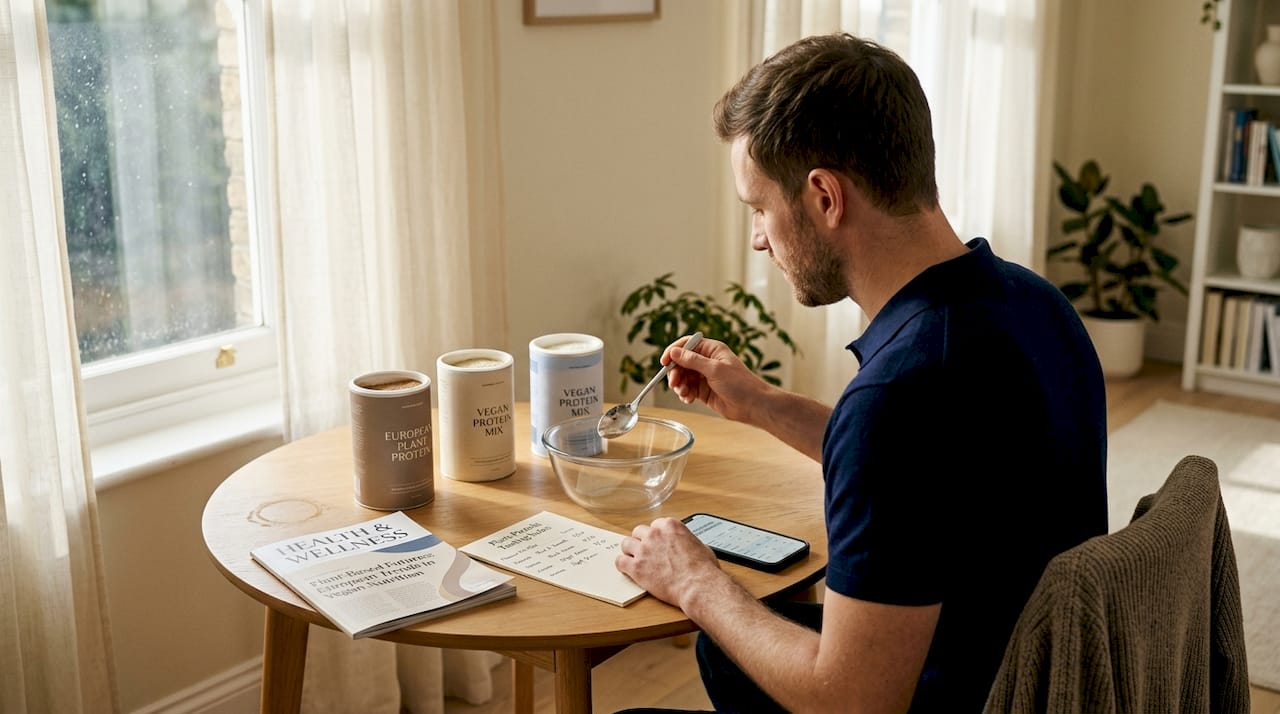
Bulk vegan protein powder
Bulk’s vegan blend is one of the most widely recommended budget options across Europe, priced between £9.99 and £29.99 for 1kg. Each serving delivers 23g of protein from a five-source blend: pea, brown rice, pumpkin seed, flaxseed, and quinoa. That combination covers the EAA spectrum more thoroughly than most competitors at this price point. The inclusion of Digezyme enzymes is a genuine practical advantage for anyone who has experienced bloating or discomfort after plant protein shakes.
Pros:
- Excellent protein-per-pound value, especially on sale
- Multi-source blend provides a near-complete amino acid profile
- Digezyme aids digestion and reduces gut discomfort
- Wide flavour range
Cons:
- Gritty texture noted across multiple independent reviews
- Some flavours contain a longer additives list than ideal
MyVegan plant protein superblend
BBC Good Food’s 2026 review names the MyVegan Plant Protein Superblend as its best budget pick, with 168g bags starting from £7.99. The Caramel flavour in particular rated highly for taste, which matters if you are the sort of person who needs to actually enjoy your recovery shake to stay consistent. Myprotein as a brand carries strong European presence and meets the sourcing standards that health-conscious buyers in Germany, France, and the Netherlands should prioritise.
Pros:
- Best-in-class taste at budget pricing
- Reputable European supply chain
- Good macro split with low sugar
Cons:
- Smaller bag sizes push up the effective cost per serving
- Superblend formula changes seasonally
Nutri+ vegan 3K
For buyers shopping from France or Germany, Nutri+ Vegan 3K offers outstanding value. Darwin Nutrition’s 2026 buying guide positions it at €28.90 per kilogram with an impressive 76g of protein per 100g, making it one of the highest protein-density options in the budget category. Clean macros, low carbohydrate content, and a straightforward ingredient list make it appealing for those serious about their nutritional precision.
Pros:
- Very high protein percentage per 100g
- Minimal additives
- Competitive pricing within mainland Europe
Cons:
- Limited flavour variety compared to larger brands
- Less widely available outside France and Germany
“When evaluating plant-based protein, the serving size benchmark matters as much as cost. Because plant proteins carry lower bioavailability than animal sources, hitting 30g of protein per serving rather than 22g changes the recovery equation entirely for active individuals.” Based on multiple 2026 expert reviews.
Statistic callout: Which?'s 2026 lab testing found that the most cost-effective options in the budget category include Holland and Barrett Precision at 61p per serving and Naturya hemp protein at 67p per serving, with Bulk at £1.03 and Myprotein at 94p per serving. These figures shift considerably during promotional periods.
For further reading on how these sources compare nutritionally, our guide to complete vegan blends goes deeper, and our article on protein powder sources explains the science behind each ingredient.
Comparison table: Best cheap plant-based protein powders
| Product | Approx. cost per serving | Protein per serving | Blend type | Digestive enzymes | Texture notes |
|---|---|---|---|---|---|
| Bulk vegan protein | £0.60 to £1.03 | 23g | Pea, rice, pumpkin, flax, quinoa | Yes (Digezyme) | Gritty but tolerable |
| MyVegan superblend | £0.75 to £0.94 | 22g | Pea and rice blend | No | Smoother than average |
| Nutri+ vegan 3K | ~€0.80 | 22 to 24g | Pea, wheat, rice | No | Moderate |
| H&B Precision | 61p | ~20g | Pea isolate | No | Slightly chalky |
| Naturya hemp protein | 67p | ~15g | Single-source hemp | No | Earthy, coarse |
Which?'s 2026 lab rankings scored top vegan powders up to 84 out of 100, factoring in bioavailability, complete protein coverage, dose adequacy, cost per serving, and additive content. The optimal serving for vegans using these products is closer to 30g rather than the 22 to 25g printed on most labels, specifically because plant proteins absorb less efficiently than whey. Adjust your scooping accordingly, and it affects how long each bag lasts in practice.
For a deeper side-by-side analysis, visit our dedicated vegan protein comparison resource.
Which powder suits your goals? Situational picks
Not everyone needs the same thing from a protein powder. Here is how to match the right product to your actual situation.
-
Gym-goers focused on muscle recovery: Choose Bulk Vegan Protein for its multi-source blend and Digezyme. The Independent’s 2026 review confirms that 23 to 25g per serving supports muscle maintenance effectively, though bumping up to 30g is advisable given lower plant protein digestibility. Buy a 2.5kg bag during a Bulk sale and your per-serving cost drops well below competitors.
-
Students on a tight budget: MyVegan Superblend in smaller bags gives you a trusted brand at accessible entry pricing. Taste is good enough to stay consistent without needing to mask it heavily, which is important when you are making shakes in a shared kitchen with limited equipment.
-
Sensitive digestion: Prioritise any product containing Digezyme or similar enzyme blends. Bulk’s formula is your primary option here. Avoid single-source pea isolates if you tend to experience bloating, as the fermentable fibre content in pea concentrate is the usual culprit.
-
Bargain hunters wanting the lowest absolute cost: Holland and Barrett Precision at 61p per serving wins on raw cost, though its single-source pea formula means you should pair it with a varied diet rich in other complementary amino acid sources such as whole grains, seeds, and legumes.
-
French or German-based shoppers: Nutri+ Vegan 3K stands out for its high protein density per 100g and clean macro breakdown. Order directly from Darwin Nutrition or local retailers to avoid import shipping costs.
Pro Tip: Blend budget powders into meals rather than drinking them straight. Mixing a gritty powder into overnight oats, a banana smoothie with frozen mango, or a savoury lentil soup completely eliminates texture problems and adds genuine nutritional depth to a meal. You also stretch each bag further this way because you are combining protein sources rather than relying on one powder alone.
Matching flavour preferences is often underrated. If vanilla and chocolate are uninspiring to you, explore unflavoured versions mixed into cooking. Unflavoured options from most brands are frequently cheaper per kilogram and give you far more flexibility in the kitchen. For readers who want specific recommendations by lifestyle, our women’s protein picks guide offers further tailored suggestions.
Expert perspective: Why price alone isn’t the full story
We have evaluated plant protein blends for years, and the single mistake we see most often is choosing the lowest number on a price tag without reading what is behind it. A powder at €15 per kilogram sounds like a win until you realise the protein percentage is 55% and the rest is maltodextrin and flavouring agents. The actual cost per gram of usable protein is often higher than a well-formulated option priced at €25.
Gritty texture is not just a comfort issue. If a powder makes you dread your post-workout shake, you will skip it. Consistently skipping protein intake in the recovery window defeats the entire point of buying the powder. From our experience, the products people stick with long-term are not always the cheapest ones. They are the ones that are good enough to drink without grimacing, priced fairly enough to reorder without stress.
The incomplete EAA problem is real but solvable without spending more. Eating a varied plant-based diet across the day, with combinations of grains, legumes, seeds, and a multi-source protein powder, covers your amino acid bases without upgrading to an expensive isolate. Budget does not have to mean nutritional compromise if you are thoughtful about how you eat around your protein supplementation.
Gut comfort is the third overlooked factor. Cheap single-source pea concentrates cause digestive discomfort for a significant number of people. That is not a reason to abandon plant protein. It is a reason to choose blends and look for enzyme support. Our resource on high quality protein facts covers the specific markers of quality worth paying attention to. Price communicates value imperfectly. Ingredients communicate it accurately.
Affordable nutrition solutions with Granavitalis
At Granavitalis, we understand that affordable clean nutrition goes well beyond the protein shake. A well-structured plant-based diet pairs quality protein with complementary whole food fats and nutrients for sustained energy and real recovery.
Our Raw Organic Pecan Butter is a natural companion to any protein shake or post-workout meal, delivering healthy fats, magnesium, and zinc that support muscle function and energy metabolism. For variety and deeper nutritional coverage, our nut and seed butter selection gives you a curated set of options to rotate through your meals, making clean eating both more practical and more enjoyable. Real nutrition is built from a foundation of whole foods, not single products, and Granavitalis is here to help you build that foundation with integrity.
Frequently asked questions
What is the cheapest plant-based protein powder in Europe with complete amino acids?
Bulk Vegan Protein Powder is consistently cited as one of Europe’s best-value complete options, with 23g of protein per serving from a five-source blend priced as low as £9.99 per kilogram on sale. MyVegan Superblend is also a strong runner-up for budget-conscious shoppers.
Are cheap plant-based protein powders good for muscle recovery?
Yes, provided you use an adequate serving size. Plant proteins can support muscle maintenance at 23 to 25g per serving, but targeting 30g or more is advisable to compensate for lower bioavailability compared to whey.
How do I reduce gritty texture in budget vegan protein powders?
Blend with frozen fruit, dairy-free yoghurt, oats, or nut butter to smooth out the texture entirely. As BBC Good Food notes, gritty texture is common in budget plant proteins, but premium blends such as Protein Works do run smoother if texture is a non-negotiable priority for you.
What is the main downside of the cheapest plant-based blends?
The primary drawbacks are basic taste and gritty mouthfeel, which are most pronounced in single-source formulas. Nutritionally, however, well-formulated EU-sourced options still deliver solid results for active individuals.
How do I check if a protein powder is truly clean and safe in Europe?
Choose brands with published third-party lab results, short ingredient lists, and EU-based sourcing. As BBC Good Food highlights, European-sourced brands like MyVegan are subject to some of the world’s strictest food safety standards, which gives you meaningful assurance about what is actually in the bag.