
Nutrient integrity explained for better food choices
TL;DR:
- Nutrient integrity involves more than label content; it encompasses actual absorption and utilization by the body. Cooking methods, food matrix, and meal composition significantly influence how nutrients are delivered and absorbed in practice. Prioritizing minimally processed foods and strategic food pairings enhances nutrient bioavailability and overall health outcomes.
You scan a nutrition label, spot a generous amount of vitamin C or iron, and assume your body will receive exactly that. It will not. Nutrient integrity explained properly is not about what a label states. It is about what your body actually absorbs and uses. The gap between those two things is where most nutrition conversations fall apart, and understanding it changes how you shop, cook, and eat in genuinely meaningful ways. This article closes that gap.
Table of Contents
- Key takeaways
- What is nutrient integrity?
- How processing and cooking affect nutrient stability
- Food matrix and meal context
- Advances in nutrient delivery technology
- How to maximise nutrient integrity daily
- My take: why labels have always told only half the story
- Nourish smarter with Granavitalis
- FAQ
Key takeaways
| Point | Details |
|---|---|
| Labels show content, not benefit | The nutrient amount on packaging tells you what is present, not what your body will absorb and use. |
| Food matrix shapes absorption | The physical structure of food, and what you eat alongside it, directly affects nutrient uptake. |
| Cooking and storage cause real losses | Heat, light, and oxidation degrade heat-sensitive vitamins before food reaches your plate. |
| Smart pairings boost delivery | Combining vitamin C with plant iron or fat with vitamins A, D, E, and K significantly improves absorption. |
| Processing method matters as much as ingredients | Minimal processing and non-thermal techniques preserve more of what the label promises. |
What is nutrient integrity?
Most people equate nutritional value with nutrient content. The figure on the label, the milligrams per serving, feels concrete and reliable. But bioavailability measures the fraction of a nutrient that is actually absorbed and used by your tissues, not just what is present before you eat. That distinction is the entire foundation of understanding nutrient integrity.
What is nutrient integrity, then? It is the combined measure of nutrient content, stability through processing and storage, and ultimate bioavailability after digestion. Think of it as the full journey a nutrient takes from soil or source, through manufacturing, into your gut, and finally into your cells.
Several factors interrupt that journey:
- Nutrient content reflects what is present in raw or processed food before consumption.
- Bioavailability refers to how much of that content is digested, absorbed into the bloodstream, and utilised by tissues.
- Food matrix effects describe how the physical structure surrounding a nutrient, proteins, fats, fibres, cell walls, controls its release during digestion.
- Digestive capacity includes your own gut health, enzyme activity, and intestinal lining integrity. Gut damage or disease can significantly reduce absorption across multiple nutrients, regardless of how nutrient-dense the food is.
Some nutrients are particularly vulnerable. Vitamin C degrades rapidly with heat and oxygen. Folate and thiamin are heat sensitive. Fat-soluble vitamins require fat for micelle formation and absorption, meaning a low-fat meal with a vitamin D supplement can dramatically underdeliver. Understanding nutritional integrity means accepting that the nutrient on the label is a starting point, not a guarantee.
How processing and cooking affect nutrient stability
The path from raw ingredient to plate introduces multiple opportunities for nutrient loss, and thermal processing is the biggest culprit. Heat causes direct nutrient loss through oxidation and Maillard reactions, and it can also alter the food matrix in ways that physically trap fortified micronutrients, reducing their release and absorption in the gut. Boiling vegetables, for example, leaches water-soluble vitamins like vitamin C and B vitamins directly into cooking water.
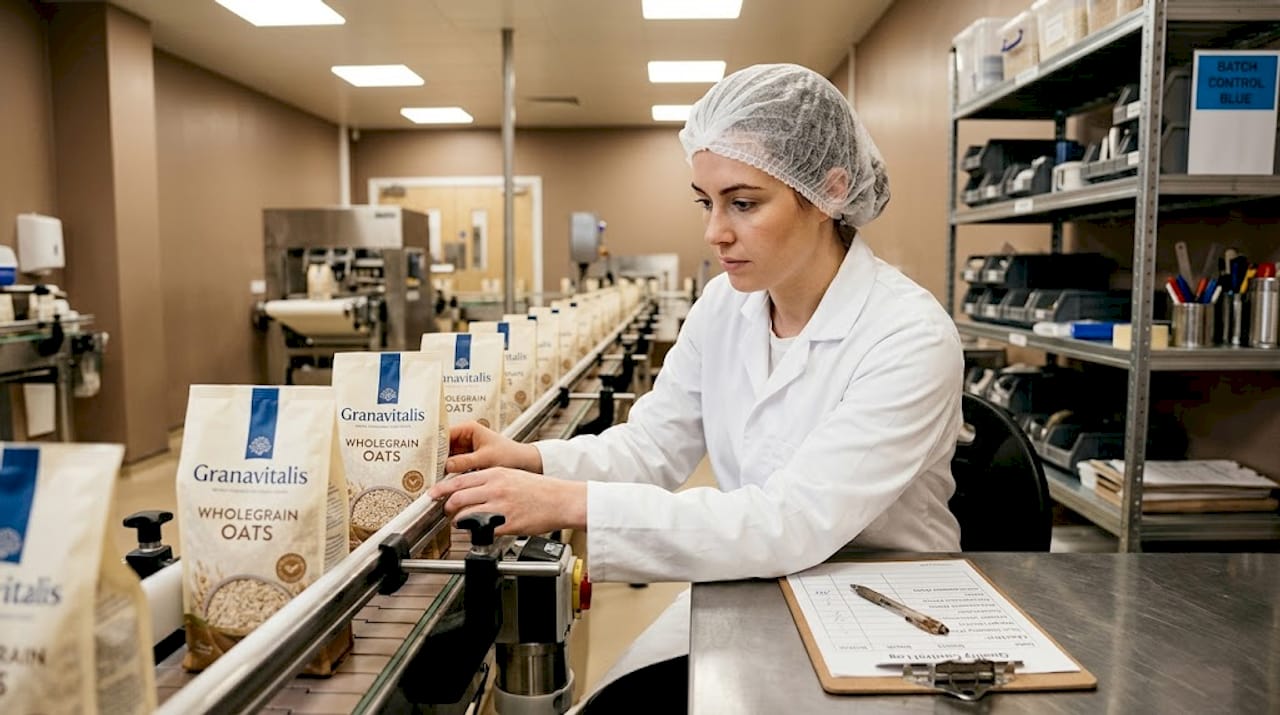
The issue runs deeper than home cooking. Industrial thermal processing of fortified foods can cause matrix denaturation, where proteins unfold and re-form around added micronutrients, effectively locking them in. A food can then pass a label retention test but still fail to deliver its nutrients during digestion.
This is why non-thermal processing technologies such as high-pressure processing, pulsed electric fields, and ultrasound are attracting serious attention from food scientists. They reduce oxidative and thermal degradation while preserving the bioactive integrity of sensitive nutrients. These methods are increasingly used in premium food production, and they represent a measurable advance in nutrient retention in food.
Pro Tip: When cooking at home, steaming rather than boiling vegetables preserves significantly more water-soluble vitamins. Shorter cooking times and lower temperatures are your greatest allies for nutrient retention.
From a practical standpoint, here is where nutrient loss commonly occurs:
- Prolonged boiling of vegetables: substantial losses of vitamin C, folate, and B vitamins.
- High-temperature roasting or frying: fat-soluble vitamin degradation and oxidation of polyunsaturated fats.
- Extended storage under light or heat: vitamin A, riboflavin, and vitamin C all degrade faster when food is stored improperly.
- Milling and refining grains: strips outer bran and germ layers, removing the very layers richest in B vitamins, iron, and magnesium.
Reading about unprocessed grains reveals just how much nutrition disappears during conventional grain refinement, reinforcing why whole grain and minimally processed options hold a genuine nutritional advantage.
Food matrix and meal context
Here is something most nutrition conversations skip: two foods with identical nutrient profiles on paper can deliver wildly different outcomes in the body, simply because of the food matrix and what else you eat at the same meal.
Traditional food systems acted as nutrient optimisation architectures, using fermentation, soaking, and deliberate food pairing to enhance mineral solubility and vitamin absorption long before the science was understood. They worked because the food matrix matters enormously.
The table below shows how meal context shifts nutrient delivery in practice:
| Nutrient | Absorption boosted by | Absorption reduced by |
|---|---|---|
| Non-heme iron | Vitamin C at the same meal | Tea, coffee, calcium |
| Fat-soluble vitamins (A, D, E, K) | Dietary fat in the meal | Very low-fat meals |
| Calcium | Vitamin D, moderate intake | High phytate foods, excess zinc |
| Zinc | Animal protein | High phytate grains, legumes alone |
| Magnesium | Adequate gut health | Excess calcium, alcohol |
Phytates and tannins are two of the most common absorption inhibitors in plant-based diets, and they are naturally present in wholegrains, legumes, and tea. This does not mean those foods are nutritionally poor. It means the meal level, what surrounds them, matters as much as the food itself.
Vitamin C enhancing non-heme iron absorption is one of the most clinically studied examples of food pairing for iron. A spinach salad with a squeeze of lemon, or lentils with tomatoes, activates meaningfully more iron than either food eaten alone. For anyone following a plant-focused diet, this kind of understanding is not academic. It is practical.
Advances in nutrient delivery technology
Even with ideal whole foods and thoughtful meal construction, certain nutrients remain difficult to deliver reliably. Solubility, pH sensitivity, and degradation in the digestive tract create genuine challenges for both fortified foods and supplements. This is where nutrient delivery science has made notable advances.
Nanoparticle-based vitamin delivery systems improve stability, bioavailability, and targeted release by increasing intestinal solubilisation and reducing degradation before nutrients reach their absorption sites. Encapsulation in lipid nanoparticles, hydrogels, or protein-based carriers protects heat-sensitive and water-sensitive vitamins from the hostile environment of digestion.
The complexity goes further. Vitamin B12 requires intrinsic factor for absorption; vitamin D requires activation post-absorption. These physiological steps mean that even a well-formulated supplement can underdeliver if the delivery mechanism does not account for the body’s own uptake pathways.
There is, however, a known tension at the centre of this science. Protecting nutrients improves stability but can reduce bioavailability. This is known in research circles as the “Banana Curve” trade-off: the more you protect a nutrient against degradation, the harder it can be for the body to release and absorb it. Hierarchical carrier designs, structures that protect nutrients during transit and then allow controlled release at the right point in the gut, represent the current frontier of solving this problem.
For health-conscious consumers, the practical implication is clear: not all supplements or fortified products are equivalent, and measuring nutrient integrity requires assessing actual uptake and utilisation, not just label retention.
How to maximise nutrient integrity daily
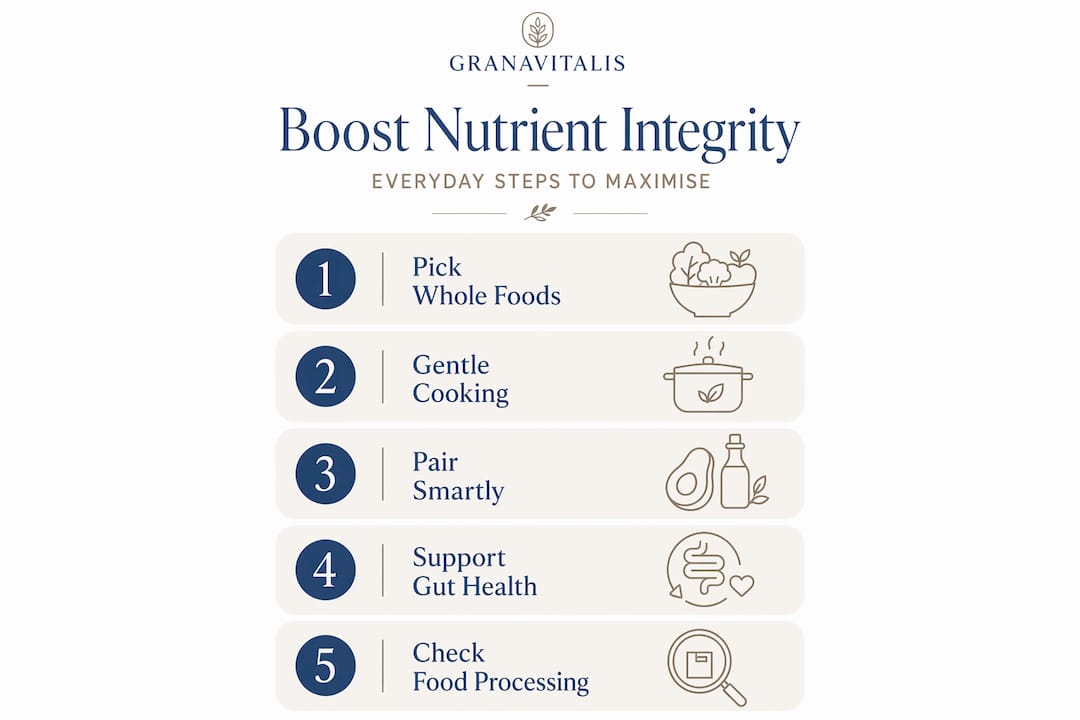
Knowing the science is only useful if it changes what you do. Here is a structured approach to preserving and maximising nutrient integrity through your everyday choices:
- Choose minimally processed whole foods as your base. The closer a food is to its natural form, the more of its original nutrient matrix remains intact. Ancient grains, raw nuts, seeds, and whole legumes retain synergistic compounds that refined alternatives cannot replicate.
- Cook with nutrient retention in mind. Steam rather than boil. Roast at lower temperatures for shorter times. Use cooking water from vegetables in soups and sauces to recover leached water-soluble nutrients.
- Pair foods deliberately. Add a vitamin C source whenever eating plant-based iron. Include healthy fats when consuming fat-soluble vitamins. Explore micronutrients in ancient grains to understand which whole grains offer both nutrient density and favourable absorption profiles.
- Be strategic about competing minerals. Calcium and iron compete for the same absorption pathways. Avoid high doses of both simultaneously, especially from supplements.
- Select fortified foods and supplements with proven delivery mechanisms. A supplement using poorly soluble forms, or a fortified food that has been heavily heat-processed, may look impressive on paper and still underdeliver in practice.
Pro Tip: Soaking nuts, seeds, and legumes overnight reduces phytate content, directly improving mineral absorption. It is one of the oldest food preparation techniques in existence, and the science fully supports it.
Gut health deserves a mention here too. An intact intestinal lining is the final gatekeeper of nutrient absorption. Poor gut health, inflammation, or intestinal damage can reduce bioavailability across multiple nutrients simultaneously, making dietary quality and gut support genuinely intertwined goals.
My take: why labels have always told only half the story
I have spent years looking at how people make food decisions, and the same pattern repeats: they trust the number on the label and assume the job is done. What I have learned is that nutrient integrity explained properly should make the label feel like chapter one of a much longer book, not the conclusion.
What strikes me most is how the oldest food preparation practices, fermentation, soaking, whole-grain milling, food pairing, quietly solved nutrient delivery problems that food scientists are still formalising today. Traditional diets were not sophisticated by accident. They were refined over generations precisely because they worked on the level of real absorption and health outcomes, not just nutrient presence.
The emerging delivery technologies are genuinely exciting. Nanocarriers and encapsulation offer real promise for nutrients that are genuinely difficult to absorb. But I would caution against letting supplement innovation become a reason to overlook whole food synergy. The food matrix that surrounds a nutrient in a whole almond or a fermented grain is still doing things that no engineered carrier fully replicates.
My practical recommendation: build your foundation on minimally processed, thoughtfully sourced whole foods. Use targeted supplements where there is a genuine gap and a sound delivery mechanism behind the product. Question any fortified food that has been heavily heat-processed without evidence of bioavailability-focused formulation. The label is not the destination. Absorption is.
— Jarrod
Nourish smarter with Granavitalis
At Granavitalis, nutrient integrity is not a marketing phrase. It is the reason every product is sourced and processed the way it is. From raw nut butters to ancient grain flours, the commitment to minimal processing is a direct commitment to preserving the nutritional value that reaches your body, not just what appears on the label.

If you want to experience what genuine nutrient integrity looks like in a product, the Raw Organic Pecan Butter from RAWGORILLA is a strong starting point. Cold-processed and organically sourced, it preserves the fat-soluble vitamins and mineral content that thermal processing would compromise. For those who want to explore further, the organic nut and seed butter selection gives you a range of minimally processed, nutrient-retaining options to build your diet around. Real food, real delivery.
FAQ
What is nutrient integrity in food?
Nutrient integrity refers to the combined measure of a food’s nutrient content, how well those nutrients survive processing and storage, and their ultimate bioavailability after digestion. It goes well beyond what is stated on a nutrition label.
Why does bioavailability matter more than nutrient content?
Bioavailability determines how much of a nutrient your tissues actually receive and use. A food can be rich in a nutrient on paper but deliver very little if the food matrix, cooking method, or meal context reduces absorption.
How does cooking affect nutrient integrity?
Heat degrades water-soluble vitamins such as vitamin C, folate, and thiamin through oxidation and leaching. Thermal processing can also alter the food matrix in ways that trap micronutrients, reducing their release during digestion.
Which food pairings improve nutrient absorption?
Combining vitamin C with plant-based iron sources significantly improves non-heme iron absorption. Eating fat-soluble vitamins (A, D, E, K) alongside dietary fat is equally important, as fat is required for their absorption into the bloodstream.
Are supplements always a reliable source of nutrients?
Not necessarily. Measuring nutrient delivery in supplements requires assessing actual uptake, not just label content. Poorly soluble forms, inadequate delivery mechanisms, and competing nutrients can all reduce how much of a supplement you genuinely absorb.