
Why ingredient transparency matters for UK wholefood shoppers
TL;DR:
- Many UK consumers are highly concerned about ingredient safety and seek greater transparency in food and personal care labels. Verifiable details like provenance, processing methods, and batch data help ensure health safety, nutrient integrity, and ethical sourcing, but most products lack comprehensive disclosures. Brands that publish clear, specific proof foster trust and demonstrate genuine commitment to transparency and quality.
A YouGov survey found that many British adults are concerned about the safety of ingredients in food and personal care products, yet a significant portion feel too little is being done about it. Ingredient transparency matters because it lets you verify what you are eating, where it came from, and how it was made — reducing allergen risk, nutritional guesswork, and ethical uncertainty in a single label check. The Food Standards Agency (FSA) sets the baseline rules for UK food labelling, but baseline is not the same as trustworthy. Brands like Granavitalis go further by publishing provenance details, processing methods, and batch traceability.
At a glance, transparent labelling gives you:
- Confidence that allergens are declared and emphasised correctly
- Assurance that nutrient claims reflect minimal, verifiable processing
- Proof of ethical sourcing through named suppliers or third-party certifications
- A clear route to request batch-level safety data
Table of Contents
- Why ingredient transparency matters for your health and trust
- What transparent labelling actually looks like on UK products
- What proof should a brand actually publish?
- How transparency protects your nutrition and reduces safety risk
- How to spot greenwash and misleading ingredient claims
- Questions to ask a brand before you buy
- How Granavitalis puts transparency into practice
- Key takeaways
- The case for transparency goes deeper than labelling law
- Granavitalis: wholefood nutrition with nothing to hide
- Useful sources
Why ingredient transparency matters for your health and trust
The case for transparency is not abstract. 56% of UK adults say manufacturers should provide greater clarity about ingredients and sourcing, and NSF research found 70% of consumers want processing information on labels, with 65% wanting more detailed allergen disclosures. Those numbers reflect three distinct concerns.
Health and allergen safety. Undeclared or poorly emphasised allergens are a direct physical risk. UK law requires the 14 major allergens to be listed and visually emphasised, but vague ingredient names can still obscure what is actually present.
Nutrient integrity. Processing degrades micronutrients. A label that discloses cold-pressing or stone-milling tells you the method preserved those nutrients; a label that says nothing about processing tells you nothing about what survived it.
Ethics and provenance. Knowing the country of origin and supplier name lets you judge labour practices, environmental impact, and supply-chain honesty. Sustainably sourced ingredients are only verifiable when the supply chain is named.
| Statistic | Source |
|---|---|
| 61% of Brits concerned about ingredient safety | YouGov |
| 56% want greater transparency on ingredients and sourcing | YouGov / FoodManufacture |
| 70% want processing information on labels | NSF |
| 65% want more detailed allergen information | NSF |
| 32% would pay a 9–12% premium for transparent labelling | NSF |
“Transparency and trust are more important than ever. Consumers want to know not just what is in their food, but how it was made and where it came from.” — Tetra Pak Index on transparency and trust
What transparent labelling actually looks like on UK products
On-pack information is rated as a trustworthy source of food safety data by 42% of UK consumers, placing it fourth overall. That trust is only warranted when the label contains specific, verifiable details. Here is what to check:
- Full ingredient list in descending order of weight, with plain-language names
- QUID percentages where a named ingredient is featured or emphasised
- Country of origin for the primary ingredient, not just the country of manufacture
- Processing notes such as “cold-pressed”, “stone-milled”, or “raw” with no added heat
- Allergens in bold or contrasting type within the ingredient list
- Named supplier or farm rather than a generic category (“European hazelnuts” vs “Hazelnuts from Piedmont, Italy”)
- Batch code printed on pack, enabling you to request a Certificate of Analysis (CoA)
- Contactable customer service with a real address or email, not just a web form
The difference between vague and specific is stark. “Contains natural flavours” tells you almost nothing; “contains 2% cold-pressed orange oil from Sicilian oranges” tells you the ingredient, the quantity, the method, and the origin. If you want to understand what natural flavouring actually means under UK rules, the distinction matters more than most shoppers realise.
Pro Tip: QR codes on packaging can link to batch-specific CoAs, but only if the brand has set this up properly. Scan the code before you buy and check whether it leads to a real document with a lot number, test method, and results — or just a marketing page. If it is the latter, email the brand directly and quote the batch code.
What proof should a brand actually publish?
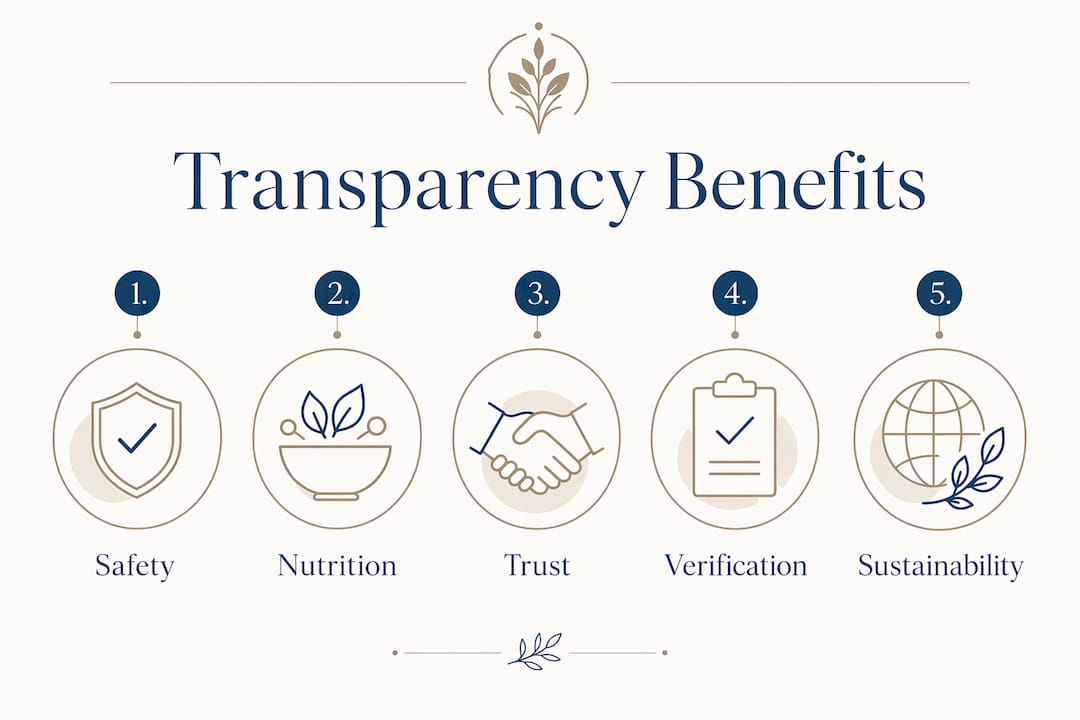
Reliable proof is public, specific, and verifiable. Marketing language is not proof. GS1 UK traceability standards shift claims from “may contain” to verifiable provenance statements tied to a specific lot and supplier. Here is how each trust signal works in practice:
| Trust signal | What it proves | How to verify |
|---|---|---|
| Soil Association organic certification | Farming and processing meet organic standards | Check the certificate number on the Soil Association website |
| Fairtrade certification | Minimum price and social premium paid to producers | Verify via the Fairtrade Foundation’s product database |
| Certificate of Analysis (CoA) | Contaminant and nutrient test results for a specific batch | Request from the brand quoting your batch/lot number |
| Third-party lab results | Independent testing beyond the brand’s own claims | Ask for the lab name and accreditation number |
| GS1 traceability data | Supplier, lot, and processing history linked to a product | Scan the GS1 barcode or ask the brand for their traceability statement |
| Named supplier or farm | Confirms origin claim is specific, not generic | Cross-reference with the supplier’s own public information |
One important caveat: a certification covers only the scope listed on the certificate. A Soil Association certificate for a farm does not automatically cover every product made with that farm’s output. A CoA is batch-specific, so last year’s results do not confirm this year’s batch. Traceability statements vary enormously in depth, from a single country name to a full supply-chain audit.
How transparency protects your nutrition and reduces safety risk
Transparency preserves nutrient integrity and reduces contamination risk by making production and testing visible. When a label confirms cold-pressing, you know the oil was not exposed to the high temperatures that degrade polyphenols and omega fatty acids. When a CoA lists heavy metal results for a specific batch of nut butter, you can see whether lead or cadmium levels fall within safe limits rather than trusting a general assurance.
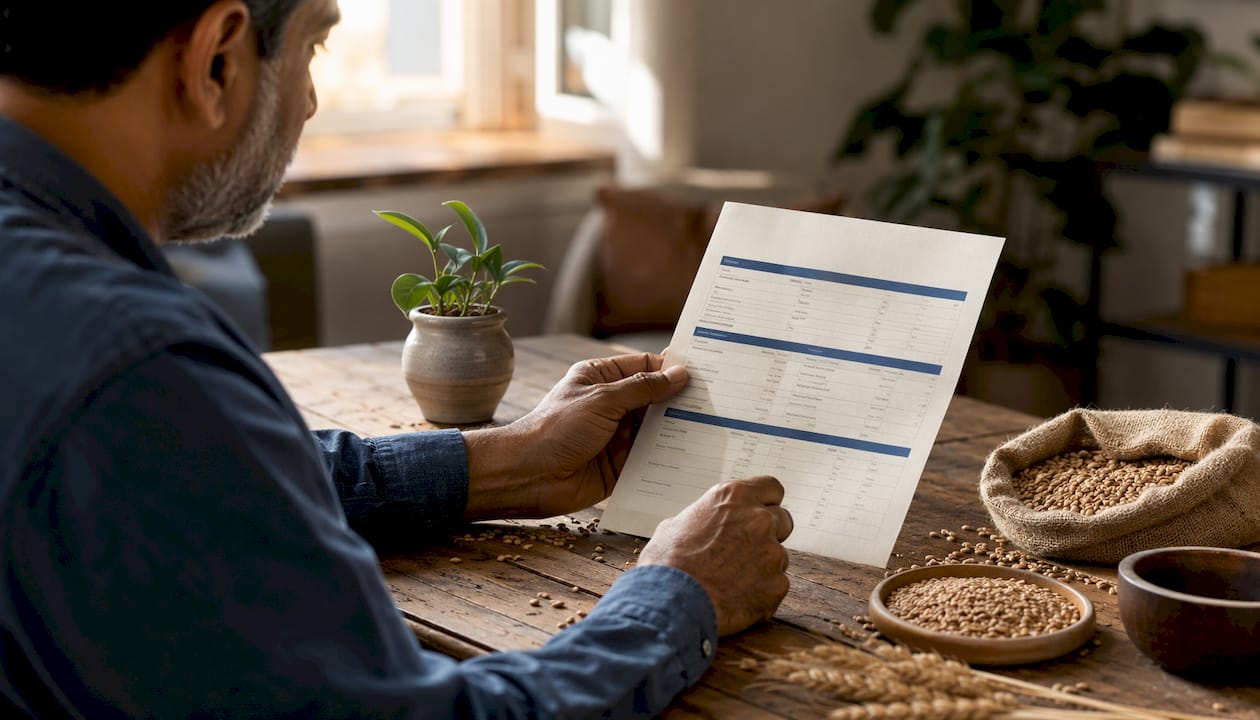
Minimal processing is not just a marketing phrase. Nutrient integrity depends directly on how a food is handled from harvest to packaging. Stone-milling whole grains retains the bran and germ; roller-milling strips them. The label either confirms the method or it does not.
Practical impacts for shoppers:
- Clearer dietary management when ingredient names are specific and unambiguous
- Fewer surprise allergens when the 14 major allergens are correctly emphasised
- Better nutrient choices when processing methods are disclosed (cold-pressed, raw, stone-milled)
- Reduced contamination risk when batch CoAs are available on request
How to spot greenwash and misleading ingredient claims
Many packaging terms are pure marketing unless backed by verifiable proof. “Natural”, “wholesome”, “plant-based blend”, and “clean” have no legal definition in UK food law. A product can carry all four and still contain heavily refined ingredients from undisclosed origins.
Common red flags include: vague origin statements (“sourced from nature”), no batch code on pack, inconsistent country-of-origin claims across the website and label, no named supplier for the primary ingredient, and sustainability claims without a certification number you can check. Understanding what clean ingredients actually means helps you separate genuine disclosure from well-designed packaging.
“Falsely describing, advertising or presenting food is an offence. Everyone has the right to know that the food they have bought matches the description given on the label.” — GOV.UK, Packaging and labelling guidance
When a claim looks unverifiable, ask the brand directly. If they cannot name the supplier, provide a CoA, or point to a certification number, that is your answer.
Questions to ask a brand before you buy
Asking a few precise questions separates genuinely transparent brands from those with good packaging design. Use these:
- “Can you provide the batch Certificate of Analysis for this lot number?”
- “Which farm or supplier provided the primary ingredient?”
- “What processing method was used, and at what temperature?”
- “Is the product third-party certified? Can I see the certificate number?”
- “Where is the country of origin for the primary ingredient?”
- “Does your traceability system meet GS1 standards or equivalent?”
Pro Tip: Frame your request as “batch information for quality assurance” rather than a challenge. Customer service teams respond faster when the question sounds routine rather than accusatory. Most genuinely transparent brands will answer within one working day.
How Granavitalis puts transparency into practice
Granavitalis publishes supplier naming, processing disclosures, and batch traceability across its wholefood lines. The Raw Organic Pecan Butter lists its origin, confirms raw processing with no added heat, and carries organic certification. The Organic Nut & Seed Butter Selection Box lets you compare ingredient lists and provenance across multiple products in a single purchase, making it straightforward to see how the same transparency standards apply consistently. The Nibbed Hazel Nuts exemplify single-ingredient simplicity: one ingredient, named origin, no additives.
Customers can request CoA documents or batch information directly via the Granavitalis website. The brand’s approach to clean nutrition reflects the same principle: fewer ingredients, all named, all traceable.
Key takeaways
Ingredient transparency gives you the evidence to make genuinely informed food choices, covering health safety, nutrient integrity, and ethical provenance in a single label check.
| Point | Details |
|---|---|
| Check these label signals | Look for named origin, processing method, batch code, and emphasised allergens before buying. |
| Demand verifiable proof | Certifications and CoAs beat marketing claims; always ask for the certificate number or lot-specific test results. |
| Know the red flags | Vague terms like “natural” or “plant-based blend” with no origin or certification are unverifiable marketing. |
| Ask two key questions | “Can you provide the batch CoA?” and “Which supplier provided the primary ingredient?” quickly reveal a brand’s real transparency. |
| Granavitalis as a benchmark | Granavitalis publishes provenance, processing methods, and organic certification across its wholefood range, with CoAs available on request. |
The case for transparency goes deeper than labelling law
Most commentary on ingredient transparency stops at compliance: does the label meet FSA requirements? That framing misses the point. Compliance is the floor, not the standard. A product can be fully compliant and still tell you almost nothing useful about what you are eating.
The more interesting question is what transparency reveals about a brand’s relationship with its own supply chain. A business that cannot name its primary ingredient supplier probably does not have a close relationship with that supplier. A brand that publishes batch CoAs is one that has actually tested the batch. These are not just signals for consumers; they are signals about how seriously a company takes the food it makes.
There is also a nutritional argument that rarely gets made explicitly. Processing disclosures matter not because “cold-pressed” sounds premium, but because the method genuinely affects what ends up in your body. A wholefood brand that discloses its processing is making a falsifiable claim. One that does not is asking you to take its word for it.
Granavitalis: wholefood nutrition with nothing to hide
If you have spent time reading labels and still cannot get a straight answer from a brand about where its ingredients come from, Granavitalis is worth your attention. Every product in the range lists its origin, confirms its processing method, and carries third-party organic certification where applicable. There are no proprietary blends, no vague flavour descriptors, and no supplier anonymity.
The Raw Organic Pecan Butter is a good starting point: single-origin, raw-processed, organic certified, with batch information available on request. Browse the full wholefood range at granavitalis.com and see the ingredient lists for yourself.
Useful sources
- YouGov: Most Britons are concerned about harmful ingredients — UK consumer survey data on ingredient safety concern and demand for greater transparency.
- FoodManufacture: Almost half of British adults avoid products over ingredient concerns — Reporting on YouGov findings with detail on labelling expectations.
- NSF research: Brits demand greater clarity in food labelling — Quantifies consumer demand for processing information, allergen detail, and willingness to pay a premium.
- Tetra Pak Index: Transparency and trust — Industry index on consumer trust in on-pack information and connected packaging.
- GS1 UK: Transparency, contamination and recall report — Explains how traceability standards move claims from plausible to verifiable.
- Food Standards Agency: Food shopping and labelling research — FSA consumer tracker data on what information shoppers check and how they judge food quality.
- GOV.UK: Food labelling — what you must show — Official UK government guidance on mandatory labelling requirements. Check the FSA website for current allergen and labelling rules applicable to your situation.
This article is general information for UK consumers and does not constitute legal, medical, or dietary advice. Verify current labelling requirements with the Food Standards Agency or a qualified professional for your specific circumstances.