
Wholefood nutrition for longevity: eat well, live longer
TL;DR:
- Not all plant-based diets are equally beneficial; food quality determines health outcomes beyond food categories. Eating whole, minimally processed foods like grains, legumes, vegetables, fruits, nuts, and seeds supports longevity by activating molecular pathways that slow aging. A balanced, flexible approach emphasizing food quality enhances adherence and long-term health benefits.
Not all plant-based diets are created equal, and the evidence is now clear enough to say so plainly. All-cause mortality drops by 16% among UK middle-aged adults who follow a healthful plant-based diet, yet many people eating no meat at all see no such benefit. The difference comes down to food quality, not food category. Wholefood nutrition for longevity is not about eliminating animal products or counting macros obsessively. It is about building your diet around foods that have been nourishing humans for thousands of years: whole grains, legumes, vegetables, fruits, nuts, and seeds in their least processed forms.
Table of Contents
- Wholefood nutrition for longevity: quality, not just category
- The role of ancient grains and fibre in supporting gut health and longevity
- How wholefood plant-based diets engage molecular pathways to slow ageing
- Balancing plant-based nutrition for healthy ageing and longevity in the UK
- Evidence-based strategies to implement wholefood nutrition for longevity
- Rethinking the longevity diet: embracing quality and balance over restriction
- Enhance your longevity journey with Granavitalis wholefood products
- Frequently asked questions
Key Takeaways
| Point | Details |
|---|---|
| Quality matters in plant-based diets | Choosing whole, minimally processed plant foods over refined or sugary options is key to longevity benefits. |
| Ancient grains boost gut health | High fibre and polyphenols from ancient grains nourish beneficial microbes and reduce inflammation. |
| Molecular pathways slow ageing | Wholefood nutrition activates cellular repair pathways that decelerate biological ageing. |
| Balanced diets suit healthy ageing | Modest inclusion of animal products may help older adults meet nutrient needs and preserve function. |
| Practical steps improve adherence | Gradual diet shifts with mindful planning enhance sustainability and maximise longevity outcomes. |
Wholefood nutrition for longevity: quality, not just category
Building on that distinction, it is worth understanding precisely what separates a diet that genuinely extends healthy life from one that merely avoids meat.
A healthful plant-based diet concentrates on foods that retain their nutritional structure: fibre, polyphenols, vitamins, and minerals are largely intact. An unhealthful plant-based diet, by contrast, leans heavily on refined grains, sugary drinks, processed snacks, and plant-based convenience foods with long ingredient lists.
The benefits of healthful plant-based diets are well documented, and the UK Biobank cohort study published in 2026 makes the split vivid. Healthful plant-based diets lower all-cause mortality by 16% and reduce cardiovascular disease risk meaningfully, while unhealthful plant-based dietary patterns actually increase that risk. The protection held even for participants with a high genetic predisposition to cardiovascular disease, which signals that diet quality operates on pathways beyond what genes alone determine.
What a healthful plant-based diet typically includes:
- Whole grains: oats, barley, spelt, einkorn, rye, brown rice
- Legumes: lentils, chickpeas, black beans, edamame
- Vegetables across a wide colour range, eaten with minimal processing
- Fruits, particularly those with high polyphenol content such as berries and dark cherries
- Nuts and seeds in their natural or lightly prepared state
- Healthy fats from sources like olive oil and avocado
What it actively limits:
- Refined flour products and white rice
- Sugary drinks, including fruit juice consumed in large quantities
- Ultra-processed plant-based meat substitutes with additives
- Packaged snacks even when labelled “vegan”
“Diet quality within plant-based patterns determines longevity outcomes far more than the simple absence of meat. The EAT-Lancet diet findings confirm that nutrient density, not dietary label, drives life expectancy gains.”
The implication for anyone serious about healthy eating for lifespan is direct: focus on what you are adding, not only what you are removing.
The role of ancient grains and fibre in supporting gut health and longevity
Gut health sits at the centre of the longevity conversation, and fibre is its primary currency. Ancient grains and gut health share a natural relationship that modern refined diets have largely severed.

Dietary fibre feeds beneficial bacteria in the large intestine, which produce short-chain fatty acids (SCFAs) such as butyrate. SCFAs reduce systemic inflammation, strengthen the gut barrier, and regulate immune function. These effects ripple outward into metabolic health, blood glucose stability, and reduced risk of the chronic conditions most associated with accelerated ageing. Aiming for 25 to 30g of daily fibre, including 6 to 8g of soluble fibre from oats and barley, nourishes exactly these bacteria and supports the anti-inflammatory environment that longevity depends upon.
Ancient grains outperform their modern counterparts in fibre content partly because they have not been subjected to decades of industrial breeding for yield over nutrition. The table below illustrates this clearly.
| Grain | Total fibre per 100g (dry) | Soluble fibre (approx.) |
|---|---|---|
| Einkorn wheat | 14g | 3g |
| Spelt | 11g | 2.5g |
| Barley | 17g | 6g |
| Oats | 10g | 4g |
| Modern white wheat | 3g | 0.5g |
| White rice | 1.3g | 0.2g |
The contrast with white wheat and rice is stark. Swapping even one daily refined grain serving for an ancient grain equivalent meaningfully shifts your fibre intake over the course of a week.
Top ancient grains to prioritise for longevity benefits:
- Barley: the highest soluble fibre content of any common grain, excellent for blood glucose control
- Oats: beta-glucan content specifically linked to cholesterol reduction and gut microbiome support
- Spelt: higher protein and mineral content than modern wheat, with good digestibility
- Einkorn: rich in lutein and carotenoids alongside its fibre, supporting eye and cellular health
- Teff: a calcium and iron-rich grain from Ethiopia, naturally gluten-free
Explore how ancient grains form a natural partnership with your gut to understand the deeper mechanisms at work.
Pro Tip: If your current fibre intake is low, add no more than 5g of additional fibre per week. Moving too quickly causes bloating and discomfort that puts people off entirely. Pair each increase with an extra 300 to 400ml of water daily to keep digestion comfortable.
How wholefood plant-based diets engage molecular pathways to slow ageing
Having established how wholefoods support gut and metabolic health, it is worth going a level deeper into what is happening inside your cells when you eat this way consistently.
The science of biological ageing increasingly points to four interacting pathways: AMPK (AMP-activated protein kinase), sirtuins, mTOR (mechanistic target of rapamycin), and autophagy. Plant-based diets activate AMPK and sirtuin pathways through caloric moderation and fibre, reduce mTOR signalling, stimulate autophagy, and enhance cellular resilience against the hallmarks of ageing. In plain terms: these pathways govern how efficiently your body repairs damaged cells, clears cellular debris, and maintains metabolic balance.
Here is how specific dietary components trigger each step:
- Fibre fermentation activates AMPK. When gut bacteria ferment dietary fibre into SCFAs, these compounds signal AMPK to switch the body from energy storage mode to energy efficiency mode, a state associated with longevity in virtually every organism studied.
- Polyphenols activate sirtuins. Compounds like resveratrol in grapes, quercetin in onions and apples, and anthocyanins in berries directly stimulate sirtuin proteins, which regulate DNA repair and gene expression related to ageing.
- Caloric moderation suppresses mTOR. Longevity diets consistently feature moderate caloric intake rather than excess. Lower mTOR activity reduces the rate at which cells grow and divide unchecked, linked to both cancer risk and accelerated ageing.
- All three effects together stimulate autophagy. Autophagy is the cellular equivalent of a deep clean: damaged proteins and organelles are broken down and recycled. It declines with age and poor diet, and wholefood nutrition is one of the few non-pharmaceutical ways to support it.
“The nutrient-sensing adaptations seen in centenarian populations worldwide share a common thread: diets low in ultra-processed foods, high in plant diversity, and calorically moderate. The molecular effects on cellular ageing are not theoretical. They are measurable in blood biomarkers within weeks of dietary change.”
This is why superfoods for health matter less than dietary patterns. A single superfood cannot activate these pathways consistently. A sustained, varied wholefood diet can.
Balancing plant-based nutrition for healthy ageing and longevity in the UK
Translating the molecular science into a realistic daily approach requires addressing some practical realities, particularly for UK adults over 50 whose nutritional needs shift considerably.
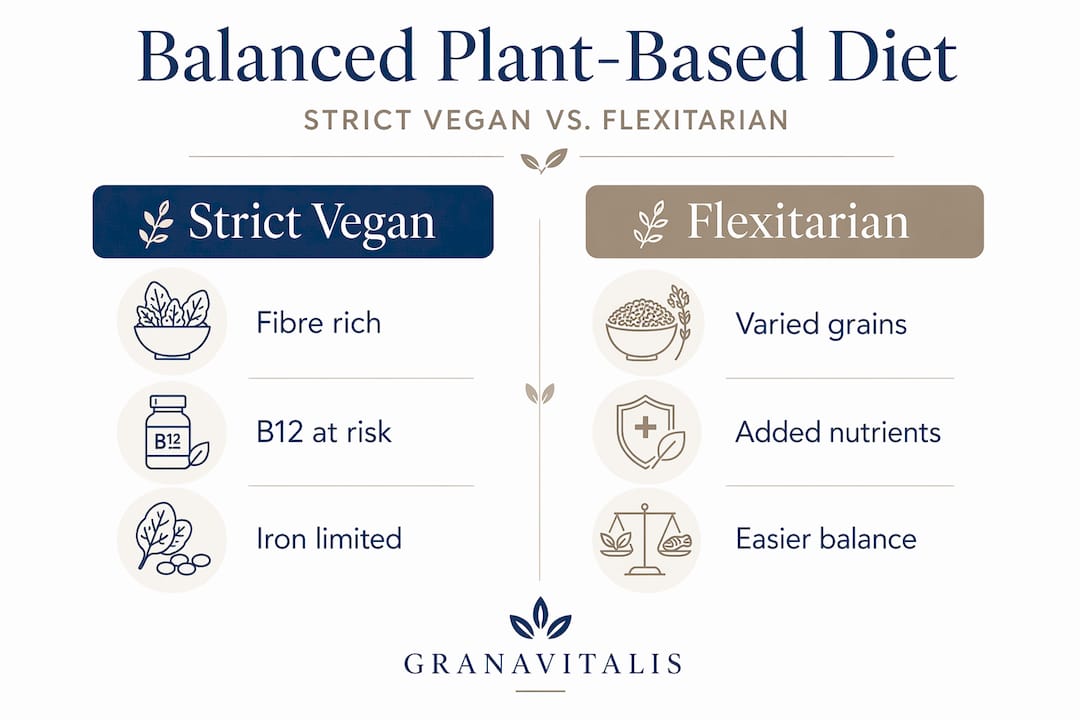
Strict vegan diets present a genuine risk if poorly planned. Older adults on strict vegan diets risk undernutrition and reduced longevity unless carefully supplemented; modest inclusion of fish, dairy, and eggs supports muscle and bone health to a degree that matches the longevity outcomes of meat-eaters. This is not a case against plant-centred eating. It is a case for pragmatism over ideology.
Key nutrients to monitor actively:
- Protein: older adults need 1.0 to 1.2g per kg of body weight daily to preserve muscle mass. Legumes, ancient grains, and seeds each contribute, but variety is essential.
- Calcium: dairy or fortified plant milks, tofu set with calcium sulphate, and tahini are reliable sources.
- Vitamin B12: not reliably available from plant foods. Supplementation is non-negotiable for anyone avoiding animal products.
- Vitamin D: the UK’s latitude means most adults are deficient from October to March regardless of diet. A daily 10 microgram supplement is recommended by the NHS for the general population.
The micronutrients in ancient grains such as magnesium, zinc, and iron make them valuable allies here, though absorption can be improved by soaking or fermenting grains before cooking.
| Nutrient | Strict vegan risk | Flexitarian wholefood approach |
|---|---|---|
| Vitamin B12 | High deficiency risk | Lower risk if eggs or dairy included |
| Calcium | Moderate risk | Well managed with dairy or oily fish |
| Omega-3 | High risk | Oily fish 1 to 2 times weekly resolves this |
| Protein adequacy | Requires careful planning | Easier to achieve with varied sources |
| Iron (haem) | Low absorption from plants | Modest meat or fish significantly improves status |
Pro Tip: If you follow a predominantly plant-based diet, consider a full blood panel every six to twelve months covering B12, vitamin D, ferritin, and folate. Many UK GP surgeries will arrange this if you explain your dietary pattern. Catching deficiencies early is far easier than reversing them.
Explore the full picture of plant-based diet balance for a nuanced guide covering both risks and rewards.
Evidence-based strategies to implement wholefood nutrition for longevity
The science is compelling. The harder question is always: how do you actually build these habits into a busy UK life?
Whole grain fibre intake significantly lowers all-cause and cardiovascular mortality, partly by reducing inflammation, confirming that consistency with fibre-rich wholefoods is one of the most evidence-backed choices you can make for your lifespan.
A stepwise approach to increasing wholefood plant nutrition:
- Replace one refined grain per day. Swap white toast for wholegrain rye, or white rice for spelt. This single change adds fibre, B vitamins, and minerals with minimal disruption to your routine.
- Add a legume serving three times weekly. Lentil soup, hummus with oatcakes, or black beans in a grain bowl. Legumes are the most consistent dietary feature of long-lived populations worldwide.
- Build a daily vegetable base. Aim for five portions minimum, spanning at least three different colours to capture a range of polyphenols and antioxidants.
- Introduce an ancient grain flour. Baking or cooking with einkorn, teff, or spelt flour is one of the easiest ways to choose ancient grains without overhauling your meals entirely.
- Add nuts and seeds to breakfast. A tablespoon of ground flaxseed or a small handful of walnuts provides omega-3 fatty acids and polyphenols with almost no preparation.
Common pitfalls and how to avoid them:
- Eating too many plant-based processed foods labelled as “healthy”
- Under-consuming protein when reducing animal products
- Jumping to high-fibre intake too quickly, causing digestive discomfort
- Relying on supplements instead of food variety as a first strategy
Understanding how ancient grains digest helps you choose and prepare them in ways your gut will welcome from the outset.
Pro Tip: Pair fibre-rich foods with polyphenol sources at the same meal. Think barley salad with blueberries, or oat porridge topped with walnut pieces and a handful of pomegranate seeds. The polyphenols act as prebiotics alongside the fibre, amplifying the microbiome benefits of both.
Rethinking the longevity diet: embracing quality and balance over restriction
Here is an observation that does not get said often enough: the loudest voices in the longevity diet conversation frequently oversimplify. The message “go plant-based and live longer” is appealing, but it is only half true and sometimes actively misleading.
We have seen, both in the research and in how people actually eat over years rather than weeks, that rigid restriction tends to fail in the long run. Particularly in older adults, where appetite naturally declines and the social dimensions of food become increasingly important, a diet that demands perfection creates stress, nutritional gaps, and often quiet abandonment.
What the evidence from centenarian populations actually shows is not extreme restriction but extraordinary quality. The Sardinians eating pecorino cheese. The Okinawans including pork on special occasions. The Ikarians drinking local wine with meals rich in legumes and wild greens. None of these patterns are strictly vegan. All of them are wholefood-centred, low in ultra-processed food, and culturally sustainable.
Explore the balanced plant-based nutrition insights we have gathered to understand why flexibility consistently outperforms rigidity in long-term dietary adherence.
“The uncomfortable truth about longevity diets is that the people who live the longest rarely think of their eating as a ‘diet’ at all. They eat real food, mostly plants, in amounts that satisfy rather than exceed, and they do so within a social and cultural context that makes the pattern genuinely enjoyable.”
For UK adults navigating a wholefood approach to longevity, the takeaway is this: prioritise quality and variety above all. If a modest portion of oily fish, a free-range egg, or a piece of good cheese helps you maintain a diet that is 80 to 90% wholefood and plant-rich, that is a significantly better outcome than a theoretically perfect diet you abandon by February. The natural diet for vitality is the one you actually eat, day after day, with ingredients you recognise and enjoy.
Enhance your longevity journey with Granavitalis wholefood products
At Granavitalis, everything we source aligns with what the research consistently confirms: nutrient-dense, minimally processed wholefoods are the foundation of a long, vital life. We do not offer shortcuts. We offer the real thing.
Our immune booster superfood bundle brings together botanicals, ancient grain products, and nutrient-rich seeds that support gut health, immunity, and sustained energy throughout the day. For those looking to add healthy fats and polyphenols in one step, our organic nut and seed butters deliver quality without additives or compromise.
Every product we carry connects back to the principles in this article: fibre, polyphenols, whole grains, and clean protein sources that your body knows how to use. Explore the range and find what fits your daily routine.
Frequently asked questions
What defines a healthful plant-based diet for longevity?
A healthful plant-based diet emphasises whole grains, fruits, vegetables, legumes, and nuts while limiting processed foods, refined grains, and sugary drinks. Healthful plant-based patterns reduce all-cause mortality by 16% compared to unhealthful plant-based diets, which can increase cardiovascular risk.
How do ancient grains contribute to healthy ageing?
Ancient grains provide high levels of dietary fibre and polyphenols that nourish beneficial gut bacteria, reduce inflammation, and support metabolic health. High fibre intake from whole grains promotes gut microbial diversity and anti-inflammatory effects that directly aid longevity.
Can a strict vegan diet support longevity in older adults?
Strict vegan diets can support longevity when carefully managed, but older adults on strict vegan diets risk undernutrition without supplementation. Modest inclusion of fish, dairy, or eggs helps maintain muscle mass and bone health to a degree that matches the longevity outcomes seen in meat-eaters.
What molecular pathways do plant-based wholefoods influence to slow ageing?
Wholefood plant-based diets activate AMPK and sirtuin pathways, reduce mTOR signalling, and stimulate autophagy. Plant-based diets activate these nutrient-sensing pathways, enhancing cellular repair and resilience against the biological processes that drive ageing.
How much fibre should I aim for daily to support longevity?
A daily target of 25 to 30 grams of fibre, including 6 to 8 grams of soluble fibre from sources like oats and barley, is recommended. Daily fibre at this level supports gut bacteria that produce anti-inflammatory compounds crucial for long-term health and reduced mortality risk.