
What foods are in a plant-based diet? 5 key groups
TL;DR:
- A plant-based diet offers diverse, nutrient-rich foods beyond salads, including ancient grains and legumes.
- Key foods such as vegetables, fruits, whole grains, nuts, seeds, and plant proteins create a balanced nutrition profile.
- Varied, wholefood-focused plant diets support health, energy, and disease prevention, with attention to key nutrients.
A plant-based diet is far more varied and nutritionally rich than most people realise. If your mental image stops at salads and fruit bowls, you are missing a world of flavour, texture, and genuine nourishment. From ancient grains that have sustained civilisations for thousands of years to protein-dense legumes and richly flavoured nut butters, the plant-based food landscape is vast. This article walks you through the core food groups, explains the role of ancient grains, unpacks plant-based protein, and helps you find an approach that fits your life — whether you are just curious or ready to commit fully.
Table of Contents
- Core food groups in a plant-based diet
- Exploring ancient grains and whole grains for nutrition
- Plant-based proteins: legumes, nuts, seeds, and more
- Customising your approach: plant-based diet types and key considerations
- Why variety and wholefoods matter most: our perspective
- Enhance your plant-based diet with Granavitalis
- Frequently asked questions
Key Takeaways
| Point | Details |
|---|---|
| Diverse food groups | A plant-based diet consists of vegetables, fruits, whole grains, legumes, nuts, and seeds for complete nutrition. |
| Ancient grains power | Ancient grains like quinoa and buckwheat boost nutrition with fibre, minerals, and sustained energy. |
| Protein from plants | You can meet all protein needs with a careful mix of legumes, grains, nuts, and seeds. |
| Flexible diet types | Plant-based eating ranges from flexitarian to vegan—pick the approach that suits your lifestyle and goals. |
| Focus on wholefoods | Prioritising minimally processed foods and variety is essential for lasting wellness benefits. |
Core food groups in a plant-based diet
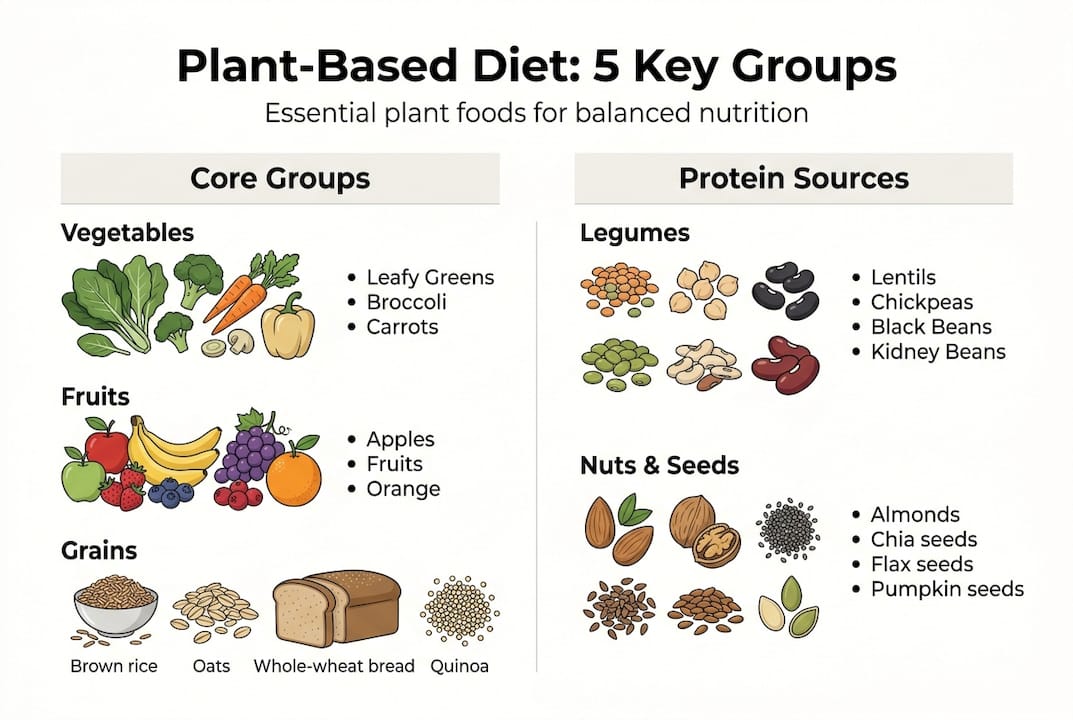
A plant-based diet includes vegetables, fruits, whole grains, legumes, nuts, seeds, and plant-based proteins. These groups are not just categories on a list — each one brings a distinct nutritional role that supports your body in a different way. Together, they create a complete, balanced approach to eating.
Here is a quick look at what each group brings to the table:
- Vegetables and fruits: Rich in vitamins, minerals, antioxidants, and fibre. Think leafy greens, sweet potatoes, berries, citrus, and cruciferous vegetables like broccoli and cauliflower.
- Whole grains: Provide complex carbohydrates, B vitamins, and sustained energy. Brown rice, oats, and ancient grains like spelt all belong here.
- Legumes: Beans, lentils, chickpeas, and peas are excellent sources of plant protein and iron.
- Nuts and seeds: Supply healthy fats, magnesium, zinc, and protein. Think almonds, walnuts, chia seeds, and hemp seeds.
- Plant-based proteins: Includes tofu, tempeh, edamame, and protein-rich grains like quinoa.
| Food group | Key nutrients | Example foods |
|---|---|---|
| Vegetables | Vitamins C, K, folate | Spinach, broccoli, peppers |
| Fruits | Antioxidants, fibre | Berries, mango, apples |
| Whole grains | B vitamins, fibre | Oats, brown rice, spelt |
| Legumes | Protein, iron, zinc | Lentils, chickpeas, black beans |
| Nuts and seeds | Healthy fats, magnesium | Almonds, flaxseeds, chia |
Research consistently shows that plant-based diets reduce the risk of chronic diseases and support gut health. The key is variety across all groups, not perfection within any single one. Eating a wide range of colours and textures each week is one of the simplest ways to ensure you cover your nutritional bases.
For inspiration on how ancient grains for wellness can fit into your everyday meals, it is worth exploring how these staples have been used for centuries. You can also find creative vegan recipe ideas to bring these food groups to life in your kitchen.
Pro Tip: Choose wholefoods over processed vegan substitutes wherever possible. A bag of lentils or a jar of nut butter will always outperform a heavily processed vegan sausage in terms of nutrient density and ingredient transparency.
Exploring ancient grains and whole grains for nutrition
With the main food groups in mind, let’s take a closer look at one of the most powerful staples in a plant-based diet. Ancient and whole grains are not interchangeable terms, though they overlap. Whole grains retain the bran, germ, and endosperm of the grain kernel, preserving their fibre and micronutrient content. Ancient grains go a step further — they are varieties that have remained largely unchanged by industrial breeding for thousands of years.
Ancient grains such as quinoa, amaranth, and teff are especially rich in protein, minerals, and fibre. That nutritional density is precisely why they are attracting so much attention from nutritionists and food scientists alike.
Popular ancient grains worth adding to your rotation include:
- Quinoa: A complete protein containing all nine essential amino acids.
- Amaranth: High in calcium, magnesium, and lysine.
- Teff: Rich in iron and resistant starch, supporting gut health.
- Spelt: A nutty, fibre-rich wheat relative with a good mineral profile.
- Buckwheat: Gluten-free and packed with rutin, a powerful antioxidant.
- Millet: Gentle on digestion and rich in B vitamins.
| Ancient grain | Protein (per 100g) | Fibre (per 100g) | Key mineral |
|---|---|---|---|
| Quinoa | 14g | 7g | Magnesium |
| Amaranth | 14g | 7g | Calcium |
| Teff | 13g | 8g | Iron |
| Buckwheat | 13g | 10g | Manganese |
| Millet | 11g | 9g | Phosphorus |
“Ancient grains diversify and enrich plant-based nutrition in ways that refined grains simply cannot match — they bring depth of flavour alongside a richer micronutrient profile.”
For a thorough grounding in this topic, explore ancient grains explained and discover the micronutrients in ancient grains that make them so valuable. You can also browse examples of ancient grains to find which varieties suit your palate and cooking style best.
Plant-based proteins: legumes, nuts, seeds, and more
Grains provide the energy base, but what about protein? This is the question most people ask first, and it deserves a clear answer. Plant-based protein is not a compromise — it is simply a different approach that, when done thoughtfully, delivers everything your body needs.
Plant proteins can fully meet adult protein requirements when variety is maintained. The key phrase there is variety. No single plant food contains all nine essential amino acids in ideal proportions, but combining different sources throughout the day solves this completely.
Your best plant-based protein sources include:
- Legumes: Lentils, black beans, chickpeas, edamame, and split peas.
- Soy products: Tofu and tempeh are complete proteins and incredibly versatile in cooking.
- Nuts and nut butters: Almonds, cashews, and pecans offer protein alongside healthy fats.
- Seeds: Hemp seeds, pumpkin seeds, and sunflower seeds are protein-dense and easy to add to meals.
- Ancient grains: Quinoa and amaranth stand out as complete plant proteins.
Here is a simple approach to combining plant proteins for complete amino acid coverage:
- Pair grains with legumes at the same meal — rice and beans, or lentil soup with wholegrain bread.
- Add seeds to smoothies, porridge, or salads to boost amino acid variety.
- Include a soy product like tofu or tempeh several times per week.
- Use nut butters as a protein-rich addition to snacks and sauces.
- Rotate your grain choices to include complete-protein options like quinoa regularly.
Pro Tip: A bowl of quinoa with roasted chickpeas gives you a complete amino acid profile in a single meal. Understanding ancient grains and satiety can help you build meals that keep you full and fuelled for hours. For a satisfying high-protein snack, crispy chickpea ideas are worth bookmarking.
The myth that plant proteins cannot build muscle is firmly outdated. What matters is total daily protein intake and variety, not the source.

Customising your approach: plant-based diet types and key considerations
You have learnt what to include, but how strictly should you follow a plant-based diet? The honest answer is that it depends entirely on your goals, health needs, and lifestyle. Plant-based eating exists on a spectrum, and every point on that spectrum offers real benefits.
Plant-based diets can range from flexitarian to vegan, with strict whole-food plant-based (WFPB) diets excluding oils and processed foods entirely.
| Diet type | Animal foods | Processed foods | Oils allowed |
|---|---|---|---|
| Flexitarian | Occasionally | Sometimes | Yes |
| Vegetarian | Dairy and eggs only | Sometimes | Yes |
| Vegan | None | Sometimes | Yes |
| WFPB | None | No | No |
Regardless of where you sit on this spectrum, certain nutrients deserve your attention:
- Vitamin B12: Not reliably found in plant foods. Fortified foods or a supplement is essential for vegans.
- Omega-3 fatty acids: Flaxseeds, chia seeds, and walnuts provide ALA, but algae-based supplements cover DHA and EPA.
- Iron: Found in legumes and leafy greens. Pair with vitamin C to improve absorption.
- Zinc: Present in seeds, legumes, and whole grains, though absorption is lower from plant sources.
- Calcium: Leafy greens, fortified plant milks, and almonds are your allies here.
“Prioritise variety for nutrition and wellness — no single food or supplement replaces the power of a genuinely diverse wholefood diet.”
For a deeper look at why grain choices matter in this context, explore why choose ancient grains and how ancient grains for modern wellness can address some of these nutritional gaps naturally. For a crunchy, plant-based snack that fits any approach, kale chip snacks are a simple starting point.
Why variety and wholefoods matter most: our perspective
After exploring the practical aspects, here is our honest take on what truly makes plant-based diets work for wellness and nutrition.
The biggest mistake we see is people swapping animal products for heavily processed vegan substitutes and expecting the same health benefits. A vegan biscuit is still a biscuit. The point of plant-based eating is not just to avoid animal products — it is to nourish your body with foods that are genuinely nutrient-dense.
A varied plant-based diet centred around wholefoods, including ancient grains, provides sustainable nutrition and real energy. That is not a marketing claim — it is what the research consistently supports.
Ancient grains are where we see the most underutilised potential. They bring gut-supporting fibre, steady energy, and a mineral richness that refined grains simply cannot replicate. Understanding the nutritional advantages of grains is a genuine game-changer for anyone serious about plant-based nutrition.
Pro Tip: Start with familiar staples like oats and brown rice, then gradually introduce one ancient grain per week. Teff in your porridge or spelt flour in your baking are easy, low-effort entry points that make a measurable difference.
Enhance your plant-based diet with Granavitalis
Bringing practical change to your plant-based journey starts with choosing quality wholefood staples.
At Granavitalis, every product is chosen to support exactly the kind of varied, wholefood plant-based eating this article describes. Our raw pecan butter is a rich, minimally processed source of healthy fats and plant protein — perfect stirred into porridge or spread on wholegrain toast. If you want to explore further, our nut and seed butter selection makes it easy to rotate flavours and nutrients. For texture and crunch in salads or grain bowls, our nibbed hazel nuts are a simple, wholefood upgrade. Real food, real ingredients, real results.
Frequently asked questions
Can you get enough protein from a plant-based diet?
Yes. A varied plant-based diet can supply all essential amino acids and meet recommended protein needs easily, provided you include a wide range of legumes, grains, nuts, and seeds.
What are the best grains to eat on a plant-based diet?
Ancient grains like quinoa, amaranth, barley, and buckwheat offer excellent nutrition and variety. They provide protein, minerals and a richer micronutrient profile than most refined grains.
What’s the difference between plant-based and vegan diets?
Plant-based emphasises mostly plants and can allow small amounts of animal food, while vegan excludes all animal products. Plant-based can include some animal foods, whereas vegan is a stricter exclusion.
How can I avoid nutrient deficiencies on a plant-based diet?
Plan for key nutrients like B12 and iron, eat a wide variety of wholefoods, and consider fortified foods or supplements if needed. Key nutrients such as B12 may require supplementation, particularly for those following a fully vegan approach.
Recommended
- What foods are on a plant based diet: complete 2026 guide – Granavitalis
- Plant-based breakfast options for protein and energy – Granavitalis
- Examples of vegetable protein for balanced diets – Granavitalis
- Top plants high in protein: complete UK guide for 2026 – Granavitalis
- What is air frying for vegetarians: healthy cooking in 2026
- Spring Superfoods You Need on Your Plate Right Now – Lunix