
What is functional nutrition: your complete guide
TL;DR:
- Functional nutrition uses personalized, science-based strategies to identify and treat health imbalances at their root. It relies on advanced diagnostics and considers biochemistry, genetics, environment, and lifestyle to tailor interventions, rather than following generic dietary guidelines. This approach improves conditions like digestive issues, hormonal imbalance, and fatigue through whole foods, targeted supplements, and lifestyle modifications.
Functional nutrition is the science-based practice of using food and nutrients as personalised medicine to address the root causes of health imbalances, rather than simply managing symptoms. Unlike conventional dietary advice, this approach treats your body as an interconnected system, where biochemistry, genetics, environment, and lifestyle all shape your health outcomes. The Institute for Functional Medicine (IFM) describes it as a systems-based shift from symptom relief to whole-body care. If you have spent years following general eating guidelines without lasting results, understanding functional nutrition basics could change how you think about food entirely.
How does functional nutrition differ from conventional nutrition?
Functional nutrition is defined by its focus on the individual, not the average. Conventional nutrition relies on population-wide guidelines, such as recommended daily allowances and calorie targets, which work for the majority but miss the person in front of you. Functional nutrition rejects that one-size-fits-all model entirely.
The clearest distinction is in what each approach treats. Conventional nutrition manages symptoms: eat less saturated fat to lower cholesterol, reduce salt to manage blood pressure. Functional nutrition asks why your cholesterol or blood pressure is dysregulated in the first place. That root cause focus requires a fundamentally different toolkit.
| Feature | Conventional nutrition | Functional nutrition |
|---|---|---|
| Focus | Symptom management | Root cause identification |
| Approach | Population guidelines | Personalised plans |
| Assessment | Standard dietary review | Advanced diagnostics and health history |
| Scope | Diet and calories | Diet, lifestyle, genetics, environment |
| Goal | Reduce risk factors | Restore systemic function |
Functional nutrition also views food differently. Food is not just fuel measured in calories. It is biological information that influences gene expression, hormone regulation, and immune function. A handful of walnuts does not just provide fat and protein. It delivers omega-3 fatty acids that modulate inflammation at a cellular level.
A common misconception is that functional nutrition is simply another restrictive diet. It is not. There are no banned food lists or rigid meal plans imposed on everyone. The plan is built around your specific biology, which means two people with the same diagnosis may follow entirely different protocols.
Pro Tip: If you are new to functional nutrition, start by tracking not just what you eat, but how you feel two hours after each meal. Energy dips, bloating, and brain fog are data points that a functional practitioner will find genuinely useful.
What does a functional nutrition assessment involve?
A functional nutrition assessment is far more thorough than a standard dietitian appointment. Where a conventional consultation might last 30 minutes and focus on food diaries, a functional assessment covers health history, lifestyle, environment, genetics, and symptoms across your entire life.
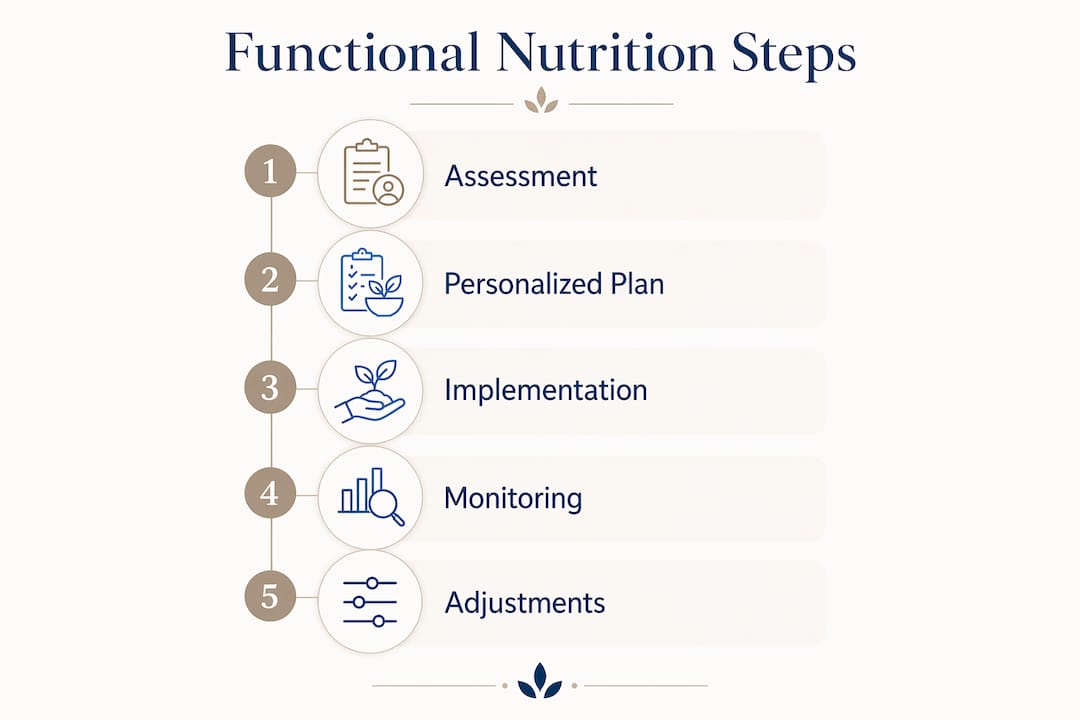
The process typically follows a structured sequence:
- Comprehensive health history. The practitioner reviews every significant health event, medication, and symptom from childhood onwards. This is not a box-ticking exercise. It is a search for patterns.
- Health timeline or life matrix. Practitioners map life stressors and exposures from birth to the present. A viral illness at 14, a period of chronic stress at 28, and persistent fatigue at 35 may all be connected.
- Advanced diagnostic testing. Standard blood panels rarely tell the full story. Functional practitioners use stool analysis, micronutrient panels, and hormone mapping to build a detailed biological profile that standard care does not routinely produce.
- Lifestyle and environmental review. Sleep quality, stress levels, movement patterns, toxic exposures, and social factors all feed into the assessment. Nutrition does not exist in isolation.
- Personalised intervention plan. Every finding feeds into a tailored protocol covering food, supplements, lifestyle changes, and follow-up testing.
This depth takes time and commitment. Assessments often span multiple sessions. That intensity is not a flaw. It is the mechanism by which functional nutrition produces results that generic advice cannot.
Pro Tip: Before your first functional nutrition appointment, write a rough timeline of your health from childhood to now. Include illnesses, stressful life events, and any periods when your energy or digestion changed noticeably. This preparation can cut assessment time significantly.
What are the main benefits of functional nutrition?
Functional nutrition produces measurable improvements across a wide range of conditions. The approach is particularly effective for digestive issues like IBS, metabolic imbalances, hormonal dysregulation, and chronic fatigue, because these conditions almost always have multiple interacting root causes rather than a single trigger.
The cognitive and stress benefits are also well supported. A 2026 eight-week clinical trial found that structured functional nutrition protocols rich in omega-3s, magnesium, B vitamins, and antioxidants improved cognitive function and stress resilience with moderate-to-large effect sizes (Cohen’s d = 0.68 to 0.82) in young adults. Those are clinically meaningful results, not marginal improvements.
The key benefits span several areas:
- Digestive health. Personalised protocols address IBS, bloating, and gut permeability by identifying specific food triggers and microbiome imbalances.
- Hormonal balance. Targeted nutrition supports thyroid function, blood sugar regulation, and adrenal health through food and evidence-based supplementation.
- Sustained energy. Addressing nutrient deficiencies, particularly iron, B12, magnesium, and vitamin D, resolves fatigue at its source rather than masking it.
- Cognitive clarity. Nutrients like omega-3 fatty acids and B vitamins directly support brain function and mood regulation.
- Inflammation reduction. Nutrient-dense whole foods and targeted supplements reduce systemic inflammation, which underlies most chronic conditions.
The concept of bio-individuality sits at the centre of all these benefits. Bespoke plans rather than standardised diets are what make functional nutrition effective long-term. Your metabolic needs are genuinely different from your colleague’s, even if your symptoms look identical on paper.
How is functional nutrition applied in daily life?
Applying functional nutrition principles does not require a complete overhaul of your life on day one. The most effective approach is gradual, structured, and built around your specific assessment findings.

Personalised meal planning is the foundation. This means building meals around foods that support your identified deficiencies and sensitivities, not following a generic clean-eating template. If your testing reveals low magnesium, you prioritise pumpkin seeds, dark leafy greens, and cacao. If your gut microbiome shows low diversity, you focus on fermented foods and a wide range of plant fibres.
Food as medicine is more than a slogan in this context. Specific foods carry specific biological effects. Oily fish delivers EPA and DHA for inflammation control. Ancient grains like spelt and einkorn provide a micronutrient profile that refined wheat simply cannot match. Exploring micronutrients in ancient grains reveals why these traditional foods remain central to functional nutrition protocols.
Lifestyle integration is non-negotiable. Functional nutrition for wellness extends well beyond the plate:
- Prioritise 7–9 hours of sleep, as poor sleep disrupts cortisol, insulin, and hunger hormones simultaneously.
- Build stress management practices into your daily routine, whether that is breathwork, walking, or structured rest periods.
- Move regularly, but match intensity to your current recovery capacity. Overtraining is a physiological stressor.
- Reduce environmental toxin exposure where practical, including plastics in food storage and synthetic fragrances.
Targeted supplementation fills gaps that food alone cannot always close. High-quality nutraceuticals matched to identified deficiencies are often the difference between a protocol that works and one that stalls. This is not about taking a generic multivitamin. It is about precision, guided by your test results.
Pro Tip: Pair any new supplement with a food source of the same nutrient. Magnesium glycinate works better alongside magnesium-rich foods like hemp seeds and dark chocolate because the body recognises and absorbs nutrients more readily in a food matrix.
Always work with a qualified functional nutrition practitioner to build your plan. Self-directed protocols based on general information carry real risks, particularly when advanced testing is involved.
Common misconceptions about functional nutrition
Functional nutrition is not a quick fix. Long-term lifestyle integration, not short-term dietary restriction, produces lasting results. People who approach it expecting rapid transformation in two weeks consistently underestimate the depth of change required.
Several other misconceptions are worth addressing directly:
- It replaces conventional medicine. Functional nutrition is a complementary, integrative approach, not a substitute for medical care. It works best alongside, not instead of, your GP or specialist.
- Supplements do the heavy lifting. Supplements support a strong dietary foundation. They do not replace it. Food comes first, always.
- One protocol works for everyone. Bio-individuality means your plan is yours alone. A protocol that resolved your friend’s fatigue may be irrelevant to your situation.
- Results are immediate. Cellular repair, microbiome shifts, and hormonal rebalancing take weeks to months. Patience and consistency are the actual active ingredients.
- The diagnostic process is excessive. The intensity of functional assessment reflects the complexity of the conditions it addresses. Thorough testing is not overcaution. It is precision.
Understanding these realities before you begin saves frustration and sets realistic expectations for the process ahead.
Key takeaways
Functional nutrition is the most personalised evidence-based approach to diet and health, targeting root causes through advanced assessment, bio-individual protocols, and whole-food nutrition.
| Point | Details |
|---|---|
| Root cause focus | Functional nutrition identifies why imbalances occur, not just what symptoms appear. |
| Advanced assessment | Practitioners use stool analysis, micronutrient panels, and health timelines to build precise biological profiles. |
| Bio-individuality | No two plans are identical; your genetics, lifestyle, and environment shape every recommendation. |
| Cognitive and physical benefits | Clinical evidence shows meaningful improvements in stress resilience and cognitive function within eight weeks. |
| Complementary approach | Functional nutrition works alongside conventional medicine, not as a replacement for it. |
Why I think functional nutrition deserves more credit than it gets
People often come to functional nutrition after years of being told their test results are “normal” while they feel anything but. That gap between clinical normal and personal optimal is exactly where this approach operates. I have seen it close that gap consistently, but only when people commit to the process rather than cherry-picking the convenient parts.
The most underrated aspect is the health timeline. Mapping your life events alongside your symptoms is genuinely revelatory. A gut infection at 22, a period of extreme work stress at 29, and persistent bloating at 34 are not three separate problems. They are one story told across time. Conventional care rarely has the appointment length to read that story. Functional nutrition is built around it.
My honest caution is this: the practitioner relationship matters enormously. A skilled functional nutrition practitioner is part scientist, part detective, and part coach. The wrong fit wastes time and money. Ask about their training, their testing protocols, and how they integrate with your existing medical care before you commit.
Functional nutrition also demands patience that most people underestimate. The body did not arrive at dysfunction overnight. It will not leave it overnight either. The people who get the most from this approach treat it as a long-term partnership with their own biology, not a six-week experiment.
— Jarrod
Granavitalis and functional nutrition: quality foods that fit your plan
Functional nutrition principles start with the quality of what you eat. Granavitalis sources nutrient-dense whole foods, from ancient grain flours to organic nut butters, that align directly with the food-as-medicine philosophy at the heart of this approach.

The Immune Booster Superfood Bundle brings together a curated selection of whole-food ingredients rich in the micronutrients that functional protocols consistently prioritise. For those building a purpose-driven nutrition approach at home, Granavitalis products offer a clean, transparent foundation. Every ingredient is traceable, minimally processed, and chosen for genuine nutritional value, not shelf appeal.
FAQ
What is the functional nutrition definition in simple terms?
Functional nutrition is a personalised, science-based approach that uses food and nutrients to address the root causes of health imbalances, rather than treating symptoms in isolation. It considers your unique biochemistry, genetics, lifestyle, and environment to build a tailored health plan.
How does functional nutrition work differently from a standard diet?
Functional nutrition uses advanced diagnostic testing, including micronutrient panels and stool analysis, to identify specific deficiencies and imbalances. Standard diets follow general guidelines; functional nutrition follows your individual biology.
What conditions does functional nutrition address?
Functional nutrition targets digestive issues like IBS, hormonal imbalances, chronic fatigue, metabolic dysfunction, and inflammation, using personalised dietary and lifestyle strategies based on lab testing.
Is functional nutrition safe to follow without a practitioner?
General functional nutrition principles, such as eating nutrient-dense whole foods and reducing processed food, are safe for most people. Advanced protocols involving targeted supplementation and diagnostic testing should always be guided by a qualified practitioner.
How long does it take to see results from functional nutrition?
Results vary depending on the condition and the individual. Clinical evidence shows meaningful improvements in cognitive function and stress resilience within eight weeks of structured protocols, though deeper systemic changes often take three to six months.