
Start a Whole Food Plant Based Diet With 6 Pantry Staples
A whole-food, plant-based (WFPB) diet builds meals around minimally processed vegetables, fruits, wholegrains, legumes, nuts and seeds, while cutting back on refined and animal-derived foods. For most health-conscious adults, it works because these foods are nutrient-dense but relatively low in calorie density, letting you eat generous portions without much restriction. It suits most people, but pregnant women, people with medical conditions, and anyone on medication should check with a GP or dietitian first.
TL;DR:
- Most people following a whole-food, plant-based diet should ensure adequate intake of vitamin B12 through fortified foods or supplements to avoid deficiency.
- A typical meal plan can include lentils, chickpeas, tofu, and whole grains, which supply sufficient protein without relying on processed foods.
- Limiting ultra-processed items like refined flours, added sugars, and heavily processed meat analogues is crucial to maximize health benefits.
- Cost is generally not a barrier since staples like dried lentils, oats, frozen vegetables, and tinned beans are affordable and widely available.
- Long-term adherence benefits from rotating simple, satisfying meals, maintaining flexibility, and monitoring key nutrients like B12 and vitamin D annually.
Table of Contents
- What is a plant based whole food diet, and how does it differ from “plant-based” generally?
- What to eat: a practical shopping list and plate rule
- What to avoid or minimise, and how to read a label fast
- What the evidence actually shows about health benefits
- Getting enough B12, iron, protein, omega‑3, calcium and vitamin D
- A simple one-day menu to get started
- How to start without burning out
- The Granavitalis approach to everyday plant-based eating
- Where people get stuck: common misconceptions
- Why this way of eating matters beyond your own plate
- Making it stick for years, not weeks
- A personal note on habits that actually stick
- Sources
What is a plant based whole food diet, and how does it differ from “plant-based” generally?
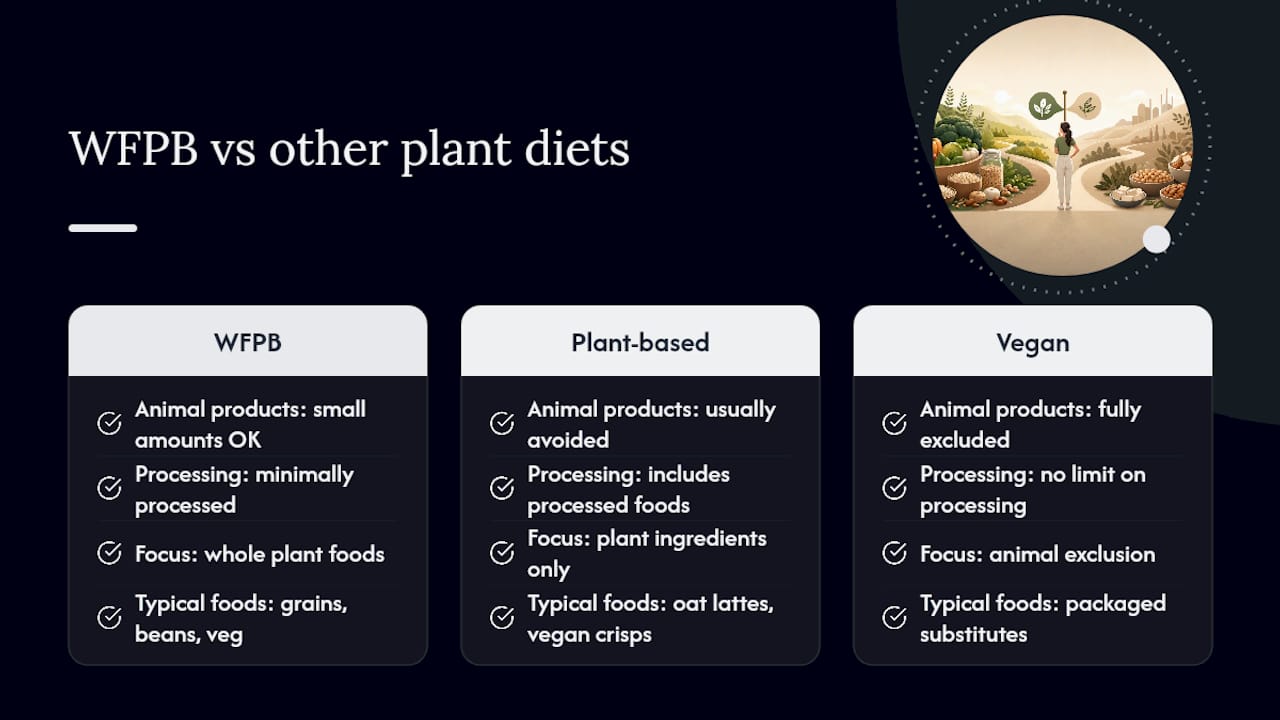
The two words matter equally. “Plant” means the diet centres on foods from plants rather than animals. “Whole” means those plant foods stay close to their natural state, unrefined, unpackaged, and without the additive lists that come with most convenience foods. A biscuit made from white flour and sugar is technically plant-based. It is not whole-food.
This distinction separates WFPB from the broader, looser “plant-based” label that has been stretched to cover everything from oat milk lattes to vegan crisps. Vegan diets exclude all animal products but say nothing about processing, so a vegan diet can be built almost entirely from packaged substitutes. Flexitarian diets simply reduce meat without any structure around what replaces it. WFPB is stricter on food quality and more relaxed on animal exclusion. Small amounts of animal produce aren’t automatically banned, though most people following the pattern lean heavily plant-first.
Researchers studying the pattern often define it using an energy threshold. Some peer-reviewed surveys on WFPB diets define the diet as having a large majority of daily energy from minimally processed whole plant foods as a working benchmark. UK public health guidance doesn’t use that exact figure, but the Eatwell-style framework points the same direction: wholegrains, beans, pulses, fruit and veg as the base of most meals.
What to eat: a practical shopping list and plate rule
Stock your kitchen around six groups, and most of your meals sort themselves out from there.
- Vegetables, fresh, frozen or tinned. Frozen peas and tinned tomatoes count just as much as anything from a farmers’ market, and they’re cheaper and last longer.
- Fruits, whole rather than juiced, so you keep the fibre.
- Wholegrains: oats, brown rice, quinoa, wholewheat pasta, barley, and less-refined flours milled from ancient grains such as spelt or einkorn, which hold onto more of their original nutrient structure than heavily processed white flour.
- Legumes: lentils, chickpeas, black beans, kidney beans, dried or tinned.
- Nuts and seeds: walnuts, almonds, chia, flax, pumpkin seeds, plus minimally processed nut butters as a spread or smoothie base.
- Minimally processed plant proteins: tofu, tempeh, edamame.
For plating, aim for half the plate in vegetables, a quarter in wholegrains, and a quarter in legumes or another plant protein, with nuts or seeds scattered on top for texture and healthy fat. Batch-cook a big pot of lentils or chickpeas on a Sunday and you’ve got the protein base for four or five meals sorted without touching the hob again midweek.
What to avoid or minimise, and how to read a label fast
The foods to limit aren’t animal products specifically. They’re the ultra-processed items that crowd out whole foods regardless of whether they’re plant-based or not.
- Added sugars in cereals, sauces, and flavoured yoghurts, even the plant-based ones.
- Refined flours in white bread, most pastries, and standard pasta.
- Refined vegetable oils used heavily in fried and packaged snacks.
- Highly processed meat analogues with long additive lists, alongside crisps, biscuits, and processed animal products like bacon or sausages.
A fast label check: flip the pack over. If the ingredient list runs past six or seven items, or contains words you wouldn’t find in a home kitchen, put it back. This isn’t about never eating a shop-bought veggie burger again. An occasional processed item is fine. The goal is making whole foods the default, not the exception.
What the evidence actually shows about health benefits
Diets built mostly from whole plant foods are linked to lower rates of heart disease, better blood sugar control in type 2 diabetes, and easier weight management. The strength of that link depends heavily on food quality within the pattern itself.
The evidence in brief: well-planned plant-based diets prioritising whole foods are associated with reduced heart disease risk and improved type 2 diabetes markers, but research consistently notes that outcomes hinge on whether the diet leans whole or processed.
This is the detail most headlines skip. A diet of vegan biscuits and fried plant-based nuggets is still “plant-based” on paper, but it won’t deliver the same outcomes as one built from lentils, oats and leafy greens. The mechanism isn’t mysterious: whole plant foods bring fibre, phytonutrients and lower calorie density, while ultra-processed versions strip most of that out during manufacturing. High-fibre staples like potatoes, brown rice and oats support satiety and steadier blood sugar precisely because they’re eaten closer to their natural form.
None of this makes WFPB a cure. It’s a pattern that shifts risk in a favourable direction over years, not a treatment for an existing diagnosis. Anyone managing diabetes, heart disease or another condition should treat dietary changes as complementary to, not a replacement for, medical care.
Getting enough B12, iron, protein, omega‑3, calcium and vitamin D
This is where most people trip up, and it’s worth doing properly.
Vitamin B12 cannot be reliably sourced from unfortified plant foods. If you’re eating minimal or no animal products, fortified foods or a direct supplement aren’t optional extras. This is close to a hard rule rather than a suggestion.
Iron from plant sources (lentils, spinach, tofu, fortified cereals) absorbs less efficiently than iron from meat. The NHS recommends pairing iron-rich meals with vitamin C, such as a squeeze of lemon over lentils, and avoiding tea or coffee around mealtimes, since tannins block absorption. Our guide to plant-based iron-rich foods covers portioning in more detail.
Protein is easier than most people expect. A daily pattern of lentils, chickpeas, tofu, wholegrains and a scoop of plant protein powder in a smoothie comfortably covers most adults’ needs. See our list of vegan protein sources for portion-level detail.
Omega‑3 ALA comes from walnuts, flax and chia, though conversion to the active EPA/DHA forms is limited. An algae-based supplement is worth considering, covered further in our omega‑3 guide.
Calcium and vitamin D are covered by fortified plant milks and, for vitamin D particularly in darker months, a supplement checked against a blood test if you’re unsure.
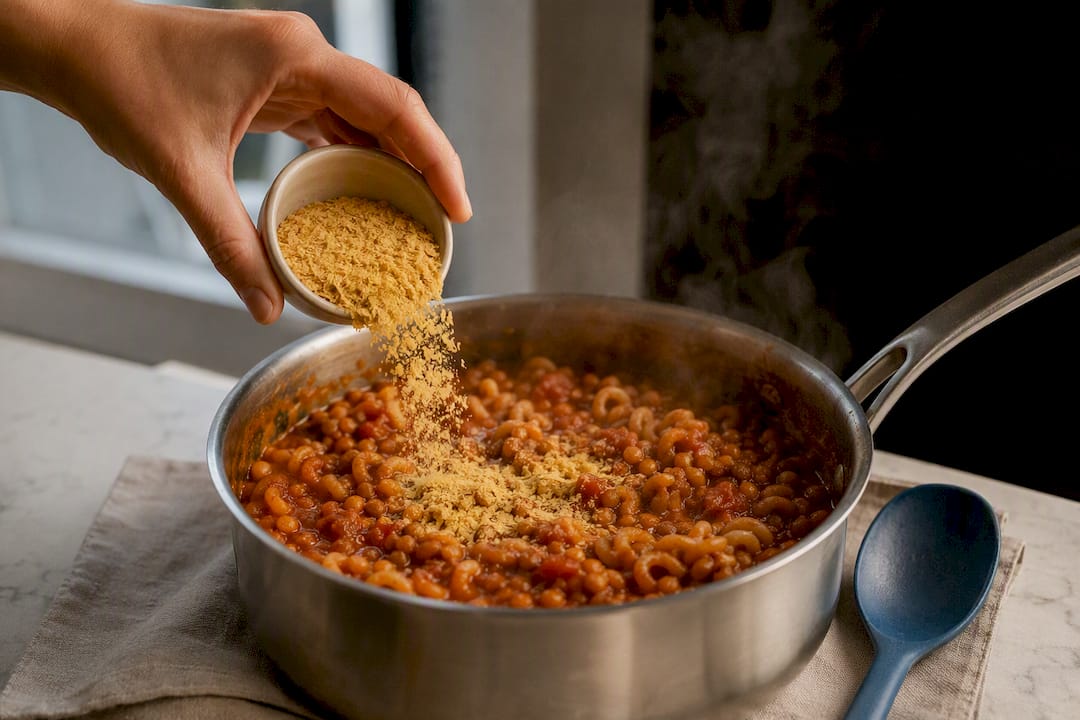
Pro Tip: Keep a jar of nutritional yeast fortified with B12 in the cupboard. A tablespoon stirred into pasta sauce or scrambled tofu is an easy, low-effort way to close the gap most beginners miss.
A simple one-day menu to get started
You don’t need a complicated meal plan to start eating this way. Here’s a full day that uses ordinary ingredients:
- Breakfast: Porridge oats cooked with fortified plant milk, topped with walnuts, chia seeds and sliced banana.
- Lunch: A big grain bowl with brown rice, roasted vegetables, chickpeas, and a tahini dressing.
- Snack: An apple with a spoonful of nut butter.
- Dinner: Lentil dahl with spinach, served over quinoa, with a side of steamed broccoli.
Batch-cook the dahl and rice in double quantities and you’ve got two more dinners sorted for the week with almost no extra effort. Swap the vegetables based on whatever’s cheapest that week, frozen or fresh; the structure of the meal matters more than the specific ingredient.
How to start without burning out
Trying to overhaul every meal overnight is the fastest route to giving up within a fortnight. Behavioural research on lifestyle change consistently favours gradual addition over sudden restriction: add more whole plant foods first, and let animal or processed foods naturally take up less space on the plate.
- Start with one meat-free day a week, then build to two or three.
- Keep pantry staples on hand: tinned beans, frozen vegetables, oats, rice, and a jar of nut butter, so a whole-food meal is always the easiest option, not the hardest.
- Prep grains and legumes in batches once or twice a week rather than cooking from scratch every night.
- Speak to a dietitian before making major changes during pregnancy, or if you’re managing a chronic condition like kidney disease or diabetes.
The Granavitalis approach to everyday plant-based eating
Heritage grains milled with minimal processing hold onto more fibre and natural texture than standard refined flour, which matters when you’re trying to stay satisfied on plant-heavy meals. A spoonful of a minimally processed nut butter stirred into porridge or blended into a smoothie adds healthy fats and protein without any additive list to decode. For deeper reading on specific nutrients, our complete guide to plant-based food groups is worth bookmarking.
Where people get stuck: common misconceptions
The biggest misconception is that WFPB means eating nothing but salad. In practice, the pattern includes hearty, calorie-sufficient food: bowls of rice and beans, oat-based breakfasts, roasted potatoes, pasta with lentil sauce. People who picture endless raw vegetables usually give up within weeks because they’re hungry, not because the diet failed them.
A second misconception is that protein becomes a constant worry. It rarely is, once legumes and grains form the daily base rather than an occasional side dish.
A third is cost. Fresh organic produce can be expensive, but the backbone of WFPB eating, dried lentils, oats, frozen vegetables, tinned beans, tends to be some of the cheapest food in any supermarket. The expensive version of this diet is the one built from pre-made vegan convenience meals, not the one built from a sack of rice and a bag of dried chickpeas.
A fourth is the assumption that going WFPB means going vegan overnight, with zero flexibility. It doesn’t require perfection or purity. Missing B12 without a plan is a genuine risk worth taking seriously, but an occasional piece of fish at a dinner party isn’t going to undo months of otherwise whole-food eating. Treating this as a rigid all-or-nothing rule is usually what causes people to abandon it within a month.
Why this way of eating matters beyond your own plate
Diet choices ripple outward in ways that are easy to overlook when you’re just trying to plan dinner. Public health guidance on sustainable eating consistently links plant-based dietary staples to lower diet-related greenhouse gas emissions compared with diets heavy in animal agriculture, largely because plant crops require fewer resources per calorie than livestock farming.
Buying what’s in season adds another layer to this. Seasonal vegetables typically travel shorter distances and need less energy-intensive storage, and eating with the seasons tends to mean fresher produce at a lower price point too, which works in your favour either way.
There’s an ethical dimension for many people as well, tied to animal welfare concerns around industrial farming. That’s a personal calculation rather than a nutritional one, and WFPB doesn’t require a particular stance on it to work as a health strategy. What the environmental case does offer is a second, independent reason to lean plant-first beyond your own cholesterol numbers: even someone entirely unmoved by health statistics might find the resource-efficiency argument compelling on its own terms.
Making it stick for years, not weeks
The diets that last are the ones that stop feeling like diets. Somewhere around the three to six month mark, most people who stick with WFPB eating report that the planning stops feeling effortful; the grain bowl and lentil dahl rotation becomes as automatic as any other habit.
A few things keep it durable long-term. Rotating through a base of ten or twelve go-to meals prevents the boredom that derails most food changes within a season. Revisiting your nutrient basics, particularly B12 and vitamin D, once or twice a year with a simple blood test catches gaps before they become problems. And giving yourself permission for flexibility at social events or on holiday removes the all-or-nothing pressure that turns one off day into a full abandonment of the pattern.
Treat the occasional slip as neutral information rather than failure. The people who stay with this longest tend to be the ones who stopped tracking perfection and started tracking whether most of their meals, most weeks, were built from whole plant foods.
A personal note on habits that actually stick
Building meals around legumes and vegetables first, then filling in grains and extras, made the switch easier than any strict rule ever did. Give it months, not days, to feel automatic.
— Jarrod
Sources
For B12, iron and fortified-food guidance, see the NHS vegan diet page. For public health framing, see GOV.UK’s healthy eating guidance. For higher-energy meal fortification, see the NHS practice leaflet on plant-based eating.
This article is general information, not a substitute for advice from a qualified doctor. Consult a qualified healthcare professional about your own circumstances before acting on anything here.
- The vegan diet - NHS
- A cross-sectional survey exploring knowledge, beliefs and barriers to whole food plant-based diets (PMC)
- Gov
- What is WFPB? — Doctors for Nutrition