
The best plant-based iron-rich foods for vegetarians
A well-planned plant-based diet can meet most people’s iron needs. The key is choosing iron-dense plant foods, pairing them with vitamin C at every meal, and keeping tea and coffee away from mealtimes. You do not need supplements unless a GP has confirmed a deficiency through testing.
Start here:
- Include pulses, fortified cereals, or tofu at least once daily
- Pair every iron-rich meal with a vitamin C source (orange juice, peppers, kiwi, broccoli)
- Avoid tea or coffee for roughly two hours either side of a main meal
- Use canned or soaked legumes to reduce phytates and improve absorption
Pro Tip: Add a small glass of orange juice to your breakfast alongside fortified cereal. It costs almost nothing and can meaningfully increase how much iron your body actually absorbs from that bowl.
Key takeaways
A well-planned plant-based diet can meet UK iron targets for most adults when it combines iron-dense foods, consistent vitamin C pairing, and smart use of fortified products.
| Point | Details |
|---|---|
| Eat iron-dense plants daily | Lentils, tofu, pumpkin seeds, and fortified cereals are the most reliable plant sources per serving. |
| Pair with vitamin C every meal | Oranges, peppers, broccoli, and kiwi increase non-haem iron absorption at the same meal. |
| Avoid tea and coffee around meals | Leave roughly two hours either side of an iron-rich meal before drinking tea or coffee. |
| Know your UK target | Women of reproductive age need 14.8 mg/day; adult men and post-menopausal women need 8.7 mg/day. |
| Granavitalis nut and seed butters | A practical, minimally processed way to add iron-rich seeds to snacks and meals every day. |
Table of Contents
- Why does iron matter, and how does plant iron differ from meat iron?
- Which plant-based foods are highest in iron?
- How can you improve non-haem iron absorption at every meal?
- What are the UK recommended daily iron intakes?
- Portion examples: how much iron are you actually eating?
- Quick meal ideas that make hitting iron targets realistic
- A research-backed sample day for meeting UK iron targets
- Granavitalis wholefood options for iron-boosting snacks
- Sources
Why does iron matter, and how does plant iron differ from meat iron?
Iron is central to making haemoglobin, the protein in red blood cells that carries oxygen around your body. Without enough of it, you feel tired, struggle to concentrate, and your immune function drops. Most people know this. What fewer people realise is that not all dietary iron behaves the same way.
Animal foods supply haem iron, which the body absorbs at a higher rate than plant foods. Plant foods supply non-haem iron, which is absorbed less efficiently and varies with the meal composition. That gap sounds alarming, but it is manageable with the right pairing strategies.
Non-haem iron is also more responsive to dietary context than haem iron. Eat it with vitamin C and absorption rises sharply. Eat it alongside tannins from tea and it drops. That responsiveness is actually an advantage: you have real control over how much iron you absorb, meal by meal.
Which plant-based foods are highest in iron?
The British Dietetic Association identifies several plant food categories as reliable iron sources. Here is how they rank in practice, with notes on how to use each one.
Legumes and pulses
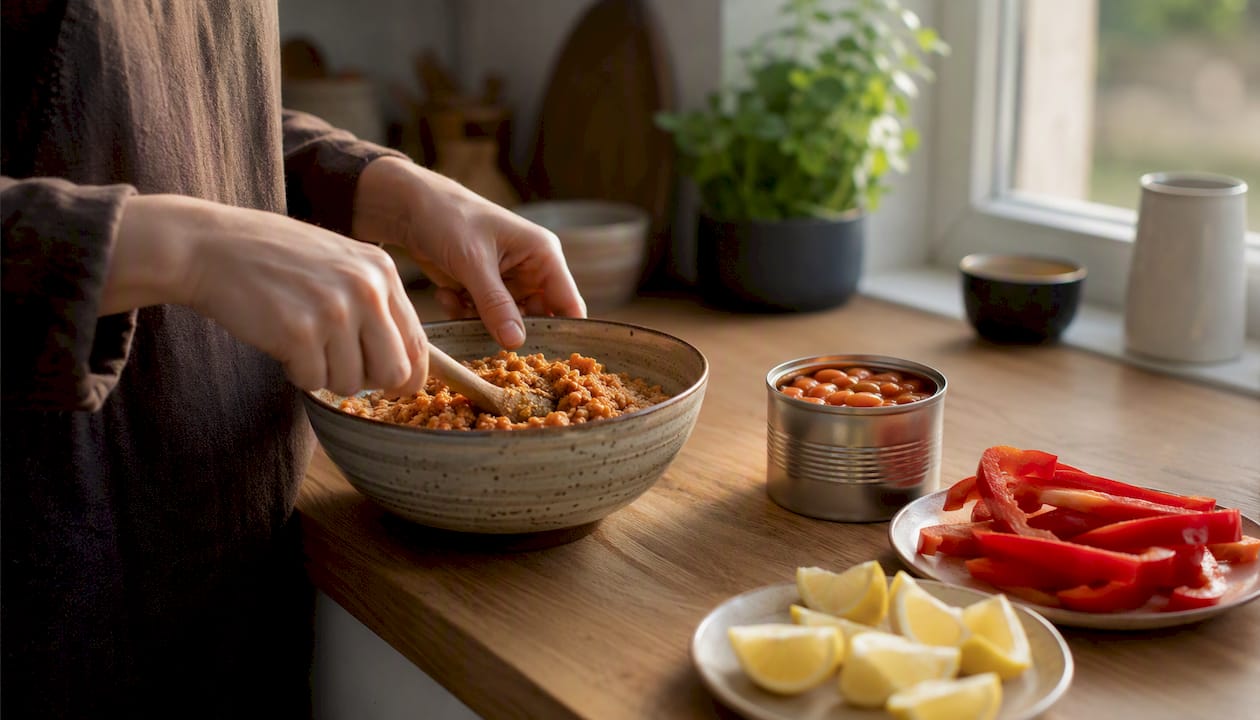
Lentils, chickpeas, kidney beans, and baked beans are the workhorses of a plant-based iron intake. Cooked red lentils provide around 2.4 mg per 100 g. A standard can of baked beans delivers approximately 1.4 mg per 200 g serving. They are cheap, filling, and easy to pair with vitamin C-rich vegetables. Canned versions are particularly useful because the canning process reduces phytate content.
Soya products
Tofu, tempeh, and edamame are among the best sources of iron for vegetarians that also deliver substantial protein. Firm tofu typically provides around 2–3 mg per 100 g serving, making it one of the more concentrated plant sources. Tempeh, being fermented, has lower phytate levels and therefore better bioavailability. For readers combining iron and protein goals, the Granavitalis guide to no-meat protein sources covers soya products in detail.
Dark green leafy vegetables
Spinach, kale, and spring greens contain iron, though cooked spinach is more useful than raw because cooking reduces its volume and the oxalic acid content. A 90 g serving of cooked spinach provides roughly 2.2 mg. Pair it with lemon juice or a tomato-based sauce and you have a simple absorption booster built into the dish.
Nuts and seeds
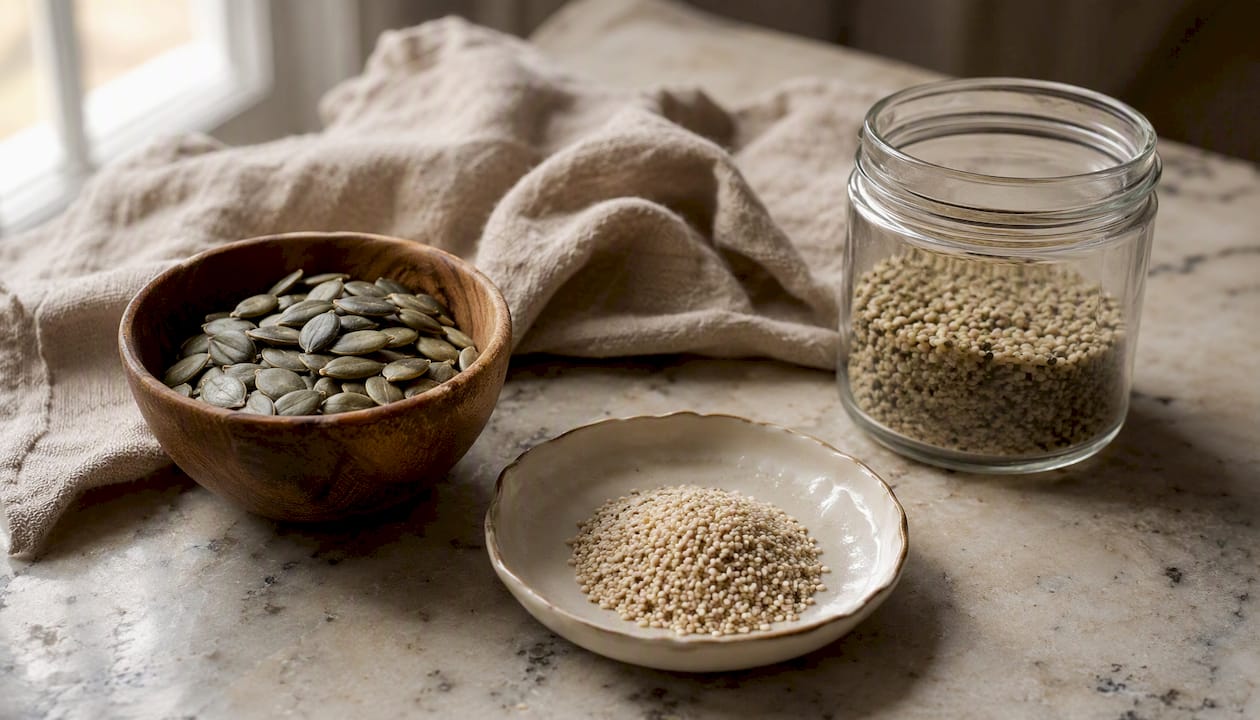
Pumpkin seeds are exceptional: around 2.5 mg per 30 g handful. Sesame seeds and tahini are similarly strong, and hemp seeds are worth adding to porridge or smoothies. These are portable, require no cooking, and work as snacks or recipe additions throughout the day.
Fortified cereals and breads
UK flour fortification regulations mean that white and brown flours are fortified with iron by law, making fortified breakfast cereals and wholemeal bread reliable contributors to daily intake. Fortified breakfast cereals can supply 2.8–4.4 mg per 30 g serving depending on the product, making them one of the most concentrated single-serving sources available.
Dried fruit
Dried apricots, figs, and raisins provide iron in a concentrated form. A 30 g portion of dried apricots delivers around 1 mg. They work well as snacks paired with a handful of pumpkin seeds, and the natural sugars make them easy to eat on the go.
Wholegrains and pseudo-cereals
Quinoa and teff stand out here. Quinoa provides roughly 1.5 mg per 100 g cooked, and teff, an ancient grain, is notably iron-dense. Oats are a solid everyday option: a 40 g serving of porridge oats provides around 1.6 mg. For readers interested in ancient grain flours, the Granavitalis plant-based iron foods guide covers teff and other heritage grains.
Iron per typical UK portion
| Food | Typical UK portion | Iron (mg) |
|---|---|---|
| Fortified breakfast cereal | 30 g bowl | 2.8–4.4 |
| Pumpkin seeds | 30 g | ~2.5 |
| Firm tofu | 100 g | ~2–3 |
| Cooked red lentils | 100 g | ~2.4 |
| Cooked spinach | 90 g | ~2.2 |
| Porridge oats (dry) | 40 g | ~1.6 |
| Quinoa (cooked) | 100 g | ~1.5 |
| Baked beans (canned) | 200 g | ~1.4 |
| Dried apricots | 30 g | ~1.0 |
| Wholemeal bread | 1 slice (40 g) | ~0.9 |
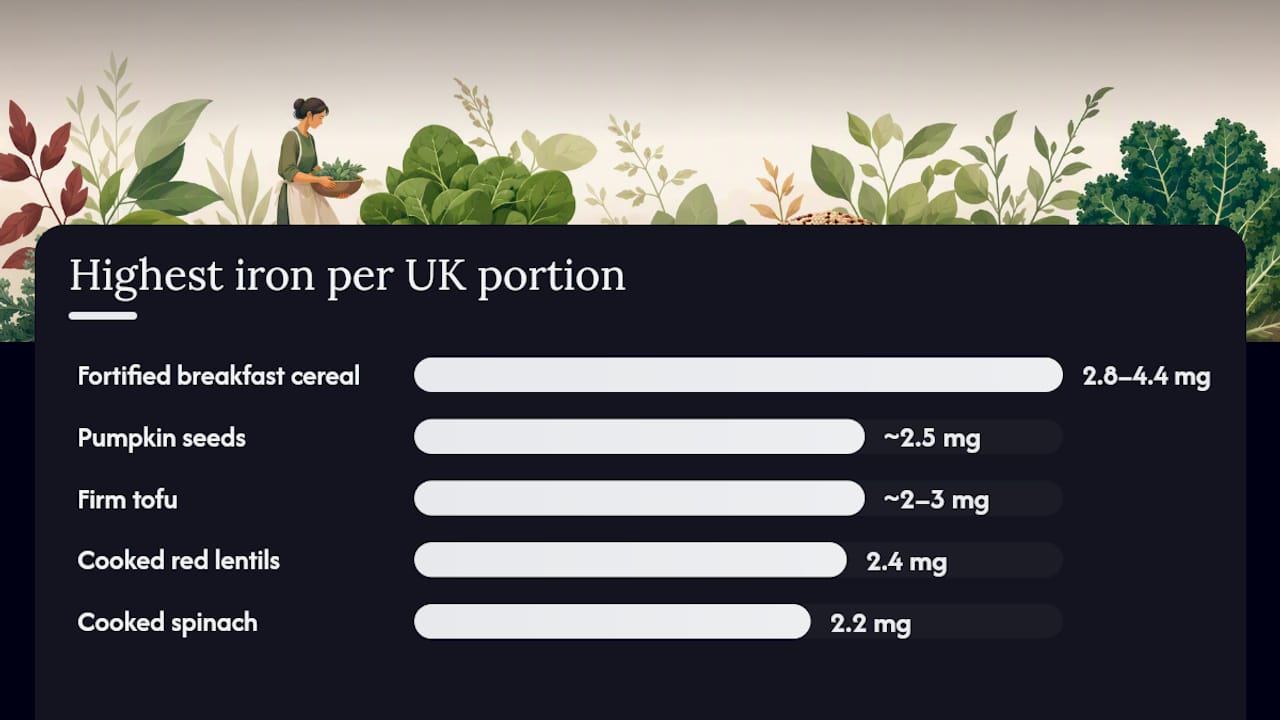
Values sourced from the BDA iron food fact sheet.
How can you improve non-haem iron absorption at every meal?
The single most effective step is pairing iron-rich foods with vitamin C. NHS guidance specifically names oranges, peppers, broccoli, and kiwi as foods that increase non-haem iron absorption when eaten at the same meal.
Vitamin C pairings that work:
- Orange juice or a whole orange with fortified cereal or porridge
- Sliced red pepper stirred into lentil soup or dahl
- Broccoli or kale alongside tofu stir-fry
- Tomatoes in a bean chilli or chickpea curry
- Lemon juice squeezed over cooked spinach
Inhibitors to manage:
The BDA advises avoiding tea and coffee for approximately two hours either side of a main meal. Tannins in tea bind to iron and reduce absorption significantly. Calcium-rich foods (dairy, fortified plant milks) taken in large amounts at the same meal can also compete with iron uptake, so it is worth spacing a large glass of fortified oat milk away from your most iron-dense meal of the day. Phytates, found in the outer layers of grains and legumes, are another inhibitor.
Preparation techniques that reduce phytates:
According to the BDA iron fact sheet, soaking, sprouting, and fermentation all reduce phytate content and improve bioavailability. Canning legumes has a similar effect. Fermented soya products like tempeh and miso are therefore better iron sources than unfermented equivalents.
Pro Tip: Cooking in a cast-iron pan can modestly increase the iron content of acidic foods like tomato-based sauces. It is a small effect, but it costs nothing and adds up over time.
What are the UK recommended daily iron intakes?
The NHS sets the UK reference intake at 8.7 mg/day for adult men and post-menopausal women, and 14.8 mg/day for women of reproductive age (11–50 years). People with heavy menstrual losses may need professional advice on whether supplements are appropriate.
These figures, underpinned by the SACN Iron and Health report, reflect the population-level reference values. The higher requirement for women of reproductive age reflects monthly iron losses through menstruation.
Groups at higher risk of deficiency:
- Women with heavy periods
- Pregnant people (requirements increase substantially)
- Children and adolescents during growth phases
- Frequent blood donors
- People with conditions affecting absorption (coeliac disease, Crohn’s disease)
- Long-term plant-based eaters who do not use fortified foods or pairing strategies
When to see a GP:
If you experience persistent fatigue, breathlessness, pale skin, brittle nails, or frequent headaches, book a GP appointment rather than starting iron tablets. The BDA is clear that routine supplementation is not recommended without testing, because excess iron carries its own health risks. A simple blood test confirms whether a deficiency exists and guides the appropriate response.
Portion examples: how much iron are you actually eating?
The table in the previous section gives per-serving figures. Here is how those portions combine across a day to reach the 8.7 mg target for adult men and post-menopausal women:
A bowl of fortified cereal (3.5 mg) + a 40 g serving of porridge oats at lunch (1.6 mg) + 100 g cooked lentils at dinner (2.4 mg) + a 30 g handful of pumpkin seeds as a snack (2.5 mg) = roughly 10 mg before accounting for any vegetables, bread, or dried fruit.
For women of reproductive age targeting 14.8 mg, adding a slice of wholemeal bread (0.9 mg), a portion of cooked spinach (2.2 mg), and a small serving of dried apricots (1.0 mg) brings the total to approximately 14 mg. Pairing each of these with vitamin C sources pushes effective absorption higher still. For more detailed portion guidance, the Granavitalis non-meat iron sources guide breaks this down further.
Quick meal ideas that make hitting iron targets realistic
Kingston and Richmond NHS guidance recommends including vitamin C at every meal and using canned or soaked legumes as a practical daily habit. These meal ideas put that into practice:
Breakfast options:
- Fortified cereal with a small glass of orange juice
- Porridge topped with pumpkin seeds and dried apricots, served with a kiwi
Lunch options:
- Lentil and spinach soup with a squeeze of lemon and wholemeal bread
- Chickpea and roasted pepper wrap with tomato salsa
Dinner options:
- Red lentil and tomato dahl with wilted kale and brown rice
- Tofu and broccoli stir-fry with sesame seeds over quinoa
- Black bean chilli with red peppers and a side of steamed spring greens
Snacks:
- Pumpkin seeds and dried apricots (portable, no prep needed)
- Tahini on oatcakes with sliced tomato
- A handful of edamame with a squeeze of lemon
Meal swaps to increase iron density:
- Swap white rice for quinoa or teff to add 1–1.5 mg per serving
- Replace iceberg lettuce with spinach or kale in salads
- Use tahini as a dressing base instead of cream-based sauces
For seasonal vegan meal inspiration that works with these principles, Wild Foodz offers a useful range of plant-forward menu ideas across the year.
A research-backed sample day for meeting UK iron targets
The following examples use sourced values from the BDA iron fact sheet and NHS tables.
For a woman of reproductive age (target: 14.8 mg/day):
- Breakfast: 30 g fortified cereal + small glass of orange juice = ~3.5 mg
- Mid-morning snack: 30 g pumpkin seeds + 30 g dried apricots = ~3.5 mg
- Lunch: 100 g cooked red lentils in a soup + 1 slice wholemeal bread + red pepper = ~3.3 mg
- Dinner: 100 g firm tofu stir-fry with broccoli and sesame seeds over 100 g cooked quinoa = ~5.0 mg
- Estimated daily total: approximately 15.3 mg
For an adult man or post-menopausal woman (target: 8.7 mg/day):
- Breakfast: 40 g porridge oats + pumpkin seeds + kiwi = ~3.5 mg
- Lunch: 200 g baked beans on 1 slice wholemeal bread + tomatoes = ~2.3 mg
- Dinner: 90 g cooked spinach with chickpeas and lemon dressing = ~3.5 mg
- Estimated daily total: approximately 9.3 mg
Every meal above pairs an iron source with vitamin C and avoids calcium-heavy foods at the same sitting. If a day falls short, a fortified cereal at breakfast is the simplest single fix. If symptoms of deficiency persist despite a varied diet, a GP appointment and blood test is the right next step, not a supplement bought over the counter.
Pro Tip: Batch-cook lentils or chickpeas at the weekend and freeze in portions. You can add them to any meal in minutes, which removes the main practical barrier to hitting iron targets on busy weekdays.
An editorial note on iron and plant-based eating
The conversation around plant-based iron tends to get stuck in two unhelpful places: either the reassurance that “you can get enough from plants” with no practical detail, or the anxiety that vegans are perpetually deficient. Neither serves you well.
What the evidence actually shows is more interesting. Human physiology adapts to habitual high-phytate diets over time, improving iron utilisation and reducing excretion. Long-term vegetarians do not consistently show higher rates of iron-deficiency anaemia than omnivores, which suggests the body is more capable of adjustment than the absorption percentages alone imply.
The practical implication is that the pairing strategies in this article matter most in the early stages of a dietary shift, or during high-demand periods like pregnancy or heavy menstruation. For most established plant-based eaters eating a varied diet with fortified foods, the system works. The risk is not the diet itself; it is a narrow, repetitive diet that leans on a few low-iron staples and skips the vitamin C pairing.
Personalise the advice. If you are in a higher-risk group, get tested. If you are not, focus on variety and the practical habits above rather than worrying about every milligram.
Granavitalis wholefood options for iron-boosting snacks
Getting enough iron from plants is genuinely achievable, and the snack layer of your day is one of the easiest places to build it. Nuts and seeds are among the best plant-based sources of iron, and nut butters make them effortless to include.
Granavitalis stocks raw organic pecan butter and an organic nut and seed butter selection box from RAWGORILLA, both minimally processed and free from additives. A spoonful of seed butter on oatcakes, stirred into porridge, or used as a dip for raw vegetables adds iron alongside healthy fats and protein with no preparation required. Browse the range at Granavitalis and find the option that fits your daily routine.
This article is for general information only and does not constitute medical advice. If you suspect iron deficiency, see your GP for a blood test before taking any supplement.
Sources
These are the primary authoritative sources used to build this article:
- NHS — The vegan diet
- British Dietetic Association — Iron-rich foods and iron deficiency
- Iron food fact sheet — British Dietetic Association (UHSussex PDF)
- Kingston and Richmond NHS — Iron diet sheet
- Gov
This article is general information, not a substitute for advice from a qualified doctor. Consult a qualified healthcare professional about your own circumstances before acting on anything here.