
Vegan breakfast meal prep: your weekly guide
TL;DR:
- Vegan breakfast meal prep involves preparing plant-based meals in advance to save time and ensure nutritional goals. It emphasizes batch-cooking versatile components like proteins, grains, and sauces, then combining them daily for variety; freezing burritos and layering parfaits are popular methods. Proper storage, moisture management, and focusing on high-protein ingredients make this approach efficient, budget-friendly, and satisfying.
Vegan breakfast meal prep is the practice of preparing plant-based breakfasts in advance so every morning starts with nutrition already handled. Done well, it saves 30–45 minutes daily, keeps your protein targets on track, and removes the temptation to skip breakfast entirely. The most reliable formats for plant-based morning prep are freezer burritos, layered parfaits, and chickpea flour casseroles. Each can be batch-cooked once a week and pulled out on demand. This guide covers every step, from stocking your kitchen to reheating without losing texture.
What ingredients and tools do you need for vegan breakfast meal prep?
The right pantry and equipment cut your prep time in half. Before you cook a single batch, stock these categories.
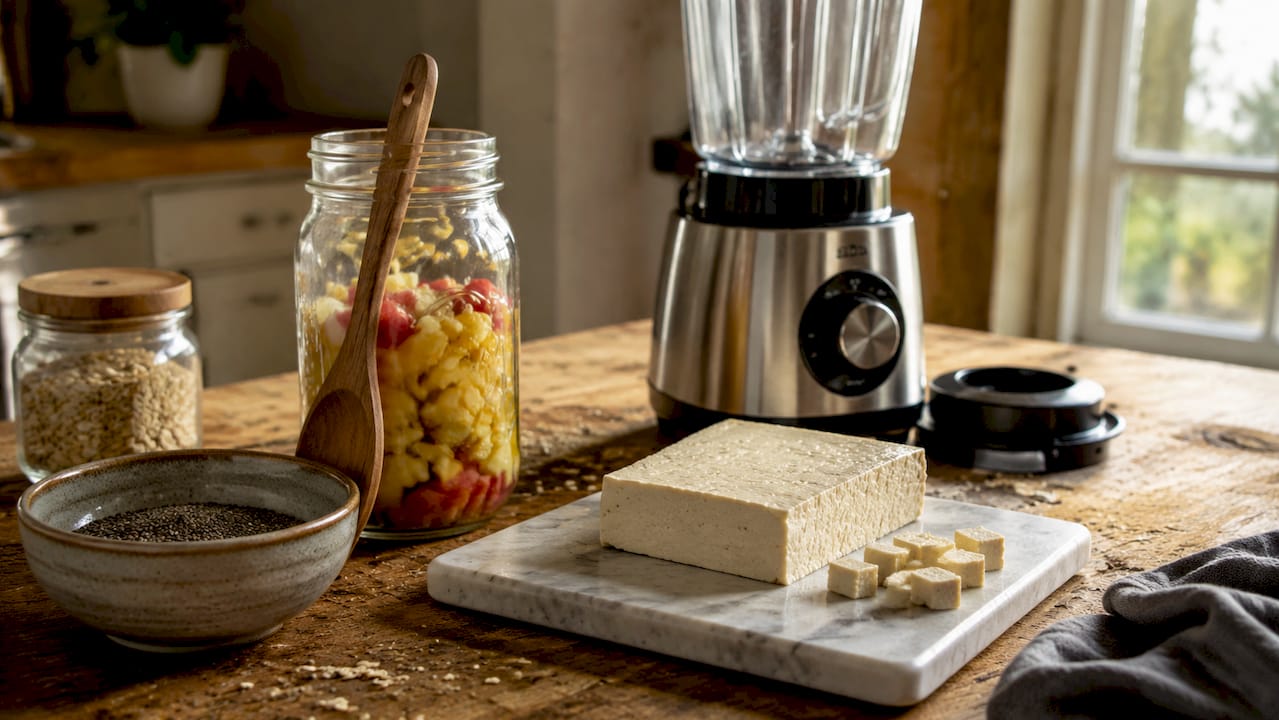
Plant-based proteins form the nutritional backbone of any prep session. Firm tofu, textured vegetable protein (TVP), canned chickpeas, and black beans all hold their texture after freezing or refrigerating. TVP and tofu scramble can push a single serving to around 42g of plant protein. That level of satiety means you stay full until lunch without snacking.
Pantry staples to keep on hand at all times:
- Rolled oats, quinoa, and brown rice for grain bases
- Chickpea flour for casseroles and egg-free omelettes
- Nutritional yeast for savoury, cheesy flavour without dairy
- Spices: smoked paprika, turmeric, cumin, garlic powder, and black salt (kala namak gives tofu an egg-like flavour)
- Non-dairy yogurts such as coconut, oat, or soya varieties for parfaits
- Nut butters for stirring into oats or spreading on wraps
Storage containers matter more than most people realise. Mason jars work brilliantly for parfaits and overnight oats. Airtight BPA-free tubs in 500ml and 1-litre sizes suit casseroles and grain bowls. For freezer burritos, individual wrapping in foil followed by a zip-lock bag prevents freezer burn.
Time-saving appliances worth owning include an Instant Pot for batch-cooking grains and legumes in under 20 minutes, and a high-speed blender for smoothie packs and sauces. A non-stick skillet is non-negotiable for tofu scrambles.
| Tool or ingredient | Purpose | Storage format |
|---|---|---|
| Firm tofu | High-protein scramble base | Fridge, up to 5 days cooked |
| TVP (textured vegetable protein) | Sausage-style filling | Dry pantry, rehydrate as needed |
| Mason jars (500ml) | Parfait and overnight oat layers | Fridge, up to 3 days |
| Airtight tubs (1 litre) | Casserole portions and grain bases | Fridge 5 days or freezer 3 months |
| Instant Pot | Batch grains and legumes | N/A |
Pro Tip: Shop once for the full week and batch-cook your grains and proteins on Sunday. Store them separately rather than assembling full meals. This gives you mix-and-match flexibility every morning without repeating the same dish.
How to prep and assemble vegan freezer breakfast burritos
Freezer burritos are the most efficient quick vegan breakfast option you can make. Total prep and cook time runs 30–45 minutes for a full batch, and they keep frozen for up to 3 months. That is a month of breakfasts from a single Sunday afternoon.
Step-by-step assembly:
- Press and crumble firm tofu, then cook in a non-stick pan with smoked paprika, turmeric, garlic powder, and black salt until golden. This is your scramble base.
- Rehydrate TVP in vegetable stock, then season with fennel, sage, and a splash of soy sauce to mimic a sausage-style filling.
- Cook black beans with cumin and a pinch of chilli until warmed through.
- Warm large flour tortillas in a dry pan for 30 seconds each side to make them pliable and less likely to crack when rolled.
- Layer fillings in the centre of each tortilla: scramble first, then beans, then TVP. Add diced peppers or spinach if using.
- Fold the sides inward, then roll tightly from the bottom up.
- Wrap each burrito individually in foil, then place in a labelled zip-lock bag.
- Freeze flat until solid, then stack to save space.
Common mistakes to avoid:
- Overfilling the tortilla, which causes splitting when frozen
- Adding wet ingredients like salsa or guacamole before freezing, which makes the tortilla soggy
- Skipping the tortilla warming step, which leads to cracking
Pro Tip: Place sauces in the centre of the filling, surrounded by drier ingredients. The dry layers act as a barrier between the sauce and the tortilla, keeping the wrap intact after freezing and reheating.
To reheat, remove the foil and microwave for 2–3 minutes, flipping halfway. For a crispier result, use an oven at 180°C for 15 minutes from frozen.
A well-made freezer burrito should taste freshly cooked. The difference between a soggy wrap and a great one comes down entirely to moisture management during assembly.
What are the best practices for vegan breakfast parfait meal prep?
Vegan parfaits are the fastest healthy vegan breakfast meal idea to assemble once your components are prepped. Layered properly in airtight glass containers, they stay fresh for up to 3 days in the fridge. Glass is preferable to plastic because it does not absorb odours and keeps layers visually distinct.
Layering order for maximum freshness:
- Bottom layer: non-dairy yogurt (coconut or oat yogurt holds texture best)
- Second layer: fresh or frozen fruit such as blueberries, mango chunks, or sliced strawberries
- Third layer: chia seeds or a Granavitalis organic superberry mix for antioxidant density
- Top layer: granola, added just before eating or stored separately
The granola placement is the most overlooked detail in parfait prep. Granola absorbs moisture noticeably within 24 hours when buried under yogurt. Store it in a small separate container or add it as the final top layer right before you eat.
| Layer | Best ingredient choices | Shelf life impact |
|---|---|---|
| Yogurt base | Coconut, oat, or soya yogurt | Stable up to 3 days |
| Fruit | Blueberries, mango, strawberries | Best within 2 days |
| Seeds or superfoods | Chia, goji, acai powder | No degradation |
| Granola | Oat-based, stored separately | Maintains crunch if separate |
Label each jar with the prep date so you rotate the oldest first. This is a simple habit that prevents waste and keeps your fridge organised.
Pro Tip: Stir a teaspoon of maple syrup or a pinch of cinnamon into your yogurt base before layering. It adds flavour depth without extra prep time, and it means you do not need to add sweetener in the morning.
How to create and store plant-based breakfast casseroles
Chickpea flour casseroles are the most underrated format in simple vegan breakfast prep. Chickpea flour (also called gram flour) behaves like eggs when baked, binding vegetables and spices into a sliceable, protein-rich slab. One baking tray feeds you for five days.
Basic preparation method:
- Whisk 200g chickpea flour with 400ml water, a tablespoon of nutritional yeast, half a teaspoon of turmeric, salt, and black pepper until smooth.
- Fold in diced courgette, cherry tomatoes, spinach, and any leftover roasted vegetables.
- Pour into a lined baking tray and bake at 180°C for 30–35 minutes until set and lightly golden on top.
- Allow to cool completely before cutting into portions. Cutting a warm casserole causes it to crumble.
- Wrap individual portions in baking paper, then place in an airtight container or zip-lock bag.
- Refrigerate for up to 5 days or freeze for up to 3 months.
Vegan breakfast casseroles reheat best after thawing overnight in the fridge, then warming in an oven at 175°C (approximately 350°F) for 10–12 minutes. This method restores the texture far better than a microwave, which tends to make the centre rubbery.
Pro Tip: Swap vegetables each week to prevent repetition. One week use courgette and sun-dried tomatoes; the next, use roasted red pepper and kale. The chickpea flour base stays the same, so the prep time never increases.
How do you organise your vegan breakfast prep workflow?
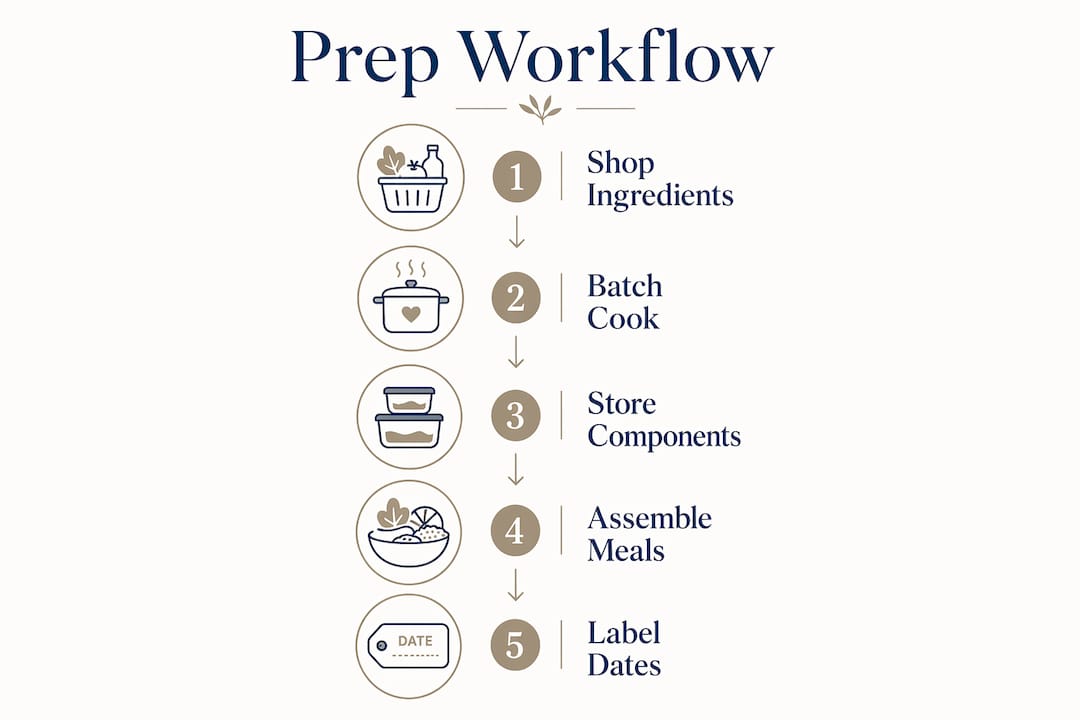
Component prepping rather than assembling full meals is the single most effective strategy for maintaining freshness and variety across the week. Cook your proteins, grains, and sauces separately, then combine them each morning in under two minutes.
A practical weekly workflow looks like this:
- Sunday: batch-cook grains (quinoa, oats, brown rice), proteins (tofu scramble, TVP, chickpeas), and one sauce or dressing
- Monday to Friday: assemble from components each morning, rotating combinations to avoid repetition
- Wednesday: check fridge stock and use anything approaching its third day in a parfait or wrap
Labelling containers with prep dates is the habit that separates organised meal preppers from those who end up throwing food away. Write the date on masking tape with a marker. It takes five seconds and removes all guesswork.
Protein is the nutrient most commonly neglected in vegan breakfast planning. High-protein vegan breakfasts support satiety and sustained energy, which means fewer mid-morning energy dips. Aim to include at least one protein source in every prepped breakfast. For more structured guidance on hitting your protein targets, the Granavitalis weekly breakfast prep guide covers component-based planning in detail.
Pro Tip: Batch-prep individual components separately and store in airtight containers. Grains, proteins, and sauces kept apart stay fresh for up to 7 days and give you genuinely different meals every morning without any extra cooking.
Key takeaways
Vegan breakfast meal prep works best when you batch-cook versatile components separately, prioritise protein in every dish, and manage moisture carefully in freezer and fridge storage.
| Point | Details |
|---|---|
| Protein is non-negotiable | TVP and tofu scramble together can deliver around 42g of plant protein per serving. |
| Freezer burritos last 3 months | Prep a full batch in 30–45 minutes and freeze for up to 3 months for ready breakfasts. |
| Parfaits need granola stored separately | Granola absorbs moisture within 24 hours; keep it apart until serving to maintain crunch. |
| Component prep beats full assembly | Storing grains, proteins, and sauces separately keeps food fresh for up to 7 days. |
| Label everything with prep dates | Date labels prevent waste and make fridge rotation intuitive and automatic. |
Why I stopped assembling full meals on Sunday
I used to spend Sunday evenings building complete breakfasts: burritos rolled and stacked, parfaits fully layered, casseroles portioned and sealed. By Wednesday, half of it was either soggy or boring. The granola had turned to mush. The burritos I had not frozen were drying out. I was eating the same thing four days running and starting to resent the whole process.
The shift that changed everything was moving to component prep. I now cook a large batch of tofu scramble, a pot of quinoa, and a jar of tahini dressing. That is it. Every morning I spend two minutes combining them differently. Monday is a burrito. Tuesday is a grain bowl with berries. Wednesday the scramble goes into a wrap with leftover casserole. Nothing repeats.
The other thing I would tell anyone starting out: do not underestimate black salt. A pinch of kala namak in your tofu scramble produces a flavour so close to eggs that most people cannot tell the difference. It is the single ingredient that makes plant-based breakfasts feel genuinely satisfying rather than a compromise.
For anyone worried about budget, vegan breakfast on a budget is entirely achievable with this approach. Tofu, TVP, oats, and chickpea flour are among the cheapest ingredients in any supermarket. The cost per serving for a freezer burrito works out significantly lower than any shop-bought alternative. You are not sacrificing quality. You are just planning ahead.
— Jarrod
Upgrade your morning prep with Granavitalis
Your meal prep foundations are solid. Now the details make the difference.

Granavitalis sources ingredients that genuinely earn their place in a prepped breakfast. Stir Raw Organic Pecan Butter into overnight oats for a rich, protein-dense base, or work through the Organic Nut & Seed Butter Selection Box to find your favourite parfait topping. For an antioxidant lift, the Immune Booster Superfood Bundle adds goji, acai, and acerola to your morning rotation without any extra prep. Every product is transparently sourced, minimally processed, and built for the kind of mornings where nutrition cannot be an afterthought.
FAQ
How long does vegan breakfast meal prep last in the fridge?
Most prepped vegan breakfasts last 3–5 days in the fridge when stored in airtight containers. Parfaits stay fresh for up to 3 days, while cooked grains and proteins hold well for up to 5 days.
Can you freeze vegan breakfast burritos?
Yes. Vegan freezer breakfast burritos store well for up to 3 months when wrapped in foil and sealed in a zip-lock bag. Reheat from frozen in the microwave for 2–3 minutes or in the oven at 180°C for 15 minutes.
What is the best protein source for vegan breakfast meal prep?
TVP and firm tofu are the most practical options for batch prepping. Used together, they can reach around 42g of protein per serving, which supports satiety and steady energy through the morning. For more options, see the Granavitalis guide to vegan protein sources.
Why does my granola go soggy in parfaits?
Granola absorbs moisture from yogurt and fruit within 24 hours. Store it in a separate container and add it as the final layer just before eating to keep it crunchy throughout the week.
Is vegan breakfast meal prep budget-friendly?
Vegan breakfast prep is one of the most cost-effective ways to eat well. Staples like oats, chickpea flour, tofu, and TVP cost very little per serving. Batch cooking reduces food waste further, which lowers the overall weekly spend considerably.