
Role of omega 3 in plant foods: your nutrition guide
TL;DR:
- Plant-based omega-3s mainly come from alpha-linolenic acid, which is found in flaxseeds, chia seeds, walnuts, and hemp seeds. The body converts ALA into EPA and DHA very inefficiently, making supplementation with algal oil important for direct EPA and DHA intake. Prioritizing ALA absorption and reducing omega-6 intake improve omega-3 benefits, especially for brain and heart health.
Omega-3 fatty acids from plant foods are defined primarily as alpha-linolenic acid (ALA), an essential fat the body cannot produce and must obtain through diet. ALA is the dominant plant-based omega-3 form, found in flaxseed, chia seeds, walnuts, and hemp seeds, and it plays a direct role in supporting cardiovascular function, reducing inflammation, and maintaining cognitive health. The body partially converts ALA into the longer-chain forms eicosapentaenoic acid (EPA) and docosahexaenoic acid (DHA), though this conversion is limited. Understanding the role of omega 3 in plant foods means understanding both what ALA delivers on its own and where dietary strategy must fill the gaps.
What are the richest plant sources of omega-3 fatty acids?
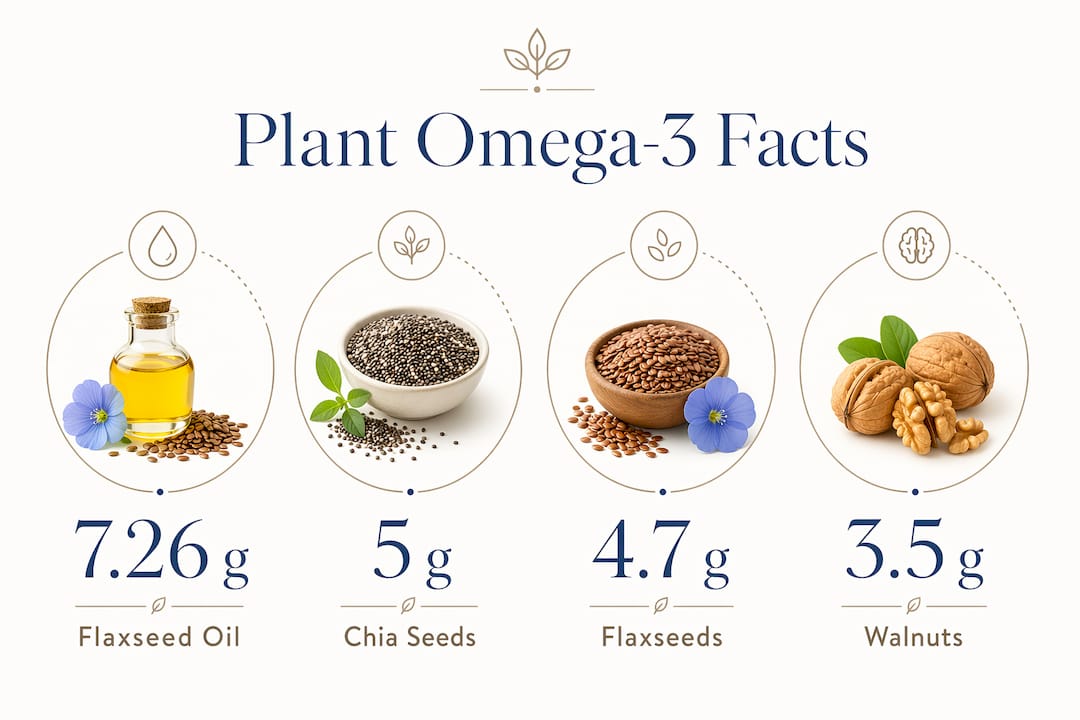
Plant foods deliver ALA in meaningful quantities, and the differences between sources matter for daily planning. Flaxseed oil leads all plant sources, providing approximately 7.26 grams of ALA per tablespoon. That single tablespoon exceeds the daily adequate intake for most adults in one serving.
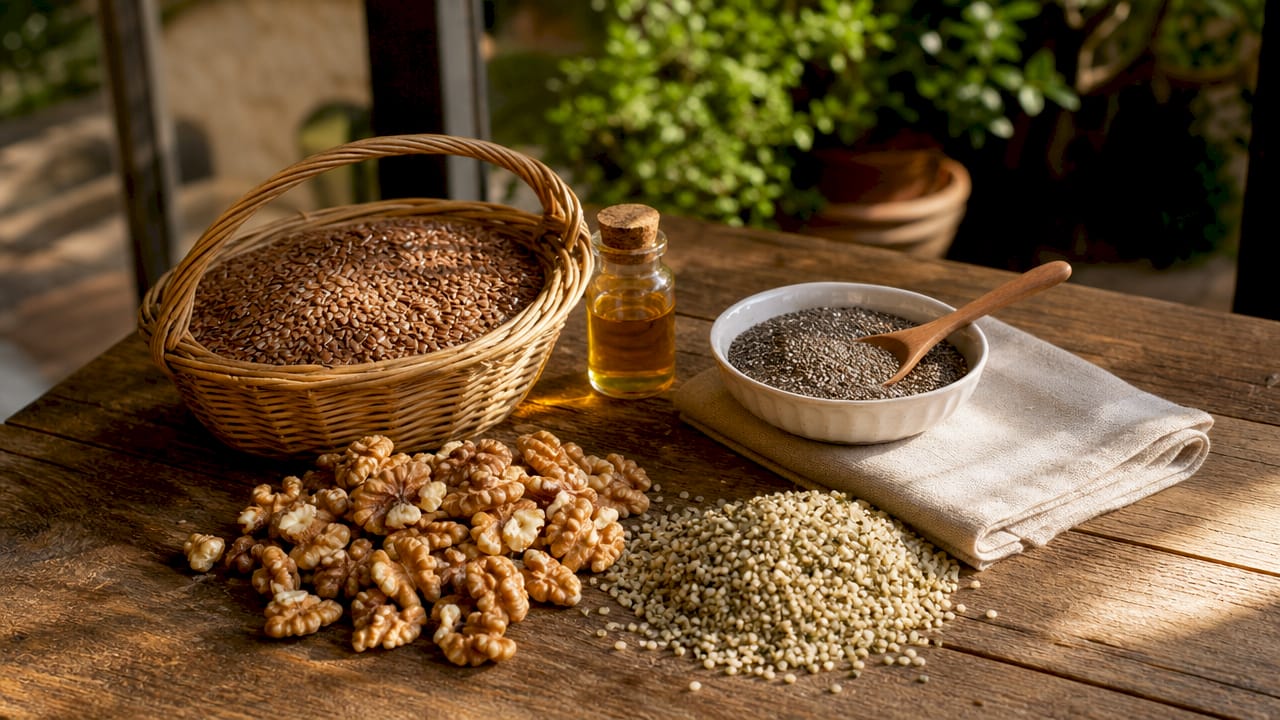
Whole flaxseeds provide 4.7 grams of ALA per two-tablespoon serving, chia seeds deliver 5 grams per ounce, and walnuts contribute 2.38 grams per ounce. Hemp seeds offer a smaller but still useful amount alongside a favourable protein profile. Each of these foods also brings co-nutrients: chia seeds add fibre and magnesium, walnuts supply polyphenols, and hemp seeds provide all nine essential amino acids.
| Plant food | Serving size | ALA content |
|---|---|---|
| Flaxseed oil | 1 tablespoon | 7.26 g |
| Chia seeds | 1 oz (28 g) | 5.0 g |
| Ground flaxseeds | 2 tablespoons | 4.7 g |
| Walnuts | 1 oz (28 g) | 2.38 g |
| Hemp seeds | 3 tablespoons | approx. 1.0 g |
Preparation matters as much as selection. Whole flaxseeds pass undigested, meaning the ALA inside never reaches your bloodstream. Grinding flaxseeds before eating them is the single most effective step you can take to unlock their nutritional value. A coffee grinder works well; store ground flaxseed in an airtight container in the fridge and use within a week.
Pro Tip: Never cook with flaxseed oil. High temperatures destroy its omega-3 content, making it nutritionally inert. Drizzle it cold over salads, stir it into yoghurt, or blend it into smoothies instead. Store the bottle refrigerated and away from light at all times.
For a deeper look at why omega-rich seeds deserve a permanent place in your diet, the practical culinary strategies are worth exploring in full.
How efficient is ALA conversion to EPA and DHA?
The body converts ALA into EPA and DHA through a chain of enzymatic steps, but the process is slow and inefficient. Only 3–10% of ALA converts to EPA, and less than 1% converts to DHA. Eating more flaxseed does not meaningfully raise EPA or DHA tissue levels, even when ALA intake is high.
This matters because EPA and DHA perform distinct biological functions that ALA cannot replicate. EPA regulates inflammatory pathways and supports cardiovascular function. DHA is a structural component of brain tissue and the retina. Low levels of both are associated with impaired cognitive function and increased cardiovascular risk.
The Western diet compounds this problem significantly. The typical omega-6 to omega-3 ratio sits at 15:1 to 20:1, far above the ideal 4:1 ratio. Omega-6 fatty acids compete for the same enzymes needed to convert ALA into EPA and DHA. The higher the omega-6 load, the less ALA gets converted.
The physiological consequences of chronically low EPA and DHA include:
- Increased systemic inflammation, measured by elevated C-reactive protein (CRP)
- Reduced neuronal membrane fluidity, affecting mood and cognitive speed
- Impaired platelet function and blood vessel regulation
- Greater susceptibility to age-related cognitive decline
“Algal oil is the only reliable direct plant-based source of preformed EPA and DHA. It raises blood DHA levels within 4–8 weeks and matches fish oil in bioavailability, making it the supplement of choice for plant-based eaters who need to close the EPA/DHA gap.”
Algal oil is derived from the same marine algae that fish consume to accumulate omega-3s. Choosing algal oil means bypassing the fish entirely while still obtaining preformed EPA and DHA directly.
What are the health benefits of omega-3 from plant foods?
ALA delivers genuine cardiovascular benefits independent of its conversion to EPA and DHA. High ALA intake is associated with up to a 10% reduced risk of heart disease, achieved through lower blood lipids, improved blood vessel function, and reduced inflammatory markers including C-reactive protein. That is a meaningful reduction from a dietary change alone.
The anti-inflammatory effects of ALA are particularly relevant for people eating a diet high in processed foods. Omega-3 fatty acids from plant sources help regulate the inflammatory response that underlies conditions ranging from arterial stiffness to joint discomfort. This is not a secondary benefit. Chronic low-grade inflammation is a driver of most major non-communicable diseases.
Brain health is where the ALA-to-DHA conversion gap becomes most consequential. ALA contributes to general neurological function, but DHA is the structural fat of the brain. For plant-based eaters, algae-based EPA and DHA supplements are recommended specifically because the conversion route cannot reliably supply enough DHA for optimal brain and retinal health.
The benefits of plant-based omega-3s are maximised within a broader lifestyle context:
- Regular aerobic exercise amplifies the cardiovascular effects of ALA
- Stress management reduces cortisol, which otherwise impairs fatty acid metabolism
- A diet low in refined seed oils reduces omega-6 competition
- Consistent daily intake matters more than occasional large doses
Pro Tip: Combining omega-3 intake with exercise and stress management produces greater cardiovascular benefit than dietary change alone. Treat plant-based omega-3s as one component of a coherent health approach, not a standalone intervention.
The connection between plant proteins and cardiovascular outcomes is also worth noting. Research shows plant protein carries a 19% lower CVD risk compared to animal protein, and omega-3 intake from the same plant foods reinforces that advantage.
How can you optimise omega-3 intake from plant foods?
Optimising plant-based omega-3 intake requires two parallel strategies: maximising ALA absorption and reducing the factors that impair its conversion. Most people focus only on the first and neglect the second entirely. Consuming plant-based omega-3s while maintaining high omega-6 intake actively diminishes the benefit of every seed and nut you eat.
Building a daily ALA foundation
Include at least one of the following in every main meal:
- Two tablespoons of ground flaxseed stirred into porridge, yoghurt, or a smoothie
- One ounce of walnuts as a snack or salad topping
- One ounce of chia seeds soaked overnight for a pudding or added to baked goods
- Three tablespoons of hemp seeds sprinkled over grain bowls or blended into protein shakes
Rotate between sources to benefit from their different co-nutrients. Chia seeds provide more fibre; walnuts provide more polyphenols; hemp seeds provide more protein. Variety is not just culinary preference. It is nutritional strategy.
Reducing omega-6 competition
Cutting processed seed oils such as sunflower, corn, and soybean oil from your cooking is the most direct way to lower your omega-6 load. Replace them with olive oil for cooking and flaxseed oil for cold use. This single change shifts the omega-6 to omega-3 ratio meaningfully without requiring any additional supplementation.
| Strategy | Action | Expected outcome |
|---|---|---|
| Grind flaxseeds | Use a grinder before eating | Full ALA absorption |
| Store flaxseed oil cold | Refrigerate, avoid light | Preserved omega-3 content |
| Replace seed oils | Switch to olive oil for cooking | Lower omega-6 competition |
| Add algal oil supplement | 250–500 mg EPA/DHA daily | Direct EPA/DHA supply |
| Rotate ALA sources | Flax, chia, walnut, hemp | Broader co-nutrient intake |
For plant-based eaters who want to ensure adequate EPA and DHA, algal oil supplementation is the most reliable route. The role of omega-3 in mental performance is well documented, and algal oil provides the preformed DHA that supports it directly. Balancing your overall plant nutrient intake is equally worth attention, and the principles behind balancing plant nutrition apply directly to omega-3 strategy.
Key takeaways
Plant-based omega-3 nutrition centres on maximising ALA absorption, reducing omega-6 competition, and supplementing with algal oil to supply the EPA and DHA that conversion alone cannot reliably deliver.
| Point | Details |
|---|---|
| ALA is the primary plant omega-3 | Flaxseed oil, chia seeds, walnuts, and hemp seeds are the richest dietary sources. |
| Conversion to EPA/DHA is limited | Only 3–10% of ALA converts to EPA; less than 1% converts to DHA. |
| Omega-6 intake impairs conversion | Reducing processed seed oils is as important as increasing omega-3 foods. |
| ALA supports heart health directly | High ALA intake is linked to up to a 10% reduction in heart disease risk. |
| Algal oil closes the EPA/DHA gap | It raises DHA blood levels within 4–8 weeks and matches fish oil in bioavailability. |
Why plant omega-3s deserve more nuance than they get
Most nutrition content treats plant-based omega-3s as either a complete solution or a hopeless compromise. Neither framing is accurate, and both lead people astray.
What I have found, working through the nutritional evidence and applying it practically, is that ALA is genuinely valuable on its own terms. The cardiovascular data is solid. The anti-inflammatory effects are real. The problem is not that plant omega-3s are weak. The problem is that most people eat them against a backdrop of such high omega-6 intake that the benefit is largely cancelled out before it begins.
The conversation almost never starts there. People add chia seeds to their smoothie and feel virtuous, while continuing to cook with sunflower oil and eating crisps fried in corn oil. The addition is real; the subtraction is invisible. Fixing the omega-6 side of the equation is, in my view, the highest-leverage change most plant-based eaters can make.
Algal oil supplementation is the other piece that gets underused. It is not a concession to the idea that plants are insufficient. It is a recognition that the conversion pathway has a hard biological ceiling, and that brain and retinal health require DHA at levels ALA simply cannot supply reliably. Taking algal oil alongside a well-constructed plant diet is not a workaround. It is the complete strategy.
— Jarrod
Granavitalis nut and seed butters: plant omega-3s made easy
Getting consistent omega-3 intake from plant foods is straightforward when the right ingredients are already in your kitchen.

Granavitalis sources organic nuts and seeds with the same commitment to purity that underpins every product in the range. The Raw Organic Pecan Butter delivers healthy plant fats in a form that is ready to eat straight from the jar, stirred into porridge, or spread on wholegrain bread. For variety, the organic nut and seed butter selection box brings together multiple sources of plant-based fats and nutrients in one order, making it easy to rotate between options daily. Every product is minimally processed, transparently sourced, and built around the principle that real nutrition comes from real food.
FAQ
What is the main omega-3 in plant foods?
Alpha-linolenic acid (ALA) is the primary omega-3 fatty acid found in plant foods. It is an essential fat, meaning the body cannot produce it and must obtain it through diet.
Do plants provide EPA and DHA directly?
Most plants do not provide EPA or DHA. Algae are the exception, and algal oil supplements derived from marine algae supply preformed EPA and DHA directly without requiring conversion from ALA.
How much ALA do I need each day?
Adequate intake guidelines for ALA are approximately 1.6 grams per day for adult men and 1.1 grams per day for adult women. A single tablespoon of flaxseed oil or one ounce of chia seeds exceeds these amounts.
Why is my omega-6 intake relevant to omega-3 status?
Omega-6 fatty acids compete for the same enzymes that convert ALA to EPA and DHA. A Western diet with an omega-6 to omega-3 ratio of 15:1 to 20:1 severely limits ALA conversion, reducing the effective benefit of plant omega-3 intake.
Can I get enough omega-3 from plants without supplements?
You can meet ALA requirements through plant foods alone. However, achieving adequate EPA and DHA from plants without supplementation is not reliably possible due to the low conversion efficiency from ALA, making algal oil supplementation the recommended approach for plant-based eaters.