
4 Week Plant Based Start for Busy People: Prevent B12 and Iron Gaps
A plant-based diet means most of what’s on your plate comes from vegetables, wholegrains, legumes, nuts, seeds and fruit rather than meat or dairy. It’s a spectrum, not a single rulebook: some people eat plant-based most days with occasional fish or eggs, others go fully vegan. Either way, the health payoff hinges on one thing: choosing whole, minimally processed foods over packaged plant-based substitutes.
TL;DR:
- Most people following a plant-based diet still consume some animal products, with flexible approaches like flexitarianism being most common.
- A well-planned diet focusing on minimally processed foods can lower the risk of chronic diseases such as diabetes and heart disease, but reliance on processed foods negates these benefits.
- Nutrients like vitamin B12, iron, iodine, calcium, vitamin D, and selenium require extra attention and, in some cases, supplementation or fortified foods.
- Transitioning gradually over four weeks with pantry staples and balanced meals helps sustain the diet without overwhelming change.
- Hidden animal ingredients in processed plant-based foods and overconsumption of ultra-processed snacks are common pitfalls to avoid.
Table of Contents
- What can you eat on a plant-based diet? Real meals, not theory
- Vegan, flexitarian, pescatarian: which type fits you?
- Does the evidence actually back the health claims?
- Nutrients that need extra attention
- How to start a plant-based diet without overhauling everything at once
- Where plant-based eating goes wrong
- How Granavitalis fits into a well-planned plant-based diet
- A straight-talking note on getting it right
- Sources
- FAQ
What can you eat on a plant-based diet? Real meals, not theory
What does a plant-based diet consist of in practice? Think oats with chia seeds and berries for breakfast, a lentil and vegetable stew for lunch, and wholegrain pasta with roasted vegetables and chickpeas for dinner. Nut butters, hummus and roasted seeds fill the snack gap.
The distinction that trips people up is whole versus ultra-processed. A bowl of brown rice, black beans, avocado and salsa is plant-based and nutrient-dense. A plate of vegan nuggets, chips and a fizzy drink is technically plant-based too, but nutritionally it’s closer to any other processed meal. The definition of a plant-based diet used in academic reviews centres specifically on minimally processed fruits, vegetables, wholegrains, legumes, nuts and seeds, not on the absence of animal products alone.
Simple swaps that work day to day:
- Swap white bread for wholegrain or sourdough with a nut butter spread
- Replace half the mince in a bolognese with cooked lentils
- Use tinned chickpeas or beans instead of processed meat substitutes
- Snack on roasted seeds and fruit instead of packaged vegan biscuits
Vegan, flexitarian, pescatarian: which type fits you?
Plant-based nutrition isn’t one diet. It’s a family of approaches that differ mainly in how much animal food, if any, they allow, and common classifications include:
- Vegan: no animal products at all, including dairy, eggs and honey
- Lacto-ovo vegetarian: no meat or fish, but dairy and eggs are fine
- Lacto vegetarian: dairy allowed, eggs excluded
- Ovo vegetarian: eggs allowed, dairy excluded
- Pescatarian: mostly plant-based with fish included
- Flexitarian: predominantly plant-based, with occasional meat or fish
So can you eat chicken on a plant-based diet? Under a strict or vegan definition, no. Under a flexitarian approach, occasional chicken is entirely compatible; the label just describes where most of your calories come from. Most people who say they eat plant-based are flexitarian in practice, not strictly vegan, which is one reason flexible approaches tend to stick where rigid ones fail.
Does the evidence actually back the health claims?
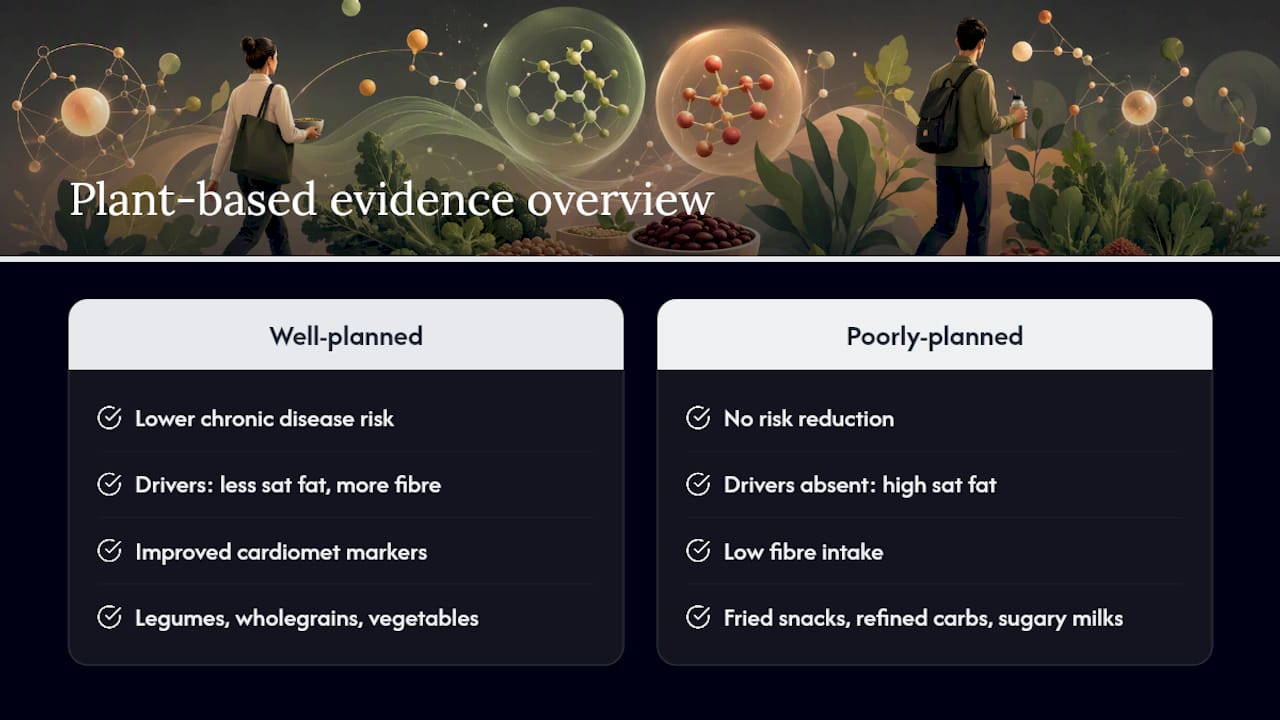
Yes, with a condition attached. Well-planned plant-based diets are linked to reduced risk of type 2 diabetes, heart disease, high blood pressure, obesity and some cancers, according to NHS guidance. Peer-reviewed research on the mechanisms behind these effects points to lower saturated fat intake, higher fibre, and improved cardiometabolic markers as the drivers.
That word “well-planned” is doing real work. The British Dietetic Association is explicit that plant-based eating must be deliberately structured to be nutritionally complete, and warns against leaning too heavily on highly processed plant foods. A diet built on fried snacks, refined carbohydrates and sugary plant milks won’t deliver the same outcomes as one built on legumes, wholegrains and vegetables, even if both technically qualify as plant-based. NHS and hospital resources, including UCLH’s patient guidance, consistently frame plant-based eating as suitable across life stages, provided it’s planned properly.
Nutrients that need extra attention
Cutting or reducing animal foods removes some nutrients that are harder to source from plants alone. The main ones to plan around: vitamin B12, iron, iodine, calcium, vitamin D, selenium and, for some, protein.
- Vitamin B12: found almost exclusively in animal foods; vegans need fortified foods or a supplement
- Iron: plant (non-haem) iron absorbs less efficiently than the iron in meat
- Iodine: seaweed and iodised salt help, but levels vary with UK soil and diet
- Calcium: fortified plant milks, tofu set with calcium, and leafy greens all contribute
- Vitamin D: limited UK sunlight for much of the year makes fortified foods or a supplement worth considering
- Selenium: Brazil nuts are one of the richest plant sources
- Protein: legumes, tofu, seitan and plant-based protein powders can help meet higher needs
Pro Tip: Pair iron-rich foods like lentils or spinach with a vitamin C source, such as peppers or citrus, in the same meal. Vitamin C meaningfully improves how much plant iron your body actually absorbs, since plant iron is less bioavailable than the haem iron in meat.
Anyone following a stricter plant-based diet long-term should speak to a registered dietitian or GP, particularly if you’re pregnant, breastfeeding, or feeding children this way.
How to start a plant-based diet without overhauling everything at once
You don’t need to convert your kitchen overnight. A phased approach holds up far better than an all-or-nothing switch that burns out by week three.
- Week 1: Swap your usual breakfast for oats or wholegrain toast with a plant-based topping, and add a tin of beans or lentils to one meal a day.
- Week 2: Make two dinners a week fully plant-based, using legumes or tofu as the protein base.
- Week 3: Introduce fortified plant milk and start checking labels for hidden animal ingredients in packaged foods.
- Week 4: Aim for plant-based meals as the default, with animal foods as the occasional exception rather than the rule.
Stock your pantry with ancient grains, dried or tinned lentils and beans, nut butters, seeds, and fortified plant milks so a decent meal is always within reach. A reliable formula for building any plate: starch, plus vegetables, plus a plant protein, plus a healthy fat, plus seasoning. Granavitalis has a longer walkthrough on pantry staples for a whole-food plant-based start and a phased four-week plan if you want more structure than the outline above. For meal inspiration through the seasons, Wild Foodz’s seasonal vegan menu ideas are a genuinely useful companion.
Where plant-based eating goes wrong
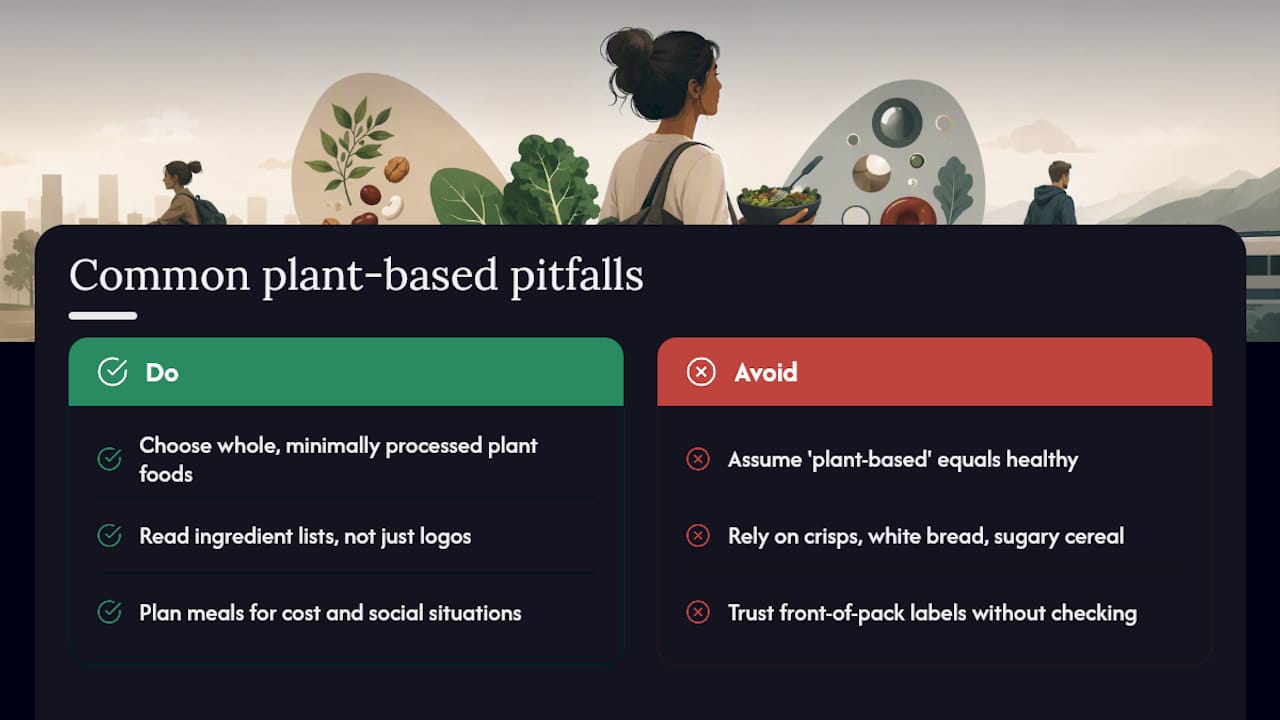
The biggest misconception is that “plant-based” automatically means healthy. It doesn’t. Crisps, white bread and sugary cereal are all plant-based and all nutritionally poor. Dietitians specifically flag over-reliance on highly processed plant foods as a genuine risk of the label being treated too loosely.
A second trap: hidden animal ingredients. Some processed vegetarian or vegan-labelled products contain gelatine, whey, or fish-derived additives that aren’t obvious from the front of the pack, so reading ingredient lists matters more than trusting a logo. Cost and social friction are real too. Speciality proteins and fortified products can be pricier than the food they replace, and eating out with non-plant-based friends takes some navigating. Neither is a reason to abandon the approach; both are reasons to plan ahead.
How Granavitalis fits into a well-planned plant-based diet
Some companies specialise in ancient grains, premium nuts, and clean plant proteins that stay on the whole-food side of the plant-based spectrum rather than the ultra-processed side. If you want to go deeper on food sources, the complete guide to plant-based food groups and the guide to iron-rich vegan foods cover the ground this article can only summarise.
A straight-talking note on getting it right
Perfection isn’t the goal here. Variety and planning beat any single “perfect” plant-based meal, because deficiencies creep in through repetition, not through the occasional processed snack. If you’re making significant changes, particularly around B12, iron or calcium, a registered dietitian will save you months of guesswork. Beyond that, build your pantry, keep a few staples on hand, and let recipes guide the rest.
— Jarrod
This article is general information, not a substitute for advice from a qualified doctor. Consult a qualified healthcare professional about your own circumstances before acting on anything here.
Sources
- The vegan diet - NHS
- Definition of a plant-based diet and overview of this special issue - PMC
- Vegetarian, vegan and plant-based diets - British Dietetic Association
- A nourishing plant-based diet - UCLH
FAQ
What is an example of a plant-based diet?
A typical day might include oats with fruit and seeds for breakfast, a lentil salad for lunch, and wholegrain pasta with roasted vegetables and chickpeas for dinner, all built around minimally processed wholefoods.
Can I eat chicken on a plant-based diet?
Under a strict or vegan definition, no, but under a flexitarian approach, occasional chicken fits fine since the diet is defined by what’s predominant, not what’s forbidden.
What is the downside of a plant-based diet?
The main risks are nutrient shortfalls in B12, iron, iodine, calcium, vitamin D and selenium if the diet isn’t planned, plus over-reliance on highly processed plant foods that undercut the health benefits.
Do you eat eggs on a plant-based diet?
It depends on the subtype: vegans exclude eggs entirely, ovo-vegetarians include them while excluding dairy, and lacto-ovo vegetarians and flexitarians typically include them without issue.