
Vegan foods high in iron: your UK guide
Pulses, fortified cereals, tofu, seeds, dried fruit, dark leafy greens, and wholegrains are the most reliable plant-based iron sources for vegans in the UK. The two rules that matter most: include an iron-rich food at every main meal, and pair it with something high in vitamin C. Avoid tea or coffee within an hour of eating. Those three habits alone can meaningfully shift how much iron your body actually absorbs.
The NHS recommends specific daily iron intake targets for women aged 19–50 and men aged 19–50 and everyone over 50. Because plant foods contain non-haem iron (less readily absorbed than the haem iron in meat), vegans often need to eat more iron-rich food overall to hit those targets reliably.
Highest-impact vegan iron foods at a glance:
- Pulses — red lentils, chickpeas, kidney beans
- Fortified breakfast cereals — Weetabix, All Bran
- Tofu and tempeh — firm tofu especially
- Seeds — pumpkin seeds, hemp seeds, sesame seeds
- Nuts — cashews, almonds
- Dried fruit — apricots, figs, raisins
- Dark leafy greens — kale, spinach, spring greens
- Wholegrains — quinoa, oats, wholemeal bread
Key takeaways
Plant-based iron needs are entirely achievable on a vegan diet when you combine the right foods, pair them with vitamin C, and keep tea and coffee away from mealtimes.
| Point | Details |
|---|---|
| UK RNI targets | 14.8 mg/day for women aged 19–50; 8.7 mg/day for men aged 19–50 and everyone over 50. |
| Top iron foods | Fortified cereals, red lentils, firm tofu, pumpkin seeds, and quinoa are among the highest-impact plant sources per portion. |
| Vitamin C pairing | Adding bell peppers, orange juice, or lemon juice to iron-rich meals reliably improves non-haem iron absorption. |
| Avoid tea/coffee at meals | Tannins in tea and coffee substantially reduce iron absorption; drink them between meals instead. |
| Granavitalis | Nut and seed butters from Granavitalis integrate easily into iron-focused meals as concentrated wholefood sources. |
Table of Contents
- Why iron matters and which vegans are most at risk
- How much iron do you need? UK RNIs explained
- Which vegan foods are highest in iron?
- How to boost iron absorption from plant foods
- What does a day of iron-rich vegan eating look like?
- When should you test your iron levels?
- An editorial perspective on iron and plant-based eating
- Granavitalis products that support your daily iron intake
- Sources
Why iron matters and which vegans are most at risk
Iron is the mineral your body uses to make haemoglobin, the protein in red blood cells that carries oxygen from your lungs to every tissue. Without enough of it, your cells run short of oxygen and your body starts to struggle.
Symptoms of low iron include:
- Persistent fatigue and low energy
- Breathlessness during normal activity
- Pale skin or pale inner eyelids
- Poor exercise tolerance or slow recovery
- Difficulty concentrating
- Brittle nails or hair loss
These symptoms overlap with many other conditions, so a GP blood test is the only way to confirm iron deficiency. Self-diagnosing and supplementing without testing is not advisable.
Some vegan subgroups face a higher risk of running low:
- Menstruating people — monthly blood loss increases iron requirements significantly
- Pregnant people — demand rises sharply during pregnancy
- Frequent blood donors — each donation depletes iron stores
- Endurance athletes — foot-strike haemolysis and sweat losses add up
- Young children — rapid growth increases needs relative to body weight
If you experience persistent fatigue, breathlessness, or any combination of the symptoms above, speak to your GP before adjusting your diet or taking supplements. A simple blood test measuring ferritin and haemoglobin will give you a clear picture of your iron status.
How much iron do you need? UK RNIs explained
The UK Reference Nutrient Intake (RNI) is the amount considered sufficient for most healthy adults. SACN’s iron and health review underpins these figures, which the NHS publishes as the practical targets for the UK population.
| Group | UK RNI | Notes |
|---|---|---|
| Men aged 19–50 | A lower iron intake target than menstruating women | Lower requirement; no monthly blood loss |
| Women aged 19–50 | A higher iron intake target due to menstrual losses | Higher due to menstrual losses |
| Everyone over 50 | A lower iron intake target similar to men aged 19–50 | Post-menopause requirement drops |
What this means for vegans specifically: NCBI Bookshelf’s overview of iron physiology explains that non-haem iron from plant foods is absorbed at a lower rate than haem iron from meat. Absorption varies depending on your current iron stores, what else you eat at the same meal, and preparation methods. The practical implication is that vegans should aim to eat iron-rich plant foods consistently throughout the day rather than relying on one large serving.
Practical interpretation tips:
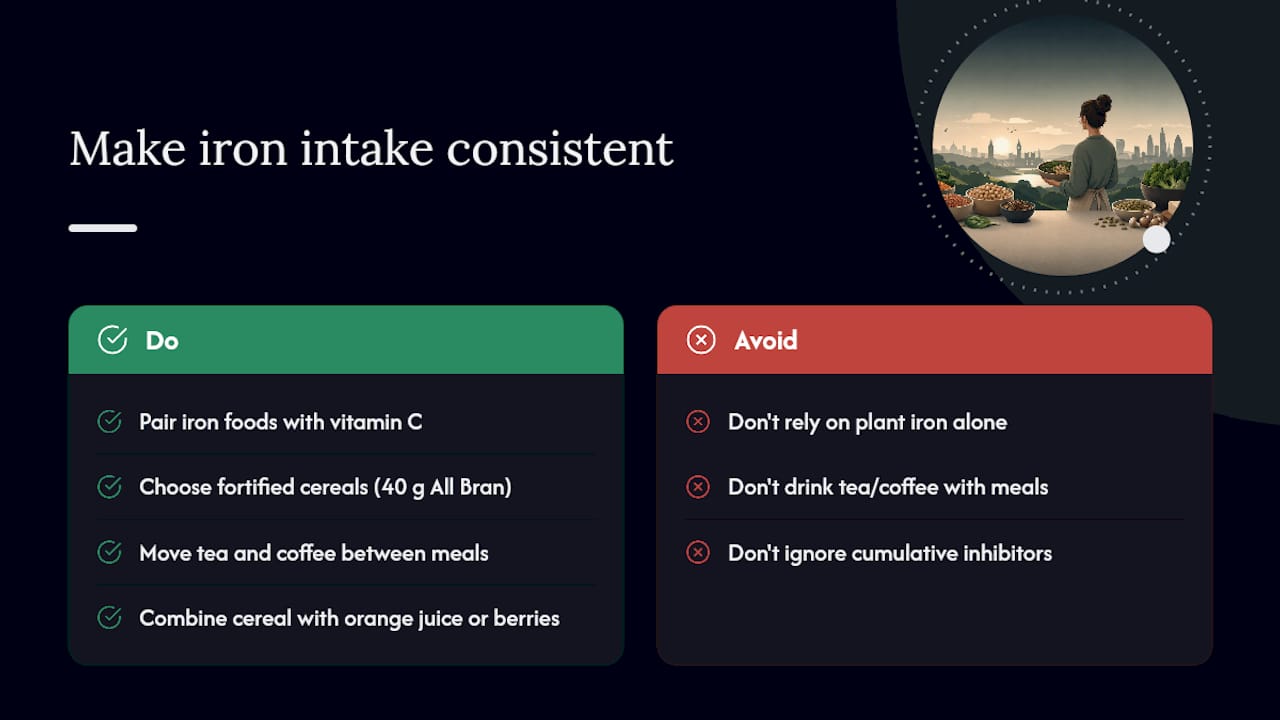
- Spread iron intake across breakfast, lunch, and dinner rather than concentrating it in one meal
- Fortified foods can close the gap efficiently, particularly at breakfast
- Use blood tests to check your actual status rather than guessing from symptoms alone
- Pregnancy and breastfeeding have separate requirements; always discuss these with a midwife or GP
Which vegan foods are highest in iron?
The Kingston & Richmond NHS Foundation Trust iron diet sheet and NHS guidance on the vegan diet both identify the same core categories as the best plant-based iron sources. The table below uses typical UK portion sizes.
Figures are approximate and based on cooked or prepared weight unless otherwise stated.
A few things worth knowing about this list. Fortified cereals are among the most efficient single-serving sources available — check the packaging for “iron-fortified” or look at the per-100g figures on the nutrition label. Weetabix and All Bran are both widely available in UK supermarkets and consistently fortified. The Quadram Institute highlights that dried seaweed can outperform boiled spinach on iron per portion, which surprises most people. It is not a daily staple for everyone, but it is worth knowing about if you are actively trying to increase intake.
Fortified plant milks such as Alpro’s fortified oat and soya varieties also contribute iron. Always check the label, as not every plant milk is fortified to the same level.
A note on label checking: the NHS vegan diet guidance specifically advises checking product labels for iron fortification. Two products in the same category can differ substantially.
How to boost iron absorption from plant foods
The difference between eating iron and absorbing iron is significant. NCBI Bookshelf’s iron physiology overview describes how non-haem iron absorption is highly sensitive to what else is in your gut at the same time. The British Dietetic Association’s iron-rich diet guidance translates this into practical meal rules.
Enhancers — eat these with iron-rich foods:
- Vitamin C sources: bell peppers, broccoli, kiwi, strawberries, orange juice, tomatoes
- Organic acids: lemon juice, lime juice, vinegar-based dressings on salads
- Fermented foods: sourdough bread, tempeh, miso (fermentation reduces phytates)
- Food preparation: soaking and sprouting pulses and grains reduces phytate content, improving bioavailability. The Vegan Society specifically recommends these techniques as a practical kitchen strategy
Inhibitors — keep these away from iron-rich meals:
- Tea and coffee — tannins and polyphenols bind non-haem iron in the gut
- High-calcium foods at the same meal — large amounts of calcium compete with iron for absorption
- Wheat bran — very high phytate content; whole bran added to meals can reduce iron uptake
- Antacids — if you take these regularly, discuss timing with a pharmacist or GP
Pro Tip: Drink tea or coffee between meals rather than with them. Even waiting 30–60 minutes after eating makes a measurable difference to how much iron you absorb from that meal. Add a squeeze of lemon juice to lentil dishes or chickpea salads for a simple, effective vitamin C boost.
What does a day of iron-rich vegan eating look like?
A day that includes a fortified cereal breakfast, a pulse-based lunch, iron-dense snacks, and a tofu or wholegrain dinner, with vitamin C at each main meal, will typically meet or approach the UK RNI for men aged 19–50 and non-menstruating adults. Menstruating people will often need to be more deliberate about portions and variety to reach 14.8 mg. For seasonal inspiration on building varied vegan menus, rotating ingredients across seasons helps keep meals interesting and nutritionally broad.
Sample one-day menu:
- Breakfast — 40 g All Bran with 200 ml fortified oat milk, topped with a handful of strawberries (~6.5 mg iron)
- Mid-morning snack — 30 g pumpkin seeds with a small kiwi (~3.0 mg iron)
- Lunch — 180 g red lentil dal with a side of steamed broccoli and a squeeze of lemon (~4.5 mg iron)
- Afternoon snack — 2 slices wholemeal toast with cashew butter (~2.5 mg iron)
- Dinner — 100 g firm tofu stir-fried with kale, bell peppers, and quinoa (~5.5 mg iron)
**Estimated daily total: an amount of iron that exceeds typical requirements for men aged 19–50 and approaches targets for menstruating women, though actual absorption will be lower than the dietary total due to bioavailability. The figures above are dietary iron content, not absorbed iron. For practical breakfast meal prep ideas that make mornings easier, batching helps enormously.
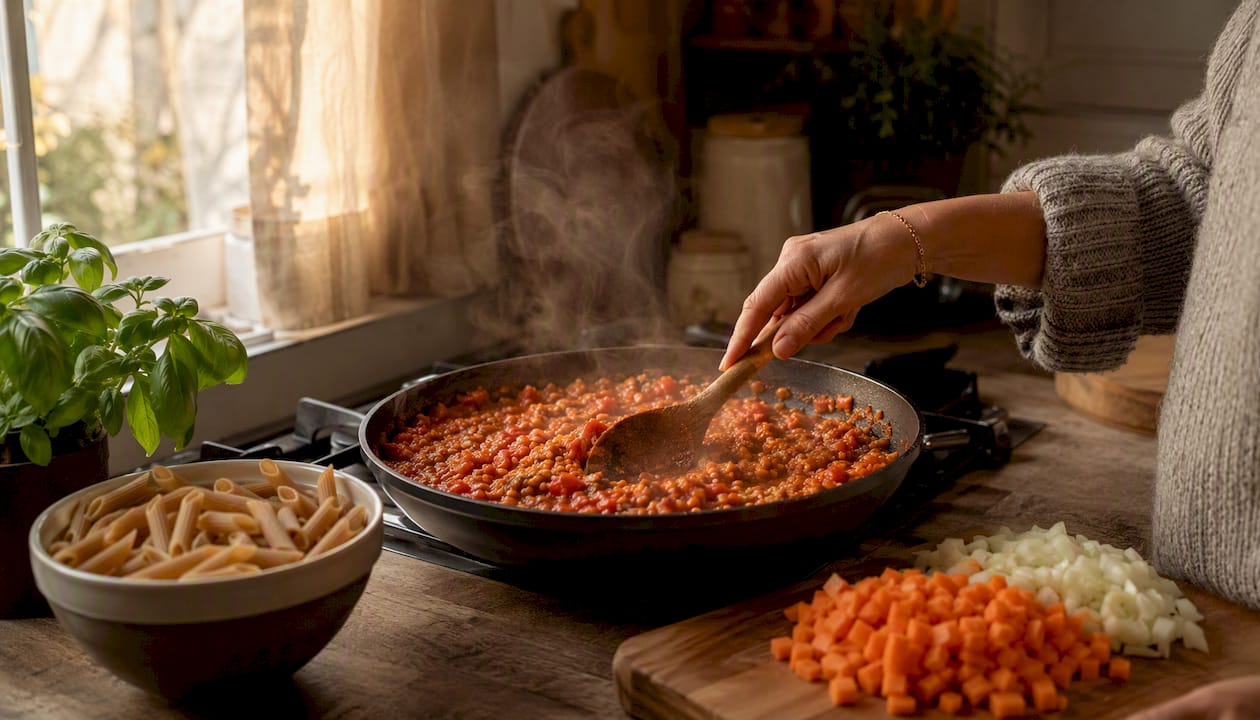
Pro Tip: Batch-cook a large pot of red lentil bolognese on Sunday and freeze it in individual portions. It reheats in minutes, pairs naturally with wholemeal pasta, and gives you a reliable iron hit mid-week when time is short.
When should you test your iron levels?
Diet is the foundation, but testing confirms whether it is working. The Vegan Society is clear that a well-planned vegan diet can supply sufficient iron for most people and that routine supplementation is not usually needed unless a GP advises it. The key word is “well-planned.”
See your GP if:
- You have persistent fatigue, breathlessness, or other symptoms listed above
- You are pregnant or planning pregnancy
- You are a frequent blood donor
- You are a menstruating person and have heavy periods
- You are an endurance athlete with unexplained performance decline
- Routine screening (e.g. during pregnancy) flags low haemoglobin
What to ask for: request a ferritin test alongside a full blood count. Ferritin measures stored iron and is a more sensitive early indicator than haemoglobin alone. The NHS iron guidance advises that supplementation should only be started on medical advice, as taking iron supplements without a confirmed deficiency carries risks.
Taking iron supplements without a confirmed deficiency is not recommended. Excess iron can cause constipation, nausea, and in serious cases, organ damage. Always confirm low iron through a GP blood test before starting any supplement, and follow the dose your GP or registered dietitian prescribes.
Fortified plant milks are a useful non-supplement option for children and people on restricted diets who need to increase intake without supplementation. Alpro’s fortified soya and oat varieties are widely available in UK supermarkets. Check the label for iron content per 100 ml, as formulations vary.
An editorial perspective on iron and plant-based eating
The conversation around vegan iron tends to collapse into two unhelpful extremes: either “plants have plenty of iron, stop worrying” or “you’ll definitely be deficient without meat.” Neither is accurate, and both miss the point.
What the evidence actually shows is that getting enough iron on a vegan diet is entirely achievable, but it requires consistency and a bit of practical knowledge. The absorption gap between haem and non-haem iron is real, and ignoring it leads people to eat theoretically iron-rich diets while still running low. The vitamin C pairing rule is not a minor detail. It is one of the most evidence-backed dietary interventions in nutrition, and it costs nothing to implement.
The part most guides underplay is the cumulative effect of inhibitors. One cup of tea with breakfast, another with lunch, and a third after dinner adds up. Tannins do not just slightly reduce absorption; they can substantially cut it at each meal. Shifting tea and coffee to between meals is a low-effort change with a disproportionate impact on iron status over time.
For UK vegans specifically, fortified cereals are genuinely underrated. A 40 g bowl of All Bran delivers more iron than a large serving of spinach, with none of the preparation time. Pair it with orange juice or strawberries and you have a breakfast that does real nutritional work.
Granavitalis products that support your daily iron intake
Meeting your iron needs through wholefoods is straightforward when you have the right ingredients to hand. Granavitalis sources nutrient-dense nuts, seeds, and wholefood products that slot naturally into the kind of iron-focused eating described above.
A tablespoon of organic nut and seed butter stirred into porridge with a handful of orange segments adds both iron and the vitamin C needed to absorb it. Pumpkin seed and cashew-based butters are particularly useful here. The Granavitalis raw organic pecan butter works well as a spread on wholemeal toast alongside a glass of orange juice, turning a quick snack into a meaningful contribution to your daily iron target. For more ideas on building plant-based iron-rich meals into your routine, the Granavitalis blog covers practical strategies in depth.
These are not supplements or shortcuts. They are concentrated wholefood ingredients that make it easier to hit your targets through real food, every day.
Sources
- Quadram Institute — how to get enough iron and vitamin B12 as a vegetarian or vegan
- Kingston & Richmond NHS Foundation Trust — iron diet sheet
- NCBI Bookshelf — iron physiology and nutrition
- Gov
This article provides general nutritional information and is not a substitute for professional medical or dietetic advice. If you have concerns about your iron levels, consult your GP or a registered dietitian.