
Best non-meat iron sources: top plant foods and portion guide
Fortified breakfast cereals, pulses (lentils, chickpeas, kidney beans), tofu, dark leafy greens, tahini, pumpkin seeds, and dried apricots are the best non-meat iron sources for vegetarians and vegans in the UK. A well-planned plant-based diet can meet your iron needs — the NHS confirms that fortified cereals and bread, pulses, and dark green vegetables are among the primary contributors to iron intake outside of meat.
Top plant-based iron sources at a glance:
- Fortified breakfast cereals (Weetabix, Ready Brek)
- Lentils, chickpeas, and kidney beans
- Tofu and soya products
- Spinach and kale
- Tahini and pumpkin seeds
- Dried apricots
- Wholemeal bread and quinoa
Pair any of these with a vitamin C-rich food at the same meal, and avoid tea or coffee for at least an hour either side, to meaningfully boost how much iron your body actually absorbs.
Key takeaways
A well-planned plant-based diet can meet UK iron requirements when it combines fortified foods, pulses, and seeds with consistent vitamin C pairing and phytate-reducing preparation methods.
| Point | Details |
|---|---|
| Fortified cereals lead the list | Weetabix (~4.5 mg) and Ready Brek (~4.0 mg) per serving are among the highest plant iron sources per portion. |
| Vitamin C is the most effective lever | Pair every iron-rich meal with a vitamin C source (orange juice, raw peppers, berries) to boost non-haem absorption. |
| Time tea and coffee away from meals | Wait at least an hour after an iron-rich meal before drinking tea or coffee to reduce tannin inhibition. |
| Women aged 19–50 have a Reference Nutrient Intake around 14.8 mg/day | This is nearly double the male RNI; heavy menstrual loss increases risk of falling short. |
| Granavitalis for daily iron support | The Immune Booster Superfood Bundle and seed butter range provide convenient, iron-supportive wholefood ingredients. |
Table of Contents
- Why plant iron behaves differently from the iron in meat
- How much iron do you actually need each day?
- How to get more iron from plant foods
- A sample day to hit your iron targets from plant foods
- When should you see a GP about iron levels?
- Granavitalis stocks the wholefoods that support your iron intake
- Sources
Why plant iron behaves differently from the iron in meat
Iron from food comes in two forms: haem iron (from meat and fish) and non-haem iron (from plants, eggs, and dairy). Non-haem iron is less readily absorbed than haem iron, but the gap is smaller than many people assume. According to the SACN Iron and Health Report, the body’s systemic iron need is the primary driver of absorption — when your stores are low, absorption rises automatically. You do not need to overhaul your diet; you need to plan it.
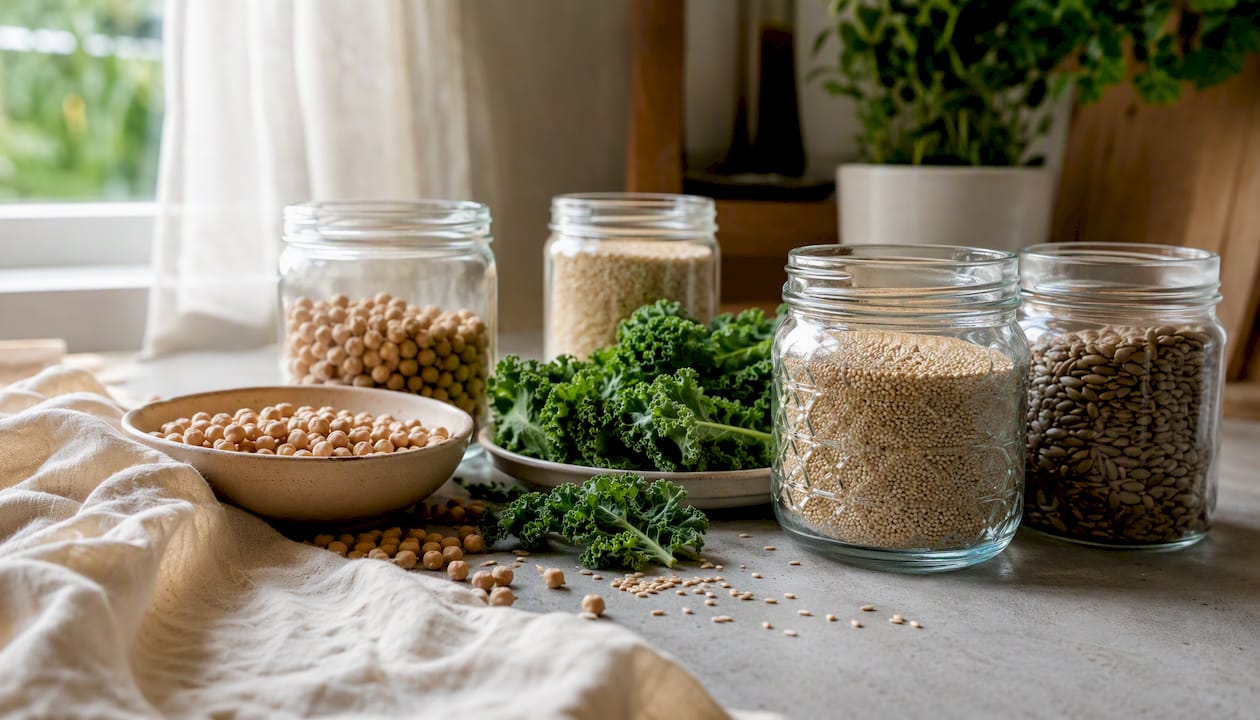
Three factors inhibit non-haem iron absorption: phytates (found in wholegrains and legumes), tannins (in tea, coffee, and red wine), and calcium (from dairy or supplements taken at the same meal). Two factors enhance it: vitamin C consumed at the same meal, and the presence of certain organic acids in fermented or leavened foods. The BDA’s iron guidance is clear that variety and smart pairing — not supplementation as a first resort — is the practical starting point for most people.
How much iron do you actually need each day?
The short answer: adult men need less than women of childbearing age, and requirements shift significantly during pregnancy. The figures below reflect UK dietary reference values from SACN and NHS guidance.
Women of reproductive age have nearly double the requirement of men, largely because of menstrual losses. Those with heavy periods, endurance athletes, and pregnant women are at higher risk of falling short and should discuss testing with a GP rather than self-supplementing.
How to get more iron from plant foods
Three steps cover most of the ground: pair iron-rich meals with vitamin C, time tea and coffee away from meals, and use preparation methods that reduce phytates. The BDA’s practical iron guide confirms that soaking dried beans, sprouting seeds, and using yeast-leavened bread all measurably reduce phytate levels and improve bioavailability.
Prioritised absorption tips:
- Vitamin C at every iron-rich meal: a small glass of orange juice, a handful of raw peppers, kiwi, or berries alongside lentils or tofu makes a real difference. The BDA iron resource cites this as the single most effective dietary lever.
- Time tea and coffee away from meals: wait at least an hour after eating before having a brew. Total avoidance is unnecessary — the practical step is timing, not elimination.
- Soak and sprout: soak dried lentils and beans before cooking, and choose sprouted or fermented options where available. Yeast-leavened (sourdough or standard yeasted) bread reduces phytates compared with unleavened flatbreads.
- Avoid calcium supplements at mealtimes: if you take a calcium supplement, take it between meals rather than with your main iron-rich meal.
- Cook spinach: boiling spinach reduces oxalate content and makes its iron more accessible than eating it raw in large quantities.
Pro Tip: Rather than overhauling your whole diet, dietitians recommend one small, consistent change: add a vitamin C source to your main iron-rich meal every day. A squeeze of lemon over lentil soup or a few slices of raw pepper alongside tofu costs nothing and takes seconds.
The Quadram Institute’s plant iron summary also highlights that legumes, soya, and leafy greens together form a reliable base for vegan iron intake when these pairing habits are in place.
Polyphenols in red wine and certain herbal teas can also inhibit non-haem iron absorption, so it is worth being aware that “tea” in this context extends beyond builder’s tea to green tea and some fruit infusions.
A sample day to hit your iron targets from plant foods
A realistic day of eating for a woman aged 19–50 (target: 14.8 mg) might look like this:
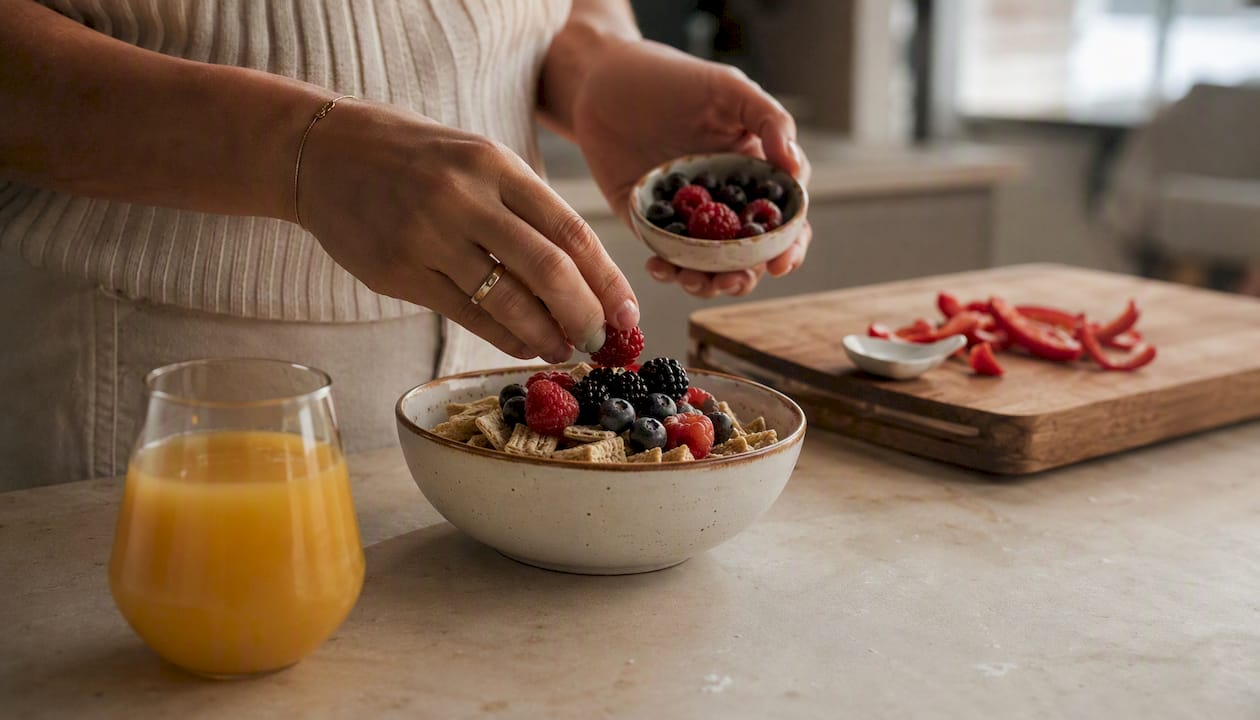
Breakfast: A bowl of Weetabix (2 biscuits, ~4.5 mg) with a handful of Granavitalis organic superberry mix stirred through, plus a small glass of orange juice. The berries add vitamin C; the juice amplifies absorption from the cereal.
Lunch: Lentil and spinach dhal (~3.5 mg from lentils, ~2.0 mg from spinach) served with a side of raw red pepper strips. This single meal contributes roughly 5.5 mg before accounting for any bread on the side.
Snack: Two tablespoons of tahini on a slice of wholemeal toast (~2.6 mg + ~1.0 mg), with a few dried apricots (~1.0 mg). The nutritional value of dried fruits makes them a compact, portable iron source worth keeping in your bag.
Dinner: Firm tofu stir-fry with broccoli, edamame, and a squeeze of lemon (~2.0 mg from tofu, plus contributions from the vegetables). Swap white rice for quinoa to add a further ~3.5 mg.
That day totals well over 14 mg from plant foods alone, without any supplements.
Simple swaps that make a difference:
- White rice → quinoa (adds ~3.5 mg per serving)
- Butter on toast → tahini (adds ~2.6 mg per 30 g)
- Plain salad → salad with pumpkin seeds (adds ~2.5 mg per 30 g)
- Fruit juice at breakfast → orange juice (adds vitamin C to boost cereal iron absorption)
Pro Tip: For on-the-go snacking, a small bag of pumpkin seeds and dried apricots is one of the most iron-dense portable combinations available. Children and older adults need smaller portions — check age-specific reference values with a GP or dietitian.
For more ideas on building a complete plant-based diet, the Granavitalis guide on what foods are on a plant-based diet is a practical starting point.
When should you see a GP about iron levels?
See a GP if you have persistent fatigue, breathlessness, pallor, or brittle nails — especially if you have heavy menstrual losses, are pregnant, or have a chronic condition affecting absorption (such as coeliac disease or inflammatory bowel disease). These are the groups the SACN report identifies as being at higher risk of deficiency.
A GP will typically request a full blood count and a serum ferritin test. Ferritin measures stored iron and is a more sensitive early indicator than haemoglobin alone. If deficiency is confirmed, a GP may prescribe iron supplements or refer you to a registered dietitian for a structured dietary review. Self-supplementing with high-dose iron without testing is not recommended — excess iron carries its own risks.
Pregnant women and those with very heavy periods are prioritised for assessment. If you are in either group and have not had iron checked recently, book an appointment rather than waiting for symptoms to worsen.
An editorial perspective on plant-based iron
The conversation around plant-based iron tends to get stuck in two unhelpful places: either “plants can’t give you enough iron” (wrong, with planning) or “just eat more spinach” (oversimplified). The reality sits in between, and the detail that most articles skip is this: your body is not passive. When iron stores drop, intestinal absorption upregulates. That biological feedback loop means that a well-planned vegetarian diet does not need to be perfect every single day to maintain adequate status — it needs to be consistently varied and paired intelligently.
The single habit I recommend above all others is the vitamin C pairing. Not a supplement, not a radical menu change. A small glass of orange juice with your fortified cereal, a handful of raw peppers alongside your lentil lunch. That one consistent action, applied daily, does more for non-haem iron uptake than any amount of dietary complexity.
Granavitalis stocks the wholefoods that support your iron intake
If you are building a plant-based diet around the foods covered in this article, Granavitalis makes it straightforward to stock the right ingredients. The Immune Booster Superfood Bundle brings together nutrient-dense seeds, berries, and botanicals that complement an iron-supportive eating pattern — the kind of varied, wholefood foundation that dietitians recommend. For everyday snacking and meal prep, the Organic Nut & Seed Butter Selection Box includes tahini-style and seed-based butters that add iron alongside healthy fats to toast, porridge, and salads.
Every product is sourced for purity and minimal processing — no shortcuts, no fillers. Browse the full range at Granavitalis and find the ingredients that fit your daily routine.
This article is for general information only and is not a substitute for medical advice. If you suspect iron deficiency, consult your GP or a registered dietitian.
Sources
The figures below are drawn from RUH NHS Foundation Trust dietary guidance and the Kingston and Richmond NHS iron diet sheet. Portion sizes reflect typical UK servings; always check cereal packaging as iron content varies by product.
A few things worth noting from this data. Fortified cereals like Weetabix and Ready Brek sit at the top of the table — they are among the most concentrated plant-based iron sources per gram, which is why the Leeds Teaching Hospitals iron guidance consistently lists them alongside pulses and leafy greens. All non-wholemeal bread sold in the UK is legally required to be fortified with iron, so even a standard sandwich contributes. Tahini and pumpkin seeds punch well above their weight for small portions, making them easy additions to salads, porridge, or toast.
Highest-iron plant foods per typical portion:
- Vitamins and minerals - Iron - NHS
- Iron - British Dietetic Association (BDA)
- SACN Iron and health report
- Plants as vegan iron sources - Quadram Institute
For a deeper look at plant-based foods high in iron and recipe ideas, the Granavitalis blog covers this in more detail.