
4-Week Whole-Food Plant-Based Start for UK: Pantry Staples & Steps
A whole-food, plant-based diet focuses on minimally processed plant foods, including vegetables, whole grains, legumes, nuts and seeds, while minimising animal products and cutting out ultra-processed foods. It’s an eating pattern, not a strict rulebook, and it’s linked to better cardiometabolic health when planned well. The catch is that “plant-based” alone doesn’t guarantee healthy, since crisps and biscuits are technically plant-based too.
TL;DR:
- A whole-food, plant-based diet emphasizes minimally processed plant foods and minimizes or excludes animal products and ultra-processed items.
- It is linked to lower risks of heart disease, diabetes, and some cancers due to increased fiber intake and reduced saturated fat consumption.
- Key nutrients like vitamin B12, vitamin D, and iodine require careful planning or supplementation on a plant-based diet.
- Switching gradually by replacing processed foods with whole staples and stacking new habits promotes long-term adherence.
- Support from brands like Granavitalis aligns with the diet’s principles, focusing on quality, integrity, and simplicity in pantry staples.
Table of Contents
- What is a whole food plant based diet, exactly?
- What do you eat on a plant based diet?
- What foods should you avoid or minimise?
- Is a plant based diet healthy? What the evidence shows
- Which nutrients need extra planning on a plant based diet?
- What does a day of eating actually look like?
- How do you start a plant based diet without overhauling everything at once?
- How does Granavitalis support a whole food plant based lifestyle?
- Making it stick beyond the first month
- Sources
What is a whole food plant based diet, exactly?
The phrase gets thrown around loosely, so it’s worth separating the terms. “Whole food” means the ingredient looks roughly like it did when it left the ground or the tree: an oat, a lentil, a carrot, not a reconstituted version of one. “Plant-based” simply means the diet leans on plants rather than animals for the bulk of its calories.
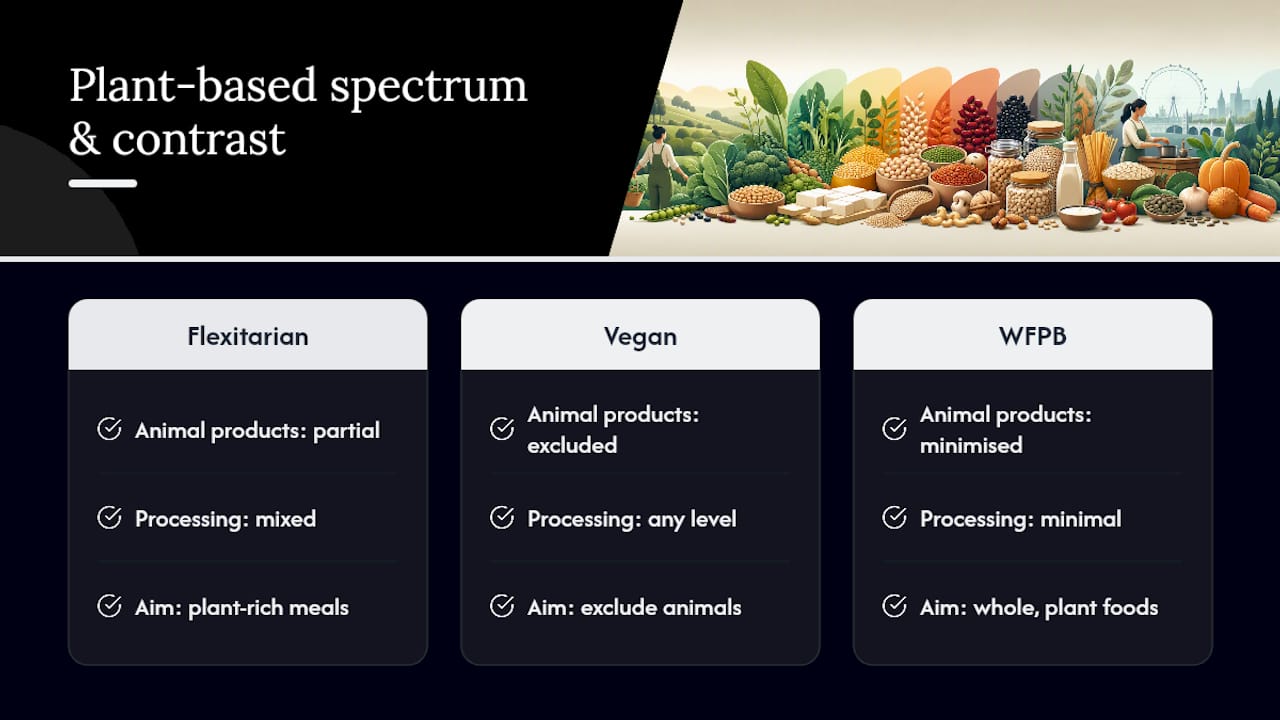
Put them together and you get a whole-food, plant-based (WFPB) diet: one built around minimally processed plant foods, while minimising or excluding meat, dairy, eggs and honey. That’s the core definition used in current nutrition literature, and it’s distinct from a standard vegan diet, which excludes all animal products but says nothing about how processed the plant foods are (a vegan diet built on chips and oat-milk ice cream is still vegan).
Think of “plant-based” as a spectrum rather than a switch. At one end sits someone who’s simply added more vegetables and swapped one meat dinner a week for beans, sometimes called plant-rich or flexitarian eating. At the other end sits a strict WFPB eater avoiding all animal products and most processed plant foods. The British Dietetic Association frames this well: the goal is plant-rich meals built around protein-containing plant foods, not just a list of exclusions. NHS guidance takes a similarly practical stance, focusing on balance rather than purity.
What do you eat on a plant based diet?
Building meals gets much easier once you stock the right staples. The research consensus on WFPB eating points to a fairly short list of food groups doing most of the work:
- Vegetables and fruit, fresh, frozen or tinned in water, aiming for a wide range of colours across the week.
- Whole grains, including ancient grains like spelt, quinoa, buckwheat and barley, alongside oats and brown rice.
- Legumes, meaning lentils, chickpeas, black beans and split peas, tinned or dried.
- Nuts and seeds, ideally whole or as 100% nut butters with no added oil or sugar.
- Tofu, tempeh and unsweetened soya, which double as your main protein anchors.
- Fortified plant milks, chosen for added calcium, B12 and vitamin D where the label confirms it.
For a working pantry, keep dried and tinned legumes, a couple of whole grains, frozen vegetables (just as nutritious as fresh, and they don’t wilt in the drawer), and a jar of unsweetened nut butter on hand. A useful portion cue: half your plate vegetables, a quarter whole grains, a quarter legumes or tofu, with nuts and seeds scattered on top. Once that pattern becomes automatic, meal planning stops feeling like a project.
What foods should you avoid or minimise?
The mistake most beginners make is assuming “plant-based” automatically means healthy. It doesn’t. Vegan biscuits, meat-free sausage rolls and dairy-free ice cream are all plant-based and all ultra-processed, often carrying more salt, added sugar and refined oil than the animal products they replace.
Small swaps make a real difference over time:
- Swap flavoured plant yoghurts for plain versions with fresh fruit stirred in.
- Swap meat-free ready meals for a home-made bean chilli or dhal batch-cooked in bulk.
- Swap fruit juice for whole fruit, which keeps the fibre intact.
- Swap refined white bread for a wholegrain or seeded loaf.
Pro Tip: Flip the pack over before it goes in the trolley. If added oil, sugar or salt appear in the first three ingredients, or the sugar content passes 15g per 100g, treat it as an occasional food rather than a daily staple.
Is a plant based diet healthy? What the evidence shows
Used well, yes, and the evidence base is broader than most people expect. Well-planned plant-based diets are linked to lower risk of heart disease, type 2 diabetes and some cancers, largely because they naturally raise fibre intake while cutting saturated fat. Reviews of the underlying mechanisms point to fibre and improved glycaemic control as key drivers: fibre feeds gut bacteria that produce compounds linked to better metabolic markers, while lower saturated fat intake tends to improve cholesterol profiles.
Modelling suggests a widespread shift to vegan diets in England could reduce NHS spending by an estimated £6.7 billion a year and prevent roughly 2.1 million disease cases annually.
That figure needs a caveat: it’s a population-level modelling exercise assuming near-universal adoption of a strictly vegan diet, not a guarantee for any one individual, and the savings depend heavily on how “vegan” gets defined in practice. Still, even partial shifts toward plant-rich eating show measurable benefits. Hospital catering trials found that swapping toward plant-rich menus cut meat served and emissions while satisfaction held around 90%, evidence that this isn’t just theoretical; people genuinely eat this way and don’t feel short-changed. There’s a sustainability dividend too: diets aligned with plant-based guidelines use around a third less land, water and energy than meat-heavy patterns.
Which nutrients need extra planning on a plant based diet?
A poorly planned plant-based diet can run short on a handful of nutrients that animal foods usually supply by default. Knowing which ones matters more than obsessing over all of them.
- Vitamin B12: not reliably available from unfortified plant foods; the NHS recommends fortified foods or a supplement for anyone eating a largely plant-based diet long term.
- Iron: found in lentils, tofu and fortified cereals, though plant iron absorbs less efficiently than the type in meat.
- Calcium: fortified plant milks, tahini, tofu set with calcium sulphate, and dark leafy greens all contribute.
- Vitamin D: limited in food generally; the NHS suggests a supplement over autumn and winter regardless of diet.
- Iodine: trickier on a plant-based diet since seaweed varies wildly in content; a supplement is often the more reliable route.
- Omega-3s: ground flaxseed, chia seeds and walnuts supply ALA, a precursor the body converts in limited amounts.
Pro Tip: Build “nutrient bridges” into regular rotation: tofu, tempeh, beans and fortified milks reliably replace what animal products once provided. And pair iron-rich foods with vitamin C, a squeeze of lemon over lentils or peppers alongside beans, since vitamin C measurably improves iron absorption from plant sources.
What does a day of eating actually look like?
Theory is one thing; a plate in front of you is another. Here’s a simple structure to copy:
- Breakfast: overnight oats made with fortified plant milk, chia seeds and berries.
- Lunch: a bean bowl, mixed grains, black beans, roasted vegetables, and tahini dressing.
- Snack: an apple with a spoonful of 100% peanut or almond butter.
- Dinner: a tofu and vegetable stir-fry over brown rice, with sesame seeds scattered on top.
All three main meals batch-cook well. Double the grain and bean portions on a Sunday, freeze in individual containers, and you’ve got backup meals for the week that beat any ready meal on the shelf. For more meal inspiration built around seeds, Wild Foodz has practical seed-based ideas worth borrowing from.
How do you start a plant based diet without overhauling everything at once?
Trying to convert your entire kitchen overnight is the fastest route to giving up by week two. A steadier approach works better:
- Week 1 to 2: swap your pantry basics, dried beans, a couple of whole grains, a jar of nut butter, so the staples are simply there when you need them.
- Week 3 to 4: make breakfast plant-first every day, then add three plant-forward dinners a week.
- Week 5 onwards: plan meals weekly rather than daily, and scope out one or two plant-friendly options at your usual takeaway or café so eating out doesn’t derail things.
Pro Tip: Habit stacking works better than willpower. Attach a new plant-based habit to something you already do daily, oats after the kettle boils, beans added to whatever you’d have cooked anyway, rather than treating it as a separate task.
If you notice persistent fatigue, unusual paleness, or you’re managing a condition like anaemia, diabetes or pregnancy, a registered dietitian or your GP can check levels and tailor advice rather than leaving it to guesswork.
How does Granavitalis support a whole food plant based lifestyle?
Granavitalis was built around exactly this kind of eating: ancient grains untouched by industrial hybridisation, premium nuts and seeds, and clean plant proteins with no unnecessary additives. That’s the same principle sitting behind every WFPB pantry: fewer ingredients, more integrity.
For anyone stocking up on staples, a jar of Raw Organic Pecan Butter covers the nut-butter category in one clean ingredient list. Beginners wanting variety without the guesswork might prefer the Organic Nut & Seed Butter Selection Box, a straightforward way to trial several options before settling on favourites. For deeper reading on getting started, Granavitalis has a practical pantry staples guide and a breakdown of what foods belong in a plant-based diet.
Making it stick beyond the first month
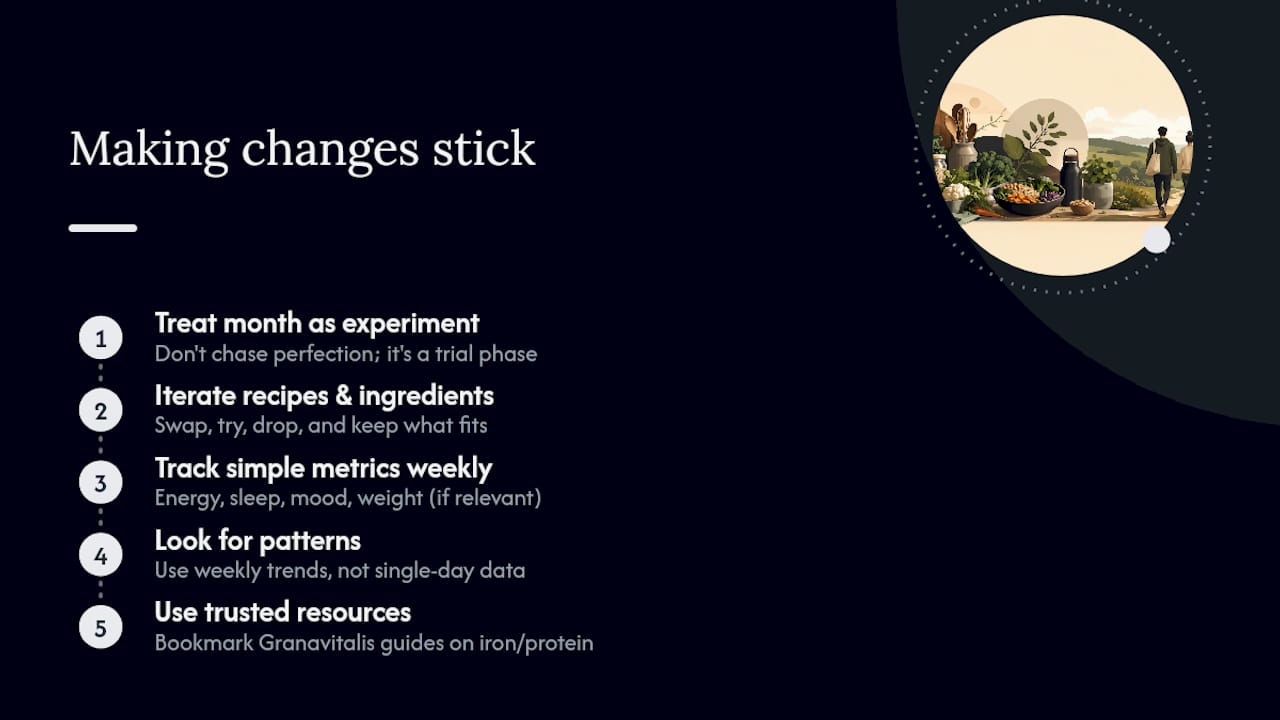
Perfection isn’t the goal, and chasing it is usually what causes people to quit. Treat the first month as an experiment: swap ingredients, try recipes, drop what you don’t enjoy, and keep what actually fits your week.
Track something simple over four weeks, energy levels, sleep, weight if that matters to you, general mood, rather than obsessing over every gram of protein. The pattern that emerges tells you more than any single day’s food diary. For recipe ideas and nutrient deep dives, Granavitalis’s guides on iron-rich plant foods and vegan protein sources are worth bookmarking.
— Jarrod
This article is general information, not a substitute for advice from a qualified doctor. Consult a qualified healthcare professional about your own circumstances before acting on anything here.
Sources
- Whole‑food plant‑based diets: overview (PMC5466934)
- A switch to vegan diets could save the NHS £6.7 billion per year (OHE, 2024)
- British Dietetic Association: plant‑based eating for beginners
- NHS: the vegan diet — how to eat a balanced diet