
Nutritional Advantages of Ancient Grains Explained
Over 60 percent of health-conscious shoppers believe ancient grains are healthier than modern varieties. With their growing popularity on supermarket shelves, these grains are often surrounded by hefty claims and even bigger myths. Knowing what truly sets ancient grains apart, and understanding the real facts behind common misconceptions, helps you make smarter decisions for your nutrition and well-being.
Table of Contents
- Ancient Grains Defined And Common Myths
- Major Types Of Ancient Grains Compared
- Nutritional Profile And Key Health Benefits
- Ancient Grains For Vegan And High Protein Diets
- Potential Risks And Considerations For Consumption
Key Takeaways
| Point | Details |
|---|---|
| Nutritional Diversity | Ancient grains like quinoa, amaranth, and buckwheat offer unique nutrient profiles that contribute to overall health. |
| Myth-Busting | Common beliefs that ancient grains are universally more nutritious or lower in calories are misleading; their benefits depend on specific types. |
| Dietary Integration | Incorporating ancient grains into your diet can enhance protein intake and support health, especially for those on vegan and high-protein diets. |
| Considerations | Potential risks include higher calorie content and allergens, necessitating careful planning and personal adaptation when consuming these grains. |
Ancient Grains Defined And Common Myths
Ancient grains represent a remarkable category of agricultural produce that have remained relatively unchanged for centuries. According to Wikipedia, these grains and pseudocereals have maintained their original genetic structure, unlike modern grains which have undergone extensive selective breeding.
These traditional grains encompass a diverse range of nutritional powerhouses, including quinoa, amaranth, millet, teff, and heritage wheat varieties like einkorn and emmer. While many people assume ancient grains are universally superior, Harvard Health suggests a more nuanced perspective, noting that while they often provide higher protein and fiber content, they can also be more calorie-dense.
Common myths surrounding ancient grains often revolve around their perceived nutritional superiority. Let’s debunk some prevalent misconceptions:
- Myth 1: Ancient grains are always more nutritious than modern varieties
- Myth 2: These grains are automatically healthier for everyone
- Myth 3: Ancient grains are significantly lower in calories
In reality, the nutritional profile varies depending on specific grain types, processing methods, and individual dietary needs. For those interested in exploring this topic further, check out our guide on understanding ancient grains.
While ancient grains aren’t a magical solution, they represent a fascinating intersection of traditional agriculture and modern nutritional science. Their unique characteristics offer potential benefits for those seeking diverse, nutrient-rich food options. The key is understanding their specific properties and integrating them thoughtfully into a balanced diet.
Major Types Of Ancient Grains Compared
Ancient grains represent a fascinating world of nutritional diversity, each offering unique health benefits and culinary possibilities. According to Healthline, several standout grains have emerged as nutritional powerhouses, including amaranth, quinoa, teff, millet, and sorghum.
Each grain brings its own remarkable nutritional profile to the table. AARP highlights the impressive diversity of these grains, noting that quinoa stands out as a complete protein containing all essential amino acids, while buckwheat acts as a prebiotic supporting gut health.
Let’s explore a comparative breakdown of these extraordinary ancient grains:
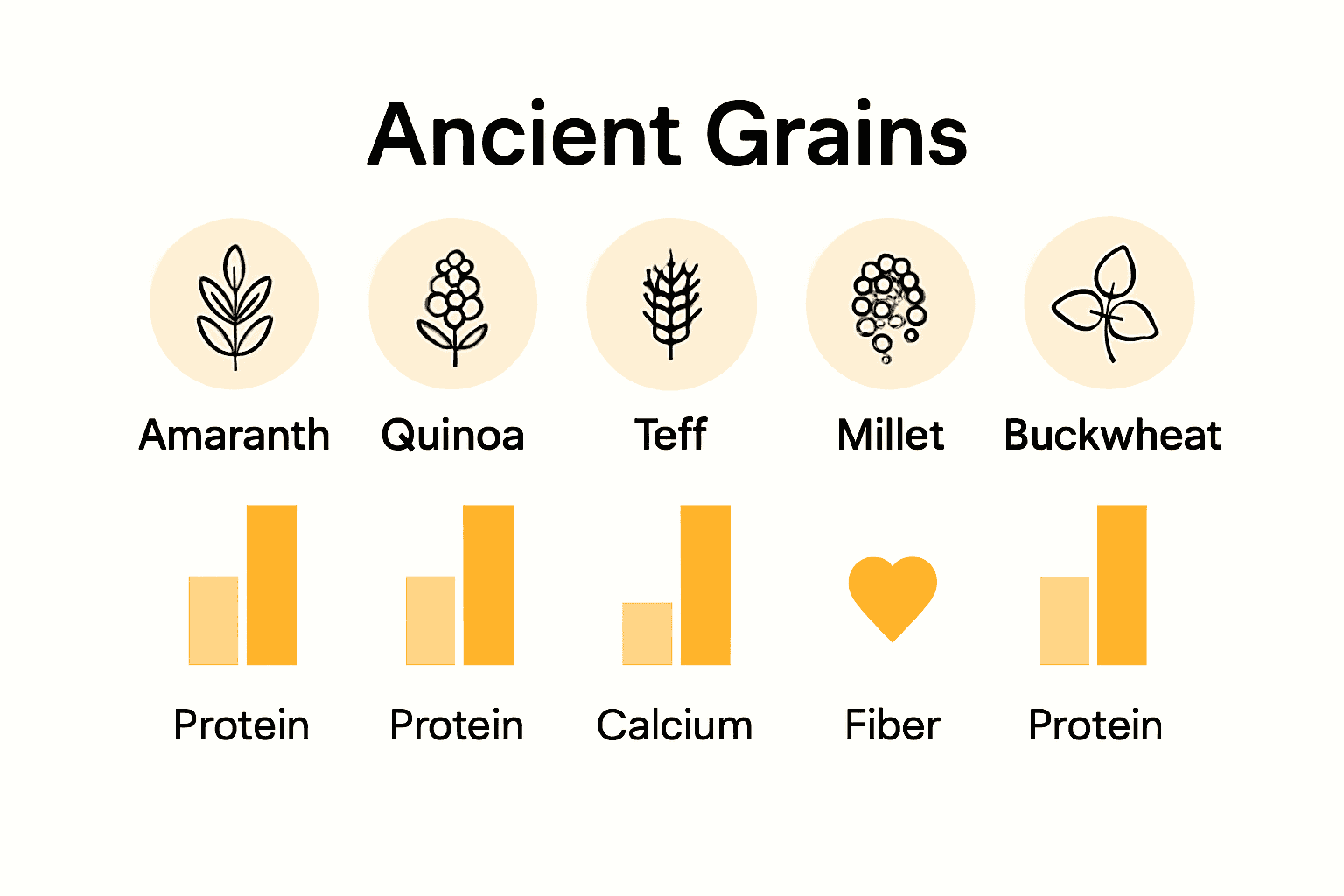
- Amaranth: High in protein and fiber, supports muscle development and digestive health
- Quinoa: Complete protein source, contains all nine essential amino acids
- Teff: Exceptionally high calcium content, excellent for bone strength
- Millet: Rich in calcium and supports bone health
- Buckwheat: Prebiotic properties, promotes healthy gut microbiome
For those wanting to dive deeper into understanding these nutritional gems, our guide comparing ancient grains vs modern cereals offers comprehensive insights.
Ultimately, incorporating these ancient grains into your diet isn’t about replacing modern foods entirely, but about diversifying your nutritional intake. Each grain offers a unique combination of nutrients that can complement a balanced, health-conscious approach to eating.
Nutritional Profile And Key Health Benefits
Ancient grains are nutritional powerhouses that offer far more than simple sustenance. According to PubMed, these remarkable grains are packed with high-quality proteins, dietary fiber, essential micronutrients, and potent bioactive compounds like phenolic acids and flavonoids.
MDPI research highlights the extraordinary health benefits associated with these nutritional treasures. The comprehensive nutritional profile of ancient grains contributes to several critical health advantages:
- Blood Sugar Regulation: Helps maintain stable glucose levels
- Inflammation Reduction: Contains natural anti-inflammatory compounds
- Gut Health Support: Rich in dietary fiber promoting microbiome balance
- Cardiovascular Protection: Supports heart health through antioxidant properties
- Chronic Disease Prevention: May help mitigate risks of type 2 diabetes
Understanding the intricate nutritional landscape of these grains becomes crucial for those seeking holistic dietary approaches. For individuals wanting to explore more about integrating these nutritional powerhouses, our guide on understanding ancient grains and wellness offers comprehensive insights.
Beyond their impressive nutrient profile, ancient grains represent more than just food—they’re a bridge connecting traditional nutritional wisdom with modern health science. By incorporating these grains strategically, you can transform your diet from mere sustenance to a proactive approach to long-term wellness.
Ancient Grains For Vegan And High Protein Diets
For those pursuing vegan and high-protein dietary lifestyles, ancient grains emerge as nutritional superheroes. According to Harvard Health, certain ancient grains like quinoa and amaranth stand out as exceptional plant-based protein sources, offering a complete amino acid profile crucial for muscle maintenance and overall health.
AARP highlights the versatility of these grains, noting that gluten-free options such as quinoa and buckwheat provide substantial protein content while supporting digestive wellness. The nutritional benefits extend far beyond basic protein supplementation.
Key protein-rich ancient grains for vegan diets include:
- Quinoa: Complete protein with all nine essential amino acids
- Amaranth: High protein content, supports muscle development
- Buckwheat: Provides resistant starch and protein
- Millet: Protein-dense and easily digestible
- Teff: Compact grain with impressive protein profile
For individuals looking to dive deeper into plant-based nutrition strategies, our guide on top vegan protein sources offers comprehensive insights into maximising nutritional intake.
Integrating these ancient grains isn’t just about meeting protein requirements—it’s about embracing a holistic approach to nutrition that celebrates plant-based eating. By understanding and leveraging these nutritional powerhouses, vegans and health-conscious individuals can create balanced, protein-rich meal plans that support long-term wellness.

Potential Risks And Considerations For Consumption
While ancient grains offer remarkable nutritional benefits, they are not without potential considerations. According to Harvard Health, these grains can be significantly higher in calories and cost compared to modern grain alternatives, which means careful dietary planning becomes essential.
AARP emphasises the importance of gradual dietary introduction and careful monitoring, particularly for individuals with existing food sensitivities. Understanding potential risks ensures a safe and balanced approach to incorporating these nutritional powerhouses.
Key considerations for ancient grain consumption include:
- Calorie Density: Higher caloric content compared to modern grains
- Potential Allergens: Some individuals might experience sensitivities
- Digestive Adaptation: Gradual introduction recommended
- Cost Implications: Generally more expensive than conventional grains
- Individual Variations: Responses can differ based on personal health profiles
Those interested in exploring the nuanced world of ancient grain nutrition can refer to our guide on understanding ancient grains and wellness for more comprehensive insights.
Ultimately, the key is personalisation. While ancient grains offer tremendous health potential, individual dietary needs vary. Consulting healthcare professionals and listening to your body’s unique responses will help you navigate these nutritional treasures safely and effectively.
Rediscover the Nutritional Power of Ancient Grains with Granavitalis
If you are looking to embrace the rich nutritional benefits of ancient grains featured in the article, Granavitalis offers a carefully curated range of products that honour these time-tested foods. Whether your focus is on boosting protein intake, adding more dietary fibre, or simply exploring diverse, wholesome alternatives, our Protein Power Packs and Gluten Free Flours support your goal of balanced, nourishing eating moments.
Take control of your nutrition by integrating ancient grains into your daily meals with premium, thoughtfully sourced ingredients from Granavitalis. Start your journey to better wellbeing today by visiting Granavitalis and discover how ancestral nourishment can transform your approach to healthy living.
Frequently Asked Questions
What are ancient grains?
Ancient grains are traditional grains and pseudocereals that have remained genetically unchanged for centuries, such as quinoa, amaranth, millet, teff, and heritage wheat varieties.
Are ancient grains more nutritious than modern grains?
Not necessarily. While ancient grains often provide higher protein and fiber content, their nutritional value varies based on specific types, processing methods, and individual dietary needs.
What are the key health benefits of ancient grains?
Ancient grains can help with blood sugar regulation, inflammation reduction, gut health support, cardiovascular protection, and chronic disease prevention, thanks to their rich nutritional profiles.
Can ancient grains be part of a vegan diet?
Yes, ancient grains like quinoa and amaranth are excellent sources of plant-based protein and can easily fit into high-protein vegan diets, providing essential amino acids and digestive wellness.