
Vegetarian protein meals for filling, high-protein plates
These 10 vegetarian protein meals are the easiest way to build 20 to 35g of protein per plate without touching meat or fish. Aim for a substantial amount of protein at each main meal and spread intake across breakfast, lunch, dinner and a snack or two to meet your daily needs.
Quick picks worth bookmarking:
- Scrambled tofu bagel with spinach
- Greek yoghurt bowl with seeds and nut butter
- Quinoa, edamame and roasted chickpea bowl
- Lentil shepherd’s pie
- Tempeh and vegetable stir-fry
- Three-bean chilli with rice
- Cottage cheese and lentil jacket potato
- Paneer and chickpea curry
- Roasted chickpeas with nut butter toast
- Soya yoghurt with hemp seeds
Protein target: roughly 30g per main meal is a sensible benchmark for satiety, and combining pulses with soya foods makes that easier than relying on cheese alone, according to the British Heart Foundation.
Key Takeaways
Hitting roughly 30g of protein per main meal is achievable through pulses, soya foods, eggs, dairy and nuts, without relying on meat substitutes or excess cheese.
| Point | Details |
|---|---|
| Aim for 30g per meal | Combine a pulse or soya base with a finishing protein topping like yoghurt or seeds. |
| Use reliable serving anchors | 80g tofu gives roughly 7-8g protein; a 150g Greek yoghurt pot gives around 13g. |
| Stack proteins, don’t isolate them | Pairing lentils, tofu and seeds in one dish raises the total without extra portions. |
| Avoid over-reliance on cheese | Swap some cheese for pulses to cut saturated fat while keeping protein up. |
| Use nut butters as toppings | Granavitalis’s Raw Organic Pecan Butter adds protein and calories to breakfasts and snacks. |
Table of Contents
- High-protein vegetarian ingredients and how much protein they actually give you
- Vegetarian protein ideas for every meal of the day
- How to build a 30g protein meal and hit 100g a day
- Quick tips to boost protein without extra prep
- What the evidence says about soya, servings and amino acids
- Why practical beats perfect when it comes to protein
- Boosting protein at breakfast without extra cooking
- Frequently asked questions
- Sources
High-protein vegetarian ingredients and how much protein they actually give you
Building any of the meals above starts with knowing which ingredients pull their weight. Pulses, soya foods, eggs, dairy, nuts, seeds and quinoa form the backbone of nearly every high-protein vegetarian plate, and mycoprotein products such as Quorn sit alongside them as a useful alternative for readers who want a meat-like texture without meat.
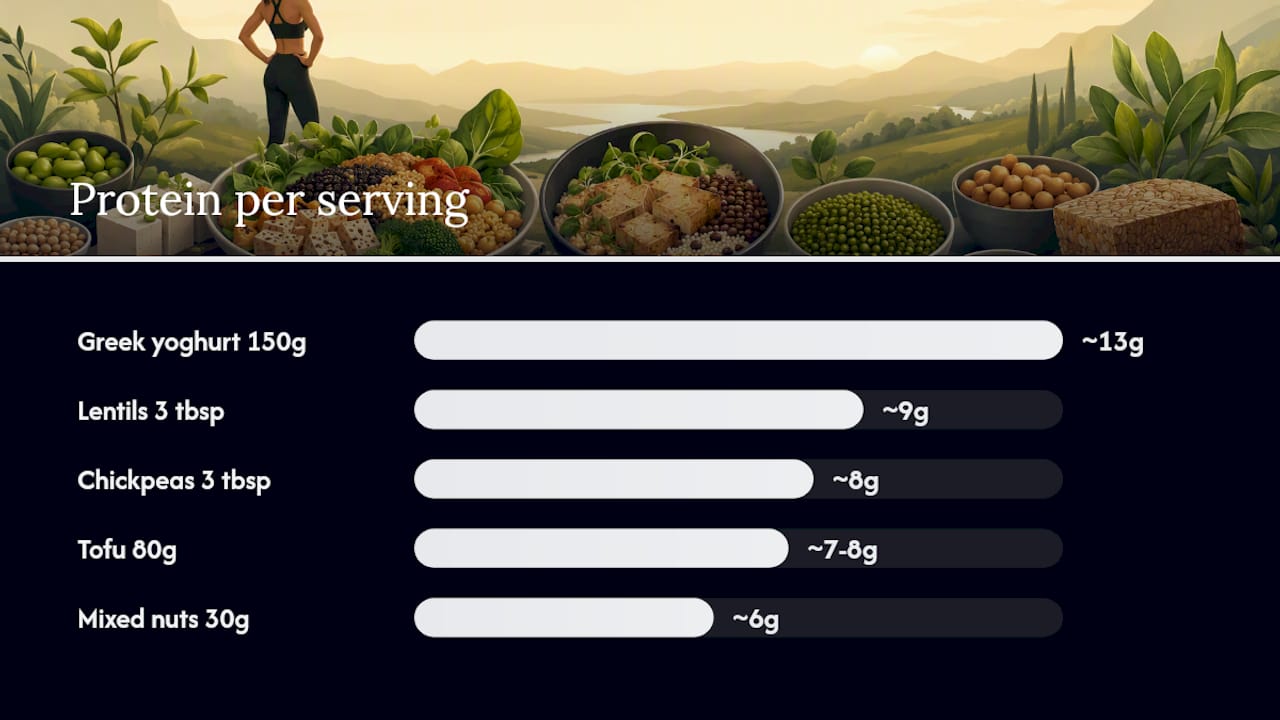
| Ingredient | Typical serving | Protein per serving |
|---|---|---|
| Baked beans | 3 tbsp | ~6g |
| Chickpeas | 3 tbsp | ~8g |
| Lentils | 3 tbsp | ~9g |
| Tofu | 80g | ~7-8g |
| Soya mince | 60g | 8g |
| Soya milk | 200ml | ~7g |
| Greek yoghurt | 150g pot | ~13g |
| Eggs | 2 medium | 9g |
| Mixed nuts/seeds | 30g | ~6g |
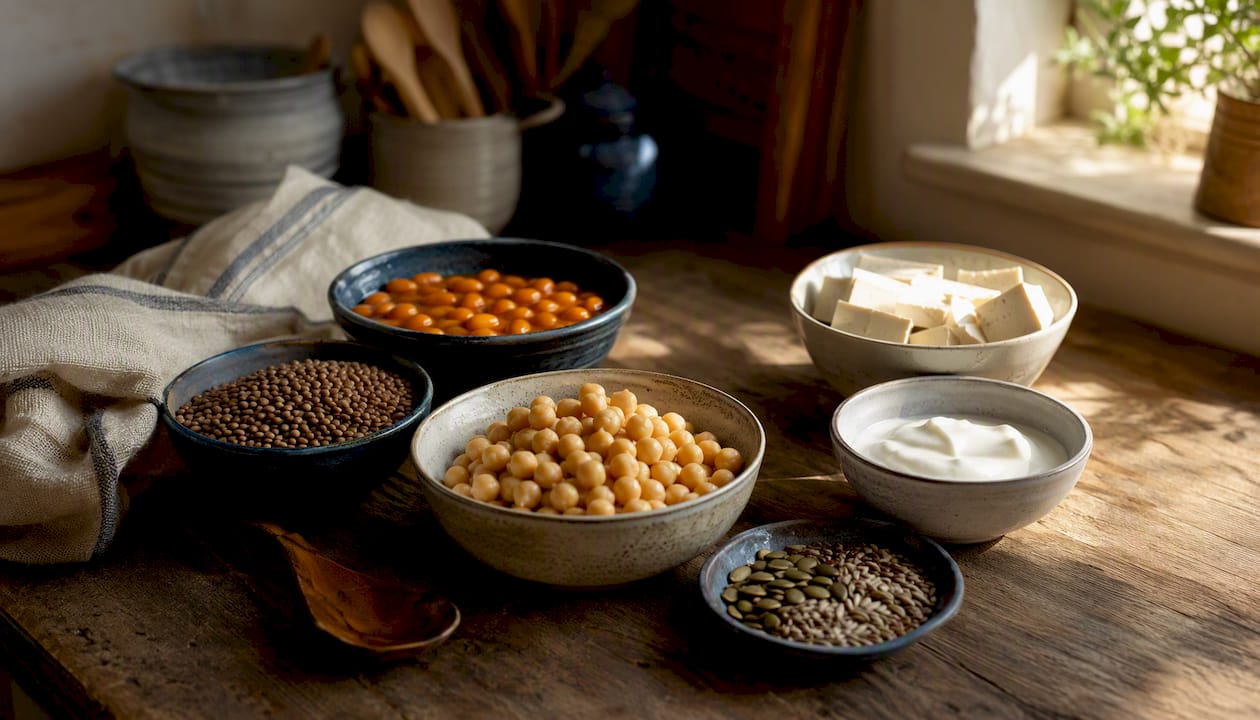
Figures are drawn from British Heart Foundation and Nutrition Society protein cards, with portion anchors such as 60g soya mince and half a tin of baked beans matching NHS-affiliated hospital guidance. You can calculate protein per 100g for any staple ingredient using the government’s COFID dataset.
A few notes on quality, not just quantity:
- Quinoa, soya and hemp seeds are complete proteins, meaning they supply all nine essential amino acids in one go.
- Tofu and tempeh absorb marinades well, which makes the protein feel less like a health chore and more like flavour.
- Cottage cheese and paneer are useful, but leaning on cheese as your main protein source pushes up saturated fat without adding much variety.
Pro Tip: Swap a third of the cheese in a recipe for a tin of drained lentils or blitzed chickpeas. You barely notice the difference in texture, but the protein count climbs and the saturated fat drops.
For a deeper ingredient breakdown, our guide to top protein foods for vegetarians covers sourcing and storage tips too.
Vegetarian protein ideas for every meal of the day
Spreading protein across breakfast, lunch, dinner and snacks is far easier than trying to cram it all into dinner.
Breakfast
- Scrambled tofu bagel — crumble 150g firm tofu into a pan with turmeric and nutritional yeast, fry for five minutes, pile onto a wholegrain bagel. Roughly 18g protein, ready in under 10 minutes.
- Greek yoghurt bowl — 150g Greek yoghurt topped with a tablespoon of mixed seeds and a spoonful of nut butter. Around 20g protein, no cooking required.
Lunch
- Quinoa and edamame bowl — cooked quinoa, steamed edamame, roasted chickpeas and a tahini dressing. Close to 25g protein, and it travels well for packed lunches.
- Cottage cheese jacket potato — a baked potato topped with cottage cheese and a scoop of lentils. Around 22g protein.
Dinner
- Lentil shepherd’s pie — brown lentils simmered with carrots and onion, topped with mashed potato. Around 20g protein per portion, and it freezes well for batch cooking.
- Tempeh stir-fry — cubed tempeh fried until golden, tossed with vegetables and a soy-based sauce over rice. Close to 28g protein thanks to tempeh’s density.
- Three-bean chilli — kidney beans, black beans and chickpeas simmered with tomatoes, served with rice or a baked potato. Around 24g protein, and it scales easily for batch freezing.
Snacks
- Roasted chickpeas — drained, dried and roasted with paprika. Around 8g protein per 3 tablespoons.
- Nut butter on wholegrain toast — a tablespoon of nut butter gives roughly 7g protein plus healthy fats.
- Edamame pods — steamed and lightly salted, about 9g protein per 100g.
The stir-fry and chilli both demonstrate protein stacking in action: a pulse or soya base, plus a finishing handful of seeds or a dollop of yoghurt on the side, pushes the total meaningfully higher without changing the recipe’s character. The BBC Good Food high-protein vegetarian collection is worth browsing for more variations on these same building blocks.
How to build a 30g protein meal and hit 100g a day
The formula is simple: protein base + carbohydrate + vegetables + a finishing protein topping. Get that base right and the rest of the plate looks after itself.
A worked example day, using the ingredients already covered:
- Breakfast — Greek yoghurt bowl with seeds: ~20g
- Lunch — quinoa and edamame bowl with roasted chickpeas: ~25g
- Snack — handful of roasted chickpeas: ~8g
- Dinner — tempeh stir-fry with rice: ~28g
- Evening snack — soya milk (200ml): ~7g
That totals roughly 88g, close to the commonly cited 100g/day benchmark for active adults, and easy to top up with an extra spoon of nut butter or a second yoghurt pot if you fall short.
Practical anchors to keep in mind:
- 80g tofu ≈ 7-8g protein
- One 150g pot of plain Greek yoghurt ≈ 13g
- Half a tin (207g) of baked beans is a standard side portion, per hospital nutrition guidance
If you train hard or struggle to eat enough volume, a scoop of plant-based protein powder in a smoothie or porridge is a reasonable way to close the gap rather than forcing down an extra full meal.
Quick tips to boost protein without extra prep
A few small habits do more for your daily total than any single “superfood” swap.
- Add a spoonful of seeds or nuts to soups, stir-fries and salads as a default, not an afterthought.
- Swap half the cheese in a gratin or pasta bake for lentils or white beans.
- Choose fortified soya milk over oat or almond milk when protein matters, since soya milk carries roughly three times the protein of most alternatives.
- Batch-cook a tray of roasted chickpeas each week for instant snacking.
The most common mistakes are underestimating pulse portions (three tablespoons looks small but adds up fast), leaning too heavily on cheese for protein, and assuming a processed meat substitute automatically means high protein. Many are built for texture, not nutrition, and can carry more salt than the plate needs, according to NHS Inform.
Pro Tip: Stir a spoonful of Greek yoghurt or ground seeds into pasta sauces or soups right at the end of cooking. It thickens the dish and adds protein without changing the flavour anyone notices.
For more swaps, see six effective ways to get protein as a vegetarian, and for seed-focused topping ideas, this piece on seed-based meal building is a useful companion.
What the evidence says about soya, servings and amino acids
Soya foods carry more than convenience. Replacing animal protein with around 25g of soya protein daily is linked to a measurable drop in LDL cholesterol, according to Harvard Health. The serving anchors used throughout this guide, 80g tofu and 200ml soya milk, match figures from hospital plant-based nutrition guidance.
You don’t need to pair complementary proteins at every single meal. Eating a variety of pulses, grains, nuts and soya foods across the day gives most people all the essential amino acids they need, with soya, quinoa and hemp already complete on their own.
Why practical beats perfect when it comes to protein
Most advice on vegetarian eating overcomplicates the maths. What actually works is having five or six reliable combinations you can make on autopilot, tofu and rice, lentils and yoghurt, chickpeas and seeds, rather than chasing an exact gram count at every meal. That’s the thinking behind how Granavitalis approaches food: wholefood ingredients doing the heavy lifting, not supplements standing in for a proper plate. Readers wanting more structured ideas can browse our complete protein sources guide for further meal templates.
Boosting protein at breakfast without extra cooking
A jar of nut butter earns its place in the cupboard faster than almost anything else you can buy for a high-protein vegetarian kitchen. Stirred through porridge, spread on toast alongside sliced banana, or blended into a smoothie with soya milk, it adds both protein and the calories many plant-based eaters underestimate they need.
Granavitalis’s Raw Organic Pecan Butter works particularly well here: no added oils or sugar, just pecans, so it drops straight into the meal formula covered earlier as your finishing protein topping. For variety across the week, the Organic Nut & Seed Butter Selection Box gives you several options to rotate through porridge bowls, sandwiches and sauces. If you’re building a weekly high-protein meal plan, add a jar to your next shop and try it in tomorrow’s breakfast bowl.
Frequently asked questions
What vegetarian food is highest in protein? Soya foods and pulses top the list gram for gram. Tempeh, tofu, lentils and chickpeas all deliver upwards of 7g protein per typical serving, rivalling many meat portions.
How can I get 100g of protein a day as a vegetarian? Spread three main meals of roughly 25 to 30g each across the day, plus one or two snacks contributing 5 to 10g, such as roasted chickpeas or a handful of seeds.
Are low carb high protein vegan meals realistic? Yes. Tofu stir-fries, tempeh with greens, and edamame-based salads keep carbohydrates modest while still delivering 20g or more protein per portion.
Is mycoprotein a good vegetarian protein source? Mycoprotein, found in products like Quorn, offers a meat-like texture and reasonable protein content, making it a useful alternative for readers transitioning away from meat.
Do I need to combine proteins at every meal for complete amino acids? No. Eating a variety of pulses, grains, soya foods, nuts and seeds across the day covers essential amino acid needs for most people, without needing to pair them at every sitting.
Sources
- Soy protein helps lower bad cholesterol — Harvard Health
- How to get protein without the meat — British Heart Foundation
- Plant based vegetarian and vegan diets — RUH patient information (PDF)
- Gov
- Protein cards — Nutrition Society (PDF)