
Top 10 protein-rich foods for vegetarians
TL;DR:
- Vegetarian sources like soybeans, lentils, and quinoa provide high-quality, complete protein essential for tissue repair. Combining legumes with grains and spreading protein intake across meals optimizes amino acid absorption and supports muscle health. Achieving daily protein goals on a vegetarian diet is practical through varied, whole foods without meticulous pairing or supplementation.
Protein-rich vegetarian foods are defined as plant-based and egg or dairy sources that deliver 14 g or more of protein per 100 g, covering the full spectrum of amino acids your body needs to build and repair tissue. The top 10 protein-rich foods for vegetarians include soybeans, lentils, chickpeas, tempeh, tofu, quinoa, pumpkin seeds, peanuts, almonds, and edamame. These foods are not interchangeable fillers. Each brings a distinct amino acid profile, calorie density, and practical role in your daily meals. Updated 2026 guidelines now recommend 1.2–1.6 g of protein per kilogram of body weight per day, which means a 70 kg adult needs 84–112 g daily. That target is entirely achievable without meat, provided you know which foods to prioritise and how to combine them.
Top 10 protein-rich foods for vegetarians, ranked
The list below ranks foods by protein content per 100 g dry weight or per standard serving, with notes on protein quality and the best ways to use each one.
1. Soybeans
Soybeans deliver roughly 36 g of protein per 100 g dry weight, making them the single richest plant protein source available. They are also a complete protein, meaning they supply all nine essential amino acids in adequate proportions. That combination of quantity and quality is rare in the plant world. Use dried soybeans in stews, or keep roasted soy nuts as a desk snack.
2. Tempeh
Tempeh is fermented whole soybean cake, and fermentation does something useful: it breaks down phytic acid, which otherwise blocks mineral absorption. A 100 g serving provides around 19–20 g of protein alongside gut-friendly probiotics. Tempeh holds its shape when sliced and pan-fried, making it one of the most satisfying meat substitutes in a high-protein vegetarian diet. Marinate it in tamari, ginger, and garlic before cooking for the best flavour.
3. Pumpkin seeds
Pumpkin seeds contain about 30 g of protein per 100 g, the highest of any common seed or nut. They are also rich in magnesium, zinc, and iron, three nutrients vegetarians frequently under-consume. A 30 g handful added to porridge or a salad contributes roughly 9 g of protein with minimal effort. Pumpkin seed butter is an equally concentrated option when you want something spreadable.
4. Peanuts
Peanuts provide 26 g of protein per 100 g and are technically legumes, which explains their superior protein content compared with tree nuts. They are among the most affordable protein sources on this list, and peanut butter retains nearly the same protein density. Two tablespoons of natural peanut butter deliver around 8 g of protein. Choose varieties with no added sugar or palm oil to keep the nutritional profile clean.
5. Almonds
Almonds offer 21 g of protein per 100 g alongside vitamin E, calcium, and monounsaturated fats. They are a lean protein option in the sense that their fat content is predominantly unsaturated rather than saturated, supporting cardiovascular health alongside muscle maintenance. Almond butter stirred into overnight oats or blended into a smoothie is one of the quickest ways to add protein to breakfast without cooking.
6. Lentils
Lentils provide approximately 18 g of protein per cooked cup (198 g), making them one of the most practical everyday protein sources for vegetarians. They cook in 20 minutes without soaking, cost very little, and absorb flavour from spices exceptionally well. Red lentils work in soups and dals; green and black lentils hold their texture in salads. Pair them with rice or flatbread to complement their amino acid profile.
Pro Tip: When reading protein labels, check whether the figure refers to dry or cooked weight. Lentils quoted per cooked cup and nuts quoted per 100 g dry are not directly comparable. Always convert to the same basis before comparing sources.
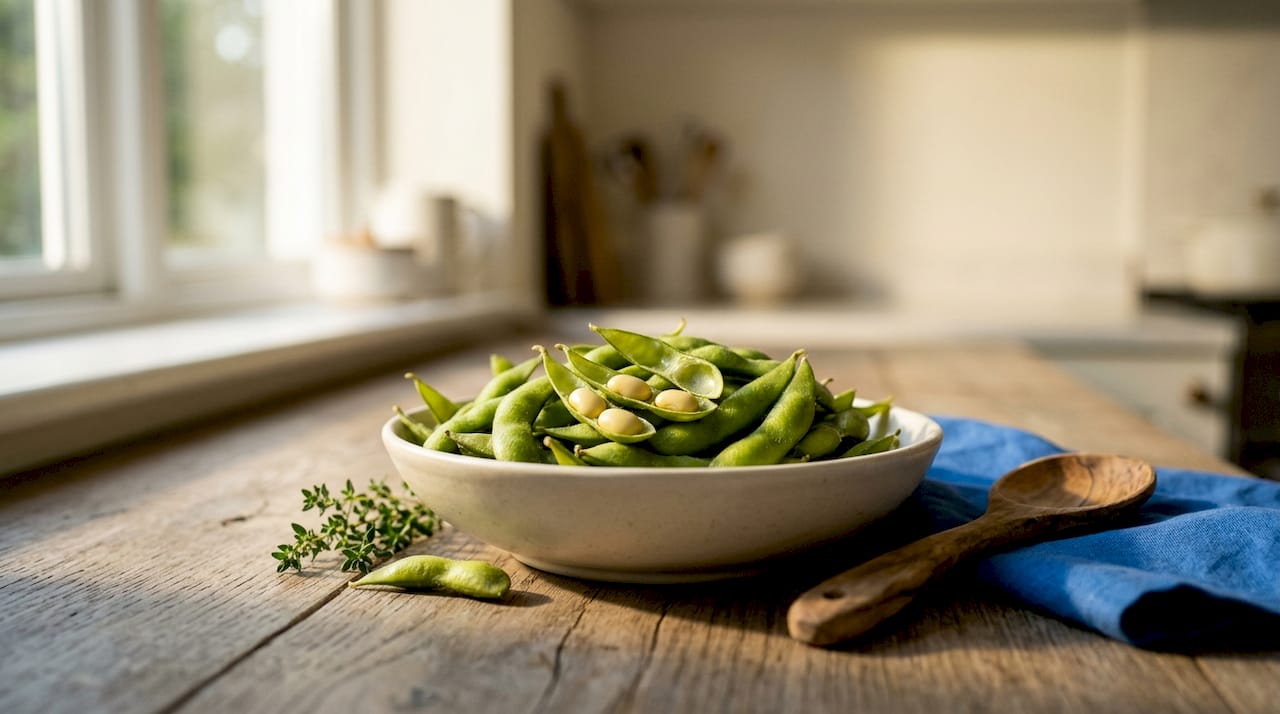
7. Edamame
Edamame delivers 18.5 g of protein per cooked cup (160 g), along with 8 g of fibre and 224 calories. As immature soybeans, edamame shares the complete amino acid profile of mature soy. Frozen edamame pods steam in four minutes in the microwave, making them one of the fastest high-protein snacks available. Sprinkle with sea salt and eat straight from the pod, or shell them into grain bowls and stir-fries.
8. Chickpeas
Chickpeas sit at around 15 g of protein per cooked cup and are one of the most versatile legumes in the plant-based protein list. Roasted chickpeas make a crunchy, portable snack. Blended with tahini, lemon, and garlic they become hummus, which pairs naturally with wholegrain pitta to form a complementary protein combination. Canned chickpeas require no cooking, which removes one of the main barriers to eating more legumes on busy days.
9. Quinoa
Quinoa is the only grain that qualifies as a complete protein, supplying all nine essential amino acids. It provides around 8 g of protein per cooked cup (185 g), which is modest compared with legumes but significant for a grain. Quinoa also contains twice the fibre of most grains and a useful amount of iron. Use it as a base for grain bowls, mix it into porridge, or cook it in vegetable stock to serve alongside roasted vegetables.
10. Chia seeds
Chia seeds contain 17 g of protein per 100 g alongside omega-3 fatty acids, calcium, and soluble fibre. Two tablespoons added to a smoothie or overnight oats contribute around 4 g of protein with no preparation required. Chia seeds absorb up to 10 times their weight in liquid, forming a gel that slows digestion and keeps you fuller for longer. They are particularly useful for vegetarians who want to increase protein without significantly increasing calorie intake.
How to combine vegetarian proteins for better results
The old rule that you must combine complementary proteins at every single meal has been debunked. Plant proteins provide all amino acids, though some are present in lower amounts than others. What matters is variety across the day, not precise pairing at every sitting.
That said, combining legumes with grains at the meal level does improve the digestible indispensable amino acid score (DIAAS), which is the current gold standard for measuring protein quality. Legumes are rich in lysine but lower in methionine. Grains are the reverse. Together, they form a more complete amino acid profile than either provides alone. Practical pairings include:
- Lentil soup with wholegrain bread
- Chickpea curry with brown rice
- Hummus with wholegrain pitta
- Tofu stir-fry with quinoa
- Peanut butter on rye toast
Covering amino acid needs through multiple food categories, including legumes, grains, nuts, seeds, tofu, and nutritional yeast, consistently produces better nutritional outcomes than relying on a single source. This is not complicated in practice. A day that includes lentils at lunch, a handful of pumpkin seeds as a snack, and tempeh at dinner already covers most of your amino acid bases.
Pro Tip: Add nutritional yeast flakes to pasta, soups, or scrambled eggs. Two tablespoons provide around 8 g of complete protein plus B12, a nutrient many vegetarians struggle to obtain from food alone.
Meeting your daily protein target as a vegetarian
The 0.8 g/kg/day protein RDA is now understood as the minimum to prevent deficiency, not the amount needed to support muscle, recovery, and long-term health. For active vegetarians, older adults, and anyone focused on body composition, 1.2–1.6 g/kg/day is the more relevant target.
The table below shows approximate daily protein targets and how to reach them through a vegetarian diet.
| Body weight | Target at 1.2 g/kg | Target at 1.6 g/kg | Example food combination |
|---|---|---|---|
| 60 kg | 72 g | 96 g | 1 cup lentils + 100 g tempeh + 30 g pumpkin seeds + 2 tbsp peanut butter |
| 70 kg | 84 g | 112 g | 1 cup edamame + 150 g tofu + 1 cup chickpeas + 30 g almonds |
| 80 kg | 96 g | 128 g | 200 g tempeh + 1 cup lentils + 50 g pumpkin seeds + 2 tbsp chia seeds |
Harvard Health’s 2026 guidance recommends spreading protein across meals and snacks rather than loading it into one sitting. This approach improves muscle protein synthesis and eases digestion. Aim to include at least one protein source at every meal, whether that is eggs at breakfast, lentils at lunch, or tofu at dinner, with nuts or seeds bridging the gaps between meals.
The role of protein in weight management is also worth noting. Higher protein intakes increase satiety, reduce overall calorie intake, and preserve lean muscle during weight loss. These benefits apply equally to plant-based diets when protein targets are consistently met.
Practical ways to add more protein to vegetarian meals
Getting enough protein as a vegetarian is largely a preparation problem, not a food availability problem. The foods exist. The challenge is building habits that make them easy to reach for.
- Batch-cook legumes. Cook a large pot of lentils or chickpeas on Sunday and refrigerate for up to five days. Add them to salads, soups, and grain bowls without any additional cooking during the week.
- Keep frozen edamame stocked. Frozen edamame steams in minutes and requires no planning. It is the closest plant-based equivalent to grabbing a boiled egg from the fridge.
- Use nut and seed butters strategically. A tablespoon of peanut, almond, or pumpkin seed butter stirred into porridge or spread on rice cakes adds 4–8 g of protein with zero cooking.
- Add tofu to anything. Silken tofu blends invisibly into smoothies and sauces. Firm tofu cubes roast in 25 minutes and absorb whatever seasoning you use. Both forms deliver around 8 g of protein per 100 g.
- Sprinkle seeds on everything. Chia, hemp, and pumpkin seeds add protein to meals that would otherwise have none. Keep a small jar on the kitchen counter as a visual reminder.
Pro Tip: Press firm tofu for at least 20 minutes before cooking. Removing excess moisture allows it to crisp properly in the oven or pan, which dramatically improves texture and makes it far more satisfying as a protein centrepiece.
Explore vegetarian meals high in protein for structured meal ideas that put these ingredients together in practical, repeatable ways.
Key takeaways
The most effective vegetarian protein strategy combines high-protein whole foods across every meal, prioritising variety in amino acid profiles over reliance on any single source.
| Point | Details |
|---|---|
| Soybeans lead on protein density | At 36 g per 100 g, soybeans and soy products are the highest-protein vegetarian foods available. |
| Updated targets are higher | Aim for 1.2–1.6 g of protein per kg of body weight daily, not the outdated 0.8 g minimum. |
| Combine legumes with grains | Pairing lentils, chickpeas, or tofu with rice, quinoa, or bread improves overall protein quality. |
| Spread protein across the day | Distributing protein across meals and snacks improves absorption and supports muscle maintenance. |
| Nuts and seeds fill the gaps | Pumpkin seeds, almonds, and chia seeds provide 17–30 g per 100 g and require no preparation. |
Why I stopped obsessing over protein grams and started thinking in meals
I spent a long time tracking every gram of protein I ate, convinced that hitting a precise daily number was the whole game. It is not. What changed my thinking was realising that a day built around varied whole foods, lentils at lunch, a handful of pumpkin seeds mid-afternoon, tempeh with dinner, consistently hit my targets without any tracking at all.
The foods on this list are not supplements or hacks. Soybeans, lentils, and quinoa have fed populations for thousands of years. The nutritional science simply confirms what traditional food cultures already knew: variety and whole ingredients are the foundation. Tempeh from Indonesia, lentil dal from South Asia, chickpea dishes from the Middle East. These cuisines built high-protein vegetarian eating long before the term existed.
What I find most useful now is thinking at the meal level rather than the gram level. Does this meal have a legume, a grain, and something from the nut or seed category? If yes, the amino acid profile almost takes care of itself. If no, I add a spoonful of pumpkin seed butter or a handful of edamame. It takes ten seconds.
The one thing I would push back on is the idea that vegetarian protein is inherently inferior or requires constant supplementation. Balanced vegetarian diets build muscle equally well as omnivore diets when total protein and variety are adequate. The gap is not biological. It is usually a planning gap, and that is entirely fixable.
— Jarrod
Fuel your protein intake with Granavitalis nut and seed butters
If you are looking for the most convenient way to add concentrated plant protein to your daily routine, Granavitalis has you covered. The organic nut and seed butter selection box from RAWGORILLA gives you a range of minimally processed butters, each one a dense source of protein, healthy fats, and micronutrients with no unnecessary additives. For something specific, the raw organic pecan butter delivers clean, nutrient-rich protein in every spoonful. Every product Granavitalis sources is chosen for purity and nutritional integrity, rooted in the same whole-food philosophy that makes these ten foods so worth eating.
FAQ
What is the highest protein vegetarian food?
Soybeans are the highest protein vegetarian food, providing roughly 36 g of protein per 100 g with a complete amino acid profile. Soy-based products including tempeh, tofu, and edamame are close behind.
What has protein that isn’t meat?
Legumes, nuts, seeds, soy products, quinoa, and dairy or eggs all provide substantial protein without meat. Pumpkin seeds, peanuts, lentils, and chickpeas are among the most protein-dense non-meat options.
What is lean protein for vegetarians?
Lean protein for vegetarians refers to sources that are high in protein relative to their fat and calorie content. Lentils, edamame, tofu, and chickpeas all qualify, providing 15–20 g of protein per serving with low saturated fat.
Do vegetarians need to combine proteins at every meal?
No. The requirement to combine complementary proteins at every meal is a myth. Eating a varied plant-based diet across the day, including legumes, grains, nuts, and seeds, provides all essential amino acids without precise pairing at each sitting.
How do I meet the 1.2–1.6 g/kg/day protein target on a vegetarian diet?
Include a protein source at every meal and snack. A combination of one cup of lentils, 100 g of tempeh, 30 g of pumpkin seeds, and two tablespoons of peanut butter provides approximately 70–80 g of protein, covering most of the daily target for a 60–70 kg adult.