
Vegetarian complete protein: 10 easy sources explained
Yes, a varied vegetarian diet can supply every essential amino acid your body needs. The British Nutrition Foundation confirms that plant foods contain all essential amino acids, and that eating a variety across the day meets requirements when overall calorie intake is adequate. You do not need to engineer a perfectly balanced plate at every meal.
Three things matter most:
- Eat at least two servings of protein-rich foods daily (pulses, soya products, eggs, dairy, nuts, seeds, or wholegrains).
- Spread those servings across breakfast, lunch, and dinner rather than loading them into one meal.
- Keep total calorie intake adequate: amino acid sufficiency follows naturally from a well-fed, varied diet.
Key takeaways
A varied vegetarian diet, spread across three meals and adequate in calories, reliably meets all essential amino acid needs without rigid meal-by-meal combining.
| Point | Details |
|---|---|
| Complete protein is achievable | Plant foods contain all essential amino acids; variety across the day is what matters, not combining at every meal. |
| UK protein targets | Aim for approximately 0.75 g of protein per kilogram of body weight daily for average adults. |
| Spread intake across meals | Aim for higher plant protein amounts per meal to support muscle synthesis, distributed across breakfast, lunch, and dinner. |
| Watch B12, iodine, and vitamin D | These are the nutrients most likely to fall short on a vegetarian diet; use fortified foods or supplements consistently. |
| Granavitalis for convenient protein | Nut and seed butters, superfood bundles, and seed mixes from Granavitalis add whole-food protein to everyday meals with minimal effort. |
Table of Contents
- Which vegetarian foods are single-food complete proteins?
- How and when should you combine plant proteins?
- How much protein do UK adults actually need?
- Quick swaps and simple meal ideas to raise your protein intake
- How does plant protein quality compare, and what else should vegetarians watch?
- A quick checklist: does your vegetarian diet cover complete protein?
- The part most articles get wrong about vegetarian protein
- Granavitalis products that fit naturally into a high-protein vegetarian diet
- Sources
Which vegetarian foods are single-food complete proteins?
A “complete protein” is any food that supplies all nine essential amino acids in proportions the body can use. Most people assume this is an animal-protein privilege, but several plant and vegetarian foods qualify outright, and the British Nutrition Foundation notes that the broader nutrient package of plant foods (fibre, complex carbohydrates, lower saturated fat) makes them worth choosing on their own terms, not just as amino acid delivery vehicles.
The table below covers every food the SERP consensus and UK health bodies recognise as a key vegetarian protein source. Per-serving protein figures are based on typical UK portion sizes.
A note on processed alternatives: mycoprotein products and meat analogues are convenient and nutritionally useful, but some processed varieties carry higher salt levels. For everyday protein, whole-food staples like tofu, tempeh, pulses, and eggs are the stronger long-term choice.
For a broader look at high protein vegetarian foods with UK portion examples, the Granavitalis guide covers ten key picks in detail.
How and when should you combine plant proteins?
The idea that you must pair complementary proteins at every single meal, rice with lentils at lunch, beans with corn at dinner, was popularised in the 1970s and has since been revised. The British Dietetic Association (BDA) is clear: essential amino acid needs do not have to be met at each meal. The body maintains an amino acid pool and draws on it throughout the day, so variety across meals is what counts, not precision engineering at every sitting.
That said, certain pairings are genuinely useful because they taste good, travel well, and happen to complement each other’s amino acid profiles:
- Rice and beans: the classic. Beans supply lysine; rice supplies methionine. Together they cover the full spectrum.
- Houmous and wholemeal pitta: chickpeas and wheat complement each other well, and the pitta adds meaningful protein on its own (~9 g per 100 g for wholemeal bread).
- Peanut butter on wholemeal toast: quick, filling, and a solid source of plant-based amino acids at breakfast or as a snack.
- Lentil dahl with brown rice: a staple across South Asian cooking that nutritionists have endorsed for decades.
- Tofu stir-fry with edamame and quinoa: all three are complete sources independently, so this combination is particularly protein-dense.
The BDA also recommends aiming for around 30 g of plant protein per meal when muscle synthesis is a priority, slightly higher than the equivalent animal-protein target, because plant proteins tend to be digested more slowly and with somewhat lower efficiency.
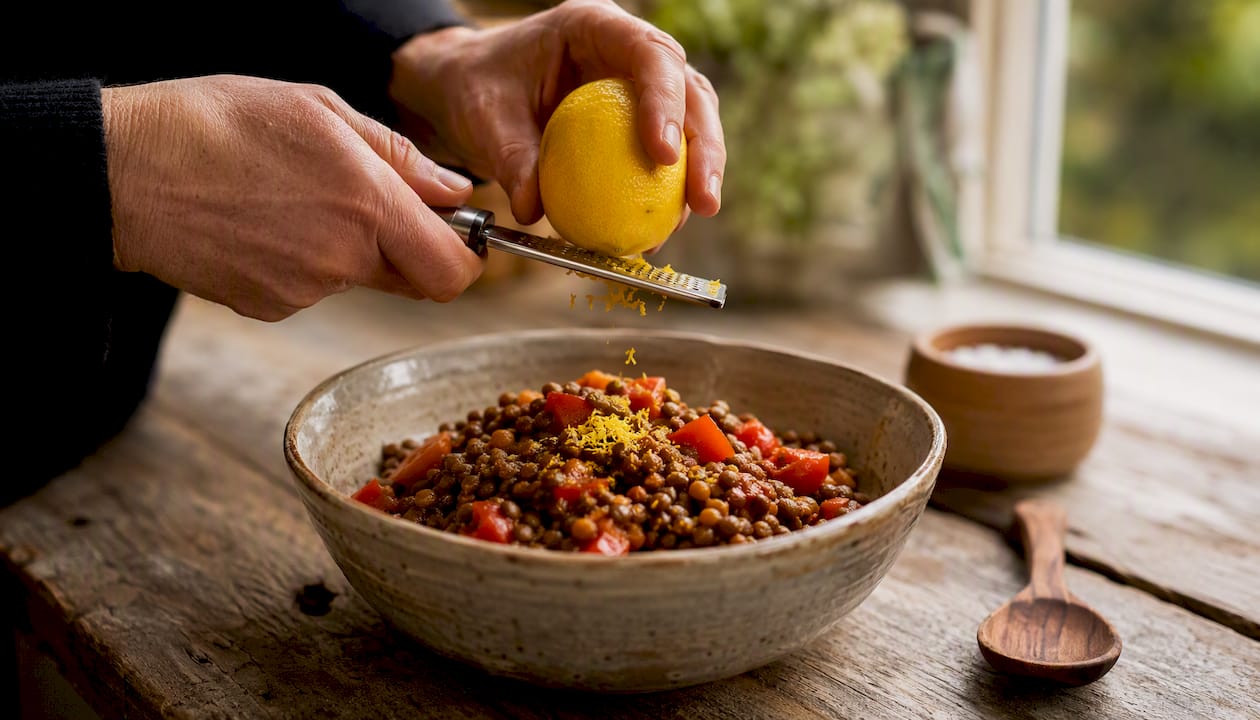
Pro Tip: Pair pulses with a vitamin C source at the same meal. Pairing lentils with tomatoes, peppers, or a squeeze of lemon significantly improves non-haem iron absorption, which matters because plant iron is less readily absorbed than the haem iron in meat.
How much protein do UK adults actually need?
The Vegetarian Society cites the UK reference nutrient intake (RNI) at approximately 0.75 g of protein per kilogram of body weight per day. In practical terms, that works out to daily protein targets for women and men based on average body weights, based on average adult body weights. Athletes, older adults (over 65), and anyone recovering from illness or surgery typically need more, often 1.2–1.6 g/kg, and should spread intake across the day to support muscle maintenance.
The NHS advises including pulses, soya products, nuts, seeds, eggs, and dairy as the core protein sources, and using fortified foods or supplements for nutrients that are harder to obtain on plant-heavy diets.
Sample portions and their protein content
A sample vegetarian day hitting ~55 g protein
- Breakfast: porridge made with fortified soya milk + 30 g hemp seeds (~16 g protein)
- Lunch: lentil soup with a wholemeal roll (~18 g protein)
- Dinner: tofu stir-fry with edamame and brown rice (~20 g protein)
- Snack: 150 g Greek yoghurt or a tablespoon of nut butter on oatcakes (~8–10 g protein)
One point worth keeping in mind: meeting your calorie needs makes amino acid sufficiency far more likely. Undereating is the most common reason vegetarians fall short on protein, not a lack of variety.
Quick swaps and simple meal ideas to raise your protein intake
Small changes to existing meals tend to stick better than complete overhauls. These swaps require minimal effort and meaningfully raise per-meal protein:
- Swap white rice for quinoa in grain bowls and stir-fries to add a complete amino acid profile and extra fibre.
- Add 30 g of hemp or chia seeds to your morning porridge or smoothie for around 5–10 g of extra protein with no cooking required.
- Replace croutons with roasted chickpeas on salads: crunchier, higher in protein, and far more filling.
- Use tempeh instead of tofu when you want a firmer texture and a slight fermented flavour; it also delivers more protein per gram.
- Stir nutritional yeast into pasta sauces, soups, or scrambled eggs for a savoury, cheesy flavour and a meaningful protein boost (around 8 g per 15 g serving).
- Batch-cook a pot of lentils or chickpeas on Sunday and use them across the week in salads, curries, and wraps.
- Swap regular milk for fortified soya milk in porridge, coffee, and baking: soya is the only plant milk with a protein content comparable to cow’s milk.
- Add a spoonful of nut butter to overnight oats, smoothies, or rice cakes for a quick protein and healthy-fat hit.
- Use edamame as a snack instead of crisps: an 80 g portion delivers around 8 g of complete protein.
- Try a mycoprotein-based mince in bolognese or chilli as a direct swap for beef mince: similar texture, lower saturated fat, and high in fibre.
For ready-to-cook inspiration, the Granavitalis guide to vegetarian protein meals maps these swaps to full recipes with portion counts.
How does plant protein quality compare, and what else should vegetarians watch?
Protein quality scores: useful context, not a verdict
Protein quality is measured using two main metrics: PDCAAS (Protein Digestibility Corrected Amino Acid Score) and the newer DIAAS (Digestible Indispensable Amino Acid Score). Both assess how well a protein’s amino acid profile matches human needs and how efficiently it is digested. Animal proteins generally score higher than individual plant proteins on these scales.
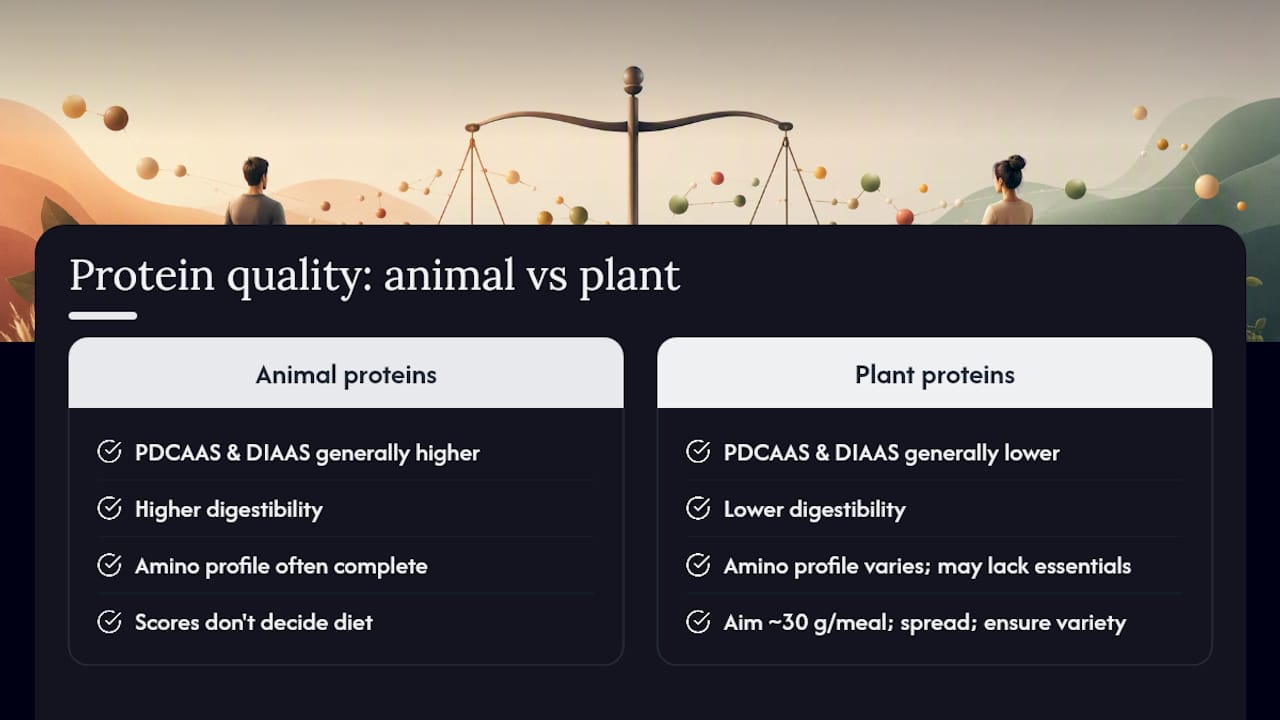
The British Nutrition Foundation notes, however, that these scores do not invalidate well-planned plant-based diets. A systematic review published in PMC confirms that plant-based diets can provide adequate protein when energy intake and variety are sufficient, though digestibility differences are real. The practical implication: aim for slightly higher per-meal plant protein targets (around 30 g, per BDA guidance) and distribute intake across the day rather than concentrating it in one meal.
Nutrients vegetarians should monitor
Getting protein right is only part of the picture. These nutrients deserve attention on a vegetarian diet:
- Vitamin B12: found reliably only in animal products and fortified foods. Vegans and many vegetarians need a supplement or consistent use of B12-fortified foods (nutritional yeast, plant milks, breakfast cereals).
- Iron: plant foods contain non-haem iron, which is less readily absorbed than the haem iron in meat. Pair pulses and dark leafy greens with vitamin C sources at the same meal to improve uptake.
- Vitamin D: most UK adults are advised to consider a supplement between October and March regardless of diet. Vegetarians who avoid oily fish have fewer dietary sources.
- Iodine: dairy and fish are the main UK dietary sources. Vegetarians who eat dairy are usually fine; vegans should use iodine-fortified plant milks or a supplement.
- Calcium: dairy provides it readily; vegans should rely on calcium-set tofu, fortified plant milks, and leafy greens such as kale and pak choi.
- Selenium: found in Brazil nuts (two per day covers the requirement), eggs, and dairy. Vegans avoiding these foods may need a supplement.
On processed meat alternatives: they are a useful occasional option, but many carry higher sodium levels than whole-food equivalents. Tofu, tempeh, pulses, and eggs remain the more reliable daily staples.
A quick checklist: does your vegetarian diet cover complete protein?
Run through these checks at the end of any day:
- Did you eat at least two servings of protein-rich foods (pulses, soya, eggs, dairy, nuts, seeds, or wholegrains)?
- Did you include a legume or soya product at some point during the day?
- Was protein spread across at least two, ideally three, meals rather than concentrated in one?
- If you are vegan: did you consume a B12-fortified food or take a supplement?
- Did you eat enough overall? Calorie adequacy is the single biggest predictor of amino acid sufficiency.
Red flags that suggest a conversation with a registered dietitian:
- Consistently low calorie intake or unintentional weight loss
- Older age (65+) combined with reduced appetite
- Training for heavy resistance sport or endurance events
- Pregnancy or breastfeeding on a vegan diet
One practical action: log one full day of eating and compare it against this checklist. Most people find they are closer to their targets than they assumed, and the gaps, when they exist, are usually easy to close.
The part most articles get wrong about vegetarian protein
There is a persistent idea in nutrition writing that vegetarians are perpetually at risk of protein deficiency, quietly running low on one amino acid or another. The evidence does not support that framing. The Vegetarian Society’s protein guidance notes that many UK vegetarians already exceed the RNI through ordinary varied eating, without tracking a single gram.
What the evidence does support is this: the quality gap between plant and animal protein is real but manageable. Slightly higher per-meal targets and consistent variety across the day close it. The bigger risk for most vegetarians is not amino acid imbalance but under-eating overall, particularly on calorie-restricted diets, or neglecting B12 and iodine because those gaps are invisible until they become clinical.
The “incomplete protein” label, applied to individual plant foods, is also misleading in a way that has done real harm. It implies that eating lentils without rice is nutritionally reckless. It is not. Lentils contain all nine essential amino acids; they are just lower in methionine than animal proteins. Eating a varied diet across the day handles that without any deliberate engineering.
The practical upshot: stop worrying about combining proteins at every meal and start paying attention to total daily intake, calorie adequacy, and the short list of nutrients (B12, iodine, vitamin D) where vegetarian diets genuinely need attention.
Granavitalis products that fit naturally into a high-protein vegetarian diet
If you are building more protein into your vegetarian diet, the practical challenge is usually convenience: having the right ingredients to hand when time is short. Granavitalis sources nut and seed butters, superfood seed mixes, and whole-food additions that slot directly into the meal ideas above.
Two tablespoons of the Raw Organic Pecan Butter from RAWGORILLA adds around 4–5 g of protein alongside healthy fats, and works stirred into porridge, spread on wholemeal toast, or blended into a post-workout smoothie. For readers who want to try several options before committing, the Organic Nut and Seed Butter Selection Box covers multiple varieties in one order, useful for rotating through the breakfast and snack swaps outlined above.
The Immune Booster Superfood Bundle includes seed and superfood mixes that add protein, fibre, and micronutrients to meals without any preparation beyond a spoonful. Browse the full range at Granavitalis.com for portion guidance and recipe ideas matched to each product.
Sources
These are the primary sources used throughout this article, selected for authority and UK relevance:
- Nutrition
- Protein | Vegetarian Society
- Practical guide: nutritional considerations re PROTEIN | British Dietetic Association
- The vegetarian diet | NHS
- Ncbi