
Best plant protein powder to build muscle: 25g per serve 2026
Choosing the right plant-based protein powder feels like wandering through a maze of labels, claims and conflicting advice. You want to build muscle, but every brand promises results while hiding fillers and additives behind buzzwords. This guide cuts through the noise, helping you select and use plant protein powders that truly deliver muscle growth, recovery and clean performance without the guesswork.
Table of Contents
- Introduction To Plant-Based Protein Powders For Muscle Building
- Prerequisites: What You Need Before Starting
- Choosing Effective Plant-Based Protein Powders
- How To Use Plant Protein Powders For Muscle Gain
- Common Mistakes And How To Avoid Them
- Expected Results And Outcome Timelines
- Discover Nutrient-Dense Ancient Grains To Boost Your Plant Protein Intake
- FAQ
Key takeaways
| Point | Details |
|---|---|
| Blend for completeness | Pea, rice, and hemp proteins combined create a complete amino acid profile essential for muscle growth. |
| Timing matters | Consume 20-30g protein within 30-60 minutes post-workout to maximise muscle synthesis. |
| Avoid cheap fillers | Maltodextrin and artificial sweeteners cause digestive issues and reduce powder quality. |
| Whole foods first | Powders supplement, not replace, a balanced plant-based diet for optimal muscle growth. |
| Patience required | Visible muscle gains appear after 8-12 weeks with consistent intake and training. |
Introduction to plant-based protein powders for muscle building
Plant-based protein powders have surged in popularity across UK gyms, studios and home kitchens as more people seek muscle support without animal products. Building muscle depends on consuming all nine essential amino acids, the building blocks your body cannot produce on its own. Complete protein sources deliver this full profile, but single plant proteins often fall short.
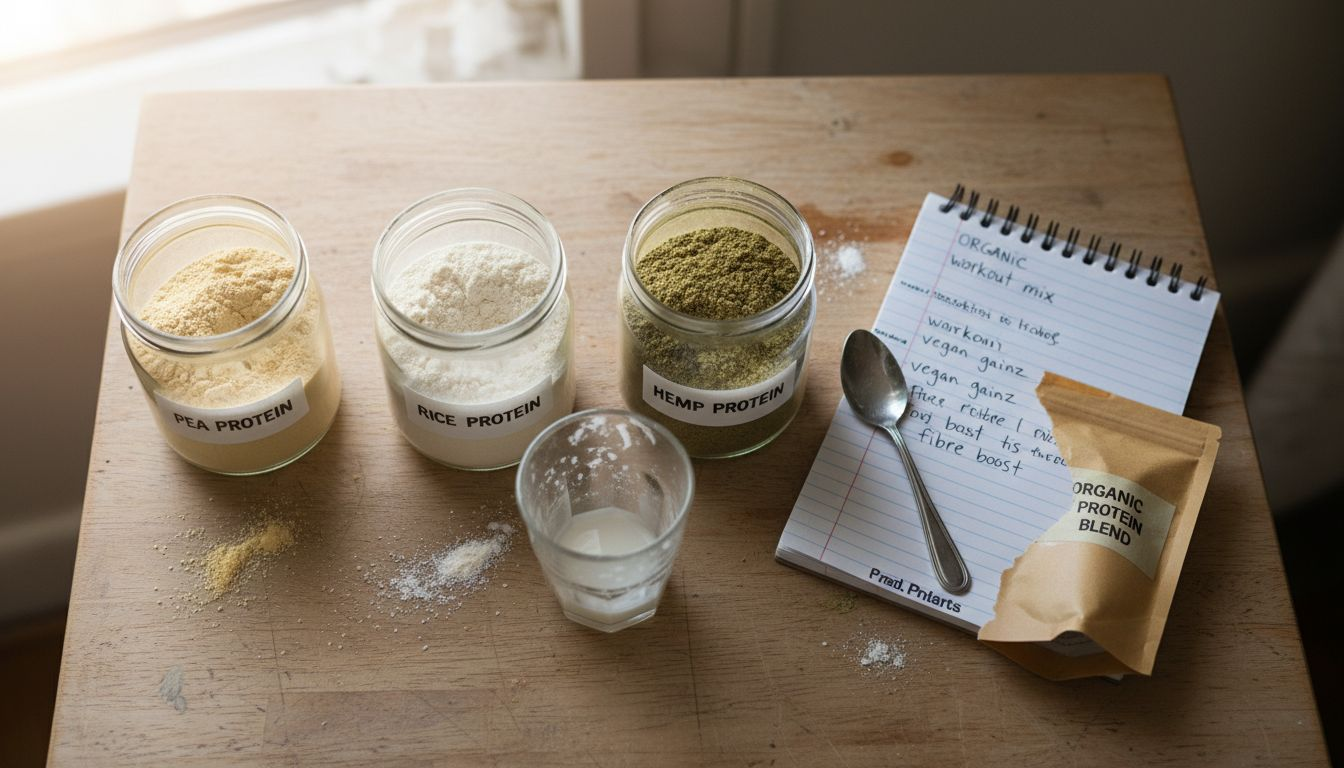
Common plant sources like pea, rice and hemp each bring unique strengths. Pea protein offers high leucine content, the amino acid crucial for muscle protein synthesis. Rice protein complements pea with additional amino acids, while hemp adds omega-3 fatty acids and fibre. Blending these creates a complete amino acid profile needed for muscle growth, matching or exceeding what animal proteins provide.
The plant-based protein benefits in the UK extend beyond muscle building. Plant proteins digest easily, reduce inflammation and support recovery without the saturated fats found in whey. When you choose the right blend and use it properly, you fuel muscle growth while honouring your body’s need for clean, nutrient-dense nutrition.
Key plant protein sources:
- Pea protein: High leucine, smooth texture, hypoallergenic
- Rice protein: Complements pea, neutral flavour, easily digestible
- Hemp protein: Omega-3s, fibre, slightly earthy taste
- Blends: Combined profiles deliver all essential amino acids
Prerequisites: what you need before starting
Before you buy your first tub of plant protein powder, calculate your daily protein requirements. Most active individuals building muscle need 1.6 to 2.2g protein per kilogram of bodyweight. A 70kg person aiming for muscle growth targets 112 to 154g protein daily, spread across meals and snacks.
Consistent strength training stimulates the muscle growth process. Without progressive overload, where you gradually increase weight or resistance, protein powders become expensive supplements with minimal impact. Your muscles need the stimulus to grow before protein can repair and build new tissue.
Understanding amino acids sets the foundation for effective powder use. These organic compounds link together to form proteins, and nine of them are essential, meaning your body cannot make them. Complete proteins contain all nine in adequate amounts. The role of plant-based proteins becomes clearer when you grasp how different sources contribute varying amino acid profiles.
Knowing your baseline helps you track progress accurately. Measure current strength levels, body composition and energy throughout the day. This data shows whether your protein intake and training align with muscle-building goals. Lean plant protein for recovery works best when integrated into a structured plan, not used randomly.
Essential preparation steps:
- Calculate protein needs: 1.6-2.2g per kg bodyweight
- Commit to strength training 3-5 times weekly
- Learn amino acid basics and why blends matter
- Establish baseline measurements for tracking progress
Choosing effective plant-based protein powders
Selecting the right powder transforms from guesswork to informed decision when you know what to look for. Seek blends of pea, rice and hemp proteins on ingredient labels, as these combinations ensure complete amino acid coverage. Single-source powders often lack one or more essential amino acids, limiting muscle-building potential.
Leucine content matters more than most labels admit. This branched-chain amino acid triggers muscle protein synthesis, the process where your body repairs and builds muscle tissue. Quality plant blends contain 2 to 3g leucine per serving. Check nutrition panels or contact manufacturers if this information is not clearly displayed.
Avoiding harmful additives protects your digestive system and overall health. Maltodextrin and artificial sweeteners like sucralose appear frequently in cheap powders, causing bloating, inflammation and blood sugar spikes. Excessive oils added for texture create sluggish digestion and reduce the powder’s nutritional density.
Texture and protein concentration vary significantly between sources. Hemp protein typically delivers 15 to 20g protein per serving compared to 20 to 25g from pea or rice blends. Hemp also has a chalky, earthy taste some find unpleasant. The best plant-based protein powders balance taste, texture and nutrition without relying on fillers.
Pro Tip: Prioritise powders listing five or fewer ingredients and added digestive enzymes like bromelain or papain. These enzymes improve amino acid absorption, ensuring your muscles actually receive the protein you consume.
| Protein Source | Protein Per Serving | Leucine Content | Texture | Best For |
|---|---|---|---|---|
| Pea | 20-25g | High (2.5-3g) | Smooth | Muscle synthesis |
| Rice | 20-24g | Moderate (1.8-2.2g) | Neutral | Complementing pea |
| Hemp | 15-20g | Low (1.2-1.5g) | Chalky | Omega-3s, fibre |
| Blends | 20-25g | High (2.5-3g) | Varies | Complete profile |
What to look for:
- Blends containing pea, rice and hemp for complete amino acids
- Leucine content around 2-3g per serving
- Minimal ingredients without maltodextrin or artificial sweeteners
- Added digestive enzymes for better absorption
- 20-25g protein per serving for muscle-building doses
How to use plant protein powders for muscle gain
Timing your protein intake amplifies muscle recovery and growth. Consume 20-30g protein within 30-60 minutes after strength training when your muscles are primed to absorb nutrients. This post-workout window maximises muscle protein synthesis, repairing the microtears created during exercise.
Plant protein powders serve as dietary supplements, not meal replacements or sole protein sources. Whole plant foods like lentils, chickpeas, quinoa and nuts provide additional nutrients, fibre and diverse amino acids that powders cannot fully replicate. Pairing your powder with balanced meals ensures your body receives the full nutritional spectrum needed for sustained muscle growth.
Hydration supports protein metabolism and muscle function. Aim for at least 2 to 3 litres of water daily, increasing intake on training days. Spreading protein intake evenly across meals, roughly 20 to 30g every 3 to 4 hours, maintains elevated muscle protein synthesis throughout the day rather than overwhelming your system with one large dose.
Using vegan protein powders effectively means integrating them into your routine, not relying on them exclusively. Blend powders into smoothies with berries, spinach and nut butter. Mix them into oatmeal or energy balls for convenient snacks. The goal is consistent protein delivery that supports your training without replacing whole food nutrition.
Pro Tip: Prepare your post-workout shake before training so it is ready immediately after your session. Delaying protein intake by even 90 minutes reduces muscle protein synthesis rates significantly.
How to maximise muscle-building results:
- Consume 20-30g protein powder within 30-60 minutes post-workout
- Pair powders with whole plant foods at every meal
- Distribute protein intake evenly across 4-5 meals daily
- Maintain hydration with 2-3 litres water per day
- Use powders as supplements, not meal replacements
- Blend into smoothies, oats or snacks for variety
Common mistakes and how to avoid them
Relying exclusively on protein powders without diverse dietary sources limits your muscle-building potential. Whole plant foods provide fibre, vitamins and minerals that powders lack, supporting overall health and sustained energy. Powders fill gaps, they do not replace meals.
Choosing powders with cheap fillers undermines your health and progress. Maltodextrin spikes blood sugar and adds empty calories, while artificial sweeteners disrupt gut bacteria and cause digestive discomfort. These additives appear tempting because they improve taste and texture cheaply, but the trade-off is inflammation and reduced nutrient absorption.
Ignoring leucine content or consuming excessive protein beyond 2.2g per kg bodyweight wastes money and stresses kidneys. More protein does not equal more muscle. Your body can only synthesise a limited amount of muscle protein per day, determined by training stimulus and recovery capacity. Excess protein converts to energy or fat, not additional muscle tissue.
Neglecting consistent strength training renders even the best protein powder ineffective. Muscle growth requires progressive overload, adequate rest and strategic nutrition working together. Skipping workouts or training sporadically breaks this cycle, leaving your protein intake without purpose.
“Many plant protein powders contain unnecessary additives like maltodextrin and artificial sweeteners that compromise digestive health and reduce the powder’s nutritional integrity. Reading ingredient labels carefully protects your investment in clean nutrition.”
Frequent mistakes to avoid:
- Using powders as primary protein source instead of complementing whole foods
- Selecting powders with maltodextrin, sucralose or excessive oils
- Ignoring leucine content on nutrition labels
- Consuming more than 2.2g protein per kg bodyweight daily
- Expecting muscle gains without consistent strength training
- Skipping meals and relying solely on shakes for nutrition
The common mistakes in vegan protein powder use often stem from marketing hype rather than nutritional science. Question claims that sound too good to be true, verify ingredient quality and prioritise powders aligned with whole food principles.
Expected results and outcome timelines
Visible muscle growth typically emerges within 8 to 12 weeks of adequate protein intake and training. Early gains often come from improved muscle recovery, increased training capacity and better nutrient timing rather than dramatic size increases. Patience and consistency matter more than chasing rapid transformations.
Tracking progress through strength metrics reveals muscle development before visual changes appear. Record weights lifted, repetitions completed and overall training volume weekly. Body composition tools like DEXA scans or bioelectrical impedance scales measure muscle mass directly, providing objective data beyond mirror assessments.
Maintaining protein intake of 1.6 to 2.2g per kg bodyweight daily supports steady gains without overwhelming your digestive system. Combined with progressive strength training and adequate sleep, this range optimises muscle protein synthesis. Rest days are crucial, as muscle tissue repairs and grows during recovery periods, not during workouts.
Tracking your journey with nutrient-dense foods alongside plant protein powders provides a comprehensive view of your nutrition’s impact. Celebrate small wins like lifting heavier weights, feeling stronger throughout the day and recovering faster between sessions. These indicators confirm your protein strategy is working.
| Timeline | Expected Outcomes | Key Actions |
|---|---|---|
| Weeks 1-4 | Improved recovery, less soreness | Establish consistent protein timing and training routine |
| Weeks 5-8 | Increased strength, better endurance | Track lifting progress, adjust protein intake if needed |
| Weeks 9-12 | Visible muscle definition, size gains | Measure body composition, refine nutrition and training |
| Weeks 13+ | Sustained growth, plateau management | Vary training stimulus, maintain protein consistency |
Realistic expectations:
- Early gains from improved recovery and training capacity
- Visible muscle growth after 8-12 weeks with consistency
- Strength increases before size changes become obvious
- Rest and sleep are essential for muscle tissue repair
- Protein alone does not build muscle without training stimulus
Discover nutrient-dense ancient grains to boost your plant protein intake
Plant protein powders deliver concentrated amino acids, but pairing them with ancient grains creates a nutritional synergy that supports muscle building and overall wellness. Ancient grains like quinoa, amaranth and spelt offer complete proteins, complex carbohydrates and essential minerals that complement your powder’s role in recovery and growth.

At Granavitalis, we provide resources and products rooted in wholefood nutrition, helping you understand how low-calorie plant protein blends integrate with nutrient-dense ancient grains for balanced, effective muscle support. Our approach honours traditional foods while meeting modern performance demands, giving you the foundation for sustainable strength and vitality. Explore our range to elevate your plant-based nutrition beyond powders alone, fuelling your body with foods designed by nature and refined by knowledge.
FAQ
What amount of plant protein powder is optimal per serving for muscle building?
Aim for 20 to 30g protein per serving to maximise muscle protein synthesis. This range provides sufficient amino acids without overwhelming your digestive system. Consuming more than 30g in one serving offers minimal additional benefit, as your body can only process a limited amount for muscle building at once.
Can plant-based protein powders alone provide all muscle-building amino acids?
Quality blends combining pea, rice and hemp proteins deliver all nine essential amino acids needed for muscle growth. However, relying solely on powders without whole plant foods limits your intake of vitamins, minerals and fibre essential for overall health. Use powders to supplement a balanced diet, not replace it.
How soon after working out should I consume protein powder?
Consume your protein shake within 30 to 60 minutes post-workout for optimal muscle recovery. This timing takes advantage of your muscles’ heightened sensitivity to nutrients, accelerating repair and growth. Delaying intake beyond 90 minutes reduces the effectiveness of muscle protein synthesis.
Are plant protein powders easy to digest compared to animal proteins?
Most people find plant proteins easier to digest than whey or casein, especially those with lactose intolerance or dairy sensitivities. Plant powders cause less bloating and inflammation. Choosing blends with added digestive enzymes further improves absorption and reduces any digestive discomfort.
How long does it take to see muscle gains from using these powders?
Visible muscle growth typically appears after 8 to 12 weeks of consistent protein intake paired with regular strength training. Early improvements in recovery and strength often occur within 4 to 6 weeks. Progress depends on training intensity, overall diet quality, sleep and individual genetic factors beyond protein powder alone.