
High-protein vegan breakfast ideas to fuel your day
Scrambled tofu, protein-fortified porridge, and pulse-based mains are the most reliable plant-based high-protein breakfast categories, each delivering 12–25 g of protein per serving. For active adults, the British Dietetic Association suggests spreading protein across the day, with a breakfast target of roughly 20–30 g for plant-based eaters. Here is what that looks like in practice:
- Scrambled tofu (140 g firm tofu): ~20 g protein
- Granola + fortified soya yoghurt or soya milk (75 g granola + 125 g yoghurt or 200 ml milk): ~12.5–13.5 g protein
- Protein overnight oats (oats + soya milk + chia + nut butter): ~18–22 g protein
- Tempeh and bean breakfast bowl: ~19–25 g protein
- Protein smoothie (soya milk + pea protein + nut butter): ~20–28 g protein
- Protein muffins (almond flour + white beans): ~10–12 g per muffin
- Beans on toast (200 g baked beans, wholegrain bread): ~14–16 g protein
The British Heart Foundation sets the UK recommended daily protein intake at 0.75 g per kg of body weight, though many active vegans aim closer to 1 g/kg to account for slightly lower plant-protein utilisation.
Key takeaways
Building a high-protein vegan breakfast consistently comes down to one rule: anchor every meal around a concentrated plant-protein source, then layer in fortified milks, seeds, and nut butters to reach 20–30 g.
| Point | Details |
|---|---|
| Protein anchor first | Build every breakfast around tofu, tempeh, pulses, or protein powder before adding other ingredients. |
| Swap oat milk for soya | Replacing oat milk with fortified soya milk adds roughly 5–7 g protein per bowl with no other changes. |
| Aim for 20–30 g at breakfast | Active plant-based eaters benefit from a higher per-meal target to support muscle protein synthesis. |
| Batch-cook on Sundays | Overnight oats, tofu scramble, and protein muffins all keep 3–5 days, removing the morning time barrier. |
| Granavitalis nut butters | RAWGORILLA pecan and nut-seed butters add 3–4 g protein per tablespoon and work across every breakfast build. |
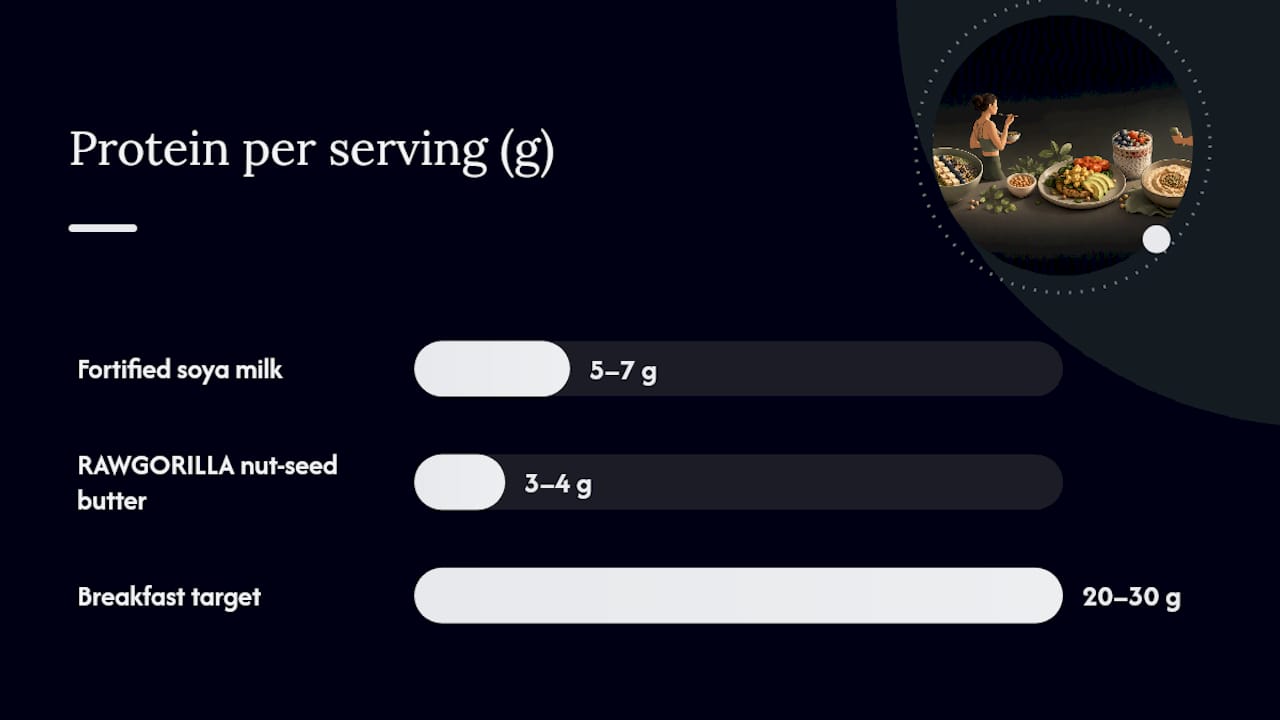
Table of Contents
- Savoury high-protein vegan breakfast ideas that actually satisfy
- Pancakes, porridge and overnight oats that genuinely raise protein
- Quick smoothies and protein bowls you can make in five minutes
- Grab-and-go protein bakes and energy balls
- Simple add-ins and swaps that raise protein fast
- How much protein do you actually need at breakfast?
- Meal-prep, timing and batch-cook strategies for busy mornings
- A Granavitalis perspective on building better plant-protein breakfasts
- Granavitalis products that support your morning protein goals
- Sources
Savoury high-protein vegan breakfast ideas that actually satisfy
Savoury breakfasts anchor protein most efficiently because they centre on tofu, tempeh, pulses, or eggs rather than relying on add-ins to reach a target.
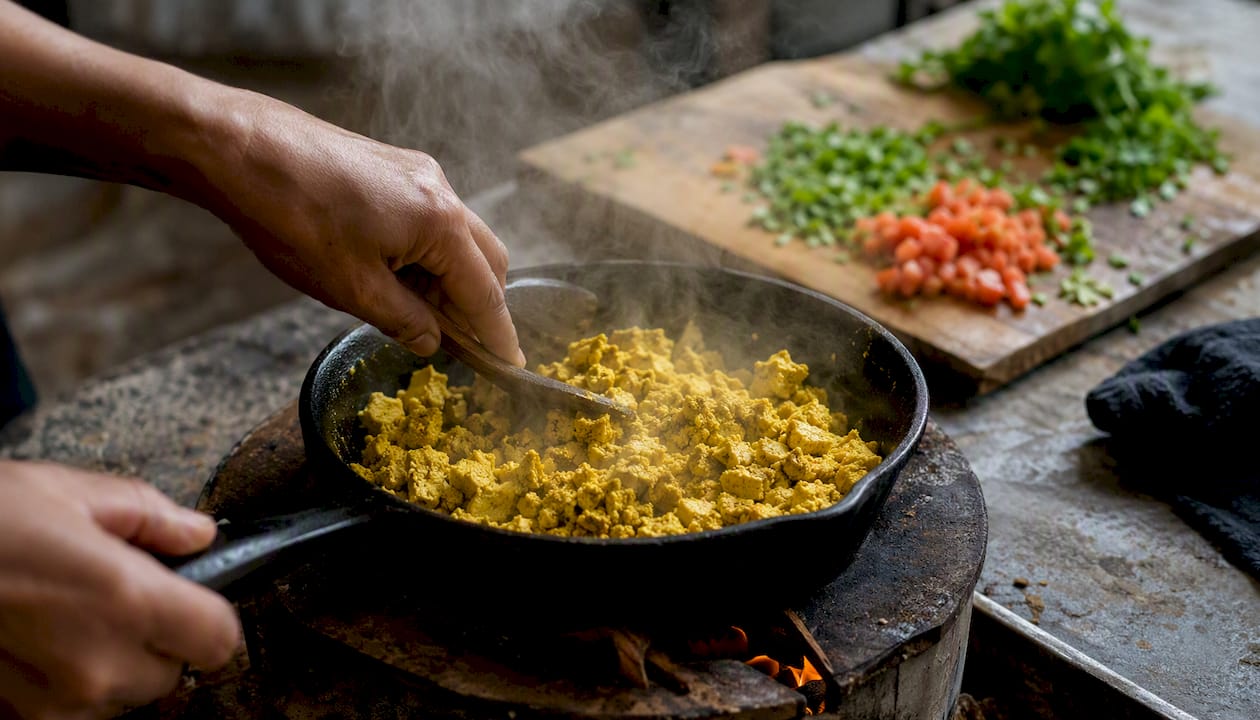
Scrambled tofu is the workhorse. Crumble 140 g of firm, calcium-set tofu into a hot pan with a little oil, turmeric, black salt (kala namak), and nutritional yeast. Cook for 5–7 minutes. Serve on wholegrain toast. That single portion delivers roughly 20 g of protein. Total time: under 10 minutes. Difficulty: easy.
Vegan fry-up (tempeh rashers + mushrooms + beans): slice 80 g of tempeh thinly and fry until golden, add a tin of baked beans and grilled mushrooms. Tempeh alone contributes around 15 g protein per 80 g serving, and the beans add another 7–8 g. Time: 15 minutes. Difficulty: easy.
Beans on toast is the most underrated quick option. Two slices of seeded wholegrain bread with 200 g of baked beans gives roughly 14–16 g protein in five minutes flat. Add a spoonful of tahini on the side to push it higher.
Chickpea and pepper scramble: fry half a tin of drained chickpeas with diced red pepper, smoked paprika, and cumin for 8 minutes. Roughly 12 g protein per serving. Time: 10 minutes. Difficulty: easy.
Pro Tip: Use calcium-set tofu (check the label for calcium sulphate) rather than standard firm tofu. It holds its texture better when scrambled and delivers a slightly higher protein content per 100 g. To press quickly, wrap in a clean tea towel and press under a heavy pan for 5 minutes.
Pancakes, porridge and overnight oats that genuinely raise protein
Most porridge recipes hover around 5–8 g protein. These builds push that number considerably higher.
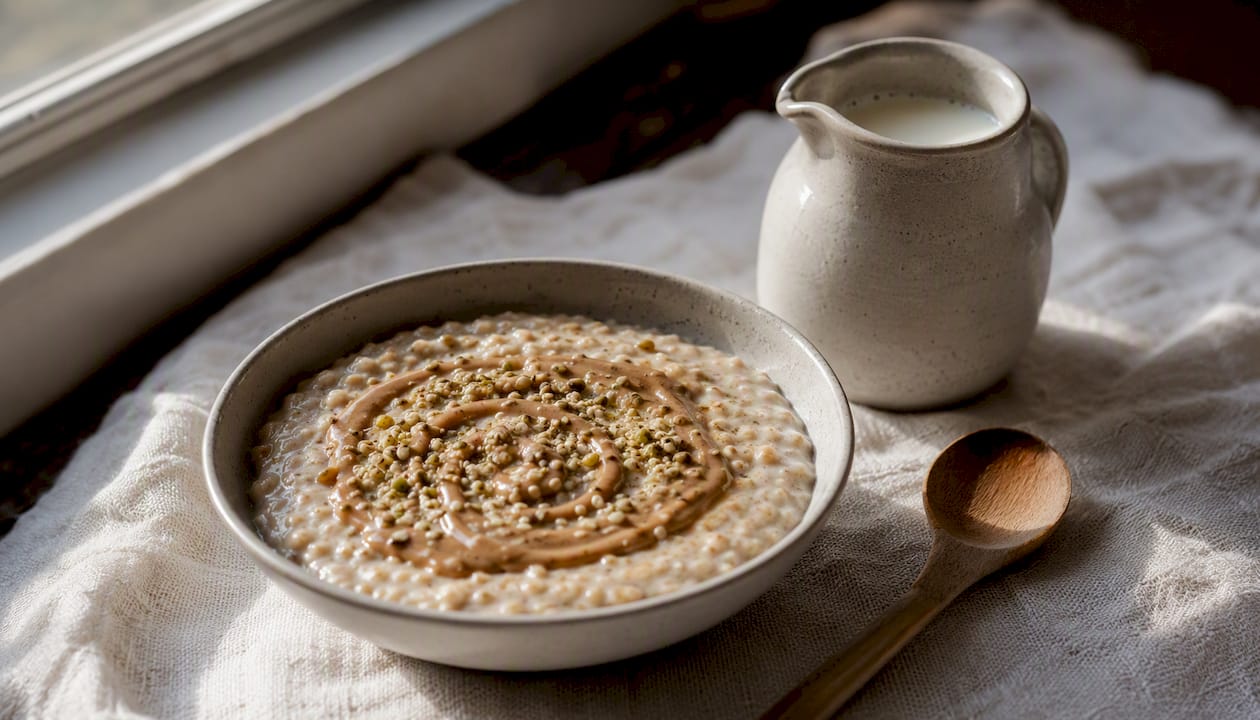
Protein porridge: cook 50 g of oats in 300 ml of fortified soya milk rather than water or oat milk. Soya milk delivers roughly 3.3 g protein per 100 ml, so the liquid alone adds around 10 g before any toppings. Stir in 1 tbsp of almond butter and 2 tbsp of hemp seeds. Total protein: approximately 20–22 g. Fortified soya milk is the single most effective swap for raising porridge protein without changing the texture.
Protein overnight oats: combine 50 g oats, 200 ml fortified soya milk, 1 tbsp chia seeds, 1 tbsp pea protein powder, and 100 g soya yoghurt in a jar. Refrigerate overnight. Protein: ~22–25 g. Make-ahead note: keeps for up to three days in the fridge.
Protein pancakes: blend 100 g silken tofu, 50 g ground almonds, 1 scoop of pea protein powder, 1 tbsp ground flaxseed, and 150 ml fortified soya milk into a smooth batter. Cook in a non-stick pan. Makes 4–5 pancakes at roughly 25–28 g protein total. Freeze leftovers between sheets of baking parchment.
For UK shoppers, Alpro Soya Original and Oatly Barista are widely available. Soya is the clear protein winner at ~3.3 g/100 ml versus oat milk’s ~1 g/100 ml. For yoghurt, Alpro Soya Plain and Alpro Greek Style both carry around 4 g protein per 100 g. Ancient grain flours such as spelt or teff can replace a portion of oats in pancake batters for a more complex amino acid profile.
Quick smoothies and protein bowls you can make in five minutes
Speed is the whole point here. These builds take less time than queuing for coffee.
Green protein smoothie: blend 300 ml fortified soya milk, 1 scoop pea protein powder, 1 tbsp almond butter, 1 frozen banana, and a handful of spinach. Protein: ~25–28 g. Pour into a travel cup and you are out the door.
Soya and oat shake: 250 ml soya milk, 40 g oats, 1 tbsp peanut butter, 1 tbsp hemp seeds, blended smooth. Protein: ~18–20 g. Thicker than a smoothie, closer to a drinkable porridge.
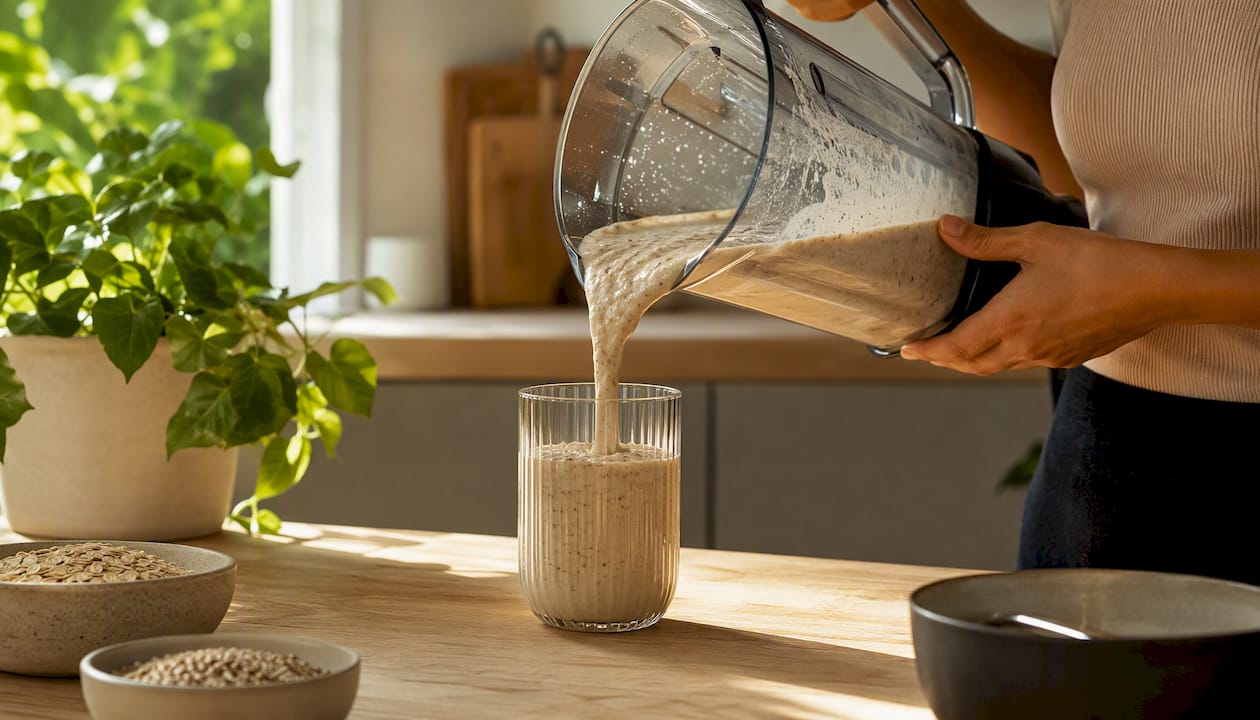
Açaí-style protein bowl: blend 200 ml soya milk with 1 scoop pea protein and 100 g frozen mixed berries until thick. Pour into a bowl and top with granola, hemp seeds, and a drizzle of nut butter. Protein: ~22–25 g. Not portable, but takes four minutes.
Pro Tip: For commuting mornings, blend the night before and store in a sealed bottle in the fridge. Shake well before drinking. Smoothies with oats and nut butter stay thick and filling for up to 12 hours.
Grab-and-go protein bakes and energy balls
Batch-cook once on Sunday and you have breakfast sorted for the week.
White bean and almond protein muffins: blend 1 tin of drained cannellini beans with 150 g ground almonds, 2 tbsp maple syrup, 1 tsp baking powder, and 1 scoop pea protein. Bake at 180°C for 20–22 minutes. Makes 10 muffins at roughly 10–12 g protein each. Freeze in pairs; defrost overnight.
Hemp and peanut butter flapjacks: melt 3 tbsp peanut butter with 2 tbsp maple syrup, stir through 200 g oats and 4 tbsp hemp seeds, press into a lined tin, and bake at 160°C for 18 minutes. Cut into 8 bars. Each bar: ~9–11 g protein. Keeps for 5 days in an airtight tin.
No-bake pea protein energy balls: mix 150 g oats, 2 tbsp tahini, 2 tbsp pea protein powder, 2 tbsp maple syrup, and 2 tbsp desiccated coconut. Roll into 12 balls. Refrigerate for 30 minutes. Each ball: ~5–6 g protein. Keeps for a week in the fridge or a month in the freezer.
Batch-cook shopping checklist:
- Cannellini beans (tinned, 2–3 tins)
- Ground almonds (500 g bag)
- Pea protein powder (unflavoured)
- Hemp seeds (200 g)
- Peanut butter or tahini
- Oats (1 kg)
- Maple syrup
- Baking parchment and airtight containers
Simple add-ins and swaps that raise protein fast
No recipe required. These are the quickest wins for boosting breakfast protein without rebuilding your whole meal.
- Hemp seeds, 2 tbsp: approximately 6–10 g protein depending on the brand; stir into porridge, sprinkle on a bowl
- Peanut butter, 1 tbsp: ~3–4 g protein; adds fat and flavour to toast or oats
- Silken tofu, 100 g: ~5–8 g protein; blends invisibly into smoothies or porridge
- Edamame, 80 g: ~11 g protein; works in savoury bowls or alongside toast
- Pea protein powder, 1 scoop (25 g): ~18–20 g protein; the fastest single-ingredient protein lift
- Fortified soya milk, 200 ml: ~6.6 g protein; swap oat milk for soya in any recipe
The swap that makes the biggest difference with the least effort is replacing oat milk with fortified soya milk in porridge. That one change adds roughly 5–7 g protein per bowl. NHS guidance recommends choosing fortified plant milks and yoghurts specifically to support B12 and vitamin D intake alongside protein. When buying, check the label for at least 120 mg calcium per 100 ml and added B12 and D2 or D3.
Pro Tip: Blending silken tofu into porridge or a smoothie raises protein density without expanding portion size, which is useful if your appetite is low first thing in the morning.
How much protein do you actually need at breakfast?
The UK reference nutrient intake for protein is 0.75 g per kg of body weight per day. For active people or those following a plant-based diet, many practitioners suggest aiming closer to 1 g/kg, partly because plant protein is utilised slightly less efficiently than animal protein. A higher per-meal target of around 30 g is often recommended for active plant-based eaters to optimise muscle protein synthesis.
The Vegan Society confirms that a varied daily intake of plant proteins provides all essential amino acids without any need to engineer specific combinations at each meal. For plant-based breakfasts built around active mornings, the practical rule is simple: anchor the meal around one concentrated protein source (tofu, tempeh, pulses, or protein powder) and the rest follows.
This section provides general nutrition information. For personalised clinical guidance, consult a registered dietitian.
Meal-prep, timing and batch-cook strategies for busy mornings
The biggest barrier to a high-protein vegan breakfast is time, not ingredients. A Sunday prep session of 45–60 minutes removes that barrier entirely.
Batch-cook workflow:
- Make a double batch of tofu scramble; refrigerate in an airtight container for up to four days, reheat in 2 minutes.
- Prep five overnight oat jars on Sunday evening; they keep until Thursday.
- Bake one tray of protein muffins or flapjacks; freeze half immediately.
- Blend a dry smoothie mix (oats, hemp seeds, protein powder) into individual zip-lock bags; add liquid and blend in the morning.
For timing, eating within 60–90 minutes of waking supports stable energy and helps distribute protein across the day rather than loading it at dinner. If you train in the morning, aim for your protein-rich breakfast within 30–45 minutes post-workout.
Equipment and storage checklist:
- Airtight glass jars (500 ml) for overnight oats
- Freezer-safe containers or zip-lock bags for muffins and energy balls
- A high-speed blender for smoothies and silken tofu batters
- A non-stick frying pan for tofu scramble and pancakes
- Baking parchment for lining trays and separating frozen items
For a full weekly workflow, the Granavitalis vegan breakfast meal-prep guide covers batch quantities and fridge-to-freezer rotation in detail. Pairing batch cooking with seed-based meal ideas is a practical way to add variety without adding prep time.
A Granavitalis perspective on building better plant-protein breakfasts
The conversation around plant protein at breakfast tends to get stuck on protein powder. Add a scoop, hit your number, done. That approach works, but it misses something.
The breakfasts that actually sustain people through a demanding morning are the ones built on a foundation of real, nutrient-dense ingredients: ancient grains that release energy slowly, nut butters that carry protein alongside healthy fats, seeds that add texture and micronutrients in the same spoonful. Protein powder is a useful top-up, not a foundation.
What I find consistently underestimated is the role of ingredient quality in satiety. A porridge made with spelt or teff flour, fortified soya milk, and a proper nut butter keeps hunger at bay in a way that a whey-equivalent shake simply does not. The fibre, the fat, and the slow-release carbohydrate all matter alongside the protein number.
The Granavitalis approach, rooted in ancient grains and minimally processed nut and seed butters, maps directly onto the breakfast builds in this article. A tablespoon of pecan or almond butter stirred into overnight oats is not a compromise. It is the point.
Granavitalis products that support your morning protein goals
Nut butters are one of the most practical protein add-ins for any breakfast, and quality matters more than most people realise. Granavitalis stocks the Raw Organic Pecan Butter by RAWGORILLA, a single-ingredient, cold-pressed butter that stirs cleanly into porridge, overnight oats, or smoothies and adds roughly 3–4 g protein per tablespoon alongside a rich, natural flavour. No palm oil and no added sugar.
For variety across the week, the Organic Nut & Seed Butter Selection Box gives you a range of butters to rotate through your breakfast builds, from almond to cashew to mixed seed, each contributing protein and healthy fats without any filler ingredients. Use one jar per recipe type and your breakfasts stay varied without any extra planning.
Browse the full range at Granavitalis and find the ingredients that fit your morning routine.
Sources
- British Heart Foundation — Protein
- A nourishing plant-based diet : University College London Hospitals NHS Foundation Trust
- British Dietetic Association — Practical guide: nutritional considerations re protein
- NHS — The vegan diet
- Eating well guide — NW Knowledge Now (NHS regional PDF)
For personalised advice on protein targets, particularly if you have specific health conditions or performance goals, consult a registered dietitian via the British Dietetic Association’s Find a Dietitian service.
This article is general information, not a substitute for advice from a qualified doctor. Consult a qualified healthcare professional about your own circumstances before acting on anything here.