

The role of micronutrients in your health: 2026 guide
TL;DR:
- Micronutrients are essential vitamins and minerals required in small amounts that support vital bodily functions. They work in interconnected networks, with deficiencies or excesses causing serious health issues like anemia, weakened immunity, or bone fragility. Maintaining a balanced, nutrient-dense diet and supporting gut health ensures optimal micronutrient intake and long-term health.
Micronutrients are vitamins and minerals required in small amounts that drive virtually every vital process in the human body. They act as enzymatic cofactors and cellular signalling modulators, meaning your immune system, metabolism, and tissue repair all depend on them being present in the right balance. Unlike macronutrients, which provide energy, micronutrients regulate how that energy is used. Deficiencies in vitamins A, C, B6, B9, B12, D, and E, alongside minerals such as zinc, selenium, iron, and copper, impair lymphocyte maturation and reduce your body’s ability to fight infection. Getting this balance right is not optional. It is the foundation of long-term health.
What are the primary micronutrients and their key biological roles?
Micronutrients divide into two broad categories: vitamins and minerals. Each group performs distinct but interconnected functions, and understanding them helps you make better food choices every day.
Vitamins and their functions
Vitamins fall into two groups: fat-soluble (A, D, E, K) and water-soluble (C and the B-complex family). Fat-soluble vitamins accumulate in body tissues, which means both deficiency and excess carry real consequences. Water-soluble vitamins cycle through the body more quickly, requiring consistent dietary replenishment.
- Vitamin A supports immune cell maturation, vision, and epithelial tissue integrity. Without it, mucosal barriers weaken, making infection more likely.
- Vitamin C is a potent antioxidant that supports collagen synthesis and enhances iron absorption. It also stimulates white blood cell production during immune challenges.
- Vitamin D regulates calcium and phosphate metabolism, underpinning bone density and immune modulation. Low vitamin D is directly linked to secondary hyperparathyroidism and bone fragility.
- Vitamin E protects cell membranes from oxidative damage. It works alongside selenium to neutralise free radicals before they disrupt cellular function.
- B-complex vitamins (B6, B9, B12 in particular) are central to DNA synthesis, red blood cell production, and neurological function. B12 deficiency alone can cause irreversible nerve damage if left unaddressed.
Minerals and their functions
Minerals are inorganic elements that the body cannot synthesise. They must come entirely from food or water.
- Iron carries oxygen in haemoglobin and supports mitochondrial energy production. It is the most common micronutrient deficiency worldwide.
- Zinc regulates gene expression, wound healing, and the activity of over 300 enzymes. It is particularly critical for immune cell development.
- Selenium activates glutathione peroxidase, the body’s primary antioxidant enzyme. Low selenium correlates with increased susceptibility to viral infections.
- Calcium builds and maintains bone structure, but also regulates muscle contraction and nerve signalling.
- Copper supports iron metabolism and connective tissue formation. It works in tandem with iron, and excess of one can interfere with the other.
Micronutrients do not operate in isolation. Nutrients function in interdependent clusters, meaning vitamin D relies on calcium and phosphate to fulfil its role in bone health, and iron depends on cofactors for mitochondrial function. This network effect is why single-nutrient thinking so often falls short.

How do micronutrient imbalances affect health?
Micronutrient imbalance runs in both directions. Deficiency and excess each trigger distinct but serious health consequences, and the line between them is narrower than most people realise.
The consequences of deficiency
- Anaemia. Iron deficiency is the leading cause of anaemia globally, producing fatigue, cognitive impairment, and reduced physical capacity. Children and women of reproductive age carry the highest risk.
- Bone fragility. Vitamin D deficiency disrupts calcium absorption and triggers secondary hyperparathyroidism, which draws calcium from bone to maintain blood levels. The result is reduced bone mineral density and elevated fracture risk.
- Immune suppression. Shortfalls in vitamins A, C, D, and zinc each impair different arms of the immune response. Combined deficiencies compound this effect, leaving the body poorly equipped against both bacterial and viral threats.
- Neurological decline. B12 and B9 deficiencies disrupt myelin sheath integrity. Prolonged shortfalls produce memory loss, depression, and peripheral neuropathy.
- Oxidative stress. Low selenium and vitamin E reduce antioxidant capacity. Cells become more vulnerable to DNA damage, accelerating ageing and increasing chronic disease risk.
The risks of excess
Excess is less common but equally damaging. Iron overload induces oxidative stress and hepatic fibrosis, particularly in people with genetic conditions such as haemochromatosis. Fat-soluble vitamins accumulate in tissue and can reach toxic levels through aggressive supplementation. Vitamin A toxicity, for example, causes liver damage and paradoxically weakens bone density.
Pro Tip: Before starting any micronutrient supplement, request a blood panel from your GP. Supplementing without knowing your baseline status risks tipping deficiency into excess, particularly for iron, vitamin D, and fat-soluble vitamins.
The clinical picture is clear. Maintaining nutritional equilibrium is not about maximising intake. It is about sustaining the right balance for your body’s specific demands.
How does lifestyle and inflammation affect micronutrient needs?
Chronic inflammation changes the micronutrient equation entirely. Your baseline dietary intake may be adequate under normal conditions, but inflammatory burden drives depletion of key vitamins and minerals, pushing requirements well beyond standard thresholds.
People managing autoimmune conditions, metabolic syndrome, or persistent stress consume micronutrients at an accelerated rate. The body redirects zinc, vitamin C, and selenium toward immune and repair processes, leaving other systems short. This is why blood tests in chronically ill individuals so often reveal deficiencies despite apparently adequate diets.
Gut health compounds the problem. Gut microbiota significantly influences micronutrient absorption and even the endogenous synthesis of certain metabolites. A disrupted microbiome, caused by antibiotics, poor diet, or chronic stress, reduces the body’s ability to extract and utilise nutrients from food. You can eat a nutrient-rich diet and still fall short if your gut flora is compromised.
Key lifestyle factors that increase micronutrient demand include:
- Chronic psychological stress, which elevates cortisol and accelerates magnesium and B-vitamin depletion.
- High-intensity exercise, which increases oxidative stress and raises requirements for antioxidant micronutrients including vitamin C, vitamin E, and selenium.
- Ageing, which alters gut microbiome composition and reduces absorption efficiency. Microbiome changes with ageing contribute directly to conditions such as osteoporosis by impairing mineral uptake.
- Alcohol consumption, which interferes with the absorption and metabolism of B vitamins, zinc, and magnesium.
Maintaining healthy eating habits during periods of travel or disruption also matters. Practical guidance on eating well away from home can help you sustain micronutrient intake when your usual routine is disrupted.
How can you ensure adequate micronutrient intake?
The most reliable way to meet your micronutrient needs is through a varied, nutrient-dense diet built around whole foods. No supplement replicates the matrix of compounds found in real food, and no single food covers every requirement.
Prioritise food diversity
Fruits and vegetables provide vitamins A, C, E, and folate alongside phytonutrients that support absorption. Nuts and seeds deliver zinc, selenium, magnesium, and vitamin E in concentrated form. Ancient grains such as teff, amaranth, and spelt supply iron, B vitamins, and trace minerals that refined grains have largely lost. Micronutrients in ancient grains represent one of the most underused tools in everyday nutrition.
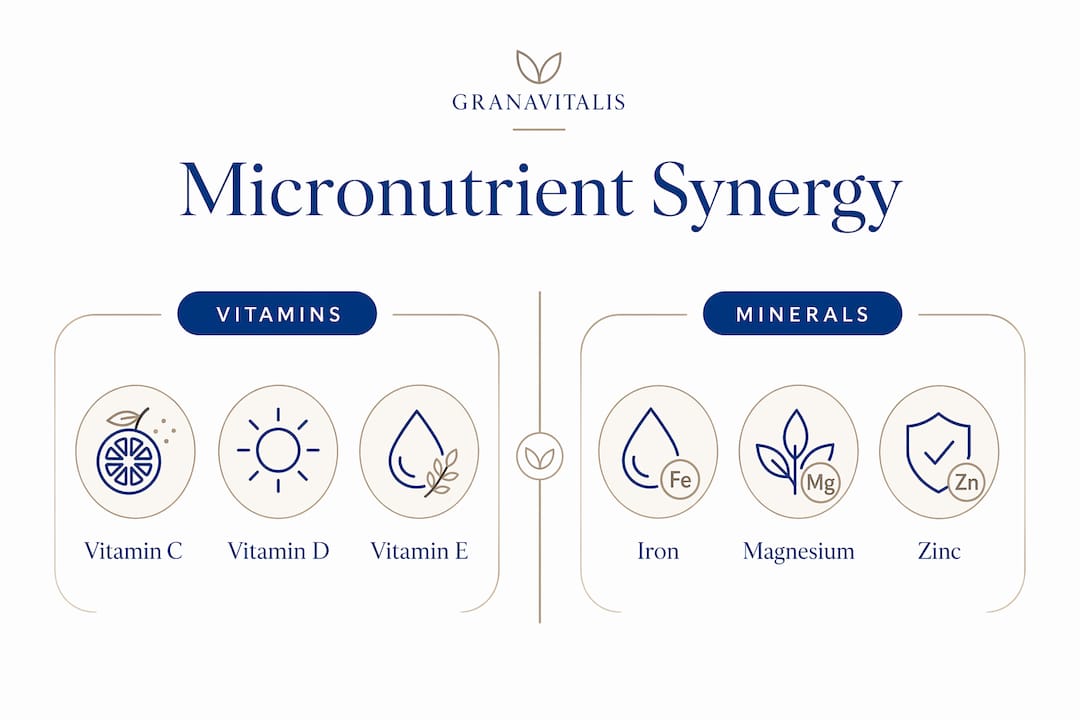
Understand nutrient synergy
| Nutrient pairing | Why it matters |
|---|---|
| Vitamin C + iron | Vitamin C converts iron to its absorbable form, significantly increasing uptake |
| Vitamin D + calcium | Vitamin D is required for calcium absorption in the intestine |
| Vitamin E + selenium | Both act as antioxidants and enhance each other’s protective effect |
| Zinc + B6 | Both support enzyme activity and immune cell production |
| Fat-soluble vitamins + dietary fat | Vitamins A, D, E, and K require fat for absorption |
Nutrient synergy is the reason whole-food eating outperforms isolated supplementation. When you eat a handful of mixed nuts with a piece of fruit, you are activating multiple absorption pathways simultaneously.
Approach supplementation carefully
Universal supplementation without clinical guidance risks metabolic complexity and adverse effects. Supplements serve a genuine purpose in treating confirmed deficiencies or supporting populations with elevated needs, such as pregnant women, older adults, or people with malabsorption conditions. For everyone else, food quality and dietary diversity are the more sustainable and safer foundation.
Pro Tip: Pair iron-rich foods such as lentils, seeds, or fortified grains with a source of vitamin C at the same meal. This simple habit can meaningfully improve iron absorption without any supplementation.
Experts now propose reassessing micronutrient thresholds for people with higher inflammatory loads or metabolic demands. Standard recommended daily amounts were designed for healthy populations under normal conditions. They may not reflect what your body actually needs during periods of stress, illness, or recovery.
Key takeaways
Micronutrients function in interdependent networks, and maintaining their balance through diverse whole-food eating is the most effective strategy for immune resilience and long-term metabolic health.
| Point | Details |
|---|---|
| Micronutrients are network nutrients | Vitamins and minerals work in clusters; single-nutrient focus misses the full biological picture. |
| Imbalance runs both ways | Deficiency and excess each cause serious harm; blood testing before supplementing is the safest approach. |
| Inflammation raises requirements | Chronic stress and inflammatory conditions deplete micronutrients faster than standard intake thresholds account for. |
| Gut health determines absorption | A disrupted microbiome reduces the body’s ability to extract nutrients from even a well-planned diet. |
| Whole foods outperform supplements | Nutrient synergy in real food activates multiple absorption pathways that isolated supplements cannot replicate. |
Why I think we’ve been thinking about micronutrients the wrong way
Most nutrition advice treats micronutrients as a checklist. Hit your vitamin D target, tick. Get enough iron, tick. Move on. That framing misses the point almost entirely.
What I’ve come to understand, working closely with food and nutrition over many years, is that micronutrient status is dynamic. It shifts with your stress levels, your gut health, your sleep, and your inflammatory state. A blood test taken on a calm Tuesday tells you very little about what your body needs during a demanding month. Micronutrient status fluctuates under chronic inflammation, producing functional deficiencies even when baseline levels look fine on paper.
The other thing I’ve seen consistently is the over-reliance on supplements as a shortcut. People take high-dose vitamin D, iron, and zinc simultaneously, without understanding that these nutrients compete for the same absorption pathways. More is not better. Balance is better.
The most durable approach I’ve found is to build nutrition from the ground up, using foods that carry micronutrients in their natural context: nuts, seeds, ancient grains, legumes, and a wide range of vegetables. These foods deliver nutrients in the ratios and cofactor combinations that the body recognises. That is not a romantic idea about traditional eating. It is biochemistry. Nutrient integrity in food choices matters more than most people realise, and it starts with what you put in your basket.
— Jarrod
Granavitalis and the nutrients your body actually needs
Granavitalis builds its range around the same principle this article defends: that real food, minimally processed and thoughtfully sourced, delivers micronutrients in the form your body uses best.

The Raw Organic Pecan Butter from Granavitalis is a concentrated source of zinc, magnesium, and vitamin E, nutrients that support immune function, antioxidant defence, and metabolic health. For broader micronutrient variety, the nut and seed butter selection brings together diverse nutrient profiles in one curated box. Each product is raw, organic, and free from unnecessary processing, so the micronutrient content stays intact from source to spoon.
FAQ
What are micronutrients?
Micronutrients are vitamins and minerals required in small amounts that regulate enzymatic reactions, immune function, and cellular signalling throughout the body.
What is the difference between micronutrients and macronutrients?
Macronutrients (carbohydrates, proteins, and fats) provide energy, while micronutrients regulate how that energy is used and support virtually every biological process.
What are the most common micronutrient deficiencies?
Iron, vitamin D, zinc, and B12 are among the most prevalent deficiencies globally, each linked to anaemia, bone fragility, immune suppression, or neurological decline.
Can you get enough micronutrients from food alone?
A varied diet rich in vegetables, fruits, nuts, seeds, and whole grains provides most micronutrients for healthy adults, though individuals with higher inflammatory loads or absorption issues may need targeted support.
Why does gut health affect micronutrient status?
Gut microbiota influences absorption and the synthesis of certain metabolites, meaning a disrupted microbiome reduces the body’s ability to benefit fully from dietary micronutrient intake.