

Spelt banana bread: a healthier loaf worth baking
TL;DR:
- Spelt banana bread is a nutritious, whole-grain quick bread made with ancient spelt flour that yields a tender, nutty loaf.
- It performs best as a quick bread due to spelt’s weaker gluten, requiring gentle mixing and lower hydration for optimal results.
Spelt banana bread is a whole-grain quick bread made with ancient spelt flour in place of refined wheat, producing a tender, nutty loaf that delivers more fibre and micronutrients than standard recipes. Spelt is one of the oldest cultivated grains in Europe, and its revival among health-conscious bakers is well earned. Ancient grains like spelt are most nutritious when consumed whole-grain, retaining the fibre and micronutrients that refined flours lose during processing. For home bakers who want a loaf that tastes genuinely good and supports a cleaner diet, spelt banana bread is the answer.
What makes spelt flour different from wheat flour for baking banana bread?
Spelt flour behaves differently from wheat flour in ways that matter enormously in the oven. The key difference lies in gluten structure. Spelt has a higher gliadin-to-glutenin ratio, which produces a softer, more extensible dough with less volume and rise potential than wheat. That means spelt dough stretches easily but lacks the spring needed for tall, structured loaves.
This gluten difference is actually an advantage for quick breads. Spelt flour is best suited for muffins and quick breads like banana bread, where a strong gluten network is not required. Attempting a direct 1:1 swap in a structural sandwich loaf yields a misshapen, crumbly result. Banana bread, by contrast, thrives on a tender, open crumb, and spelt delivers exactly that.
Hydration is another critical factor. Spelt absorbs less water than wheat, so standard hydration levels designed for wheat recipes will leave spelt dough too wet. The weaker gluten network also means overmixing is a serious risk. Overworked spelt dough loses what little structure it has, leading to a collapsed or gummy loaf.
There is also a health consideration worth knowing. Spelt gluten has 15–25% lower immunoreactivity than wheat gluten, making it potentially better tolerated by some people with non-coeliac gluten sensitivity. A 2026 pilot study found that 60% of participants reported milder symptoms with spelt versus wheat. This does not make spelt safe for coeliac disease, but it does make it a more considered choice for sensitive bakers. For a deeper look at how ancient grain gluten differs from modern wheat, the gluten in ancient grains guide from Granavitalis covers the science clearly.
- Spelt has a higher gliadin-to-glutenin ratio than wheat, producing softer, more extensible dough.
- Its weaker gluten network suits quick breads but not high-rise structural loaves.
- Spelt absorbs less water, so recipes need lower hydration than standard wheat formulas.
- Overmixing destroys spelt’s delicate gluten structure faster than it would wheat.
- Spelt’s lower immunoreactivity may benefit some people with non-coeliac gluten sensitivity.
Pro Tip: If you are converting a wheat-based banana bread recipe to spelt, reduce your liquid by roughly 10% and mix only until the batter just comes together. Stop the moment you see no dry flour.
What ingredients and tools do you need for spelt banana bread?
The ingredient list for a spelt banana bread is short, but each component plays a specific role. Whole grain spelt flour is the foundation. It produces a denser loaf than white spelt but provides significantly more fibre and micronutrients. Whole grain spelt’s nutritional benefits outweigh the slightly denser texture, making it the better choice for health-focused bakers.
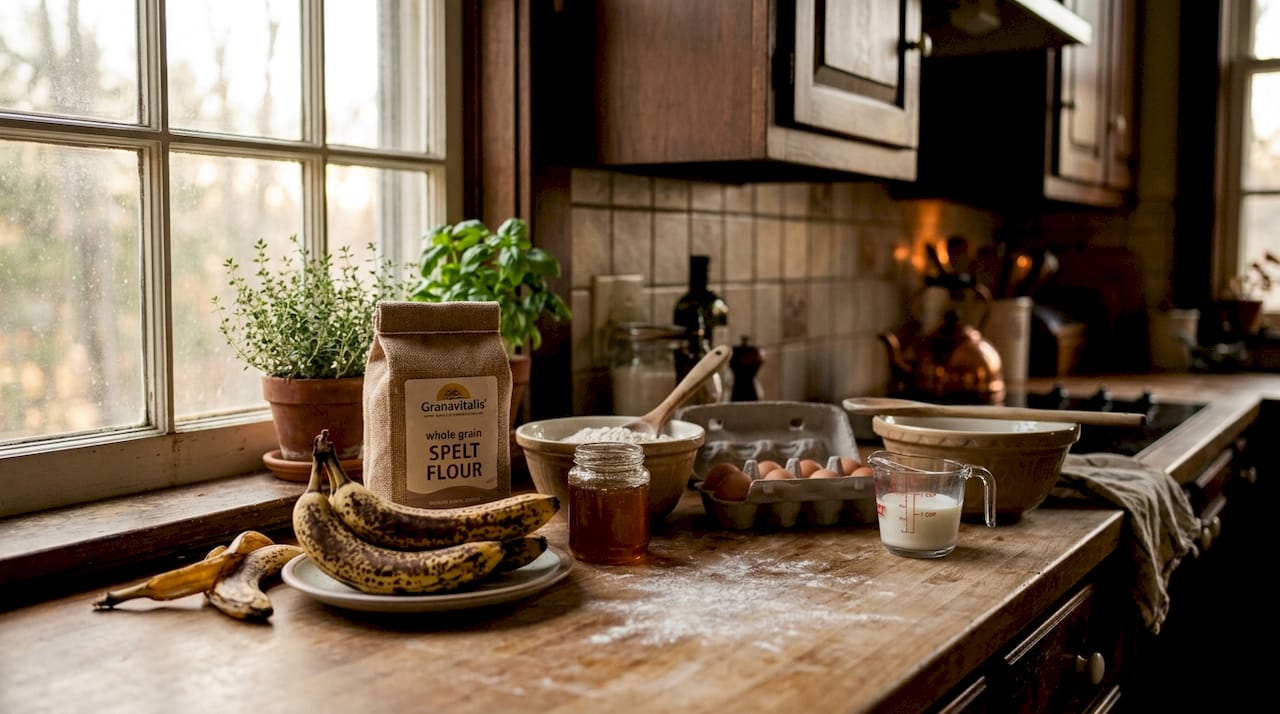
Overripe bananas are non-negotiable. The riper the banana, the more natural sugar it contributes and the more moisture it adds to the batter. Three large, very ripe bananas are the standard for a 900g loaf tin. Natural sweeteners like honey, maple syrup, or medjool dates work well alongside the banana’s own sweetness.
| Ingredient | Role | Substitution |
|---|---|---|
| Whole grain spelt flour | Structure and nutrition | White spelt flour (lighter texture) |
| Overripe bananas | Moisture, sweetness, binding | No direct substitute |
| Eggs | Binding and lift | Flax egg or chia egg (vegan) |
| Honey or maple syrup | Sweetness | Medjool date paste |
| Coconut oil or butter | Fat and moisture | Light olive oil |
| Baking powder | Leavening | Bicarbonate of soda + acid |
| Pinch of salt | Flavour balance | Sea salt flakes |
For equipment, a standard 900g loaf tin, a large mixing bowl, and a fork or potato masher for the bananas are all you need. A stand mixer is not recommended for spelt batters. Hand mixing gives you far better control over how much you work the gluten. If you do use a stand mixer, a specialist bread mixer guide can help you identify the lowest speed settings suitable for delicate doughs.
Pro Tip: Source whole grain spelt flour from a supplier who mills to order or has a fast stock turnover. Stale spelt flour loses its subtle nutty flavour quickly. Granavitalis stocks ancient grain flours selected for freshness and minimal processing.
How to bake spelt banana bread step by step
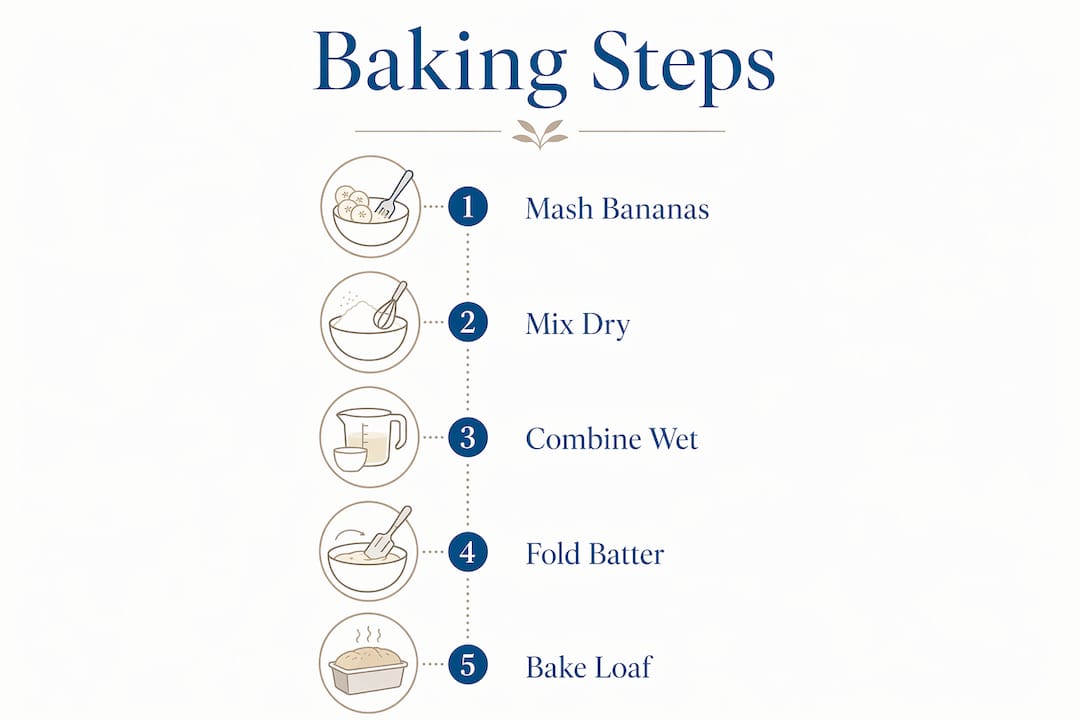
Follow these steps in order. The sequence matters because spelt’s gluten degrades quickly once liquid meets flour.
- Preheat your oven to 170°C fan (190°C conventional). Grease a 900g loaf tin and line it with baking parchment.
- Mash the bananas thoroughly in a large bowl using a fork. Aim for a smooth purée with very few lumps. This is your wet base.
- Add the wet ingredients to the mashed banana: eggs (or your vegan alternative), melted coconut oil, and honey or maple syrup. Stir gently to combine.
- Sift the dry ingredients into a separate bowl: whole grain spelt flour, baking powder, and salt. Add any spices such as cinnamon or nutmeg at this stage.
- Fold the dry into the wet using a large spatula or wooden spoon. Use slow, deliberate folds. Stop the moment the batter is just combined. Lumps are fine. Overmixing is not.
- Pour into the tin and smooth the top lightly. Scatter any toppings such as nibbed hazel nuts or banana slices across the surface.
- Bake for 50–60 minutes. Check at 50 minutes by inserting a skewer into the centre. It should come out clean or with a few moist crumbs.
- Cool in the tin for 10 minutes, then transfer to a wire rack. Cutting too early causes the crumb to collapse.
Spelt’s delicate gluten structure means the batter goes from perfectly mixed to overmixed in seconds. Treat it like a scone batter, not a cake batter. Fold, do not beat, and your loaf will reward you with a genuinely tender crumb.
Mixing technique for quick breads is the single biggest variable between a good spelt loaf and a dense one. Reduce your mixing time by 20–30% compared to a standard wheat recipe, and keep hydration at 65–70% to prevent collapse.
How to troubleshoot common issues with spelt banana bread
Even experienced bakers hit problems with spelt. The good news is that most issues trace back to two causes: overmixing or incorrect hydration.
Dense or flat loaf. This is the most common complaint. Spelt’s weaker gluten network makes banana bread prone to density when the batter is overworked or too wet. The fix is simple: mix less and reduce liquid slightly. If your loaf consistently comes out flat, check that your baking powder is fresh. Old leavening is a silent killer in quick breads.
Gummy or wet centre. This usually means the loaf needed more time in the oven, or the batter was too hydrated. Whole grain spelt holds more moisture than white spelt, so baking times can run 5–10 minutes longer. Always test with a skewer rather than relying on time alone.
Crumbly texture. Too little fat or too few bananas causes this. Fat coats the gluten strands and keeps the crumb cohesive. If your loaf crumbles when sliced, increase the oil or add an extra banana next time.
- Dense loaf: reduce mixing time and check hydration levels.
- Flat loaf: verify baking powder freshness and avoid opening the oven door early.
- Gummy centre: extend baking time by 5–10 minutes and test with a skewer.
- Crumbly texture: increase fat content or add an extra banana.
- Collapsing crumb: the batter was overmixed or too wet; fold more gently next time.
Pro Tip: If you want a moister loaf without adding more liquid, stir a tablespoon of natural nut butter into the wet ingredients. It adds fat, depth of flavour, and keeps the crumb tender for days.
How can spelt banana bread be adapted for vegan or sugar-free diets?
Spelt banana bread adapts well to both vegan and sugar-free requirements without sacrificing texture or flavour. The banana itself does most of the heavy lifting as a binder and sweetener, which makes swaps easier here than in many other baked goods.
Vegan spelt banana bread uses plant-based egg replacements while retaining moistness, and common options work reliably with spelt flour. The most effective substitutes are:
- Flax egg: 1 tablespoon ground flaxseed mixed with 3 tablespoons water, left for 5 minutes to gel. Adds a subtle nuttiness.
- Chia egg: the same ratio as flax, with a slightly more neutral flavour.
- Extra banana: half a ripe banana replaces one egg in most quick bread recipes, though it intensifies the banana flavour.
- Unsweetened apple purée: 60g replaces one egg and adds moisture without altering the flavour significantly.
For sugar-free versions, ripe bananas provide enough natural sweetness for most palates. Medjool date paste adds depth without refined sugar. Honey and maple syrup are lower on the glycaemic index than white sugar and complement spelt’s nutty flavour well. Avoid artificial sweeteners in spelt batters as they can affect browning and texture. The digestibility of ancient grains is also worth considering when choosing sweeteners, as whole grain spelt paired with low-GI sweeteners supports steadier blood sugar responses.
Key takeaways
Spelt banana bread succeeds when you respect spelt’s weaker gluten structure: mix gently, reduce hydration, and use whole grain flour for the best nutritional return.
| Point | Details |
|---|---|
| Spelt gluten is weaker than wheat | Use spelt in quick breads, not structural loaves, to avoid collapse. |
| Hydration must be lower | Reduce liquid by roughly 10% compared to standard wheat banana bread recipes. |
| Overmixing is the main risk | Fold the batter until just combined and stop immediately. |
| Whole grain spelt adds nutrition | It provides more fibre and micronutrients than white spelt or refined flour. |
| Vegan and sugar-free swaps work well | Flax eggs, chia eggs, and date paste all integrate reliably with spelt batter. |
Why I think most spelt banana bread recipes get the mixing wrong
Every spelt banana bread recipe I have tested or baked at home confirms the same thing: the instructions almost always say “mix until combined” without explaining what that actually looks like with spelt. With wheat flour, you have a reasonable margin for error. With spelt, you do not. The moment the batter looks smooth and glossy, you have gone too far.
The loaves I am most proud of came from treating the batter almost carelessly. A few large folds, some visible streaks of flour still in the bowl, then straight into the tin. The oven does the rest. The crumb on those loaves was open, tender, and genuinely moist for three days.
My favourite combination is whole grain spelt, three very ripe bananas, a tablespoon of raw pecan butter stirred into the wet mix, and a handful of nibbed hazelnuts pressed into the top before baking. The pecan butter adds a richness that makes the loaf taste almost indulgent despite being made entirely from whole, clean ingredients. That is the point of baking with ancient grains: you get real flavour without compromise.
If you are new to spelt flour recipes, start here before attempting spelt sourdough or spelt pastry. Quick breads are forgiving enough to build your confidence with the grain’s handling characteristics, and banana bread is the most rewarding place to start.
— Jarrod
Granavitalis ingredients that make your spelt loaf better
Spelt banana bread is already a step above the average loaf. The right additions take it further.

Granavitalis stocks ingredients that pair naturally with spelt baking. Stirring a spoonful of raw organic pecan butter into your wet ingredients adds healthy fats, a deep caramel-like richness, and keeps the crumb moist for longer. For bakers who like variety, the nut and seed butter selection box lets you experiment with different flavour profiles across multiple bakes. Pressed into the top of the batter before it goes into the oven, nibbed hazel nuts add crunch, visual appeal, and a dose of healthy fats. Every ingredient Granavitalis offers is sourced for purity and minimal processing, which means they belong in a loaf built on the same principles.
FAQ
Is spelt banana bread suitable for people with coeliac disease?
Spelt contains gluten and is not safe for people with coeliac disease. It may be better tolerated by some with non-coeliac gluten sensitivity, but it is not a gluten-free grain.
Can I use white spelt flour instead of whole grain spelt?
White spelt flour produces a lighter, less dense loaf but delivers fewer nutrients than whole grain spelt. Both work in banana bread; the choice depends on your texture and nutrition priorities.
How ripe do the bananas need to be for spelt banana bread?
The bananas should be very ripe, with heavily spotted or blackened skins. Riper bananas provide more natural sugar, more moisture, and a stronger flavour that balances spelt’s nuttiness.
Why did my spelt banana bread sink in the middle?
Sinking usually means the batter was overmixed, too wet, or underbaked. Reduce mixing time, lower hydration slightly, and always test with a skewer before removing the loaf from the oven.
Can I make spelt banana muffins with the same recipe?
The same batter works well as spelt banana muffins. Fill cases two-thirds full and bake at 180°C fan for 20–25 minutes. Muffins bake faster, so check them at 18 minutes with a skewer.