
Wholegrain flour explained: Benefits, baking tips, and nutrition
TL;DR:
- Many store-bought products labeled “wholegrain” often contain less intact whole-kernel nutrition than claimed, highlighting the importance of reading labels carefully. True wholegrain flour includes all three grain parts—the bran, germ, and endosperm—offering vastly superior nutritional benefits over refined flour. Consistent wholegrain consumption is linked to reduced risks of chronic diseases, better weight management, and improved gut health.
Pick up almost any loaf or bag of flour at your local supermarket and you will likely spot the words “wholegrain” or “whole wheat” somewhere on the packaging. Yet a significant proportion of those products contain far less whole-kernel goodness than the label implies, and the nutritional gap between a genuinely wholegrain flour and its refined counterpart is enormous. If you care about what goes into your food, understanding exactly what wholegrain flour is, how it performs in the kitchen, and how to read the label critically is one of the most practical things you can do for your long-term health.
Table of Contents
- What is wholegrain flour?
- Nutritional powerhouse: Wholegrain flour vs refined flour
- What the health research really says
- Baking and cooking with wholegrain flour: What you need to know
- Label confusion: Decoding wholegrain claims
- A fresh perspective: Why true wholegrain flour matters more than a label
- Explore nutrient-dense options from Granavitalis
- Frequently asked questions
Key Takeaways
| Point | Details |
|---|---|
| Wholegrain flour explained | It uses the entire grain—bran, germ, and endosperm—so it naturally retains more nutrients than refined flour. |
| Superior nutrition | Wholegrain flour offers higher fibre, more vitamins, and extra beneficial plant compounds for overall wellbeing. |
| Check the label | Not all products labelled ‘whole grain’ are fully whole kernel—always check for genuine ingredient listings. |
| Baking adjustments required | When substituting wholegrain for regular flour, add water and adjust expectations to enjoy the best results. |
What is wholegrain flour?
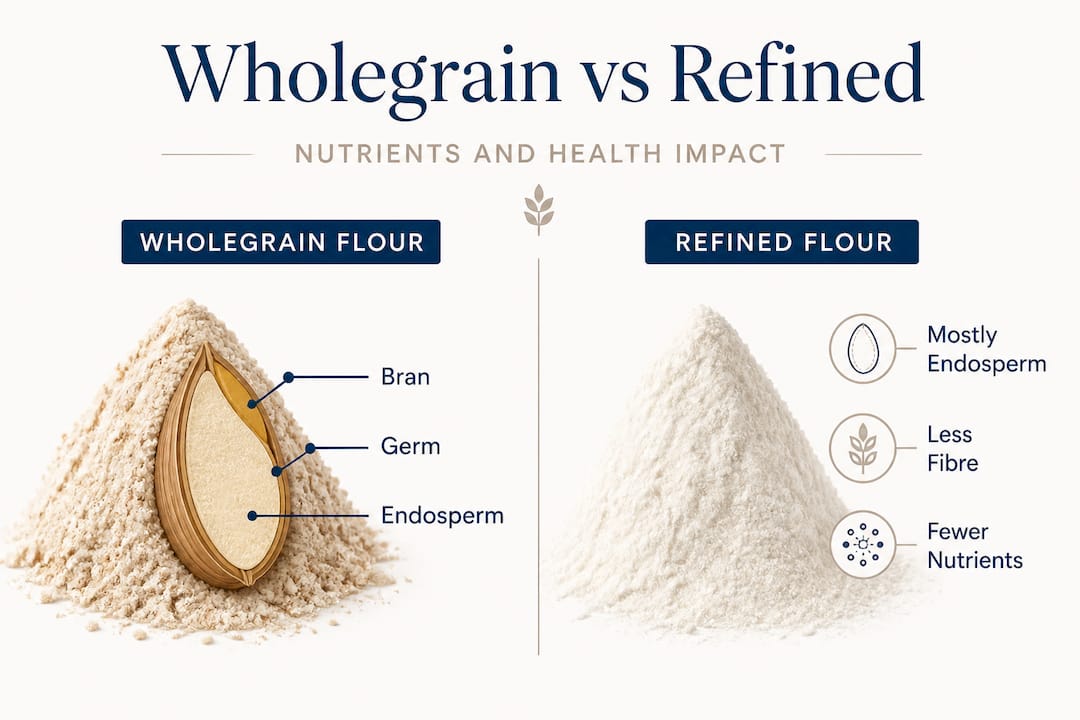
A grain of wheat, spelt, einkorn, or any other cereal is made up of three distinct parts, each with a specific nutritional role. The bran, germ, and endosperm are all present in wholegrain flour, meaning nothing is stripped away during milling. The bran is the tough outer layer loaded with fibre. The germ is the nutrient-dense embryo packed with healthy fats, B vitamins, and antioxidants. The endosperm is the large, starchy centre that refined flour almost entirely consists of.
“Wholegrain flour means flour milled from the entire grain kernel, which includes the bran (fibre-rich outer layer), germ (nutrient-dense inner part with oils), and endosperm (starchy part).” British Heart Foundation
Refined flour, by contrast, retains only the endosperm. Every other part is milled away, taking the fibre, the fat-soluble vitamins, and a long list of trace minerals with it. The result is a pale, shelf-stable flour that behaves beautifully in baking but delivers a fraction of the nutrition of its wholegrain equivalent.
Here is a quick overview of what each part of the grain contributes:
- Bran: Dietary fibre, B vitamins (thiamine, niacin, riboflavin), iron, zinc, magnesium, copper, and antioxidant phenolics
- Germ: Vitamin E, folate, healthy unsaturated fats, phytochemicals, and additional B vitamins
- Endosperm: Carbohydrates (starch), protein, and small amounts of B vitamins
| Component | Wholegrain flour | Refined white flour |
|---|---|---|
| Bran | Present | Removed |
| Germ | Present | Removed |
| Endosperm | Present | Present |
| Dietary fibre | High | Low |
| Vitamins and minerals | Extensive | Minimal |
| Phytochemicals | Abundant | Largely absent |
When you choose a flour like stoneground wholemeal spelt flour, you are getting all three components intact, whereas white spelt flour follows a similar pattern to refined wheat flour in that the bran and germ are largely absent. Knowing this distinction shapes every decision you make at the baking bench.
Nutritional powerhouse: Wholegrain flour vs refined flour
Knowing what wholegrain flour is, we can now compare its nutritional value to refined alternatives. The numbers are striking. Refining a grain removes up to 75% of phytochemicals alongside most of the vitamins and minerals. Phytochemicals are naturally occurring plant compounds that support everything from cellular protection to inflammation management. Losing three quarters of them is not a minor trade-off.
Wholegrain flour consistently outperforms refined flour across a wide range of nutrients:
- Fibre: Roughly two to three times more per 100 g, supporting digestive health and satiety
- Iron: Essential for energy and oxygen transport, significantly higher in wholegrain varieties
- Magnesium: A mineral involved in over 300 enzymatic processes; refined flour contains very little
- Zinc: Important for immune function and wound repair; largely concentrated in the bran and germ
- Vitamin E: A fat-soluble antioxidant found almost exclusively in the germ
- B vitamins: Particularly thiamine, niacin, and folate; some are added back to refined flour through fortification, but not all
- Healthy fats: The germ contains beneficial unsaturated fatty acids absent from refined flour
- Protein: Marginally higher in wholegrain flour, contributing to baking structure and nutrition simultaneously
| Nutrient (per 100 g) | Wholegrain wheat flour | Refined white flour |
|---|---|---|
| Dietary fibre (g) | 10.7 | 2.7 |
| Iron (mg) | 3.9 | 1.1 |
| Magnesium (mg) | 138 | 22 |
| Zinc (mg) | 2.9 | 0.7 |
| Vitamin E (mg) | 1.4 | 0.3 |
| Folate (µg) | 57 | 20 |
Ancient grain flours show an even more impressive profile in many cases. For a detailed look at the spelt flour benefits or the einkorn flour nutrition facts, it becomes clear that traditional varieties of grain have retained qualities that modern hybridised wheat has largely lost. The full picture of nutrition of ancient flours is genuinely compelling, and exploring ancient flour varieties reveals how diverse and nutrient-rich pre-industrial grains truly were.
What the health research really says
With its impressive nutrient content, it is worth considering the real-world health impact of wholegrain flour. The research base here is unusually consistent. Wholegrain consumption is associated with lower risk of chronic diseases such as heart disease, certain cancers, and type 2 diabetes, as well as benefits for weight management.
The documented health benefits of regular wholegrain flour consumption include:
- Reduced cardiovascular risk: The fibre, antioxidants, and phytosterols in wholegrain flour help manage cholesterol and blood pressure
- Lower type 2 diabetes risk: The fibre content slows glucose absorption, supporting steadier blood sugar levels
- Reduced cancer risk: Particularly colorectal cancer, linked to the protective effects of dietary fibre and antioxidant phytochemicals
- Better weight management: Wholegrain foods are more filling gram for gram, which naturally reduces overall calorie intake
- Improved gut microbiome: The prebiotic fibre from bran feeds beneficial bacteria in the large intestine, with downstream benefits for immunity and mood
- Anti-inflammatory effect: Wholegrains contain phenolic acids and other compounds that reduce markers of low-grade inflammation
“The evidence base linking wholegrain intake to reduced chronic disease risk is among the most consistent in nutritional epidemiology. The dose-response relationship between wholegrain consumption and reduced cardiovascular and metabolic disease risk is well established across multiple populations.”
This is not about a single superfood. It is about a tradition-rooted nutrition approach where the whole is genuinely greater than the sum of its parts. Eating wholegrain flour regularly, rather than occasionally, is where the cumulative benefit comes from.
Baking and cooking with wholegrain flour: What you need to know
Now that wholegrain flour’s health benefits are clear, let us turn to making it work deliciously in your kitchen. The honest truth is that wholegrain flour behaves differently to refined flour, and pretending otherwise will leave you frustrated with dense loaves and dry muffins. But once you understand why, the adjustments become intuitive.
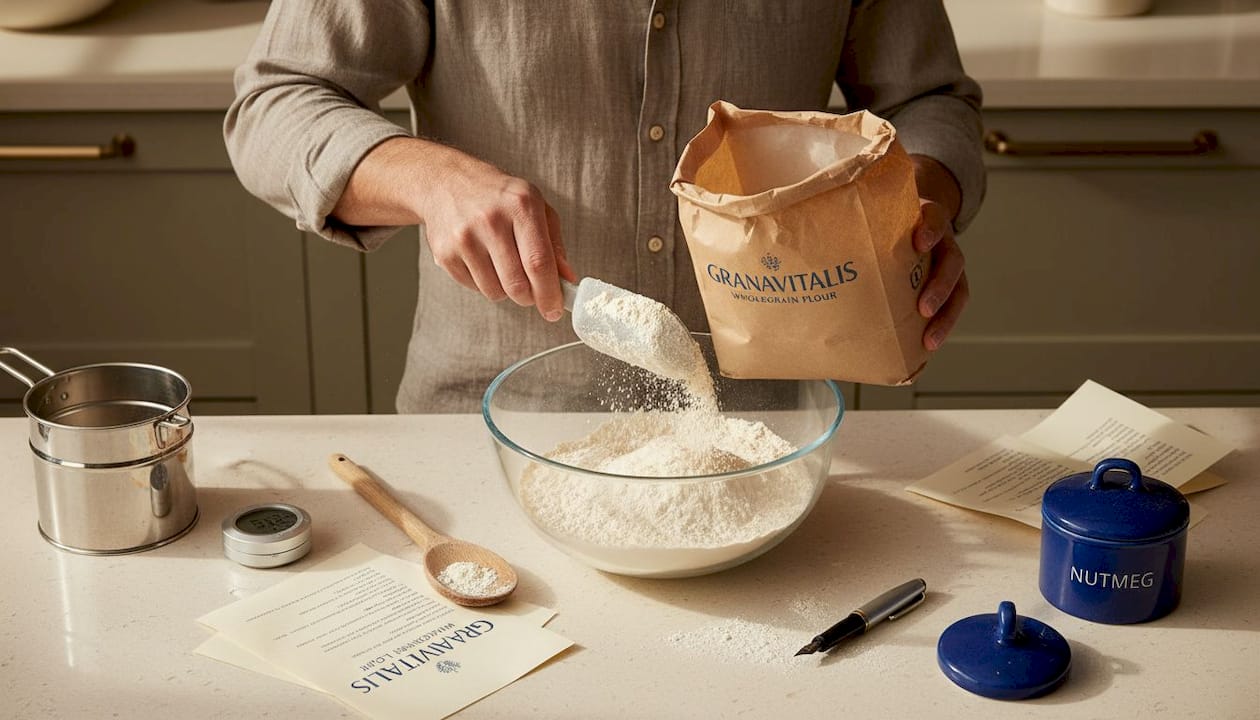
Bran particles in wholegrain flour can interfere with gluten development and wholegrain flour also absorbs significantly more water than its refined counterpart. Those two factors together mean your usual recipes need tweaking.
Here is how to adapt successfully:
- Increase hydration: Add an extra 10 to 20 ml of water per 100 g of flour when substituting wholegrain for white. The bran soaks up moisture and the dough will otherwise dry out during baking.
- Rest the dough: A 20 to 30 minute rest after mixing (called autolyse in bread baking) gives the bran time to hydrate fully and softens its cutting effect on gluten strands.
- Expect a denser result: This is not a flaw. A wholegrain loaf is naturally more substantial. If you want a lighter result, blend 50% wholegrain with 50% white flour to start.
- Reduce oven temperature slightly: Wholegrain bakes tend to brown more quickly due to higher natural sugar content in the bran. Lower your oven by 5 to 10 degrees Celsius to avoid over-browning.
- Add a small amount of fat: A teaspoon of olive oil or nut butter per 100 g of flour improves crumb texture and counteracts the drying effect of bran.
- Do not over-knead: Over-working wholegrain dough can produce a gummy, tight crumb. Mix until just combined and let resting do the structural work.
Pro Tip: When making your first wholegrain bread, try a 70/30 wholegrain to white ratio rather than going 100% whole immediately. It produces a more open crumb and a lighter loaf, making the transition easier without sacrificing most of the nutritional benefit.
If you are sensitive to wheat or gluten, the picture changes considerably. Exploring healthy wheat-free flour swaps opens up a wide range of options, including oat, buckwheat, and rice flours. For more detailed guidance, resources on wheat alternatives and gluten-free flour tips cover practical baking adjustments in detail.
Label confusion: Decoding wholegrain claims
Baking and cooking with wholegrain flour is easier when you know what you are actually buying, so let us decode the labels. This is where many well-intentioned shoppers lose ground. The term “wholegrain” on a packet does not automatically mean the product is made entirely from whole kernel flour.
Whole grain labelling can be nuanced: products may carry whole-grain claims even when they contain smaller proportions of whole grains by weight, and labelling rules may not align with what consumers expect. In some regulatory frameworks, a product only needs to contain 51% wholegrain to carry the claim. The remaining 49% could be refined flour.
What to look for on packaging when choosing genuinely wholegrain flour:
- “Wholemeal” or “whole wheat” as the first ingredient, not further down the list
- “Stone ground” or “stoneground”: this milling method tends to preserve the germ oils and bran structure better than roller milling
- “Whole kernel”: indicates the entire grain was milled rather than fractions being recombined
- A short ingredient list: one ingredient (the grain) is ideal
- No “enriched” or “fortified” claims: these suggest nutrients were added back after processing stripped them away
- Absence of additives like emulsifiers, bleaching agents, or dough conditioners
Be particularly wary of “recombined” wholegrain products, where the bran, germ, and endosperm are milled separately and then blended back together. This technically meets many definitions of wholegrain but does not replicate the nutritional matrix of a true whole-kernel flour, because the microstructure that governs how your body absorbs nutrients is disrupted.
Pro Tip: When in doubt, look for stoneground on the label. Stoneground milling uses traditional millstones that crush the grain more gently, keeping the germ oils integrated throughout the flour rather than separating them out under high heat and pressure. It is a reliable quality indicator.
Our quinoa flour and brown rice flour are both excellent examples of single-ingredient, whole-grain flours with nothing added and nothing removed. For those exploring less common grains, resources on wheat berries and farro flour provide useful background on what true whole-kernel grains look like before milling.
A fresh perspective: Why true wholegrain flour matters more than a label
Here is the part most articles skip over. We talk a great deal about wholegrain flour as though the label alone guarantees nutritional value. It does not. The word “wholegrain” has become a marketing shorthand, and the food industry has been extraordinarily effective at using it to dress up products that are only marginally better than their refined equivalents.
Fresh-milled flour made from whole kernels differs meaningfully from store-bought wholegrain flour that may have sat on a shelf for months. The germ oils in genuinely wholemeal flour begin to oxidise after milling, which is why traditionally milled flour was always used quickly. Modern packaging slows this, but the freshest wholegrain flour is still the most nutritionally intact.
The real benchmark for quality is not a certification stamp or a marketing claim. It is whether the ingredient list reads as a single grain, whether the milling method respects the grain’s structure, and whether the flour connects to a food tradition that predates industrial agriculture. Ancient grain flours like those from long-standing grain traditions carry that heritage in their DNA. They were never hybridised for yield or stripped down for convenience. They remain what they always were.
Our view is simple: if you cannot read the ingredient list and picture exactly what grew in a field, you need a different flour.
Explore nutrient-dense options from Granavitalis
If you are ready to experience nutrition-focused baking staples for yourself, here is where to start.
At Granavitalis, every flour we source comes from grains that have not been compromised by industrial hybridisation or unnecessary processing. Our commitment to purity means you get the full-kernel benefit that a genuine wholegrain flour promises.

Our organic stoneground spelt flour is one of the most popular choices for home bakers who want genuine nutrition alongside excellent baking performance. Pair it with our pecan butter for healthy baking to add flavour, healthy fats, and natural richness to your loaves and cakes. For those who want to explore further, the organic nut butter selection is a fantastic starting point for building a genuinely wholefood kitchen. Real nutrition starts with real ingredients, and every product in our range is chosen to deliver exactly that.
Frequently asked questions
What makes flour ‘wholegrain’?
Wholegrain flour is milled from the entire grain kernel, including the bran, germ, and endosperm, so nothing is removed during processing.
Is wholegrain flour healthier than plain white flour?
Yes; wholegrain flour contains more fibre, vitamins, and phytochemicals than white flour because the bran and germ are retained rather than milled away.
Can you swap wholegrain flour for plain flour in any recipe?
You can often swap them directly, but expect to add more water and accept a denser result because bran particles affect gluten formation and wholegrain flour absorbs moisture differently.
Are all wholegrain flours equally healthy?
No; some products labelled “whole grain” may be recombined or contain only 51% whole grain by weight, so checking the ingredient list and milling method is essential.
What are the main health benefits of eating wholegrain flour?
Regular consumption may reduce your risk of heart disease, type 2 diabetes, and some cancers, while the fibre content supports weight management and healthier outcomes long term.
Recommended
- Understanding What is a Spelt Flour and Its Benefits – Granavitalis
- Discover wheat-free flours: 10+ healthy baking options – Granavitalis
- Why Eat Ancient Flours: Nutrition Rooted in Tradition – Granavitalis
- Ancient Flour Varieties – Revitalising Modern Wellbeing – Granavitalis
- Hochwertige Fertigmahlzeiten: So erkennst du gesunde Gerichte – FITTASTE