
Plant protein water: hydration and muscle recovery simplified
TL;DR:
- Plant protein water is a clear, fast-absorbing drink containing 10–20g hydrolyzed plant protein per serving.
- It supports muscle recovery, hydration, and digestion for active, health-conscious individuals.
- Best used post-workout to supplement nutrients without replacing balanced whole foods.
Most people picture protein supplements as thick, chalky shakes that sit heavily in your stomach after a workout. Plant protein water turns that image on its head. It’s clear, light, and refreshing, yet still delivers a meaningful protein hit to support muscle recovery and keep you fuelled. For health-conscious, active people looking for clean nutrition without compromise, this format is genuinely worth understanding. This article covers what plant protein water actually is, why it works, how it compares to other protein sources, and how to choose the right product for your goals.
Table of Contents
- What is plant protein water and how does it work?
- Main benefits: why use plant protein water?
- How does plant protein water compare with animal protein and whole foods?
- Optimising your use: who benefits most and how to choose the right blend
- A fresh perspective: what most people miss about plant protein water
- Explore premium plant-based nutrition with Granavitalis
- Frequently asked questions
Key Takeaways
| Point | Details |
|---|---|
| Clear and convenient | Plant protein water offers a light alternative to traditional protein shakes with 10-20g protein per serving. |
| Muscle recovery support | Blended, leucine-rich plant proteins match whey for post-exercise muscle repair. |
| Sustainable nutrition | Plant-based sources reduce environmental impact compared to animal protein. |
| Best used smartly | Optimal as a workout or travel convenience—not a full substitute for whole foods. |
What is plant protein water and how does it work?
Plant protein water is exactly what it sounds like: a clear, drinkable liquid or a mixable powder that blends into water without turning cloudy or thick. Each serving typically delivers 10–20g hydrolysed plant protein in a clean, light format that looks more like a sports drink than a protein shake.
The key word here is hydrolysed. Hydrolysation is a process that breaks protein chains into smaller fragments called peptides. This is what makes the liquid clear rather than opaque, and it also speeds up how quickly your body can absorb the protein. Standard protein powders use intact or partially processed proteins, which scatter light and create that milky appearance. Hydrolysed proteins, by contrast, dissolve fully, which is why the drink stays transparent.
Common protein sources used in these products include pea, rice, and fava bean. Each has a slightly different amino acid profile, which is why plant protein blends tend to outperform single-source options. Pea protein is rich in branched-chain amino acids (BCAAs), particularly leucine, which is the amino acid most directly linked to triggering muscle protein synthesis (MPS). Rice protein complements it well by filling in amino acid gaps. Fava bean hydrolysate has shown particular promise: hydrolysed fava bean protein improves both clarity and digestive absorption compared to unprocessed plant proteins.
Key features of plant protein water at a glance:
- Clear, light texture with no chalky residue
- 10–20g protein per serving
- Low calorie: typically 60–90 kcal per serving
- Fast-absorbing due to hydrolysation
- Suitable for those with sensitive digestion
- Often free from dairy, gluten, and artificial additives
| Feature | Plant protein water | Standard plant shake |
|---|---|---|
| Appearance | Clear | Opaque/milky |
| Protein per serving | 10–20g | 20–30g |
| Calories | 60–90 kcal | 120–200 kcal |
| Absorption speed | Fast (hydrolysed) | Moderate |
| Digestive comfort | High | Variable |
Understanding protein isolate benefits helps explain why isolates and hydrolysates are often the preferred base for these products.
Pro Tip: If a product label says “hydrolysed” or “hydrolysate,” that’s a good sign. It means the protein has been pre-digested into peptides, making it easier on your gut and faster into your bloodstream.
Main benefits: why use plant protein water?
Now that you know what these drinks contain, let’s look at the powerful reasons active people are turning to plant protein water.
The most obvious benefit is that it combines hydration with protein in one go. After a run or a gym session, your body needs both fluids and amino acids. Reaching for a clear, refreshing drink that covers both needs is far more appealing than forcing down a dense shake when you’re already hot and tired.
Why plant protein water stands out for active people:
- Replenishes fluids and protein simultaneously
- Light enough to drink during or immediately after exercise
- Gentle on the digestive system, even for those with IBS or lactose intolerance
- Supports muscle recovery without unnecessary calories
- Convenient format for busy, on-the-go lifestyles
- Aligns with plant-based and sustainable dietary choices
On the recovery front, the science is encouraging. When plant protein blends are formulated with enough leucine, they can match whey for muscle protein synthesis and post-exercise recovery. This is significant because whey has long been considered the gold standard for muscle repair. The gap between plant and animal protein narrows considerably when the blend is properly designed.
Further supporting this, research into plant-based diets and resistance training found leg strength and endurance gains in participants using plant protein blends post-exercise, comparable to those using animal-based supplements. That’s a meaningful finding for anyone who trains seriously and eats plant-based.
For muscle recovery support, the format also matters. A lighter, faster-absorbing drink is easier to consume in the critical window after training than a heavy shake.

The environmental angle is worth noting too. Plant proteins require significantly fewer resources to produce than dairy-based whey, making plant protein water a more sustainable choice for eco-conscious consumers. If your goals include plant protein for balance across health and environmental impact, this format ticks both boxes.
Pro Tip: Drink your plant protein water within 30 minutes of finishing your workout. This is when muscle protein synthesis is most responsive to amino acid availability, giving you the best return on your recovery investment.
How does plant protein water compare with animal protein and whole foods?
Given those benefits, you might wonder how plant protein water holds up against classic protein options like whey powder or simply eating more beans and nuts.
The honest answer is nuanced. Plant blends match whey for muscle gains when leucine is optimised, but single-source plant proteins are generally inferior to whey in terms of amino acid completeness. A pea-only product, for example, will fall short on methionine. A well-designed blend closes that gap significantly.
| Option | Muscle recovery | Digestion | Nutrients | Sustainability | Convenience |
|---|---|---|---|---|---|
| Plant protein water | Good (blend) | Excellent | Limited | High | Very high |
| Whey protein | Excellent | Moderate | Moderate | Low | High |
| Whole plant foods | Good | Good | Excellent | High | Low |
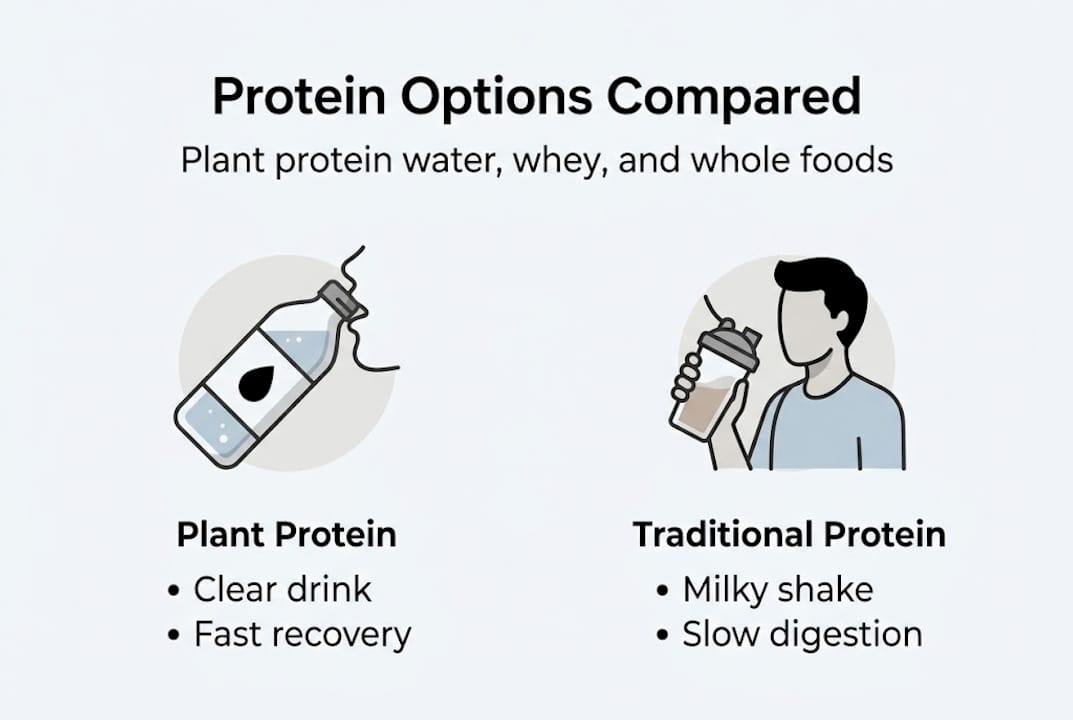
Whole plant foods, however, offer something protein water simply cannot: breadth. Protein water omits carbs and micronutrients that whole foods naturally provide. Lentils, for instance, give you protein, fibre, iron, and folate in one package. A protein drink gives you protein and not much else.
Here’s a practical way to think about when each option makes sense:
- Post-workout, time-pressed: Plant protein water wins. Fast, light, and effective when you need quick amino acid delivery.
- Main meals: Whole plant foods win. Beans, legumes, tofu, and seeds provide a far richer nutrient profile.
- Bulking or high-calorie needs: Whey or higher-calorie plant shakes may be more appropriate for hitting larger protein targets.
- Sensitive digestion or dairy-free needs: Plant protein water is often the most comfortable option.
- Environmental priorities: Plant protein water and whole plant foods both outperform dairy-based whey.
“Plant protein water is a convenient supplement, but whole foods should remain the foundation of your diet for the broadest range of nutrients.”
For a detailed breakdown, the vegan vs whey comparison covers the trade-offs thoroughly. If your primary goal is muscle gain, the best plant protein for muscle gain guide is also worth reading. And for a broader view of how plant proteins function in the body, the role of plant proteins article provides solid context.
Optimising your use: who benefits most and how to choose the right blend
Armed with evidence, here’s how to make practical, informed choices when considering or buying plant protein water.
First, identify whether this format actually suits your needs. Plant protein water works best for people who:
- Train regularly and want a light, fast post-workout option
- Prefer low-calorie supplementation without sacrificing protein
- Have digestive sensitivities to dairy or heavy shakes
- Lead busy lives and need a grab-and-go recovery drink
- Follow a plant-based or flexitarian diet
Once you’ve decided it fits, here’s how to read the label properly:
- Check for a blend: Look for at least two protein sources (e.g., pea and rice, or pea and fava bean). Single-source products are rarely sufficient.
- Look for leucine content: Ideally 2–3g leucine per serving. This is the amino acid that triggers muscle protein synthesis most directly.
- Confirm hydrolysation: The label should say “hydrolysed” or “hydrolysate.” Unhydrolysed plant proteins are less clear and slower to absorb.
- Check the calorie count: A genuine plant protein water should sit between 60–90 kcal. Higher than that suggests added sugars or fats.
- Scan the additives: Avoid products with artificial sweeteners, excessive flavourings, or long ingredient lists that obscure the protein source.
Optimised blends of 20g or more, with leucine fortification, are best suited to post-workout use. Single-source products may not provide enough of the right amino acids to make a meaningful difference to recovery.
The guide to protein blends is a useful resource if you want to go deeper on how different sources stack up.
Pro Tip: Don’t let convenience products replace real meals. Plant protein water is a targeted tool, not a dietary foundation. Whole foods should still make up the bulk of your daily protein intake for the full range of nutrients your body needs.
A fresh perspective: what most people miss about plant protein water
Here’s the part most product reviews skip over. Plant protein water is genuinely useful, but only when it fills a real gap in your diet rather than replacing something better.
The convenience trap is real. When a product is easy to grab and drink, it’s tempting to reach for it at every opportunity. But each time you swap a meal or a whole-food snack for a protein drink, you lose fibre, micronutrients, and the complex nutrition that whole plant protein nutrition naturally provides. That trade-off matters over time.
Where plant protein water genuinely earns its place is in the post-workout window, when appetite is low, digestion is sluggish, and you need amino acids quickly without a heavy meal. That’s a specific, real scenario. Outside of it, whole foods are almost always the better choice.
The sustainable sourcing angle is also underappreciated. Choosing pea or fava bean protein over dairy-based whey isn’t just a personal health decision. It’s a meaningful reduction in land use, water consumption, and greenhouse gas emissions. For eco-minded consumers, that’s not a minor footnote. It’s a core reason to choose this format.
Our view at Granavitalis is simple: use plant protein water as a precision tool, not a daily crutch. When it fits, it’s excellent. When it doesn’t, reach for real food.
Explore premium plant-based nutrition with Granavitalis
If you’re inspired to explore more ways to enjoy plant-powered nutrition beyond protein drinks, we’ve hand-picked some options worth exploring.
At Granavitalis, we believe clean nutrition goes far beyond a single supplement format. Our organic pecan butter delivers healthy fats, plant protein, and rich flavour in one whole-food package, perfect for post-workout snacking or a nourishing breakfast addition. For variety, our nut and seed butter selection brings together a curated range of premium spreads to support your wellness routine. And if you prefer whole-food snacking, our nibbed hazel nuts offer a simple, nutrient-dense option rooted in natural goodness. Real food, real nutrition, every day.
Frequently asked questions
Is plant protein water better than whey protein?
When formulated as a leucine-optimised blend, plant protein water matches whey for muscle recovery, though whey still edges ahead in amino acid completeness for single-source comparisons. The choice depends on your dietary values, digestive comfort, and sustainability priorities.
Can I use plant protein water every day?
Daily use is safe within a balanced diet, but whole foods offer broader nutrition and should remain the priority. Use plant protein water to fill specific gaps rather than as a primary protein source.
Does plant protein water aid muscle gain?
Yes. Leucine-optimised plant blends stimulate muscle protein synthesis comparably to whey, making them effective for muscle gain when used consistently alongside resistance training and adequate overall protein intake.
Are there any side effects from plant protein water?
Side effects are uncommon. However, unhydrolysed or overused products may cause mild digestive discomfort. Choosing a hydrolysed protein format significantly reduces the risk of gut issues compared to standard plant protein powders.
Recommended
- Plant-Based Protein Isolate: Wellness And Recovery – Granavitalis
- Low-Calorie Plant Protein: 20g Blends Fuel Muscle & Wellness – Granavitalis
- Vegan Protein Essential: Powering Recovery and Balance – Granavitalis
- 7 Ways Clean Plant Based Protein Enhances Your Daily Wellness – Granavitalis
- Sports therapy: recovery, prevention, and results explained