
Complete Guide to the Role of Plant Based Proteins
More people are making the switch to plant-based proteins, driven by the growing evidence that they offer real advantages for health and the planet. Research shows that plant proteins can cut LDL cholesterol by up to 10 percent while slashing environmental impact. From heart health to sustainability, the benefits add up quickly. Discover what makes plant-based proteins so valuable and how they can fit into any balanced diet.
Table of Contents
- Defining Plant Based Proteins And Key Benefits
- Types Of Plant Proteins And Nutritional Profiles
- How Plant Proteins Support Health And Wellness
- Challenges, Myths, And Common Misconceptions
- Comparing Plant And Animal Proteins In Diets
Key Takeaways
| Point | Details |
|---|---|
| Diverse Sources of Plant Proteins | Plant-based proteins are derived from legumes, grains, nuts, and seeds, offering a comprehensive nutritional profile. |
| Health Benefits | Regular consumption of plant-based proteins can lower LDL cholesterol, decrease type 2 diabetes risk, and provide essential amino acids. |
| Environmental Sustainability | Plant proteins significantly reduce greenhouse gas emissions and water usage compared to animal proteins, supporting eco-friendly dietary choices. |
| Nutritional Strategy | Combining various plant protein sources throughout the day ensures a complete amino acid profile, enhancing overall nutritional intake. |
Defining Plant Based Proteins and Key Benefits
Plant-based proteins represent a powerful nutritional approach that transforms our understanding of protein sources beyond traditional animal products. According to research from PubMed, these proteins are derived from diverse natural sources including legumes, grains, seeds, and nuts, offering a comprehensive nutritional profile that supports human health and environmental sustainability.
What Exactly Are Plant-Based Proteins?
At their core, plant-based proteins are protein sources extracted directly from plant materials. University of Nottingham highlights that these proteins can be sourced from an impressive range of botanical sources, including:
- Legumes (beans, lentils, chickpeas)
- Nuts and seeds
- Whole grains
- Cereals
- Seaweeds and algae
Key Nutritional Benefits
Beyond their versatility, plant-based proteins offer remarkable health advantages. PubMed research indicates they can contribute to:
- Reducing LDL (bad) cholesterol levels
- Lowering risk of type 2 diabetes
- Providing essential amino acids
Environmental Impact
Moreover, choosing plant-based proteins isn’t just a personal health decision—it’s an environmental statement. Compared to animal proteins, these botanical sources significantly reduce greenhouse gas emissions and water consumption, making them a sustainable nutritional choice for conscientious consumers.
For more detailed insights into selecting the best plant-based protein sources, explore our guide on vegan protein nutrition.
Types of Plant Proteins and Nutritional Profiles
Plant proteins represent a diverse and nutritionally rich category of protein sources, with each type offering unique characteristics and benefits. Academic Research reveals that these proteins are found across various botanical sources, with protein content ranging dramatically from 6% to 38% depending on the specific plant type.
Primary Plant Protein Categories
The main categories of plant proteins include:
- Legumes: The protein powerhouses, containing 20%–38% protein content
- Cereals: Offering 6%–15% protein concentration
- Pseudocereals: Alternative grain-like sources
- Nuts and Seeds: Providing concentrated protein and healthy fats
Protein Quality Considerations
Understanding protein quality is crucial when evaluating plant-based options. Nutrition Research indicates that while animal proteins traditionally score higher in biological value, strategic dietary planning can ensure complete amino acid intake. The Protein Digestibility Corrected Amino Acid Score (PDCAAS) helps evaluate protein effectiveness, with legumes demonstrating impressive scores between 81% and 96%.
Nutritional Strategy
To maximise protein absorption, nutritionists recommend consuming a varied mix of plant proteins throughout the day. This approach ensures you receive a comprehensive amino acid profile, effectively mimicking the nutritional completeness of animal proteins.

For a deeper exploration of optimising your plant-based protein intake, check out our comprehensive guide to high protein plant-based diets.
How Plant Proteins Support Health and Wellness
Plant-based proteins are far more than just a dietary alternative—they are powerful nutritional agents that actively contribute to overall health and wellness. PubMed Research reveals that these proteins are packed with bioactive components like vitamins, polyphenols, and bioactive peptides, which play a critical role in preventing chronic diseases and promoting optimal human health.
Key Health Benefits
The remarkable health advantages of plant proteins extend across multiple bodily systems:
- Cardiovascular Protection: Linked to lower cholesterol levels
- Disease Prevention: Rich in compounds that combat chronic health conditions
- Nutritional Density: Provide essential nutrients beyond basic protein
Bioactive Compounds and Wellness
PubMed Research highlights that processing techniques like germination and fermentation can significantly enhance the digestibility and functional properties of plant proteins. These methods unlock additional nutritional potential, making plant proteins not just a protein source, but a comprehensive wellness tool.
Holistic Nutritional Approach
By incorporating a diverse range of plant proteins, individuals can create a nutritional strategy that supports long-term health. The combination of different plant protein sources ensures a complete amino acid profile and maximises the absorption of essential nutrients.
For more insights into selecting the best plant-based protein sources, explore our guide to understanding plant-based protein benefits.
Challenges, Myths, and Common Misconceptions
Plant-based proteins have gained significant popularity, but they are not without their complexities and misconceptions. World Wildlife Fund research highlights that while these protein sources offer tremendous potential, they are not a straightforward, one-size-fits-all nutritional solution.
Common Misconceptions
Several persistent myths surround plant-based proteins:
- Myth 1: All plant proteins are automatically healthier
- Myth 2: Plant-based means low in processed ingredients
- Myth 3: These proteins can completely replace animal proteins without strategic planning
Nutritional Complexity
Contrary to popular belief, not all plant-based products are created equal. World Wildlife Fund points out that many plant-based alternatives can be surprisingly high in fat, sugar, and salt. The key is to focus on minimally processed options like legumes and nuts, which offer genuine nutritional and environmental benefits.
Strategic Consumption
Navigating the world of plant proteins requires a nuanced approach. Consumers need to read labels carefully, understand processing methods, and diversify their protein sources to ensure comprehensive nutritional intake.
To dive deeper into selecting the most nutritious plant protein sources, check out our top 10 vegan protein sources guide.
Comparing Plant and Animal Proteins in Diets
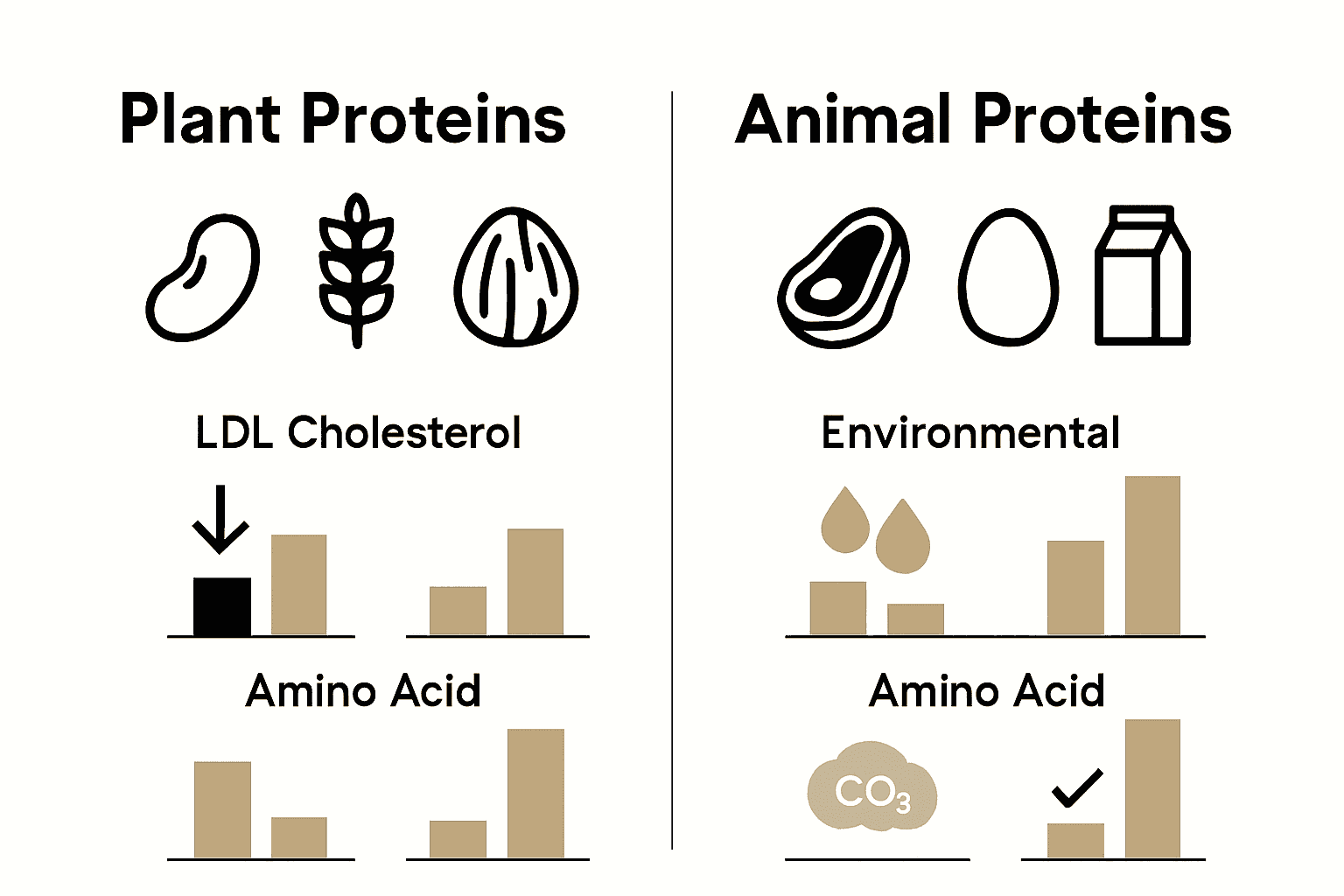
The debate between plant and animal proteins is nuanced, with each protein source offering unique nutritional characteristics. Nutrition Research reveals that while animal proteins traditionally contain a complete amino acid profile, strategic plant-based dietary planning can effectively meet nutritional requirements.
Nutritional Composition Comparison
Key differences between plant and animal proteins include:
- Amino Acid Profile: Animal proteins provide complete essential amino acids
- Digestibility: Animal proteins typically have higher biological value
- Nutrient Density: Plant proteins offer additional phytonutrients and fiber
Health and Environmental Impact
PubMed Research highlights compelling advantages of plant-based protein substitution. Replacing animal proteins can potentially:
- Reduce LDL cholesterol by 5-10%
- Lower type 2 diabetes risk by 18%
- Dramatically decrease environmental footprint
Strategic Protein Integration
The most effective approach involves diversifying protein sources. By combining various plant proteins throughout the day, individuals can create a comprehensive amino acid profile that rivals animal protein nutrition.
For practical strategies on incorporating plant proteins, explore our guide to vegetarian protein sources.
Unlock the Power of Plant-Based Proteins with Granavitalis
Feeling overwhelmed by the complexities of plant-based proteins and how to incorporate them effectively into your daily diet is a common challenge. This guide reveals that although plant proteins offer incredible health and environmental benefits, success depends on choosing quality sources and combining them wisely to meet your nutritional needs. At Granavitalis, we share your goal of embracing plant proteins that genuinely nourish and energise your body without compromise.
Discover nutrient-rich solutions crafted for modern living by exploring our range of Vegan Protein Powders – Granavitalis. Each product is thoughtfully designed to provide high-quality protein derived from ancient grains and plants, ensuring you get a full amino acid profile and sustained energy. Our products embody respect for tradition and wellness, helping you build meals that support lasting vitality.
Take charge of your health journey today by choosing plant-based proteins that truly perform. Visit Granavitalis now and transform your approach to nourishing breakfasts and beyond with whole foods that fuel body and mind. Embrace a future where delicious taste meets powerful nutrition – your wellbeing deserves nothing less.
Frequently Asked Questions
What are plant-based proteins?
Plant-based proteins are protein sources derived from plants, including legumes, grains, seeds, and nuts. They offer a complete nutritional profile that can support human health and environmental sustainability.
How do plant-based proteins compare to animal proteins?
While animal proteins generally contain a complete amino acid profile and higher digestibility, plant-based proteins can provide additional nutrients and lower environmental impacts. A strategic combination of plant proteins can effectively meet daily protein needs.
What are the health benefits of consuming plant-based proteins?
Plant-based proteins are linked to reducing LDL cholesterol, lowering the risk of type 2 diabetes, and providing essential amino acids. They also contain valuable bioactive compounds that promote overall health and prevent chronic diseases.
How can I ensure I’m getting enough protein on a plant-based diet?
To maximize protein intake on a plant-based diet, consume a variety of protein sources throughout the day. This approach helps to achieve a complete amino acid profile similar to that of animal proteins.