
Low sugar breakfast recipes aligned with Diabetes UK and NICE
A low sugar breakfast pairs protein, healthy fats and fibre so glucose rises slowly and hunger stays away for hours. Reach for eggs with spinach, Greek yoghurt with nuts and berries, or porridge made with milk and a spoon of nut butter instead of syrup. Eat within an hour of waking, keep portions moderate, and skip the fruit juice.
TL;DR:
- A low sugar breakfast combines protein, fiber, and no added free sugars such as honey or syrup to stabilize blood glucose and reduce hunger.
- Savory options like eggs with vegetables generally cause smaller blood sugar spikes compared to sweet choices, especially for those with blood sugar concerns.
- Simple recipes like protein porridge, yogurt and seed bowls, or batch-cooked egg bake provide quick, wholesome options within ten minutes or less.
- Shopping for cereals and ingredients requires careful label reading to avoid hidden free sugars found in many marketed “healthy” products.
- Incorporating wholefoods like plain oats, Weetabix, or shredded wheat remains the most effective way to reduce sugar intake and maintain stable blood glucose levels.
Table of Contents
- What counts as a low sugar breakfast?
- Simple recipes and a build-your-own bowl formula
- How do you avoid hidden sugars when shopping?
- What does the research actually say about breakfast and blood sugar?
- Ten-minute breakfasts for mornings when you’re rushed
- Why simple wholefood breakfasts still beat the shortcuts
- Stock your kitchen for low sugar mornings
- Sources
- FAQ
What counts as a low sugar breakfast?
A genuine low sugar breakfast has three things going for it: a solid protein hit, some fibre from wholegrains or vegetables, and no free sugars hiding in the mix. Free sugars are the ones added to food or found in honey, syrup and fruit juice. Whole fruit doesn’t count against you here, which is worth remembering when you’re eyeing up that banana.
Sweet options:
- Overnight oats soaked in milk with berries stirred in, no honey needed
- Greek yoghurt parfait layered with nuts, seeds and a small handful of raspberries
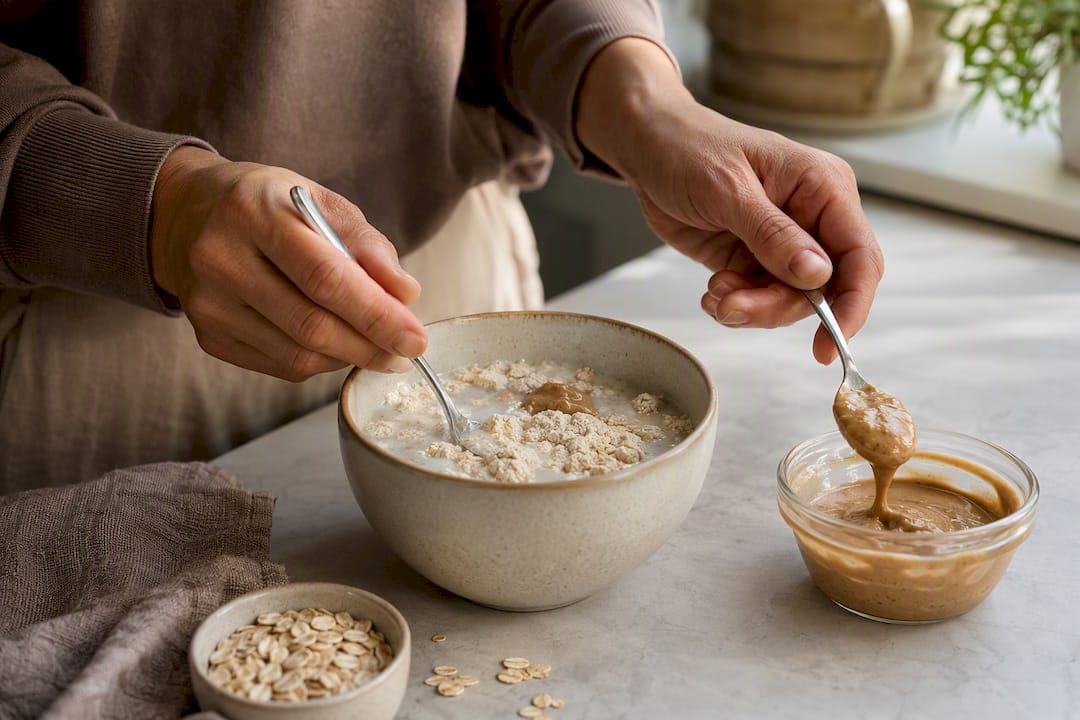
- Porridge topped with a spoon of nut butter instead of sugar or syrup
Savoury options:
- Scrambled eggs with spinach, mushrooms or peppers
- Baked egg muffins made in a tray and kept for the week
- Savoury oats cooked in stock with a poached egg and seeds on top
Everything on that list takes ten minutes or less bar the egg muffins, which reward a bit of batch cooking. If blood sugar is a daily concern, the savoury options tend to sit slightly better because they carry no natural fruit sugars at all, though a portion of berries alongside porridge is still a sound choice for most people.
Simple recipes and a build-your-own bowl formula
Three recipes cover most mornings, and a fourth idea, the build-your-own formula, means you never run out of options.
- Protein porridge: 40g porridge oats cooked in 200ml milk, stirred with a tablespoon of nut butter and a handful of berries. Takes five minutes on the hob or two in the microwave.
- Yoghurt and seed bowl: 150g plain Greek yoghurt, a tablespoon of mixed seeds, a small handful of walnuts and a few chopped strawberries. No cooking required.
- Veg and egg bake: Whisk four eggs with chopped spinach, tomato and a splash of milk, pour into a greased dish, bake at 180°C for 18 minutes, then slice into portions for the week.
For mornings when you fancy something different, use this formula: base + protein + fibre + healthy fat + flavour. Plain oats or wholegrain toast as the base, an egg or a scoop of protein powder for protein, berries or seeds for fibre, nut butter or avocado for fat, and cinnamon or vanilla extract for flavour instead of sugar.
Dairy-free readers can swap milk for unsweetened almond or oat milk and use a plant-based protein powder in place of Greek yoghurt. Nut allergies mean sunflower seed butter works just as well as almond or peanut butter in any of these recipes.
Pro Tip: Batch-cook the egg bake on a Sunday, cut it into six squares, and freeze what you won’t eat within three days. It reheats from frozen in under two minutes and beats reaching for cereal on a rushed morning.
How do you avoid hidden sugars when shopping?
Ingredient labels hide free sugars behind names that don’t sound like sugar at all. Watch for syrup, malt, fruit concentrate, maltose and dextrose, and remember that if any form of sugar sits near the top of the ingredients list, that product is sweeter than the packaging suggests.
Cereal aisles are the worst offenders. Many boxes marketed as healthy carry more free sugars than a slice of cake, so Diabetes UK’s guidance on breakfast cereals points people towards plain porridge oats, Weetabix or shredded wheat instead, checked against the label for added sugar or sweetened dried fruit pieces.
Beyond cereal, a few swaps make a real difference:
- Choose plain yoghurt over flavoured varieties, then add your own fruit
- Swap jam or chocolate spread for a natural nut butter with no added sugar
- Watch flavoured coffees and chain-shop drinks; a syrup-laden latte can carry more sugar than a doughnut
What does the research actually say about breakfast and blood sugar?
The clinical evidence increasingly favours protein and fibre over refined carbohydrate at breakfast. A network meta-analysis published in Frontiers in Endocrinology found legume-based and high-protein breakfasts were the most effective at lowering blood glucose two hours after eating, and breakfasts supplemented with whey protein improved HbA1c, the longer-term marker of blood sugar control.
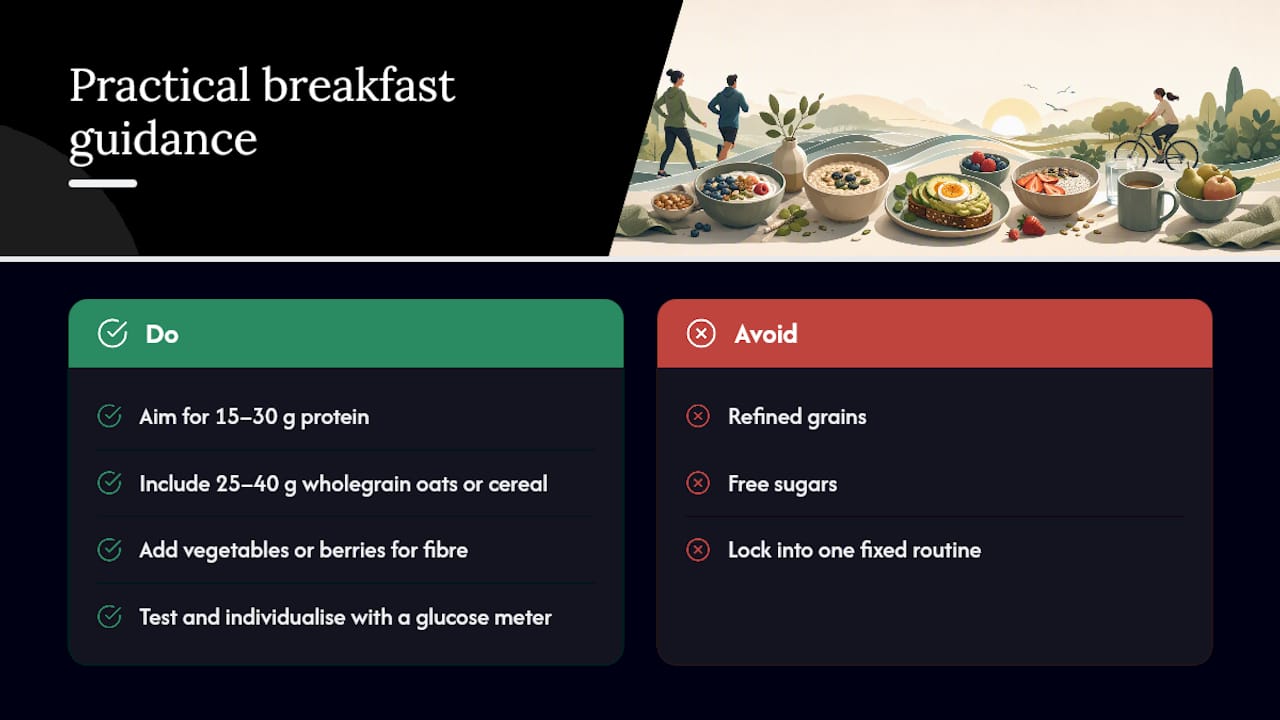
Practical target: aim for roughly 15 to 30g of protein at breakfast, plus a 25 to 40g portion of wholegrain oats or cereal, plus a serving of vegetables or berries for fibre. Adjust for appetite and, if you’re on insulin, for your own medical advice.
A randomised crossover trial backs eggs specifically: egg-based breakfasts outperformed higher-carbohydrate breakfasts on insulin-sensitivity markers, largely because they replace sugar with protein rather than adding anything special.
Diabetes UK and NICE guidance NG28 both steer people towards fibre-rich wholegrains and away from refined grains and free sugars, and NICE stresses individualising meal patterns rather than following one fixed template. If you use insulin, that individualisation matters more than any general rule in this article, so test your own response with a glucose meter or a simple symptom log before locking in a new routine.
Ten-minute breakfasts for mornings when you’re rushed
Some mornings don’t allow for recipes, only survival. These take ten minutes or less, start to finish.
- Microwave porridge with nut butter: 40g oats, 200ml milk, two minutes on high, then stir through a spoon of nut butter.
- Egg and veg scramble: Two eggs whisked with a handful of frozen spinach, cooked in a pan for four minutes flat.
- Yoghurt pot with frozen berries: Plain Greek yoghurt straight from the fridge, frozen berries defrosted in thirty seconds in the microwave, seeds on top.
- Grab-and-go egg muffins: Made ahead in a muffin tin and kept in the fridge for up to four days, reheated in ninety seconds.
- Baked oats squares: A tray of baked oats made once a week, cut into portions, eaten cold or warmed through.
For genuine make-ahead reliability, egg muffins and baked oats win because they reheat cleanly without turning rubbery or dry. If breakfast happens at a desk or in a car, pack yoghurt and seeds separately so the seeds stay crunchy rather than turning soggy, and carry nut butter in small pots rather than trying to spread it on the move. For more structured meal-prep ideas that hit the same protein and fibre targets, see this round-up of high-fibre high-protein breakfasts.
Why simple wholefood breakfasts still beat the shortcuts
Most of the noise around breakfast comes from products dressed up as healthy that quietly carry a spoonful of syrup. The recipes above work because they lean on whole ingredients, eggs, oats, nuts, yoghurt, rather than anything processed to taste sweet without the sugar tax. That’s the same thinking behind Granavitalis’s approach to grains and nut butters. If you’re on insulin or managing a more complex condition, treat everything here as a starting point and check changes with your GP or diabetes team first.
— Jarrod
Stock your kitchen for low sugar mornings
This article recommends pantry staples without the added sugar that sneaks into most jarred spreads. Stirring a spoon of raw organic pecan butter into porridge gives you the fat and flavour that would otherwise come from syrup, with nothing added beyond the pecans themselves.

If your mornings vary between yoghurt bowls, porridge and pancakes, the organic nut and seed butter selection box covers that range without a repeat trip to the shop. For more recipe ideas using nuts, seeds and plain yoghurt, this seed-based meal ideas guide is worth a look too. Pick a jar that suits your usual breakfast and add it to your next order.
Sources
- Type 2 diabetes in adults: management | NICE guidance NG28
- Network meta-analysis (2026) on breakfast macronutrient composition and postprandial glucose | Frontiers in Endocrinology
This article is general information, not a substitute for advice from a qualified doctor. Consult a qualified healthcare professional about your own circumstances before acting on anything here.
FAQ
What can I eat for breakfast that is low in sugar?
Eggs, plain Greek yoghurt with nuts and berries, or porridge made with milk and topped with nut butter instead of syrup all work well, since each pairs protein with fibre and no free sugars.
What is the best breakfast for type 2 diabetes?
Diabetes UK and NICE both recommend high-fibre wholegrains and protein over refined carbohydrate, with individualised portions, and evidence suggests legume-based or high-protein breakfasts lower post-meal glucose most effectively.
What can I eat for breakfast that won’t make my blood sugar spike?
Savoury options like scrambled eggs with vegetables tend to cause the smallest rise, while porridge or yoghurt with berries (rather than juice or dried fruit) also keeps the rise gradual.
What is a good low-sugar breakfast cereal?
Plain porridge oats, Weetabix and shredded wheat carry far less free sugar than most flavoured cereals, so check the ingredients list for syrup or added sugar before choosing a box.