
Healthy breakfast ideas that hit your protein and fibre targets
A healthy breakfast pairs 20–30 g of protein with 6–10 g of fibre and a smart carbohydrate. Together they should provide roughly a fifth to a quarter of your day’s energy, according to British Dietetic Association guidance. You don’t need a spreadsheet to get there. Three examples that hit the mark within minutes:
- Overnight oats with Greek yoghurt and a scoop of plant protein
- Two eggs on wholegrain toast with spinach
- A Greek yoghurt parfait layered with berries and mixed seeds
Get the balance right and the mid-morning slump mostly disappears. Get it wrong (a bowl of sugary cereal, a pastry on the run) and you’ll be reaching for biscuits by 11am.
Key Takeaways
A balanced breakfast combining 20–30 g protein and 6–10 g fibre steadies energy and appetite better than either nutrient alone.
| Point | Details |
|---|---|
| Hit the numbers | Aim for 20–30 g protein and 6–10 g fibre, roughly 20–25% of daily energy, per BDA guidance. |
| Combine, don’t choose | Protein drives satiety; fibre supports gut health, so pairing both beats picking one. |
| Use the 3-2-1 rule | Pick 3 proteins, 2 fruit or veg items, 1 smart carb, and rotate them to cut decision fatigue. |
| Batch on Sundays | Boil eggs, jar oats and freeze smoothie packs once to cover most weekday mornings. |
| Granavitalis fits the gap | Nut butters and plant protein powders make it simple to add missing protein or fibre without new recipes. |
Further reading: British Dietetic Association breakfast guidance, NHS Eatwell Guide, Netmums dietitian breakfast tips, Cambridge breakfast trial, Johns Hopkins Medicine on healthy breakfasts.
Table of Contents
- Ten 5-minute healthy breakfast ideas you can make today
- Nutritious breakfast ideas by category
- Batch prep and the 3-2-1 rule for stress-free mornings
- What the evidence says about breakfast targets
- How Granavitalis thinks about breakfast nutrition
- Frequently asked questions
- Sources
Ten 5-minute healthy breakfast ideas you can make today
Each of these takes 2 to 5 minutes of hands-on effort, which matters more than any recipe when you’re weighing up a quick nutritious breakfast against skipping the meal entirely.
- Greek yoghurt, berries and seeds (3 mins) — high protein, naturally lower sugar than flavoured yoghurt.
- Two boiled eggs, pre-cooked, with a wholemeal roll (2 mins) — batch-boil on Sunday, grab and go all week.
- Overnight oats with chia and plant protein (5 mins prep, night before) — vegan-friendly if you use plant milk.
- Peanut or almond butter on rye toast (2 mins) — swap to sunflower seed butter for a nut-free version.
- Cottage cheese with pineapple and pumpkin seeds (3 mins) — high protein, gut-friendly fibre.
- Smoothie with spinach, banana, oats and protein powder (4 mins) — blend the night before if your mornings are tight.
- Beans on wholegrain toast (5 mins) — a genuine fibre powerhouse, though tinned beans in sauce can carry hidden sugar; rinse them first.
- Scrambled eggs with mushrooms (5 mins) — gluten-free as standard, just skip the toast or use a gluten-free slice.
- Rice cakes with cottage cheese and tomato (2 mins) — gluten-free, light but still protein-forward.
- Porridge made with milk, topped with nut butter and banana (5 mins) — go easy on honey drizzles; that’s where the sugar creeps in.
Most of these swap in and out depending on what’s in your fridge, which is really the point of an easy nutritious breakfast: it survives a chaotic Tuesday.
Nutritious breakfast ideas by category
Grouping ideas by style makes it easier to rotate through the week without getting bored, which is usually why people abandon “eating healthy” by February.
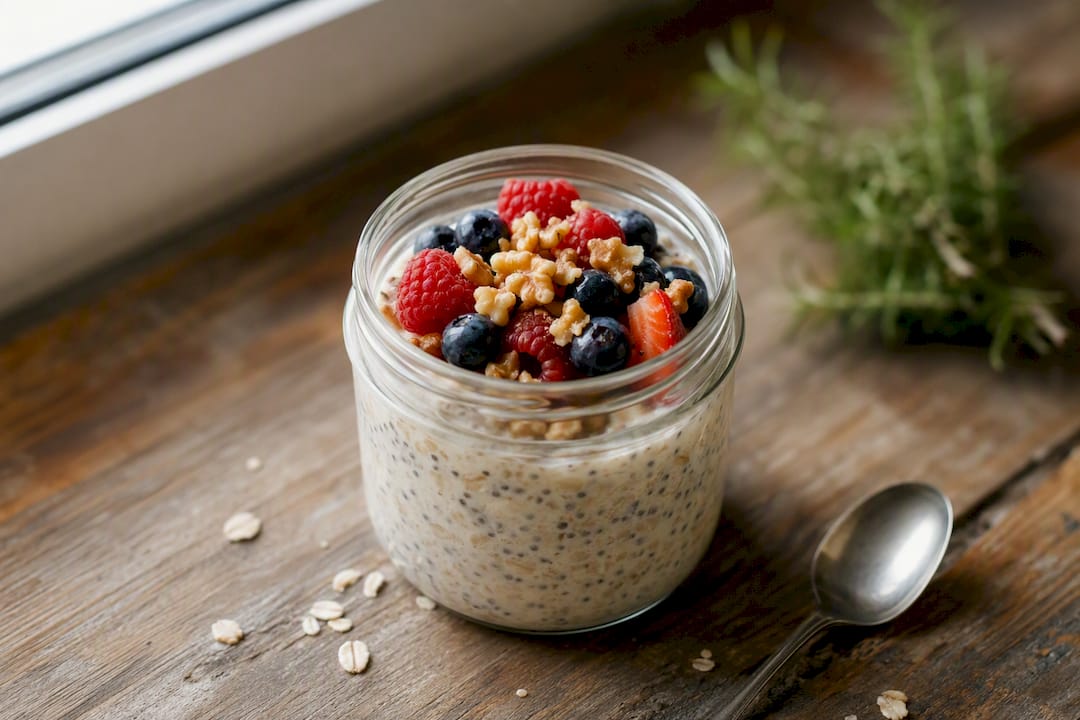
Oats. Classic overnight oats with milk, chia and berries; savoury oats cooked with stock and a fried egg on top; baked oat squares with mashed banana and walnuts; high-protein oats blended with a scoop of powder before cooking. Oats bring the fibre; add Greek yoghurt or protein powder for the other half of the equation.
Eggs. A veggie-loaded omelette, poached eggs on wholegrain toast, a frittata muffin batch for the freezer, or shakshuka with tinned tomatoes and chickpeas for extra fibre. Watch the salt in ready-made hollandaise or processed breakfast meats, both flagged as ones to limit by Johns Hopkins Medicine.
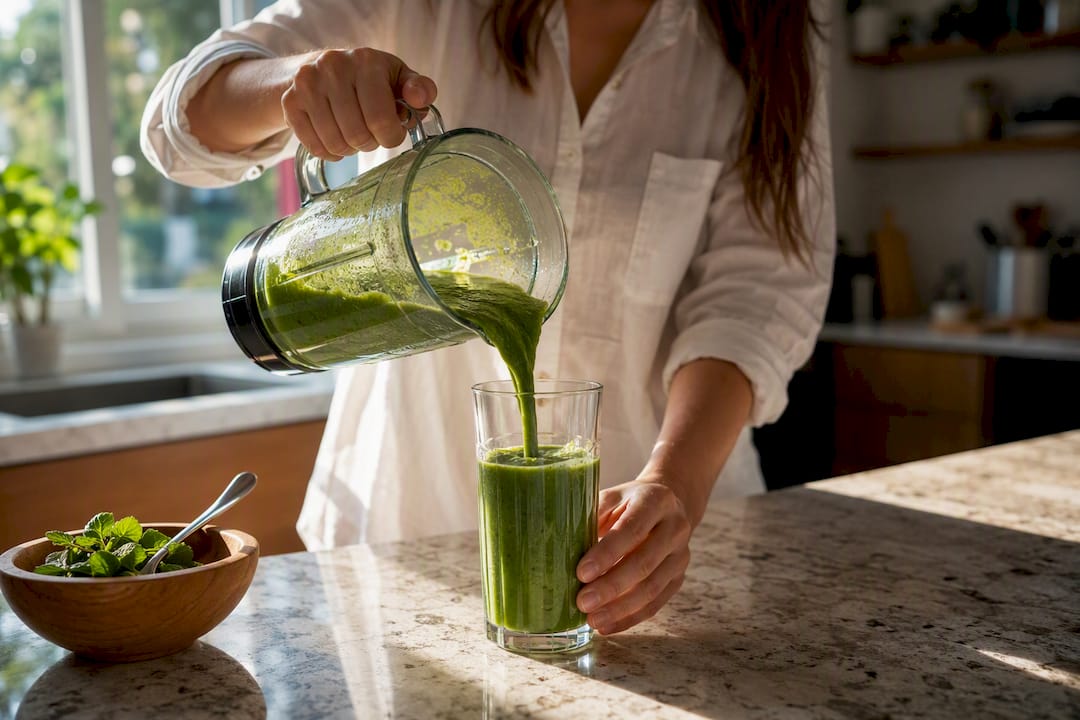
Smoothies. Green smoothie with spinach and avocado, berry and oat smoothie with plant protein, tropical mango and chia smoothie, or a cocoa and banana blend with nut butter stirred in. Fruit-heavy smoothies can spike sugar fast; anchor each one with a protein source and a spoonful of ground flaxseed for fibre.
Bowls. Chia pudding bowls with fruit, quinoa breakfast bowls with roasted seeds, acai-style bowls topped with granola (go for a low-sugar one), or a savoury bowl of brown rice, egg and greens.
Toast and savoury. Beans on toast, avocado and egg on rye, cottage cheese and cucumber on seeded bread, or mashed sardines on toast for an omega-3 boost.
Pancakes and quick breads. Oat and banana pancakes, buckwheat pancakes for a gluten-free base, protein pancakes made with cottage cheese blended into the batter, or a wholegrain banana loaf sliced and frozen in portions. For dairy-free versions, swap milk for oat or soy milk and use coconut yoghurt in place of Greek yoghurt.
Real seed-based combinations, like those in the Wild Foodz porridge and topping guide, are a useful reference if you want more textures beyond the usual chia and flax.
Batch prep and the 3-2-1 rule for stress-free mornings
The 3-2-1 rule cuts decision fatigue: pick 3 quick proteins, 2 fruit or veg items, and 1 smart carbohydrate, then rotate them across the week instead of reinventing breakfast daily.
- Sunday session: boil 6 eggs, make 3 jars of overnight oats, and portion frozen smoothie packs (fruit, spinach, protein powder) into bags.
- Weeknight, 5 minutes: prep tomorrow’s jar or pull a smoothie pack from the freezer straight into the blender.
- Fridge rules: boiled eggs keep 5 to 7 days; oat jars keep 3 to 4 days; smoothie packs keep up to 3 months frozen.
Pro Tip: Reheat egg-based breakfasts gently and only once. Refrigerated cooked eggs should be eaten within a week and never left at room temperature for more than two hours.
What the evidence says about breakfast targets
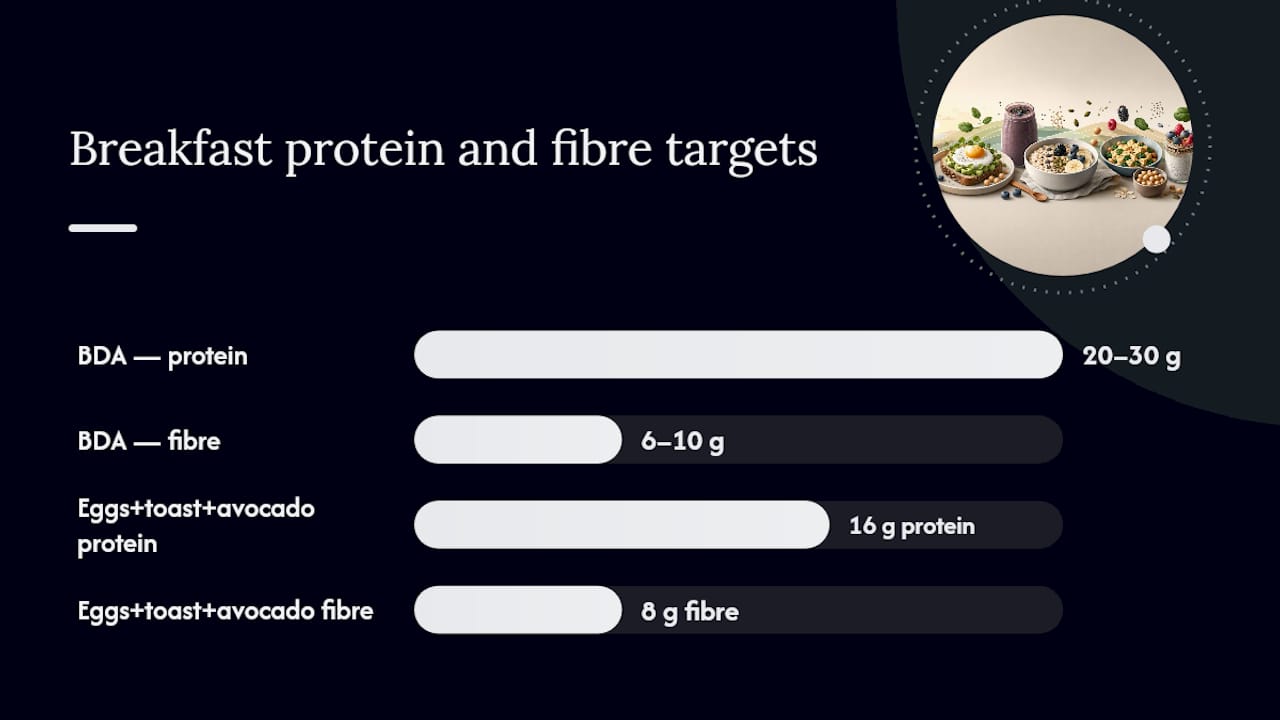
The numbers aren’t arbitrary. The British Dietetic Association puts the target at 20 to 30 g protein and 6 to 10 g fibre, roughly 20 to 25% of your day’s energy, aimed at steadier blood glucose and better satiety through the morning.
A randomised trial on breakfast composition found something worth knowing if you’ve ever wondered which matters more. High-protein breakfasts were better at suppressing hunger; high-fibre breakfasts did more for gut microbiota, according to the Cambridge Core trial. Neither wins outright, so combining both is the pragmatic move rather than picking a side.
Quick arithmetic makes the target feel less abstract:
- Two eggs (12 g protein) + wholegrain toast (3 g fibre, 4 g protein) + half an avocado (5 g fibre) gets you to roughly 16 g protein and 8 g fibre.
- Greek yoghurt (150g, about 15 g protein) + a tablespoon of chia (5 g fibre) + berries (2 g fibre) lands close to 15 g protein and 7 g fibre before you’ve added any granola.
Add a scoop of protein powder or a spoon of nut butter to either and you’re comfortably inside BDA range. Our own protein and fibre breakfast targets guide walks through more combinations if you want to build your own.
Small swaps that lower sugar and raise protein or fibre
- Swap flavoured yoghurt for plain Greek or coconut yoghurt with fresh fruit stirred in.
- Choose a wholegrain, low-sugar cereal or porridge oats over granola clusters coated in syrup.
- Add a spoon of ground flaxseed or chia to smoothies instead of extra fruit juice.
- For dairy-free protein, try silken tofu blended into smoothies or a plant-based yoghurt fortified with protein.
- Keep nut butter portions to a tablespoon; they’re nutrient-dense but calorie-dense too.
How Granavitalis thinks about breakfast nutrition
Granavitalis builds its ingredient range around the same protein-and-fibre logic dietitians recommend, using ancient grains, clean plant proteins and nut butters rather than refined fillers. A few practical uses:
- Stir a spoon of nut butter into porridge for healthy fats and staying power.
- Add plant protein powder to smoothies or overnight oats to close the gap to 20–30 g.
- Bake with ancient grain flour for higher-fibre pancakes or quick breads.
Our high-fibre, high-protein breakfast guide and 30g plant protein breakfast guide go deeper into exact combinations if you’re tracking numbers closely.
Try the 3-2-1 rule for one week
I’d suggest trialling the 3-2-1 framework for seven days rather than overhauling everything at once. Track your energy and mid-morning hunger daily, and try folding a spoon of nut butter or protein powder into one breakfast as your easy upgrade.
A simple way to hit your targets without overthinking it
Most breakfast advice tells you what to eat but not how to keep good ingredients on hand without a weekly shop dedicated to it. That’s really the gap Granavitalis fills.

The Raw Organic Pecan Butter stirs straight into porridge or overnight oats for healthy fats and extra staying power, no faffing with ratios. If you want more variety across the week, the Organic Nut & Seed Butter Selection Box covers several textures and flavours so breakfast doesn’t get repetitive by Wednesday. Order either one and you’ve got a fridge staple ready for tomorrow’s jar, no extra prep required.
Frequently asked questions
What counts as a healthy breakfast for weight management? One with roughly 20–30 g protein and 6–10 g fibre tends to keep hunger steadier through the morning than a high-sugar, low-protein option, based on trial evidence from Cambridge Core.
What’s a good high-protein breakfast idea if I don’t eat eggs? Greek yoghurt with seeds, cottage cheese with fruit, or a smoothie built with plant protein powder all reach 15–20 g protein without eggs.
Can I meet fibre targets without eating cereal or bran? Yes. Chia seeds, beans on toast, wholegrain bread and berries all add meaningful fibre; two tablespoons of chia alone supplies around 5 g.
Are smoothies a nutritious breakfast option or just sugar in a glass? It depends on what goes in. A smoothie built around spinach, protein powder and a modest amount of fruit is balanced; one made from fruit juice and banana alone spikes sugar with little staying power.
How do I make a healthy breakfast dairy-free? Swap dairy yoghurt for a fortified plant-based version, use plant milk in oats or smoothies, and lean on nut butters or tofu for protein instead of eggs or cheese.
Sources
- Healthy Breakfast - British Dietetic Association
- Eatwell guide - NHS (West London NHS Trust copy)
- Big-breakfast diet composition impacts on appetite control and gut health — Cambridge Core
- Healthy breakfasts — Johns Hopkins Medicine