
The right protein and fiber rich breakfast: targets and 10 ideas
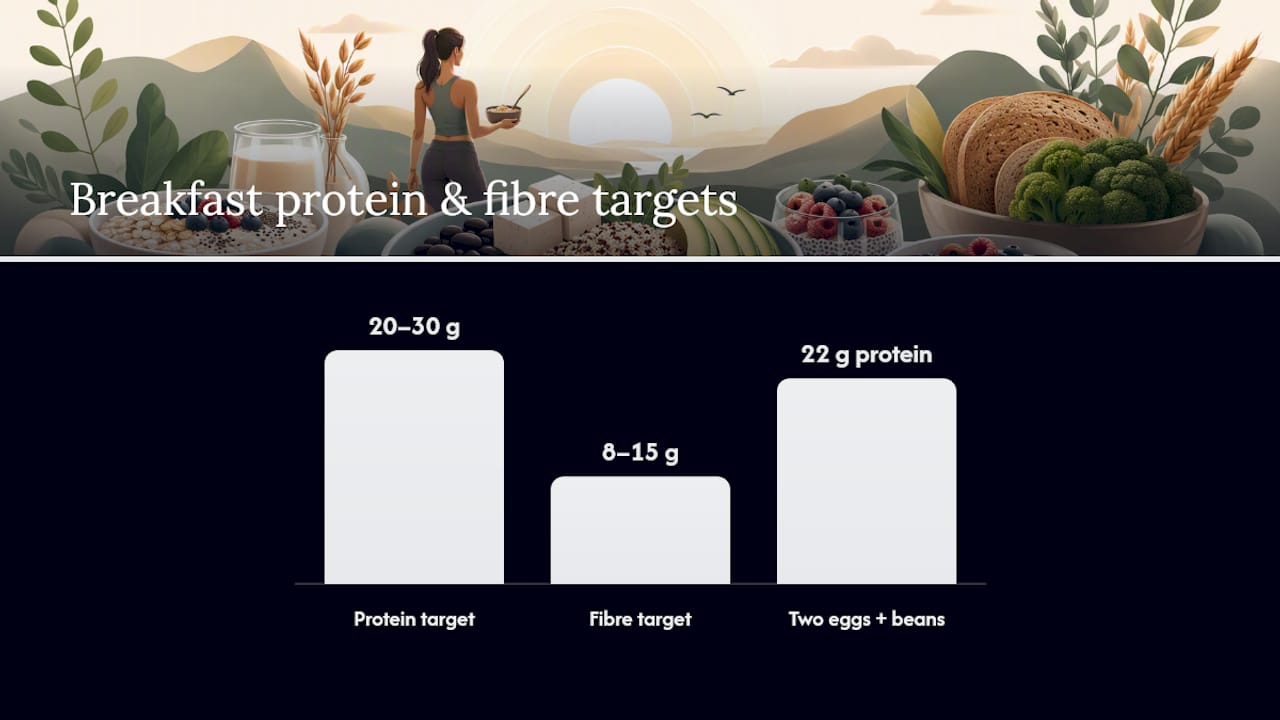
Aim for 20 to 30 grams of protein and 8 to 15 grams of fibre at breakfast. That’s the number to remember before anything else on this page. Hit that range and you’re far less likely to be raiding the biscuit tin by 10:30am.
The British Heart Foundation puts adult protein needs at roughly 0.75g per kilogram of body weight daily, and notes that 20 to 30g per meal is a sensible practical target for satiety and keeping muscle. Fibre works differently but towards the same goal: it slows digestion, feeds your gut bacteria, and helps flatten the blood sugar spike that a carb-only breakfast tends to cause. Put protein and fibre on the same plate and you get slower digestion plus a longer-lasting “I’m actually full” signal, rather than one or the other.
Short on time? Here are three that hit the target with almost no thinking involved:
- Greek yoghurt bowl (150g Greek yoghurt, 40g oats, 1 tbsp chia seeds, handful of raspberries): roughly 24g protein, 10g fibre. Five minutes.
- Two eggs, wholemeal toast, half an avocado: roughly 22g protein, 9g fibre. Eight minutes.
- Overnight oats with a scoop of vegan protein powder: roughly 25g protein, 9g fibre. Zero minutes in the morning if made the night before.
Key Takeaways
A protein and fibre rich breakfast works best when it delivers roughly 20 to 30g of protein and 8 to 15g of fibre in a single meal.
| Point | Details |
|---|---|
| Hit both targets | Aim for 20 to 30g protein and 8 to 15g fibre at breakfast, not one or the other. |
| Try one plant based option | Chickpea and vegetable scramble delivers a high protein and fibre content with no swaps needed. |
| Try one omnivore option | Two eggs with beans on wholemeal toast gives roughly 22g protein in under ten minutes. |
| Batch prep saves mornings | Overnight oats and pre-cooked lentils both keep 3 to 4 days and remove all morning effort. |
| Build with Granavitalis staples | Granavitalis pantry items like vegan protein powder and nut butters help close protein or fibre gaps fast. |
This article is general information, not a substitute for advice from a qualified doctor. Consult a qualified healthcare professional about your own circumstances before acting on anything here.
Table of Contents
- 10 easy high protein high fibre breakfasts to try this week
- Why combining protein and fibre actually works
- Building the numbers: portions, swaps and one habit that matters
- Make ahead and 5 minute morning shortcuts
- Stocking a pantry that makes this easy
- Sources
10 easy high protein high fibre breakfasts to try this week
This is the core list. Each one is built to land somewhere near that 20 to 30g protein, 8 to 15g fibre window, with vegan swaps included so dietary restrictions aren’t an afterthought.
1. Greek yoghurt, oats and chia bowl. Mix 150g Greek yoghurt with 40g rolled oats, a tablespoon of chia seeds and a handful of mixed berries. Around 24g protein, 10g fibre. Vegan swap: soya yoghurt plus a scoop of plant protein powder to make up the protein shortfall, since soya yoghurt alone runs lower in protein than dairy Greek yoghurt.
2. Two eggs with beans on wholemeal toast. A classic for a reason. Two eggs plus half a tin of baked beans on one slice of wholemeal toast provides a substantial balance of protein and fibre. Vegan version: swap the eggs for a scramble of firm tofu with turmeric and nutritional yeast.
3. Cottage cheese with berries and seeds. 200g cottage cheese, a handful of mixed berries, a tablespoon of mixed seeds: a convenient protein and fibre combination. Dietitians commonly recommend this exact combination for its convenience and simplicity. Vegan swap: a thick plant-based yoghurt with an extra tablespoon of ground flaxseed to lift the fibre count back up.
4. Overnight oats with vegan protein powder. 40g oats soaked overnight in oat milk with a scoop of vegan protein powder and a tablespoon of ground flaxseed. Around 25g protein, 9g fibre, and it’s already made when you wake up. This is naturally vegan and gluten-free if you use certified gluten-free oats.
5. Savoury seeded sourdough with eggs and spinach. Seeded sourdough toast topped with two poached eggs and wilted spinach. Roughly 22g protein, 8g fibre. Nutritionists like Emily English favour exactly this kind of savoury, colourful plate over sweet cereal bowls, arguing the extra vegetables and protein keep hunger at bay for longer.
6. Chickpea and vegetable scramble. Mashed chickpeas fried with turmeric, cumin, spinach and tomatoes, served with half an avocado delivers high fibre and protein content, suitable as a plant-based breakfast. This is one of the highest-fibre options on the list and entirely plant-based without needing a swap.

7. Peanut butter and banana on wholemeal toast, with a protein shake on the side. Two slices of wholemeal toast with natural peanut butter, plus a protein shake, together offer high protein and fibre intake. Nut-free households can use sunflower seed butter instead.
8. Skyr with granola and flaxseed. 170g skyr (a strained dairy product higher in protein than standard yoghurt), 30g low-sugar granola, a tablespoon of ground flaxseed. Around 22g protein, 8g fibre. Vegan swap: soya skyr, now widely available, keeps the protein count close to the dairy version.
9. Lentil and vegetable breakfast bowl. Cooked green lentils, roasted vegetables and a poached egg or a spoon of tahini for vegans. Roughly 20g protein, 15g fibre, the highest fibre figure on this list. Excellent for anyone whose main goal is regularity rather than muscle maintenance.
10. Protein smoothie with oats, seeds and berries. Blend oat milk, a scoop of vegan or whey protein, 30g oats, a tablespoon of chia seeds and frozen berries. Around 28g protein, 10g fibre, and it takes under three minutes with a decent blender.
Why combining protein and fibre actually works
Protein and fibre do different jobs, and that’s precisely why pairing them beats leaning on either one alone. A randomised weight-loss trial from Cambridge compared high-protein and high-fibre “big breakfast” diets over 28 days. Both groups lost weight and improved metabolic markers, but the effects diverged in an interesting way: the high-protein breakfast kept people feeling fuller for longer, while the high-fibre breakfast produced more favourable gut microbiota markers.
The practical lesson from that trial isn’t “pick a side”. It’s that protein and fibre solve different problems, satiety versus gut health, and a breakfast built on only one of them leaves the other benefit on the table.
That finding lines up with broader nutrition guidance. BBC Good Food’s coverage on fibre notes that protein increases acute satiety while fibre slows digestion and supports beneficial gut fermentation, and recommends a hybrid approach rather than obsessing over one macronutrient. A separate crossover trial testing doubled protein and quadrupled fibre at breakfast found that higher fibre intake lowered insulin levels measured over four hours after eating, though combining higher protein with higher fibre didn’t always shift blood glucose measurements in the same trial. The takeaway for your Tuesday morning is simpler than the study design: fibre and protein each pull a different metabolic lever, so a breakfast with both tends to outperform a breakfast with just one.
Building the numbers: portions, swaps and one habit that matters
Recipes are useful, but understanding the maths behind them means you can build your own breakfast from whatever is in the fridge. Below are common combinations and roughly what they contribute.
That third row is worth calling out on its own. Something as ordinary as two slices of wholemeal toast with peanut butter and a medium orange delivers around 8.3g of fibre, which is over half the daily 30g target most UK adults are advised to reach, from a breakfast that takes four minutes to assemble.
A few swaps make hitting both targets easier without reinventing your routine:
- Swap dairy yoghurt for skyr or soya skyr when you want a genuine protein boost rather than just a dairy-free label.
- Replace plain oats with wholegrain toast plus nut butter if you’re bored of porridge; it shifts the fibre source without dropping the total.
- Add a tablespoon of chia or flax seeds to almost anything, it’s the easiest 4 to 5g fibre addition going.
- Use tinned pulses (chickpeas, lentils, beans) as a savoury fibre and protein base instead of relying purely on grains.
Pro Tip: If your current breakfast has little to no fibre, don’t jump straight to 15g. Add fibre gradually over one to two weeks and drink more water alongside it, sudden increases are the most common cause of bloating and discomfort.
Make ahead and 5 minute morning shortcuts
None of this works if it takes 25 minutes of chopping every day. The realistic version of a fibre packed breakfast routine is built the night before, or the weekend before that.
- Overnight oats keep well in the fridge for up to 4 days, so batch four jars on a Sunday.
- Cooked lentils and pre-roasted chickpeas both store safely in an airtight container for around 3 to 4 days and can be reheated straight into a scramble.
- Frozen berry packs need no prep at all and go straight into a blender or onto yoghurt from frozen.
- Boiled eggs keep for up to a week in the shell and turn a slice of toast into a full protein hit in under a minute.
- Pre-portion nut butter, oats and seeds into small containers so assembly in the morning is pouring, not measuring.
For genuine five-minute mornings, microwave baked oats (oats, egg or protein powder, milk, microwaved for 90 seconds) or a quick skillet of eggs and tinned beans both deliver on the target without any advance planning at all.
Stocking a pantry that makes this easy
The difference between a breakfast routine that lasts and one that collapses by Thursday is usually what’s sitting in the cupboard. A few staples worth keeping stocked:
- Ancient grains and rolled oats as a fibre-rich base that also takes on protein additions well.
- Tinned pulses (chickpeas, lentils, black beans) for a savoury protein and fibre boost with a shelf life measured in years, not days.
- Seeds (chia, flax, pumpkin, hemp) for a fast fibre and healthy fat top-up on almost anything. A seed-based approach to meals works well beyond breakfast too.
- Nut butters for slow-release energy and easy protein on toast or in smoothies.
- Fermented dairy or plant yoghurt as a protein-dense base you can build almost any recipe on this list around.
The NHS is fairly direct that whole foods should form the backbone of your fibre intake rather than fortified bars, which need to hit only 6g fibre per 100g to legally claim “high fibre” but often arrive short on the broader micronutrients whole grains and pulses provide naturally. Treat a protein powder or a fibre bar as a convenience add-on for a rushed morning, not the foundation of the meal.
Seeds and dried pulses store for months without refrigeration, which makes them one of the most budget-friendly ways to build fibre into a breakfast without buying anything perishable every week.
A practical rule of thumb for busy mornings
My honest view, after going through the research behind this, is that people overthink the protein-versus-fibre question. You don’t need to run macros every morning. A simple rule works nearly as well: three colours, two textures, one protein source. Three colours forces some fruit or vegetable onto the plate. Two textures, crunchy seeds against creamy yoghurt, say, tends to slow you down enough to actually register fullness. One clear protein source, eggs, yoghurt, pulses, or a scoop of powder, gets you most of the way to that 20 to 30g target without a calculator. Granavitalis leans on this same logic: whole grains, real seeds, real nut butters, because variety on the plate does more nutritional work than any single “superfood” ever will.
A faster way to stock your breakfast pantry
If your mornings are the problem rather than your recipes, the fix is usually what’s in the cupboard, not the cookbook. Granavitalis’s Immune Booster Superfood Bundle gives you seeds, dried fruit and nutrient boosts in one go, so you’re not buying five separate jars to build one bowl of porridge.

For a straightforward protein top-up on rushed mornings, the Kick Ass Vegan Protein blends into oats or a smoothie in seconds and closes the gap on any recipe above that falls short of 20g. And if peanut butter on toast is already your go-to, swapping in the Raw Organic Pecan Butter adds variety without changing your routine. Have a look at the range and pick one item that fits the breakfast you’re already making, rather than overhauling everything at once.
Sources
- Protein: how much do you need? - BHF
- BBC Good Food – Fibremaxxing
- How to get more fibre into your diet - NHS
- Big‑breakfast diet composition impacts on appetite control and gut health — Cambridge trial