
100g Protein Day plus 5 Quick Low Carb Vegetarian Recipes
Yes, a low carb high protein vegetarian diet is entirely realistic. Prioritise concentrated protein sources such as eggs, Greek yoghurt, tofu, tempeh and soya, then swap starchy sides for cauliflower, courgette or leafy greens. Keep some fibre-rich vegetables and pulses in the mix rather than cutting carbs to zero, and lean on tools like Granavitalis’s nut butters and plant proteins when you need a quick boost.
TL;DR:
- Prioritizing concentrated protein sources like eggs, Greek yoghurt, tofu, and tempeh makes reaching 100 grams of daily protein achievable with fewer meal adjustments.
- Pairing small portions of pulses with high-quality proteins helps control carbohydrate intake while maintaining iron and fiber levels.
- Spreading protein intake across all meals, especially breakfast, significantly improves adherence and prevents mid-afternoon energy slumps.
- Batch-prepping proteins and keeping versatile staples, such as tofu, eggs, and seeds, streamlines meal planning and reduces reliance on convenience foods.
- Vegetarians should ensure adequate B12, iron, and fiber through supplements, fortified foods, and maintaining a variety of vegetables and seeds in their diet.
Table of Contents
- What counts as high protein vegetarian food (and what to buy)
- How to hit 100g of protein a day as a vegetarian
- Low carb vegetarian meals for every part of the day
- Five quick recipes for busy weeknights
- Pantry staples that make the week easier
- What the evidence says (and where it doesn’t stretch)
- Iron, B12 and fibre: the gaps worth watching
- Getting the protein-carb-fat balance right
- Benefits and risks worth knowing before you commit
- Meal planning that actually survives a busy week
- A few honest commitments worth making this week
- Simple boosts from Granavitalis for protein-focused meals
- Sources
What counts as high protein vegetarian food (and what to buy)
Some vegetarian staples deliver far more protein per portion than others, and knowing the difference is what separates a diet that works from one that leaves you hungry by 4pm. Eggs, Greek yoghurt, cottage cheese, tempeh, tofu, seitan, edamame, and seeds such as hemp and chia sit at the top of the list because they pack protein into a small, low-carb footprint.
Here’s roughly what you’re working with per typical portion:
- Eggs: about 6g protein each, with almost zero carbs
- Tofu: roughly 8 to 10g per 100g, varying by firmness
- Cottage cheese: around 12g per 100g, with very few carbs
- Seitan: one of the densest plant proteins going, often exceeding 20g per 100g
- Edamame: a portable snack that’s lower in digestible carbs than most grain-based options
- Hemp and chia seeds: 3 to 5g protein per tablespoon, with useful fats thrown in
Soya-based foods deserve special mention. Research shows soya protein offers a complete amino acid profile comparable with animal protein, and roughly 25g of soya protein daily, about 80g of tofu, is a sensible target if you want quality plant protein without relying on meat substitutes. Pulses like lentils and chickpeas are useful too, but they carry more carbohydrate per gram of protein than the foods above, so treat them as a supporting player rather than your main strategy. Our guide to plant sources of protein breaks down portion sizes further if you want the full picture.
How to hit 100g of protein a day as a vegetarian
Most people aiming for a high protein target, commonly around 100g daily for weight management or muscle maintenance, assume it means eating enormous amounts of food. It doesn’t. It means choosing the right foods at the right times.
A quick reference for the heavy lifters:
| Food | Protein | Typical carbs |
|---|---|---|
| Greek yoghurt (1 cup) | 15–20g | 6–9g |
| Tempeh (100g) | 20g | 8g |
| Egg (1 large) | 6g | under 1g |
Here’s how that adds up across a day:
- Breakfast: two eggs plus a small pot of Greek yoghurt with seeds. Roughly 30g protein.
- Lunch: a salad bowl with 100g tempeh and a handful of edamame. Roughly 35g protein.
- Dinner: baked tofu (150g) with roasted vegetables. Roughly 20g protein.
- Snacks: cottage cheese and a spoon of nut butter. Roughly 15g protein.
That’s close to 100g, spread across four eating points rather than crammed into one meal. BBC Food’s analysis found that plant-based days often fall 10 to 20g short of protein targets specifically because breakfasts and snacks get neglected, so front-loading protein early in the day matters more than most people think. If a meal falls short, a scoop of plant protein powder or a spoon of nut butter closes the gap without adding much carbohydrate.
Low carb vegetarian meals for every part of the day
Planning by mealtime, rather than trying to invent a whole new cuisine, makes this way of eating stick. The goal at each meal is the same: build around a concentrated protein, then fill the plate with low-carb vegetables instead of grains or bread.
Breakfast is where most vegetarians underdeliver on protein, so it deserves the most attention. Scrambled eggs with spinach and feta take five minutes and deliver close to 20g protein. A tofu scramble with turmeric and mushrooms gives a similar hit for anyone avoiding eggs, and our egg-free breakfast guide has several variations worth trying. A Greek yoghurt bowl topped with hemp seeds, a few berries and a spoon of nut butter also works well when mornings are rushed. For anyone specifically avoiding both eggs and heavy carbs, this low carb egg-free breakfast collection is worth bookmarking.

Lunch should be built around a salad or bowl format. Think mixed greens, roasted vegetables, 100g of tempeh or a generous handful of edamame, and a dressing based on olive oil and lemon rather than anything sugary. A crustless quiche or vegetable frittata, made the night before and sliced cold, is another strong option that reheats well.
Dinner works best with a familiar shape, protein plus vegetables, minus the rice or pasta. Baked tempeh or tofu with cauliflower rice, a low-carb vegetable curry using coconut milk instead of a starchy base, or a vegetable and cheese bake all fit the brief without feeling like diet food.
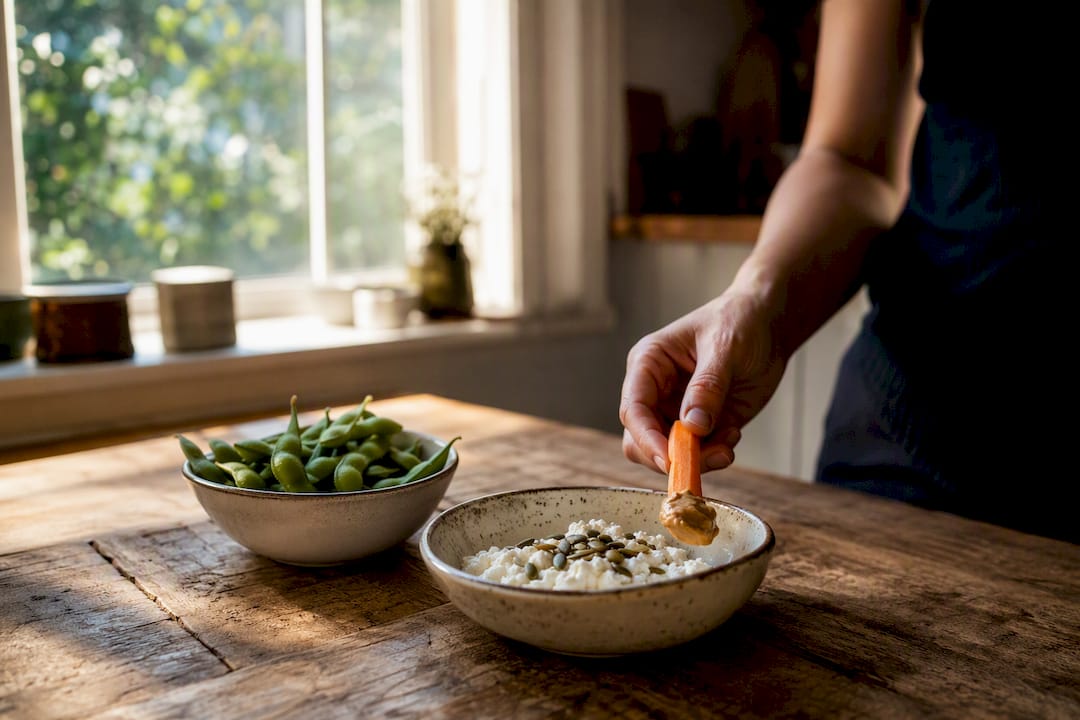
Snacks are where a lot of low-carb plans fall apart, usually because people default to crackers or fruit out of habit. Keep it simple: edamame pods, a small pot of cottage cheese, celery sticks with nut butter, or a handful of roasted pumpkin seeds. Our roundup of filling vegetarian protein meals has more combinations if you want variety across the week.
Five quick recipes for busy weeknights
None of these take longer than 30 minutes, and most take considerably less once you’ve made them once or twice.
- Tempeh scramble: crumble 100g tempeh into a hot pan with a splash of oil, add turmeric, smoked paprika, and a dash of tamari. Cook for 6 to 8 minutes until golden. Around 20g protein, minimal carbs.
- Cottage cheese protein salad: mix cottage cheese with diced cucumber, cherry tomatoes, chopped chives, and a squeeze of lemon. Ready in five minutes, no cooking required.
- Crustless egg muffins: whisk six eggs with chopped spinach and grated cheese, pour into a muffin tray, and bake at 180°C for 18 minutes. Batch-cook six at once and reheat through the week.
- Batch-roasted tofu and tempeh: cube 400g of each, toss in oil and spices, and roast at 200°C for 25 minutes. Store in the fridge and drop into salads, wraps, or stir-fries for the next four days.
- Edamame and seed bowl: steam edamame, toss with sesame oil, chilli flakes, and a scattering of pumpkin seeds. Eat warm or cold.
Pro Tip: Batch-roast a double portion of tofu or tempeh on a Sunday. Having a ready-made protein source in the fridge is often the difference between reaching for it and reaching for toast.
Pantry staples that make the week easier
A stocked kitchen removes most of the decision-making that derails a low carb high protein vegetarian diet halfway through the week. Keep these on hand:
- Tempeh, tofu (firm and silken), Greek yoghurt, cottage cheese, and eggs as your protein backbone
- A mix of seeds, hemp, chia, pumpkin, and a jar of nut butter for quick additions
- Cauliflower (fresh or frozen) for rice substitutes, plus courgette for spiralised “noodles”
- Leafy greens, peppers, and mushrooms as your default low-carb vegetables
When you’re reading labels, watch for added sugar in flavoured yoghurts and check that tofu or tempeh hasn’t been marinated in a syrup-based sauce. Our top protein foods guide has a fuller shopping checklist if you want to plan a whole week in one go.
What the evidence says (and where it doesn’t stretch)
Vegetarian diets can meet protein requirements when they include enough calories and enough variety, spanning pulses, soya, eggs, dairy, nuts and seeds rather than relying on one or two foods.
That’s the consistent message from dietetic guidance and from public health nutrition resources, both of which list the same core foods, pulses, soya, tofu, eggs, dairy, nuts, and seeds, as the backbone of an adequate vegetarian diet. Where it gets more specific for low-carb goals: practitioners often caution against relying exclusively on pulses, since they’ll quietly push your daily carbohydrate count up. Pairing a smaller portion of lentils or chickpeas with a concentrated protein such as Greek yoghurt, cottage cheese, or tofu keeps the fibre benefit while controlling carbs. Granavitalis’s own range of plant proteins and ancient grain mixes exists precisely for readers who want that concentrated boost without extra label-reading.
Iron, B12 and fibre: the gaps worth watching
Cutting carbs while eating vegetarian can accidentally narrow your nutrient intake if you’re not paying attention, and three nutrients come up more than any others.
Iron absorption from plant sources is lower than from meat, and a lower-carb approach that trims whole grains and some pulses can reduce iron intake further. Pairing iron-rich foods, lentils, tofu, seeds, spinach, with a source of vitamin C (peppers, citrus, tomatoes) improves absorption meaningfully.
Vitamin B12 doesn’t occur naturally in plant foods, full stop. Vegetarians who still eat eggs and dairy get some B12 from those sources, but many people find their intake falls short, particularly if egg and dairy portions are modest. A B12 supplement or fortified foods are worth considering here, and it’s a conversation worth having with a GP or dietitian rather than guessing.
Fibre is the nutrient most at risk when carbs get cut aggressively, since whole grains, beans, and some fruits are major fibre sources. The fix isn’t to avoid low-carb eating altogether, it’s to keep non-starchy vegetables, seeds, and a modest amount of pulses in the mix rather than eliminating them for the sake of a lower carb count. Leafy greens, broccoli, and chia seeds all deliver fibre without much carbohydrate cost.
Getting the protein-carb-fat balance right
Balancing macronutrients on this way of eating isn’t about hitting exact numbers every day, it’s about building habits that naturally land you in the right range most of the time.
Start each meal by asking what the protein source is before deciding on anything else. If you can’t name it, the meal probably needs adjusting. Once the protein is set, either eggs, Greek yoghurt, tofu, tempeh, or cottage cheese, build the rest of the plate around non-starchy vegetables. This single habit does more to control carb intake than counting grams ever will.
Fat shouldn’t be an afterthought either. Olive oil, nuts, seeds, and avocado provide the calories that keep meals satisfying, which matters because protein and vegetables alone can leave a meal feeling thin. A tablespoon of nut butter or a scattering of seeds over yoghurt or a salad adds both flavour and staying power.
Timing matters more than most low-carb guides admit. Spacing protein across three or four meals, rather than loading it all into dinner, supports better appetite control and muscle maintenance than a single large protein hit at the end of the day. If breakfast is your weak point, that’s the meal to fix first.
Benefits and risks worth knowing before you commit
A well-built low carb high protein vegetarian diet tends to support steadier energy levels through the day, since concentrated proteins and fats digest more slowly than refined carbohydrates and avoid the mid-afternoon slump that follows a bread-heavy lunch. Many people also find it easier to manage appetite and weight, simply because protein is more satiating gram for gram than carbohydrate.
The risks sit mostly in execution rather than the approach itself. Cutting carbs too aggressively while vegetarian can strip out fibre and micronutrients that were coming from whole grains and legumes, which is why the earlier point about keeping vegetables and some pulses in the mix matters. There’s also a real risk of monotony, eating the same three meals on rotation gets boring fast, and boredom is usually what causes people to abandon a way of eating rather than any flaw in the diet itself.
Anyone managing a health condition, particularly kidney issues where protein intake needs careful monitoring, should check with a GP or dietitian before making significant changes. For most healthy adults, though, this pattern is a sustainable way to eat, provided it’s built on variety rather than restriction for its own sake.
Meal planning that actually survives a busy week
The plans that fail are usually the ones built around perfect daily menus. The plans that work are built around a rotation of five or six meals you actually enjoy, prepped in batches.
Start with a weekly shop that covers your protein staples, tempeh, tofu, eggs, Greek yoghurt, cottage cheese, then commit one hour, typically a Sunday, to batch cooking. Roast a tray of tofu or tempeh, hard-boil half a dozen eggs, and portion out Greek yoghurt into containers with seeds already added. This one hour removes most of the friction that causes people to default to takeaway or toast on a Wednesday evening.
Keep a running list of three breakfasts, three lunches, and three dinners that you know work, then rotate through them rather than reinventing meals daily. Our full guide to high protein vegetarian eating has a longer planning framework if you want to build this out further. For seasonal variety without much extra effort, seasonal vegan menu ideas are a useful source of inspiration for swapping vegetables in and out as the year moves on.
A few honest commitments worth making this week
Pick two things: swap one carb-heavy breakfast for eggs or a yoghurt bowl, and batch-cook one protein source this weekend. Small, repeatable changes beat a perfect plan you abandon by Thursday. Our protein food guides are there when you want to go further.
— Jarrod
Simple boosts from Granavitalis for protein-focused meals
A jar of nut butter does more work than most people give it credit for. Stirred into Greek yoghurt, folded through overnight oats, or spread on celery, it adds concentrated protein and healthy fats without the carb load of bread or crackers. Granavitalis’s Raw Organic Pecan Butter is a straightforward way to lift the protein content of a snack or smoothie in seconds.

If variety matters to you, the Organic Nut & Seed Butter Selection Box lets you try several spreads across the week rather than committing to one jar. Plant protein powders and ancient grain mixes work similarly, a scoop stirred into yoghurt or folded into pancake batter boosts protein without adding much carbohydrate, which is useful on days when a meal falls short of target. Browse the range and pick one product to add to your next shop, it’s a small change that makes hitting your daily protein target noticeably easier.
Sources
- PubMed: soya protein evidence
- How easy is it to get enough protein if you follow a plant-based or vegetarian diet? - BBC Food
- Nutrition