
High protein vegetarian breakfast ideas that hit 20 to 30g
Aim for a substantial amount of protein at breakfast if you want to stay fuller for longer and stop the mid-morning snack raid. That’s the working target most dietitians point to, and you don’t need powders or processed “protein” bars to get there. A Greek yoghurt bowl with seeds, a tofu scramble on toast, two eggs with baked beans, or a bowl of protein porridge made with oats and milk provide a satisfying protein content, whether you eat eggs and dairy or skip them entirely.
Here’s a shortlist to act on this week featuring nutritious breakfast options with significant protein content:
- Greek yoghurt, berries, and mixed seeds
- Tofu scramble with wholegrain toast
- Two eggs, spinach, and baked beans on toast
- Overnight oats with milk, chia, and nut butter
- Cottage cheese with fruit and a scattering of walnuts
- Chickpea “omelette” with vegetables
- Protein smoothie with silken tofu and oats
- Egg muffins with beans and cheese
A British Journal of Nutrition study found that a higher-protein breakfast reduced hunger and kept people fuller for longer compared to a lower-protein breakfast, even while they were cutting calories. That’s the whole case for eating this way in one line: more protein at breakfast, less grazing by 11am.
Key Takeaways
Hitting 20 to 30g of protein at breakfast through whole foods like eggs, yoghurt, tofu, and pulses reliably improves fullness and reduces mid-morning hunger.
| Point | Details |
|---|---|
| Target 20 to 30g | Aim for this range at breakfast using eggs, yoghurt, tofu, or beans rather than processed protein products. |
| Plant proteins need more volume | Vegan breakfasts should skew toward 30g since plant proteins often need larger portions than animal sources. |
| Combine, don’t perfect | Pairing grains with legumes across the day covers amino acid gaps better than any single food. |
| Batch prep on Sundays | Hard-boil eggs, jar overnight oats, and bake egg muffins so weekday mornings need no cooking. |
| Boost with clean toppers | Granavitalis nut butters and plant-based add-ins help close small protein gaps in porridge, oats, or smoothies. |
Table of Contents
- What counts as a high protein vegetarian breakfast (and why the target matters)
- 12 high protein vegetarian breakfast options to build your week around
- Building your own high protein vegetarian breakfast
- Meal prep that keeps this sustainable on weekdays
- Nutrition notes: what the evidence actually supports
- Getting more protein out of plant-based food
- How your protein needs shift with age, sex, and activity
- Why we build breakfasts around whole foods, not shortcuts
- Three easy ways to add protein without changing your routine
- Sources
What counts as a high protein vegetarian breakfast (and why the target matters)
“High protein vegetarian breakfast” gets thrown around loosely, so it’s worth being precise. Nutritionists generally define it as a morning meal delivering at least 20g of protein from eggs, dairy, pulses, soya, nuts, or seeds, distinct from a standard breakfast that might offer 8 to 12g from toast and cereal alone. The gap between those two numbers is exactly why so many people feel hungry by mid-morning: they’re eating carbohydrate-heavy breakfasts and wondering why willpower keeps failing them at the biscuit tin.
Research supports that higher-protein breakfasts improve appetite regulation and certain hormonal responses linked to fullness, compared with lower-protein versions, according to a study in the American Journal of Clinical Nutrition. This isn’t about maximising protein at every meal. The British Dietetic Association advises spreading protein intake across the day rather than loading one meal, but breakfast is where most vegetarians and vegans fall shortest, so it’s the meal worth fixing first.
12 high protein vegetarian breakfast options to build your week around
These cover egg-based, dairy, pulse, tofu, and oat routes, with a vegan swap noted wherever the base recipe uses eggs or dairy.
- Greek yoghurt bowl with seeds and berries (18–22g). Layer plain Greek yoghurt with mixed berries, a tablespoon of chia or hemp seeds, and a few walnuts. Five minutes, zero cooking. Swap in a thick, protein-fortified soya yoghurt for a vegan version.
- Tofu scramble with wholegrain toast (15–18g). Crumble firm tofu into a pan with turmeric, black pepper, and spinach; fry for five minutes and serve on toast. Naturally vegan.
- Egg muffins with beans and cheese (18–22g). Whisk eggs with chopped vegetables, black beans, and grated cheese, then bake in a muffin tin for 18 to 20 minutes. Makes six at once, ready for the whole week.
- Protein pancakes with cottage cheese batter (20–24g). Blend cottage cheese, eggs, and oats into a batter, then cook like ordinary pancakes. Rich and filling without added sugar.
- Baked beans on wholegrain toast with a poached egg (24–28g). A classic combination that quietly delivers more protein than most people expect from tinned beans alone.
- Cottage cheese with fruit and nuts (18–20g). Cottage cheese has one of the best protein-to-calorie ratios of any dairy product; pair with pineapple or peaches and a spoon of mixed seeds.
- Protein smoothie with silken tofu and oats (22–28g). Blend silken tofu, oats, a banana, and plant milk. The tofu adds body and protein without any noticeable flavour.
- Chickpea “omelette” (14–16g). Whisk chickpea flour with water and spices into a batter, cook like a pancake. A reliable vegan alternative to a traditional omelette, and naturally egg-free.
- Overnight oats with Greek yoghurt and seeds (20–24g). Combine oats, Greek yoghurt, milk, and a tablespoon of seeds in a jar the night before. By morning, it’s ready and the texture has softened.
- Scrambled eggs with spinach and feta (18–20g). Add a handful of spinach and crumbled feta to scrambled eggs for extra protein and iron.
- Lentil and vegetable breakfast bowl (16–18g). Reheated cooked lentils with roasted vegetables and a poached egg or a spoon of tahini for a savoury, non-cereal start.
- Peanut butter and banana on rye with hemp seeds (14–17g). Not the highest number on this list, but the fastest, and hemp seeds push it well past standard toast and jam.
Building your own high protein vegetarian breakfast
Rather than memorising recipes, learn the combinations, and you can improvise indefinitely. Four templates cover almost everything:
- Eggs + dairy: two eggs plus a serving of Greek yoghurt or cheese comfortably clears 20g.
- Oats + Greek yoghurt + seeds: the oats bring fibre, the yoghurt brings the bulk of the protein, seeds top it up.
- Beans + toast + cheese: tinned beans are underrated, delivering 7 to 8g per half tin before you’ve added anything else.
- Tofu + grains + seeds: firm tofu scrambled with a grain base and a seed garnish, entirely plant-based.
Here’s the detail that trips people up: plant proteins often need a slightly bigger portion than animal proteins to do the same job. The BDA notes that plant sources frequently require closer to 30g per meal to match the response you’d get from around 20g of animal protein, because plant proteins tend to have a different amino acid profile. Practically, that means a vegan breakfast should skew toward the top of the 20 to 30g range rather than the bottom.
Pro Tip: Build every breakfast from four boxes: a protein base, a carbohydrate, something green or colourful, and a healthy fat. Tick all four and you’ll land near 20 to 30g without doing any maths.
Meal prep that keeps this sustainable on weekdays
None of this works if it demands fresh cooking every single morning. A single Sunday session fixes that.
- Hard-boil a batch of eggs. Six eggs, twelve minutes, done. NHS storage guidance suggests keeping cooked eggs refrigerated and using them within three to four days.
- Jar three or four portions of overnight oats. Different flavour combinations (berry, cocoa, cinnamon apple) stop the week feeling repetitive.
- Bake a tray of egg muffins. They freeze well and reheat from frozen in under two minutes.
- Pre-portion nut butter and seeds into small pots. Grabbing a ready-measured topper is faster than reaching for a jar and a spoon at 7am.
Reheat egg-based dishes gently, either in a microwave with a splash of water or briefly in a warm oven, to avoid rubbery results. Pack yoghurt bowls and oats in a container with the wet and dry elements separated if you’re eating on a commute.
Nutrition notes: what the evidence actually supports
Increased protein at breakfast produces “an initial and sustained feeling of fullness” during periods of energy restriction, according to research published in the British Journal of Nutrition, which compared roughly 28g against 17g at the same meal.
That’s a meaningful gap, not a marginal one. NHS guidance points vegetarians toward beans, pulses, eggs, tofu, and fortified dairy alternatives as everyday protein sources, alongside wholegrains and vegetables. One caution worth repeating: the British Heart Foundation flags that many processed “high-protein” vegetarian convenience foods carry more salt and saturated fat than whole-food equivalents. A tin of beans beats a processed veggie sausage most mornings.
Getting more protein out of plant-based food
Plant proteins aren’t absorbed as efficiently as animal proteins on their own, largely because foods like beans, grains, and vegetables often contain fibre and compounds that slow digestion of the protein alongside it. You can work around this with a few habits rather than any single fix.
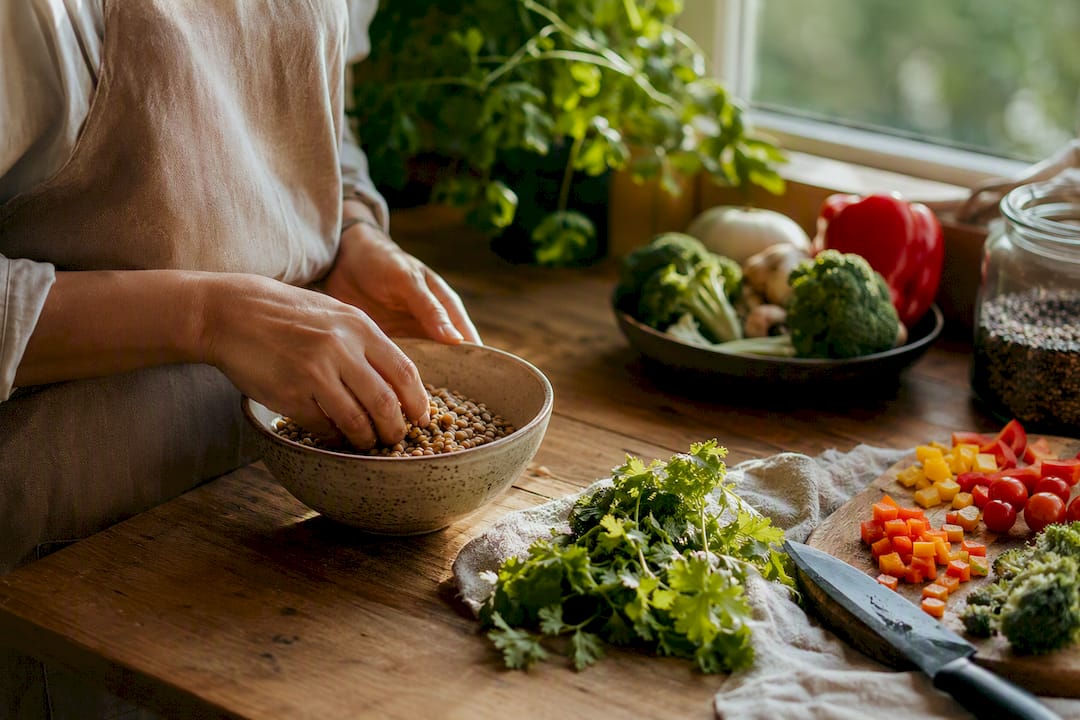
Combine complementary proteins. Grains and legumes have different amino acid gaps, and eating them together, beans on toast, rice and lentils, hummus on pitta, fills those gaps without any planning beyond the plate itself. You don’t need to eat them in the same bite, or even the same meal; matching them across the day works fine, which is consistent with the point that total daily protein spread matters more than perfect combinations at every sitting.
Soak and cook pulses properly. Dried beans and lentils contain compounds that interfere with digestion when undercooked. Soaking overnight and cooking thoroughly reduces this and makes the protein more available.
Add vitamin C-rich foods alongside iron-containing plant proteins. Peppers, citrus, or tomatoes alongside lentils or tofu help with iron absorption, which matters for vegetarians relying on plant sources more heavily.
Don’t skip the fat. A little olive oil, avocado, or nut butter alongside a plant-protein meal slows gastric emptying just enough to improve how satisfying the meal feels, and some plant compounds are fat-soluble.
Vary your sources across the week. Rotating tofu, lentils, chickpeas, seeds, and grains, rather than relying on one, tends to give a broader amino acid spread over time than any single plant food can offer alone.
How your protein needs shift with age, sex, and activity
The 20 to 30g breakfast target is a reasonable default, but it isn’t universal. A sedentary adult in their 50s and a woman training for a half marathon are not the same case, even if both are vegetarian.
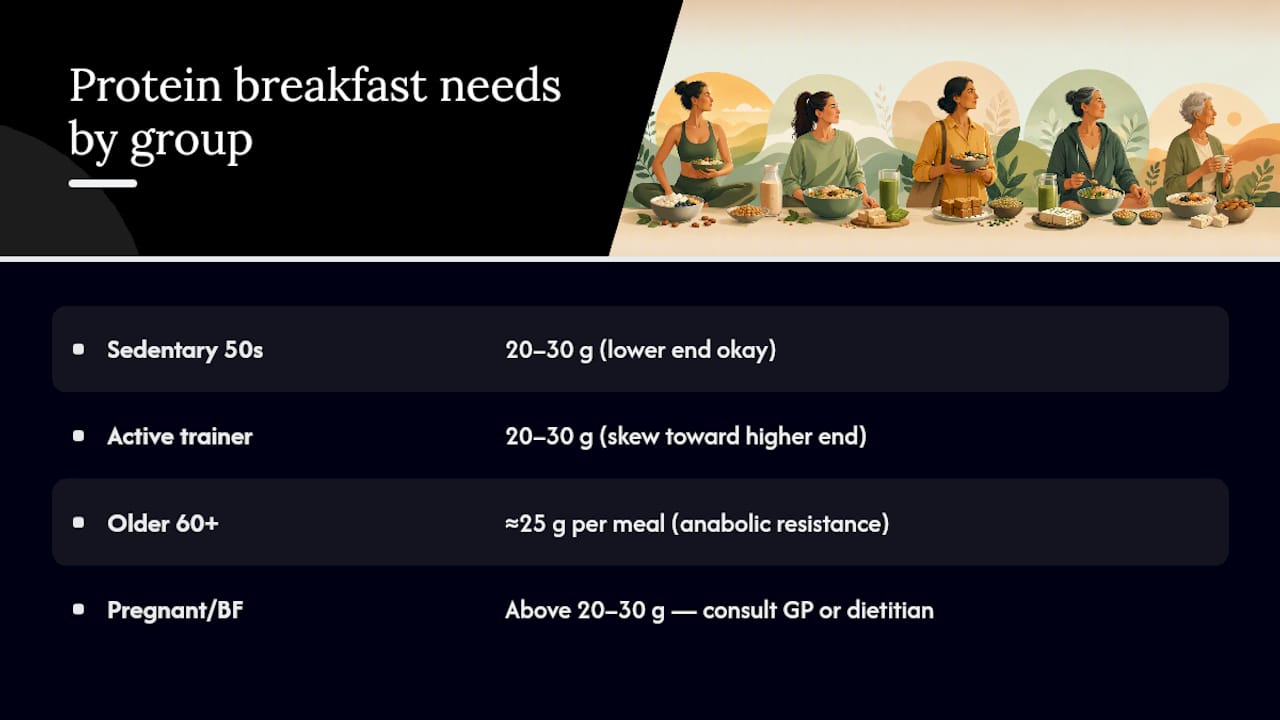
Protein needs generally rise with activity level. Someone doing regular resistance training or endurance exercise needs more total daily protein to support repair and recovery, which usually means every meal, including breakfast, should skew toward the higher end of the range rather than the lower.
Age matters too. Adults over 60 tend to need proportionally more protein per meal to trigger the same muscle-maintenance response younger adults get from a smaller amount, a phenomenon sometimes called anabolic resistance. That makes a 25g breakfast more useful, not less, as you get older, precisely when appetite often starts to shrink.
Sex differences are smaller than most people assume once you adjust for body size and activity, but pregnancy and breastfeeding both raise protein requirements meaningfully, and that’s a conversation worth having with a GP or dietitian rather than guessing from a blog post. For most other adults, the 20 to 30g breakfast window, combined with the BDA’s advice to spread protein across the day rather than front-loading one meal, remains the sensible baseline.
Why we build breakfasts around whole foods, not shortcuts
, and the pattern I keep coming back to is this: the best high-protein vegetarian breakfasts are almost always the least complicated ones. Eggs, yoghurt, oats, seeds, tofu. Granavitalis exists because we think ancient grains and clean plant proteins do that job better than another shaker bottle of isolate, and a spoon of proper nut butter stirred into porridge often solves the protein gap faster than anything branded “performance.”
Three easy ways to add protein without changing your routine
If your breakfast is already sorted but sitting a few grams short of 20, the fix is usually a topping, not a rebuild.
Stirring a spoonful of raw organic pecan butter into porridge or overnight oats adds protein and healthy fats in one movement, no extra prep required. If variety is what keeps a routine going, the organic nut and seed butter selection box gives you a rotating topper for oats, yoghurt, or toast so the same breakfast never feels repetitive. And for mornings when a smoothie is the plan, a spoon of a functional cacao-flavoured blend stirred into oats or a shake adds flavour alongside its other benefits. None of these replace whole-food protein, but they close the gap on the mornings when you’re a few grams short. Have a look through the full range and pick one that fits tomorrow’s breakfast, not next month’s plan.