
Porridge nutrition: ancient grains for plant-based breakfasts
Porridge has a reputation problem. Many people still picture a watery, flavourless bowl of oats with little nutritional merit. The reality is far more interesting. A standard 40g dry serving of oat porridge delivers 150 calories, 5g protein, 4g of fibre, and a remarkable spread of minerals. Add ancient grains to the picture and you have one of the most nutrient-dense breakfasts available to plant-based eaters across Europe. This article breaks down exactly what is in your bowl, why it matters, and how to make every morning count.
Table of Contents
- What is porridge? Grains, types, and traditions
- Nutritional breakdown: Macros, fibre, vitamins, and minerals
- Why fibre and beta-glucan matter: Cholesterol, digestion, and satiety
- Comparing oats, barley, and ancient grains: Which is best for you?
- Plant-based porridge: Best practices for a nutritious bowl
- Supercharge your porridge with nutritious toppings
- Frequently asked questions
Key Takeaways
| Point | Details |
|---|---|
| Nutrient-dense options | Ancient grain porridges supply diverse minerals, protein and antioxidants compared to traditional cereal grains. |
| Heart health support | Oats and barley porridge are rich in beta-glucan, proven to reduce cholesterol and support healthy blood sugar. |
| Plant-based friendly | Plant-based porridge is naturally low in calories, can be easily boosted for protein, and fits vegan diets. |
| Mix for best results | Combining grains like oats, barley, and quinoa maximises both protein and fibre intake. |
| Simple upgrades | Adding nut butters and berries turns porridge into a high-energy, satisfying breakfast. |
What is porridge? Grains, types, and traditions
At its simplest, porridge is any grain cooked in liquid until soft and thick. It is one of the oldest prepared foods in human history, eaten across Scandinavia, Scotland, Eastern Europe, and beyond for thousands of years. The grain you choose, however, changes everything about the nutritional outcome.
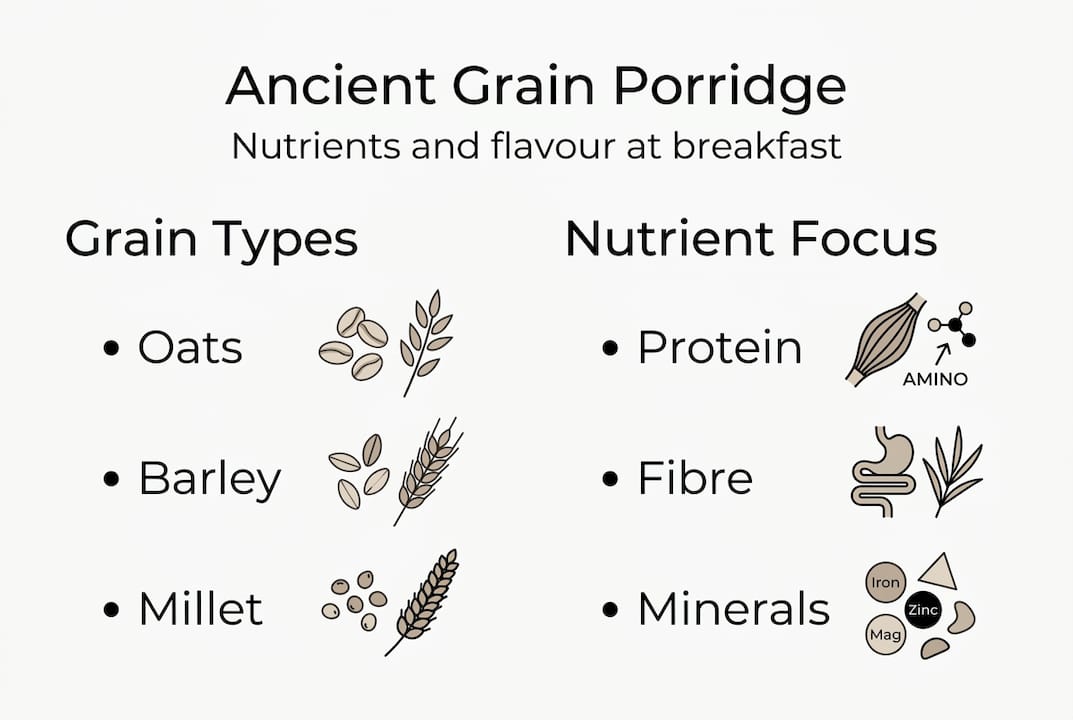
Modern porridge is most commonly made from rolled oats, but the world of porridge grains is far broader. Ancient grains like einkorn, emmer, barley, quinoa, and millet offer higher protein, minerals, and antioxidants than their modern, industrially hybridised counterparts. These grains have remained largely unchanged for centuries, which is precisely why they retain such nutritional integrity.
For plant-based eaters in Europe, the most relevant porridge grains include:
- Oats – the classic choice, rich in soluble fibre and beta-glucan
- Barley – higher total fibre than oats, with a mild, nutty flavour
- Einkorn – an ancient wheat with elevated protein and antioxidant content
- Emmer – another heritage wheat, dense in minerals and complex carbohydrates
- Quinoa – a complete protein source and naturally gluten-free
- Millet – light, alkaline-forming, and easy to digest
If you are curious about moving beyond the standard bowl, exploring porridge alternatives can open up a whole new range of textures and nutrients. For a deeper look at where these grains come from, understanding ancient grains is a great place to start.
Nutritional breakdown: Macros, fibre, vitamins, and minerals
Knowing what grains can be used, let us look at the actual nutritional content you will find in your bowl. The numbers are more impressive than most people expect.

A standard 40g dry serving of oat porridge provides 150 kcal, 5g protein, 27g carbs, 4g fibre, and 3g fat, along with 64% of your daily value for manganese and 17% for phosphorus. These are not trivial amounts for a single breakfast food.
When you bring ancient grains into the comparison, the picture becomes even richer. Quinoa delivers 4g protein per half cup cooked, einkorn is notably high in protein and antioxidants, and barley surpasses oats for total fibre content. Here is how the main options compare:
| Grain | Protein (per 40g dry) | Fibre (per 40g dry) | Key micronutrient |
|---|---|---|---|
| Oats | 5g | 4g | Manganese, phosphorus |
| Barley | 4.5g | 5.5g | Selenium, magnesium |
| Quinoa | 6g | 3g | Iron, all essential amino acids |
| Einkorn | 6.5g | 3.5g | Zinc, lutein, antioxidants |
| Millet | 4g | 3g | Magnesium, B vitamins |
Worth noting: Manganese supports bone formation and energy metabolism. Phosphorus is essential for cell repair. These are not bonus nutrients. They are foundational to how your body functions every single day.
For those focused on building a stronger morning, high-protein porridge grains offers a practical guide to the best options. You can also explore a broader nutrient-rich porridge approach to maximise what your bowl delivers.
Why fibre and beta-glucan matter: Cholesterol, digestion, and satiety
Fibre is the headline nutrient in porridge, but not all fibre works the same way. Beta-glucan is a specific type of soluble fibre found in oats and barley, and it behaves differently from the insoluble fibre in, say, wheat bran.
When beta-glucan dissolves in water, it forms a thick gel in your digestive tract. This gel slows digestion, blunts blood sugar spikes, and binds to cholesterol in the gut before it can be absorbed. 3g of beta-glucan daily from oats or barley can reduce LDL cholesterol by 5 to 10%. That is a meaningful, clinically recognised effect from a breakfast food.
Barley porridge contains more total fibre than oats and is a particularly strong source of beta-glucan. If heart health is a priority for you, rotating barley into your porridge rotation is a simple, evidence-backed move.
To get the most from fibre in your bowl, follow these steps:
- Use whole or minimally processed grains such as steel-cut oats or pot barley rather than instant varieties
- Cook with water or unsweetened plant milk to avoid diluting the fibre effect with excess sugar
- Eat your porridge slowly and allow the gel to form fully before adding more liquid
- Pair with a source of healthy fat such as flaxseed or nut butter to further slow digestion
Pro Tip: If you want to hit 3g of beta-glucan in one sitting, a 40g dry serving of oats gets you most of the way there. Add a tablespoon of barley flakes to close the gap without changing the flavour significantly.
For a full picture of what plant-based porridge can do for your health, plant-based porridge benefits covers the evidence in practical terms.
Comparing oats, barley, and ancient grains: Which is best for you?
With fibre’s importance covered, it is time to compare your main options so you can choose what fits your needs. There is no single best grain. The right choice depends on your health goals.
Oats are superior for soluble fibre and cholesterol management, while barley and ancient grains lead on total fibre, protein diversity, and mineral density. Quinoa stands apart as the only grain that provides all nine essential amino acids, making it especially valuable for plant-based eaters who need complete protein sources.
Less-processed forms like steel-cut oats and whole barley have a lower glycaemic index than instant or rolled varieties, meaning they release energy more steadily. This matters if you are fuelling a long morning of work or training.
| Goal | Best grain choice |
|---|---|
| Lower LDL cholesterol | Oats or barley |
| Complete plant protein | Quinoa or einkorn |
| Sustained energy | Steel-cut oats or whole barley |
| Gluten-free diet | Quinoa or certified gluten-free oats |
| Maximum mineral density | Einkorn or emmer |
Key considerations when choosing:
- Mixing grains gives you the broadest nutritional profile. Try two thirds oats and one third quinoa flakes for a protein and fibre boost
- Gluten sensitivity rules out einkorn and emmer, which are ancient wheats. Quinoa and millet are safe alternatives
- Energy focus points toward less-processed grains with a lower glycaemic index
For a thorough comparison, ancient vs modern grains explains the key differences. You can also discover 7 nutritious ancient grains worth adding to your rotation, or read specifically about ancient grain porridge nutrition for a focused breakdown.
Plant-based porridge: Best practices for a nutritious bowl
You have seen how grains differ. Now it is time to put it into practice. The liquid you choose, the toppings you add, and the sweeteners you avoid all shape the final nutritional value of your bowl.
Plant-based porridge made with water or plant milk sits at around 150 kcal per serving, keeps you full for hours, and is ideal for weight management. Adding nuts and seeds pushes the protein content higher without compromising the wholefood character of the meal.
Choosing your liquid:
- Water keeps calories low and lets the grain flavour come through cleanly
- Oat milk adds a natural sweetness and a small amount of extra beta-glucan
- Almond milk is lower in calories and adds a subtle nuttiness
- Soy milk contributes the most protein of any plant milk option
Boosting protein without compromise:
- Stir in a tablespoon of hemp seeds for 3g of complete protein per serving
- Add a spoonful of almond or pecan butter for healthy fats and extra protein
- Mix in a half scoop of a clean plant-based protein powder after cooking
- Top with pumpkin seeds, which deliver 5g of protein per 30g serving
For sweetness, reach for fresh or frozen berries, half a mashed banana, or a pinch of cinnamon. These add flavour and micronutrients without the blood sugar spike that comes from syrups or refined sugar.
Pro Tip: Cook your porridge in oat milk and finish with a spoonful of nut butter stirred through while still hot. The fat emulsifies into the grain and creates a naturally creamy texture with no added cream or sugar needed.
For step-by-step guidance, making healthy porridge walks you through the process. If protein is your priority, add protein to porridge covers every practical method.
Supercharge your porridge with nutritious toppings
Your grain choice sets the foundation, but the right toppings are where your bowl truly comes alive. At Granavitalis, we have sourced the kind of additions that do real nutritional work, not just add flavour.
A spoonful of raw organic pecan butter stirred into warm porridge adds healthy monounsaturated fats, a rich depth of flavour, and a protein boost that keeps you going well past mid-morning. If you want variety across the week, the nut and seed butter selection box gives you a range of options to rotate through, each one cold-pressed and free from unnecessary additives. For colour, antioxidants, and natural sweetness, scatter a handful of our organic superberry mix over the top. Goji berries, cranberries, blackberries, and physalis together turn a simple bowl into something genuinely exciting and nutritionally complete.
Frequently asked questions
How many calories and protein are in a bowl of oat porridge?
A 40g dry serving of oat porridge delivers around 150 calories and 5g of protein, making it a solid foundation for a plant-based breakfast.
Which grain gives the most fibre in porridge?
Barley porridge supplies more total fibre than oats, with approximately 15.6g of fibre per 100g dry weight, making it an excellent choice for digestive health.
Does porridge help lower cholesterol?
Yes. 3g of beta-glucan daily from oats or barley porridge can reduce LDL cholesterol by 5 to 10%, a benefit recognised by European food safety authorities.
Is porridge suitable for gluten-free diets?
Quinoa and certified gluten-free oats are safe options, but always check that they are processed in dedicated gluten-free facilities to avoid cross-contamination.
How can I make my porridge higher in protein?
Stir in nuts, seeds, or plant protein after cooking, or swap a portion of oats for quinoa flakes to significantly increase the protein content of your bowl.