
High-protein dairy-free breakfast: 8 quick recipes
Yes, you can regularly hit 20 to 30g of protein at breakfast without a drop of dairy. The trick is combining a dense plant protein (tofu, soya, mycoprotein) or an egg with nuts, seeds, or wholegrains, rather than relying on one food to do all the work. The Nutrition Society puts the UK Reference Nutrient Intake at 0.75g per kilogram of body weight daily for sedentary adults, but active people commonly aim higher, around 1.2 to 2.0g/kg. For an 80kg active adult, that lands on roughly 20 to 30g per meal, spread across the day.
Key Takeaways
Hitting 20 to 30g of protein at a strictly dairy-free breakfast is entirely achievable by pairing one dense protein source with nuts, seeds, or wholegrains.
| Point | Details |
|---|---|
| Target 20 to 30g per meal | This range supports muscle protein synthesis, according to BASES guidance. |
| Combine, don’t rely on one food | Pair tofu, soya, or eggs with nuts, seeds, or wholegrains to reach the target. |
| Check fortification | Choose calcium, iodine, and B12-fortified plant milks to cover nutrients lost from dairy. |
| Batch-prep for busy mornings | Overnight oats and chickpea frittatas hold their protein content for several days. |
| Granavitalis nut butters help | A tablespoon of pecan butter or a scoop of plant protein closes small protein gaps fast. |
Table of Contents
- 8 dairy-free, high-protein breakfast ideas
- How to build your own 20 to 30g dairy-free breakfast
- Key dairy-free protein ingredients and how much they give you
- Make-ahead and 10-minute options for busy mornings
- What the evidence says about protein quality and timing
- Sources
8 dairy-free, high-protein breakfast ideas
Each of these hits a meaningful protein number without a splash of milk, yogurt, or cheese in sight, with plenty of inspiration for seed-based recipes available in Seed-Based Meal Ideas for Every Meal of the Day. Protein figures are approximate per serving.
-
Overnight protein oats. 40g oats, 200ml soya drink, one scoop plant protein powder, one tablespoon chia seeds. Around 28 to 32g protein. Best for: make-ahead. Prep is two minutes the night before, and the oats soften into a spoonable pudding by morning.
-
Savoury tofu scramble. 150g firm tofu crumbled and pan-fried with turmeric, spinach, and nutritional yeast. Around 18 to 20g protein. Best for: quick weekday mornings. Ten minutes, one pan, and it tastes far more like scrambled egg than most people expect.
-
Smoked salmon and avocado on wholegrain toast. Two slices wholegrain bread, 80g smoked salmon, half an avocado. Around 22g protein. Best for: post-workout. The omega-3s alongside the protein make this a genuinely useful recovery plate.
-
High-protein pancakes with plant-protein flour. Batter made with oat flour, a scoop of pea or soya protein, and mashed banana. Around 24g protein per stack. Best for: kid-friendly mornings. Nobody at the table clocks that it’s a protein-forward breakfast.
-
Banana protein smoothie with soya and nut butter. 250ml soya drink, one banana, one scoop plant protein, one tablespoon peanut butter. Around 30 to 35g protein. Best for: on-the-go. Blend it the night before and it holds up fine in the fridge.
-
Baked chickpea shakshuka-style bowl. 200g chickpeas simmered in tomato sauce with cumin and paprika, topped with an optional egg. Around 16 to 22g protein depending on the egg. Best for: weekend batch cooking, since it reheats well for several days.
-
Protein-packed breakfast burrito. Wholegrain wrap filled with 100g black beans, 60g cooked quinoa, and salsa. Around 20g protein. Best for: quick assembly if the beans and quinoa are pre-cooked from the night before.
-
No-bake protein bites. Oats, one scoop plant protein, almond butter, and pumpkin seeds rolled into balls. Around 8 to 10g protein per two bites. Best for: a top-up alongside a smaller breakfast rather than a stand-alone meal.
Pro Tip: Blending a spoonful of silken tofu into pancake or smoothie batter adds 3 to 4g of protein and a creamier texture, with almost no flavour change.
For more formulations built around ancient grains, Granavitalis has a separate guide worth bookmarking.
How to build your own 20 to 30g dairy-free breakfast
The BASES expert statement recommends roughly 20 to 30g of protein per meal to properly trigger muscle protein synthesis, and spreading that intake across the day works better than loading it all into one sitting. This lines up with research from the University of Stirling showing muscle stays responsive to protein for at least 24 hours after exercise, so a steady rhythm of meals beats one giant protein hit.
Three sample combos, with the maths worked out:
- 200ml soya drink (7g) + 2 tbsp peanut butter (8g) + 40g oats (6 to 8g) = roughly 21 to 23g.
- 150g tofu (12g) + 30g mixed nuts (6g) + one slice wholegrain toast (3g) = roughly 21g.
- One scoop plant protein powder (20g) + 250ml soya drink (7g) + banana = roughly 27g.
Pick one dense protein source first (tofu, soya, mycoprotein, or eggs if you eat them), then pair it with nuts, seeds, or wholegrains. If you’re short, a small scoop of plant protein powder closes the gap fast.
Key dairy-free protein ingredients and how much they give you
Building a breakfast around real numbers beats guessing. This is the shortlist worth memorising.
| Ingredient (portion) | Protein per portion |
|---|---|
| Soya drink, 200ml | ~7g |
| Firm tofu, 100g | ~8g |
| Cooked lentils or beans, 100g | 8g |
| Nut butter, 30g | ~7g |
| Oats, 40g | ~5 to 6g |
| Egg, 1 medium | ~6g |
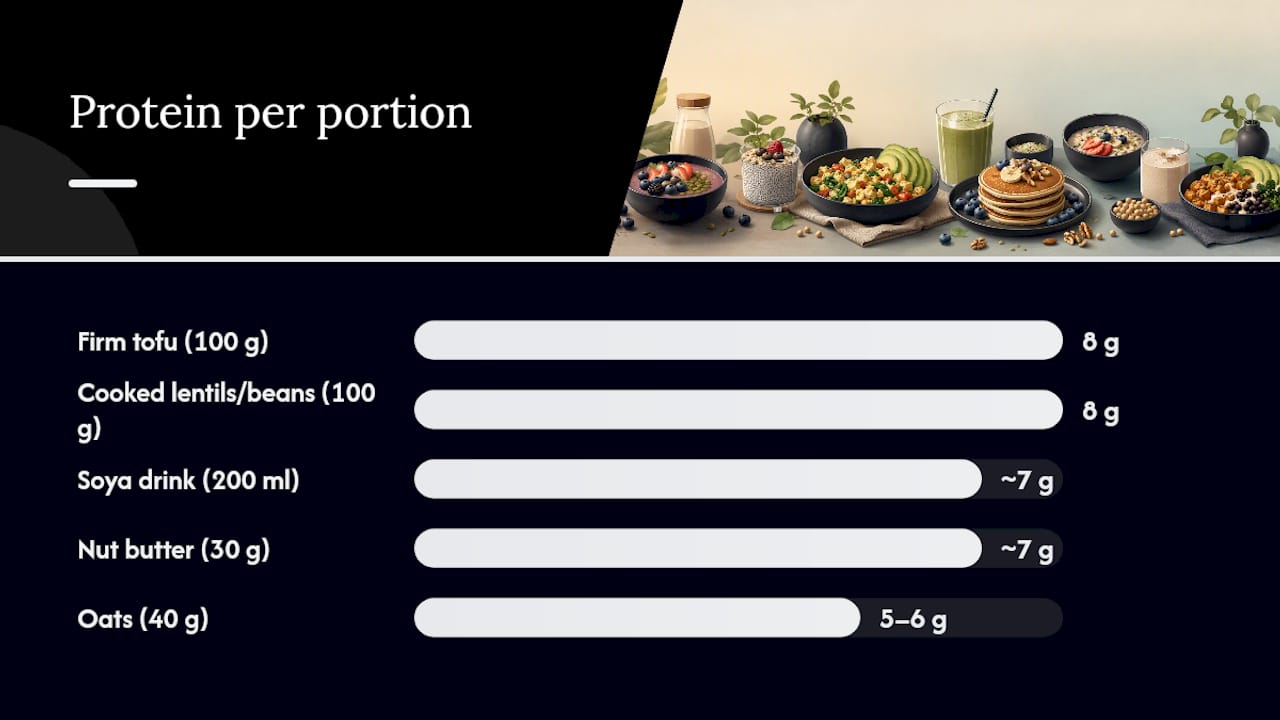
These figures come from the British Heart Foundation’s protein guidance, which also flags that combining two or three of these sources gets you to a proper breakfast total fast, rather than relying on one bulk ingredient.
Not all soya drinks or oat milks are fortified the same way. Check the label for added calcium, iodine, and B12, since clinical dietetic guidance recommends fortified versions specifically to cover the gaps left by cutting dairy.
Pro Tip: Two plant milks can sit side by side with wildly different micronutrient profiles. Always check for “calcium-fortified” on the label, not just “unsweetened”.
Make-ahead and 10-minute options for busy mornings
Some mornings don’t allow for a pan and a chopping board. These hold up without dairy and without much effort.
- Overnight oats with soya drink and nut butter, prepped the night before, roughly 25g protein.
- Pre-baked chickpea frittata squares, made in batches on a Sunday, roughly 18g protein per slice.
- Protein porridge jars with oats, chia, and plant protein powder, stored in the fridge for up to three days.
- Ten-minute silken tofu scramble, or a quick smoothie with plant protein powder and nut butter.
- Beans on wholegrain toast, a genuinely underrated ten-minute option that clears 15g protein easily.
Reheat gently and stir in extra liquid if a jar has thickened too much overnight. Tofu scrambles lose their texture in a microwave, so a quick pan reheat works far better.
What the evidence says about protein quality and timing
Most plant proteins are incomplete on their own, missing one or more essential amino acids in meaningful quantities. Soya, quinoa, and mycoprotein are the exceptions, since they carry a full amino acid profile close to that of animal protein, according to guidance from the Royal Marsden. Pairing grains with pulses, or seeds with legumes, covers the gap for everything else.
Per-meal protein intake of roughly 20 to 30g is what most expert bodies point to for stimulating muscle repair, and spreading that across three or four meals a day works better than concentrating it into one.
Cutting dairy removes a reliable source of calcium, iodine, and B12, so Royal Marsden guidance recommends fortified plant milks or a varied enough diet to cover those nutrients elsewhere. The British Heart Foundation also points out that whole-food protein sources beat heavily processed “high-protein” products for satiety and for keeping salt and saturated fat down.
An editor’s take on protein hype
Granavitalis has spent years sourcing ancient grains and nut butters, and the pattern is consistent: whole ingredients combined thoughtfully beat any single “miracle” powder. Read more from our team on the blog.
Where Granavitalis fits into your morning
Stirring one tablespoon of Raw Organic Pecan Butter into oats adds around 3g of protein plus a solid hit of healthy fats, without a hint of dairy. A scoop of plant protein blended into a morning smoothie can close the rest of the gap in seconds. If you like experimenting with flavours across the week, the Organic Nut & Seed Butter Selection Box gives you several options to rotate through without committing to one jar. Browse the pecan butter now and see how it fits into tomorrow’s breakfast.
Sources
- Nutrition Society — protein information
- Royal United Hospitals — Vegetarian and vegan diets (clinical guidance)
Check fortified alternatives and speak to a dietitian if you have a specific health condition affecting protein needs.
This article is general information, not a substitute for advice from a qualified doctor. Consult a qualified healthcare professional about your own circumstances before acting on anything here.