
High-protein gluten-free and dairy-free breakfasts
Eight breakfasts that reliably deliver a gluten-free, dairy-free high-protein breakfast of 20–30 g protein per serving, ready to make now:
- Tofu scramble with spinach and hemp hearts — 200 g firm tofu plus 3 tbsp hemp hearts; scrambles in 8 minutes, batch-cooks for three days
- Smoked salmon and egg white omelette — two whole eggs plus 100 g smoked salmon; grab-and-go in a wrap made with a certified gluten-free tortilla
- Tempeh and black bean hash (~26 g) — 100 g tempeh delivers around 20 g protein before the beans even count; batch-fry a full pan on Sunday
- Chia and hemp pudding with pea protein — 3 tbsp chia, 3 tbsp hemp hearts, one scoop pea protein in fortified soya milk; assemble the night before
- Almond-flour protein pancakes (~21 g) — almond flour plus one scoop soy protein and two eggs; freeze a stack of eight for the week
- Tinned tuna and avocado rice bowl (~30 g) — 150 g tuna in spring water over cooked brown rice with edamame; cold-prep the night before
- Egg and chickpea flour baked bites — six mini bites freeze well and reheat in three minutes
- Pea protein smoothie with almond butter (~25 g) — one scoop pea protein, 2 tbsp almond butter, 300 ml fortified oat milk; truly portable
Every option above is free from gluten and dairy. Most take under 15 minutes on a weekday, and several work as batch-cook staples you pull from the fridge or freezer all week.
Key takeaways
A gluten-free, dairy-free breakfast can reliably deliver 20–30 g of protein when you stack a whole-food protein base with a booster and a seed or nut-butter finish.
| Point | Details |
|---|---|
| Stack three protein layers | Base (tofu, eggs, tempeh) plus booster (pea protein, edamame) plus finish (hemp hearts, nut butter) reaches 25–30 g. |
| Check labels carefully | Look for “certified gluten-free” and calcium ≥ 120 mg per 100 ml on plant milks; many free-from products are low in protein. |
| Batch-cook twice a week | A Sunday bake session (45 minutes) covers five sit-down breakfasts; four chia jars cover portable mornings. |
| Prioritise whole-food proteins | Tofu (16.5 g per 100 g), tempeh (20 g per 100 g) and edamame (16 g per 120 g) outperform most processed free-from alternatives on protein density. |
| Granavitalis as your ingredient base | Pecan butter, seed butters and ancient-grain flours from Granavitalis slot directly into the pancake, muffin and smoothie builds above. |
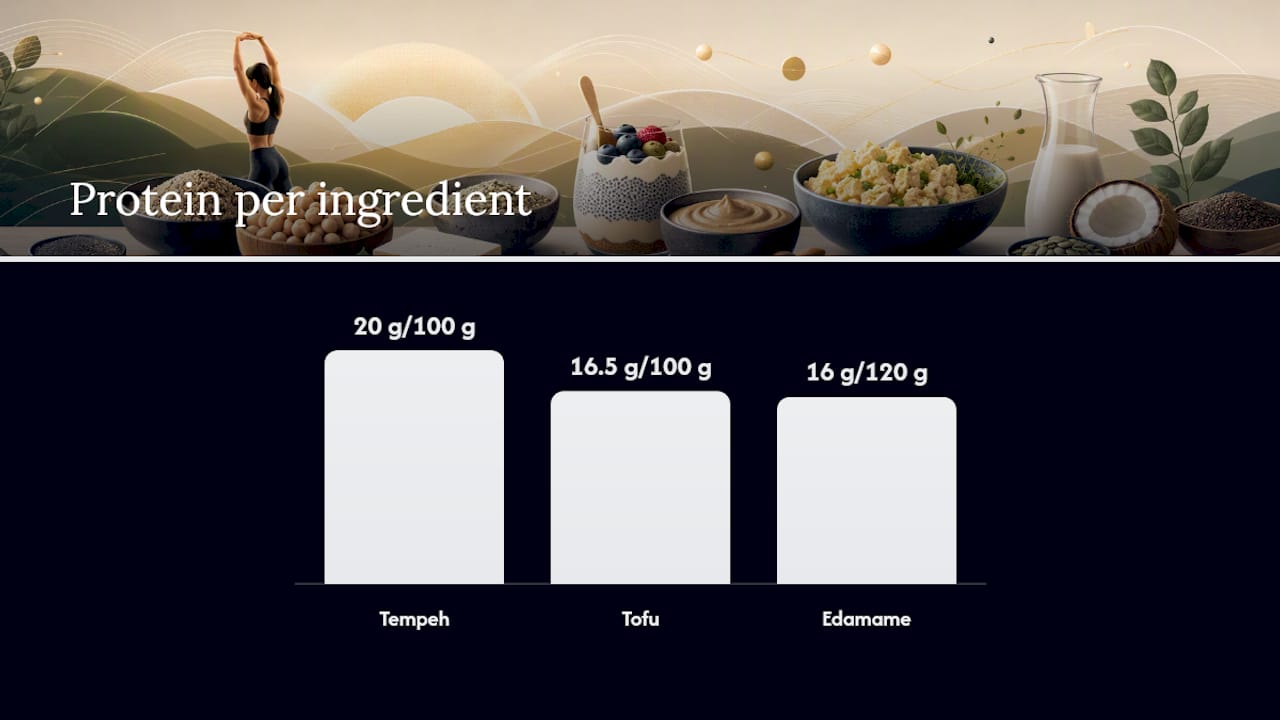
Table of Contents
- Why does a high-protein breakfast actually matter?
- What should you stock for a UK-friendly high-protein pantry?
- High-protein savoury breakfasts you can make in minutes
- High-protein sweet breakfasts and portable bakes
- How do you reliably hit 20–30 g protein at breakfast?
- Making GF/DF high-protein breakfasts work every day
- Granavitalis makes high-protein GF/DF breakfasts easier
- Sources
Why does a high-protein breakfast actually matter?
Protein at breakfast does three things that matter: it slows gastric emptying (keeping you fuller longer), supports muscle protein synthesis after an overnight fast, and helps stabilise blood glucose compared with a carbohydrate-heavy start. The practical upshot is fewer mid-morning cravings and steadier energy through to lunch.
A realistic target for most active adults is 20–30 g of protein at breakfast. The British Nutrition Foundation notes that plant proteins such as beans, lentils, chickpeas and nuts each contribute meaningfully to daily intake, and that combining complementary sources across the day covers all essential amino acids. You do not need to engineer a perfect amino acid profile at every single meal — but stacking two or three protein sources at breakfast is the fastest way to hit 25 g without relying on a single large portion of any one food.
A quick worked example: 100 g firm tofu (16.5 g protein) plus 3 tbsp hemp hearts (~10 g) already puts you at 26.5 g before you add a handful of edamame or a slice of smoked salmon. That is the stacking principle in practice.
What should you stock for a UK-friendly high-protein pantry?
Getting the pantry right removes the daily decision fatigue. These are the staples worth keeping in rotation.
Core high-protein ingredients
- Tofu (firm or extra-firm): 100 g ≈ 16.5 g protein; scrambles, bakes, egg-bite fillers
- Tempeh: 100 g ≈ 20 g protein; slice and pan-fry for hashes or crumble into scrambles
- Edamame (frozen or canned): 120 g ≈ 16 g protein; stir into bowls or blend into dips
- Eggs: two large eggs ≈ 12 g; the quickest single-ingredient protein base
- Tinned tuna or salmon: 150 g drained ≈ 25–30 g; no cooking required
- Canned pulses (chickpeas, black beans, lentils): 100 g drained ≈ 7–9 g; bulk out any savoury build
- Nut and seed butters (almond, peanut, sunflower seed): 2 tbsp ≈ 6–8 g; stir into smoothies or porridge
- Hemp hearts: 3 tbsp ≈ 10 g; sprinkle on anything
- Pea or soy protein powder: one scoop ≈ 20–25 g; the fastest single booster
- Pumpkin, flax and chia seeds: per University Hospitals Sussex NHS guidance, seeds such as pumpkin and flax contribute roughly 6.5 g protein per 25 g serving
Fortified dairy alternatives to prefer
The NHS recommends fortified dairy alternatives — specifically fortified soya, oat and pea drinks — for calcium and vitamin B12 when you are cutting out dairy. Look for products that list at least 120 mg calcium per 100 ml and added B12 on the label. Unsweetened fortified soya milk tends to be the highest in protein among plant milks (around 3.3 g per 100 ml), which makes it the better base for porridge and smoothies when protein is the goal.
UK label-checking checklist
| What to look for | Why it matters |
|---|---|
| “Certified gluten-free” symbol | Confirms production controls that prevent cross-contamination, not just a recipe claim |
| Calcium ≥ 120 mg per 100 ml on plant milks | Matches the fortification level of cow’s milk |
| Vitamin B12 listed in ingredients or nutrition panel | Critical for those avoiding all animal products |
| Protein per serving ≥ 5 g | Many “free-from” products are low in protein; check the panel, not the front-of-pack claim |
| “May contain gluten” or shared-facility warnings | Relevant for those with coeliac disease; choose a certified product instead |
University Hospitals Sussex NHS explicitly warns that many vegan-labelled alternatives are often low in protein, so reading the nutrition panel rather than trusting front-of-pack branding is non-negotiable.
Quick swaps:
- Dairy yoghurt → silken tofu blended with a squeeze of lemon, or fortified soya yoghurt
- Plain flour → almond flour or chickpea flour (both add protein)
- Cream in baked egg dishes → unsweetened full-fat coconut milk (adds structure without a strong coconut flavour when well-seasoned)
- Cheese for texture → nutritional yeast (adds a savoury, umami note and some B vitamins)
For ideas on using seeds and nuts across all meals of the day, seed-based meal ideas from Wild Foodz offer practical inspiration that translates well to breakfast builds.
High-protein savoury breakfasts you can make in minutes
These five builds cover the full range from a two-minute weekday scramble to a batch-bake you pull from the freezer. Protein figures are estimates based on standard UK supermarket portions.
Tofu and spinach scramble with hemp hearts
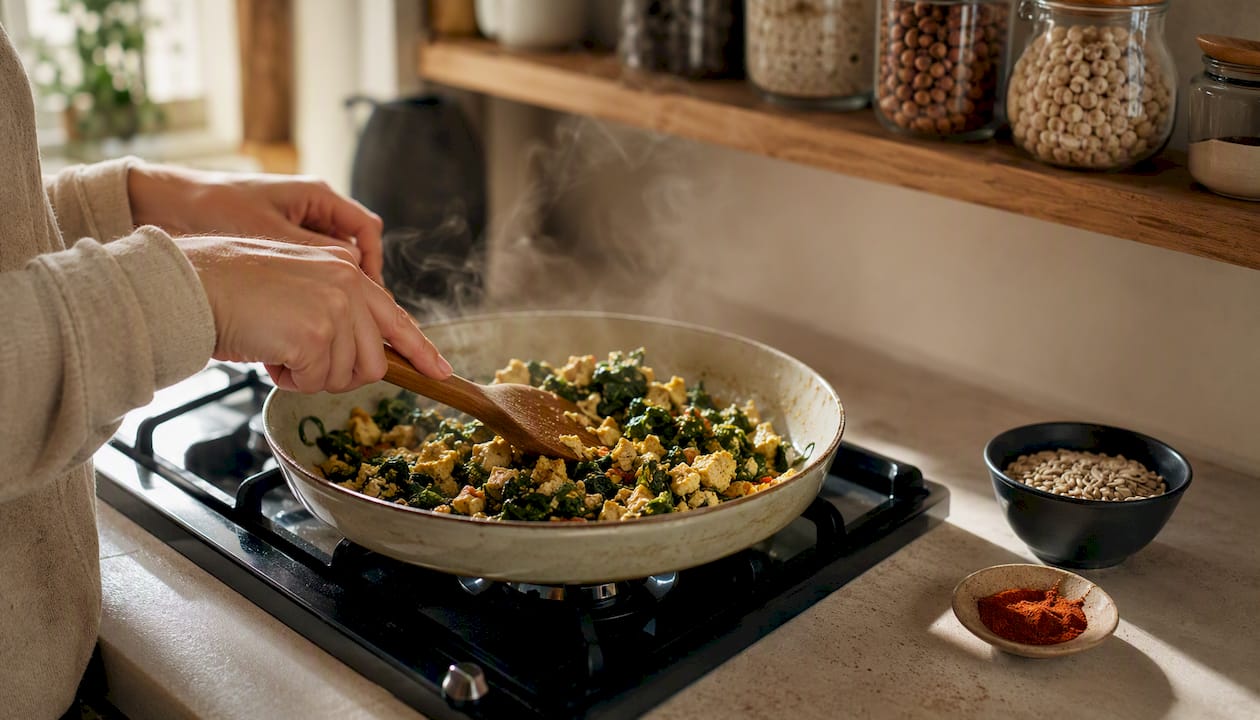
Ingredients: 200 g firm tofu, 3 tbsp hemp hearts, large handful spinach, ½ tsp turmeric, tamari (gluten-free soy sauce), olive oil. Protein per serving: ~26 g. Prep/cook: 10 minutes. Crumble tofu into a hot pan with oil, add turmeric and tamari, stir in spinach until wilted, finish with hemp hearts off the heat. Keeps refrigerated for three days; reheat in two minutes.
Smoked salmon and egg omelette
Ingredients: 2 large eggs, 100 g smoked salmon, capers, dill, olive oil. Protein per serving: ~28 g. Prep/cook: 8 minutes. Whisk eggs, pour into a hot oiled pan, lay salmon across one half, fold and serve. No make-ahead needed — this is a five-day weekday staple that takes less time than queuing for coffee.
Tempeh and black bean hash
Ingredients: 100 g tempeh (sliced thin), 100 g canned black beans (drained), red pepper, smoked paprika, olive oil. Protein per serving: ~26 g. Prep/cook: 15 minutes. Pan-fry tempeh slices until golden, add beans and pepper, season heavily with smoked paprika. Batch-cook a double portion on Sunday; it reheats perfectly and actually improves in flavour overnight.
Egg and chickpea flour baked bites
Ingredients: 4 eggs, 3 tbsp chickpea flour, diced courgette, sun-dried tomatoes, nutritional yeast. Protein per serving (6 bites): ~23 g. Prep/cook: 25 minutes (mostly oven time). Whisk eggs with chickpea flour, fold in vegetables and nutritional yeast, pour into a silicone muffin tray, bake at 180°C for 18–20 minutes. Freeze in pairs; reheat from frozen in three minutes.
Tuna and edamame rice bowl
Ingredients: 150 g tinned tuna (in spring water), 120 g frozen edamame (cooked), 80 g cooked brown rice, tamari, sesame oil, pickled ginger. Protein per serving: ~38 g. Prep/cook: 5 minutes (using pre-cooked rice). Cold-assemble the night before and refrigerate. The edamame alone contributes around 16 g protein, making this the highest-protein option in the savoury list.
Nutritional yeast and miso paste are the two flavour tools that make dairy-free savoury breakfasts genuinely satisfying rather than merely functional. A tablespoon of white miso stirred into scrambled tofu adds depth that nutritional yeast alone cannot replicate. Use both.
Pro Tip: For egg-based baked bites and frittatas, replace cream with unsweetened full-fat coconut milk at a 1:1 ratio. The fat content gives the same custardy structure, and the coconut flavour disappears completely once you season with miso, paprika or nutritional yeast.
High-protein sweet breakfasts and portable bakes
Sweet options do not have to mean low protein. These five recipes all hit at least 20 g per serving and most can be prepped in batches.
-
Chia and hemp pudding with pea protein — Combine 3 tbsp chia seeds, 3 tbsp hemp hearts, one scoop pea protein powder (20–25 g protein) and 300 ml fortified soya milk. Stir well, refrigerate overnight. Protein per jar: ~30 g. Makes four jars at once; keeps for four days. Inspired by the high-protein chia and hemp pudding format that has become a staple in GF/DF recipe collections.
-
Almond-flour protein pancakes — 80 g almond flour, one scoop soy protein powder, 2 eggs, 100 ml fortified oat milk, ½ tsp baking powder (gluten-free). Whisk, cook in small rounds. Protein per serving (4 pancakes): ~22 g. Freeze a stack of eight between sheets of baking paper; reheat from frozen in a dry pan in two minutes.
-
Baked protein oats — 80 g certified gluten-free rolled oats, one scoop pea protein, 1 tbsp almond butter, 200 ml fortified soya milk, mashed banana. Bake at 180°C for 25 minutes. Protein per serving: ~24 g. Cut into squares and refrigerate for five days. Coeliac UK advises choosing oats labelled “certified gluten-free” to avoid cross-contamination — this applies to every oat-containing recipe here.
-
Hemp and banana smoothie bowl — One scoop pea protein, 3 tbsp hemp hearts, 1 tbsp almond butter, 200 ml fortified oat milk, one frozen banana. Blend thick and top with pumpkin seeds. Protein per bowl: ~28 g. Prep the dry toppings in a small jar the night before; blend takes 90 seconds.
-
Chickpea flour protein muffins — 100 g chickpea flour, one scoop soy protein, 2 eggs, 2 tbsp almond butter, 1 tsp vanilla, 1 tbsp maple syrup, ½ tsp baking powder. Bake at 175°C for 20 minutes. Protein per muffin (makes 6): ~12 g (two muffins = ~24 g). Freeze the full batch; they defrost at room temperature in 20 minutes.
Pro Tip: Blend protein powder with a small amount of plant milk first — about 50 ml — before adding to oats or batter. This prevents the powder from clumping and gives a smoother texture throughout. Coeliac UK also recommends checking that your protein powder itself carries certified gluten-free labelling, as some are processed in facilities that handle wheat.
How do you reliably hit 20–30 g protein at breakfast?
The stacking method is the most practical framework: choose a protein base, add a booster, then finish with seeds or nut butter. Each layer contributes independently, so you are never relying on one ingredient to do all the work.
The three-layer stack:
- Base (10–18 g): 2 eggs, 200 g tofu, 100 g tempeh, 150 g tinned tuna, or 150 g smoked salmon
- Booster (8–25 g): one scoop pea or soy protein powder, 120 g edamame, or 100 g canned pulses
- Finish (5–10 g): 3 tbsp hemp hearts, 2 tbsp almond or peanut butter, or 25 g pumpkin seeds
A tofu base (16.5 g) plus a scoop of pea protein (22 g) already exceeds 30 g before the finish layer. For readers who prefer not to use protein powder, a tempeh base (20 g) plus edamame (16 g) reaches 36 g from whole foods alone. For a deeper guide to building this kind of breakfast, the 30 g plant protein breakfast guide from Granavitalis walks through the stacking logic step by step.
Weekly meal-prep templates
Template 1 — Sit-down breakfasts (Sunday batch, 45 minutes): Cook a large tray of baked protein oats and a batch of egg-and-chickpea bites. Portion into five containers. Each morning, pull one from the fridge and add a handful of hemp hearts or a spoonful of nut butter to hit the finish layer.
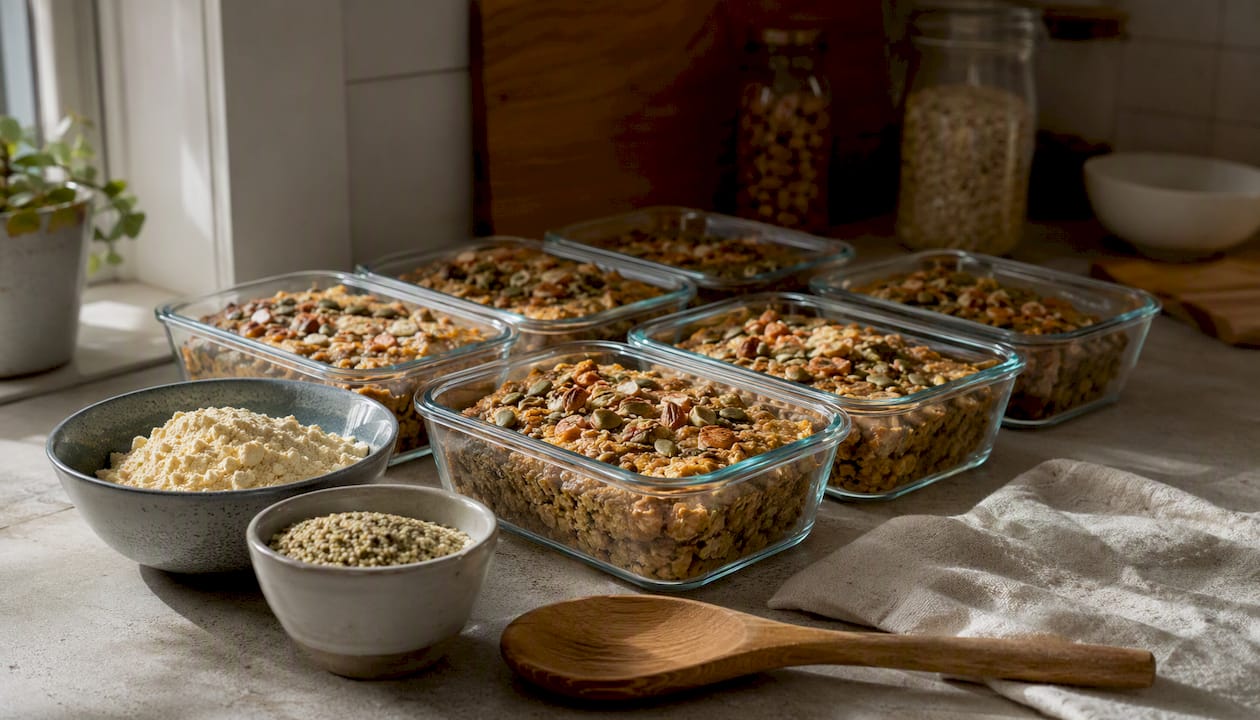
Template 2 — Portable jars (Sunday evening, 20 minutes): Assemble four chia-hemp pudding jars and two smoothie-bowl dry-topping kits. Each morning, blend one smoothie bowl (90 seconds) or grab a pudding jar. Pair with a hard-boiled egg if the jar alone falls short of your target.
Storage guidance: Cooked proteins (tofu scramble, tempeh hash) keep for three days refrigerated. Baked goods freeze for up to three months. Opened plant milk cartons keep for four to five days in the fridge; buy smaller cartons if you use less than 500 ml per week to avoid waste.
Pro Tip: Pre-portion protein powder into small zip-lock bags or a weekly pill organiser. It sounds fussy, but removing the scoop-and-measure step on a Monday morning at 6:30 AM is the difference between making the smoothie and skipping it.
Making GF/DF high-protein breakfasts work every day
The honest challenge with gluten-free, dairy-free high-protein breakfasts is not the recipes — it is the Monday morning at 6:15 AM when you have nothing prepped and the easiest thing is a piece of toast. That is the moment the whole system falls apart.
What actually works, in practice, is accepting that you will not cook every morning. The goal is to cook twice a week and eat well every day. A Sunday batch of baked oats and a midweek top-up of chia jars covers most of the week without any real effort on the mornings themselves.
The cost concern is real but manageable. Tofu, canned pulses, eggs and frozen edamame are among the most affordable high-protein foods in any UK supermarket. Protein powder is the one premium item, and it is optional — the whole-food stacks above reach 25–30 g without it. For readers watching the grocery budget, the cheap high-protein vegan breakfast guide from Granavitalis covers the most cost-effective combinations in detail.
One thing worth saying plainly: processed “free-from” products — the gluten-free bread, the dairy-free cheese slices, the vegan sausage alternatives — are often nutritionally thin. They solve the allergen problem but rarely the protein problem. Building breakfasts around whole protein sources (tofu, eggs, pulses, fish, nut butters) and using ancient-grain or legume flours for baking is a more reliable route to both nutrition and flavour than leaning on the free-from aisle.
Granavitalis’s approach to ingredient sourcing — prioritising ancient-grain flours, premium nut butters and clean plant proteins — reflects exactly this philosophy: the ingredient quality does the work, so the recipe does not have to be complicated.
Granavitalis makes high-protein GF/DF breakfasts easier
The gap between a good breakfast and a great one is usually one or two ingredients. Granavitalis’s raw organic pecan butter stirs into smoothies and porridge in seconds, adding healthy fats and a depth of flavour that plain almond butter cannot match. Swirl it into chia pudding the night before, and the jar goes from functional to genuinely worth waking up for.
For readers who want to experiment across flavour profiles, the organic nut and seed butter selection box covers almond, cashew, pecan and seed varieties — each one a ready-made protein and fat booster for the recipe builds in this article. Use a different butter each morning and you have five distinct breakfasts from the same base recipe. Granavitalis also stocks ancient-grain flours and clean plant proteins that slot directly into the pancake, muffin and baked oat recipes above. Browse the full range at Granavitalis and pick the ingredients that fit your weekly prep routine.
Sources
- Nutrition information about protein and plant-based protein
- The vegetarian diet - NHS
- Food as Treatment - Dairy Free and Vegan - University Hospitals Sussex NHS Foundation Trust
- Coeliac UK
- 21 High-Protein Gluten-Free, Dairy-Free Breakfast Recipes | Upgraded Health
This article is general information, not a substitute for advice from a qualified doctor. Consult a qualified healthcare professional about your own circumstances before acting on anything here.