
Dairy free grain free breakfast ideas for Paleo & Whole30
The most reliable dairy-free, grain-free breakfast follows one rule: build around a dedicated protein source first, then add healthy fats, seeds, and a calcium-rich plant food. Two large eggs with 75–100 g smoked salmon (roughly 30 g protein, ready in 5 minutes), chia seed porridge with almond butter and fortified oat-free plant milk (a protein-rich option, prepared the night before), or a tin of sardines on wilted spinach (roughly 25 g protein, 3 minutes) — these are the formats that work every morning without compromise.
A few quick wins before the detail:
- Scrambled eggs + smoked salmon — 5 min, ~30 g protein, Whole30-compliant
- Chia seed porridge + almond butter + fortified coconut milk — overnight prep, ~15 g protein (add hemp seeds to push higher)
- Sardines + spinach + avocado — 3 min, ~25 g protein, naturally Paleo
- Turkey or chicken slices + cucumber + tahini — 5 min, ~28 g protein, zero cooking required
The NHS advises choosing calcium-fortified plant milks when dairy is excluded, aiming for options that match cow’s milk at around 120 mg calcium per 100 ml. The British Dietetic Association supports spreading protein across the day, with a morning serving in the 20–30 g range to support muscle maintenance and satiety. Granavitalis nut butters, seeds, and clean plant proteins slot directly into every format below.
Key takeaways
A dairy-free, grain-free breakfast works reliably when you build around a dedicated 20–30 g protein source, choose calcium-fortified plant milks, and use seeds and leafy greens to cover the fibre and calcium removed with dairy and grains.
| Point | Details |
|---|---|
| Protein first | Plan around eggs, tinned fish, poultry, or firm tofu to reach 20–30 g protein per morning. |
| Calcium replacement | Choose fortified plant milks (~120 mg calcium per 100 ml) and include tahini, leafy greens, and sesame seeds daily. |
| Batch two items weekly | Egg muffins and chia pots take under 25 minutes and cover 4–5 weekday mornings. |
| Read labels carefully | “Free-from” products may contain whey, casein, or barley malt — check every ingredient list. |
| Vary protein sources | Rotate eggs, oily fish, poultry, and tofu across the week to avoid over-reliance on any single source. |
Table of Contents
- Dairy-free, grain-free breakfast ideas by format
- Grain-free baking: flour swaps, ratios, and binding tips
- Make-ahead and 5-minute grain-free breakfasts
- What to stock for dairy-free, grain-free breakfasts in the UK
- How to hit ~30 g protein at a dairy-free, grain-free breakfast
- Why nutrient-dense, grain-free breakfasts suit active modern lives
- Sources
Dairy-free, grain-free breakfast ideas by format
Grain-free dairy-free breakfasts cover far more territory than eggs alone. Here are the six formats worth having in rotation.
Smoothies and drinks
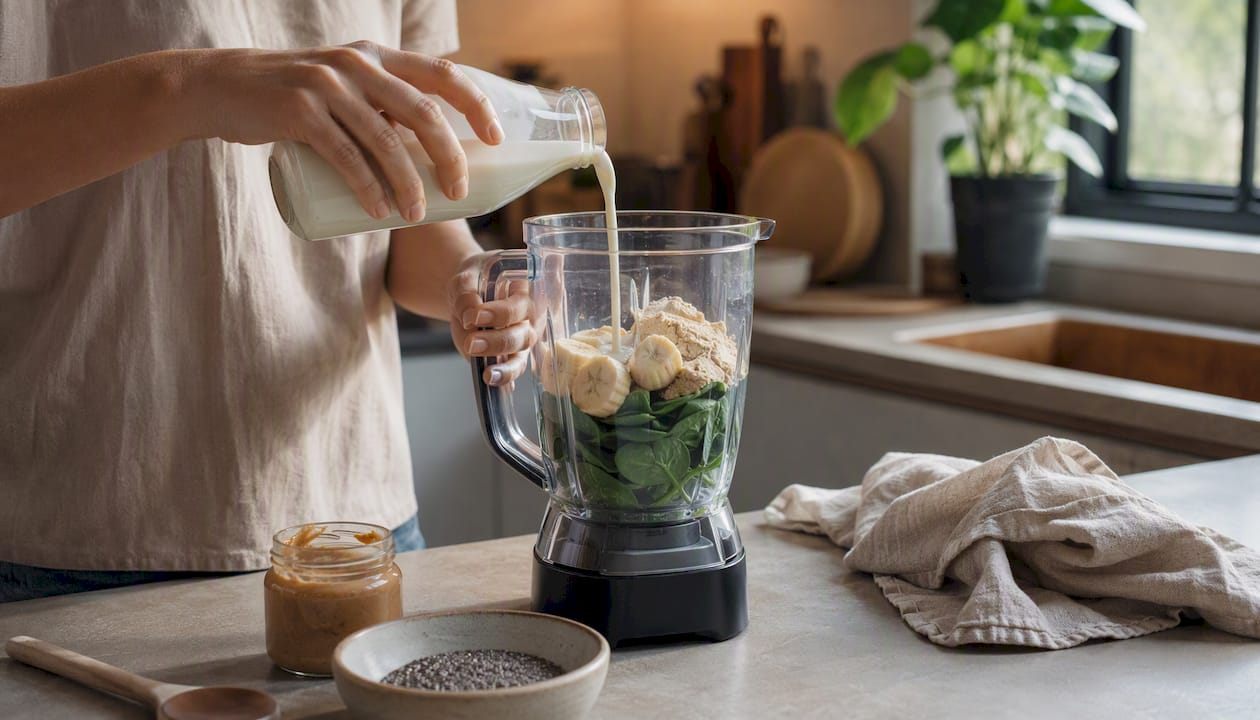
Blend 200 ml unsweetened fortified coconut or almond milk with a scoop of unflavoured pea or hemp protein, a tablespoon of almond butter, half a frozen banana, and a handful of spinach. Ready in 3 minutes, roughly 25–30 g protein depending on your protein powder. For a purely whole-food version, use 2 tablespoons of hemp seeds and 1 tablespoon of chia instead of powder — lower protein (~15 g) but rich in omega-3s.
Egg dishes
Eggs are the workhorse of this style of eating. Three scrambled eggs with smoked salmon and a handful of rocket: 5 minutes, protein-rich. A two-egg omelette stuffed with leftover roasted vegetables and topped with avocado: 8 minutes, protein-rich. Baked eggs in a roasted tomato and pepper base (shakshuka-style, minus the bread): 20 minutes, protein-rich for two eggs.
Pro Tip: Crack a third egg into any egg dish to add roughly 6 g protein with almost no extra effort or cost.
Porridge and pancake alternatives
Chia seed porridge made with fortified almond milk, topped with mixed berries and a tablespoon of tahini, gives a creamy texture with no grains involved. Coconut flour pancakes (see the baking section below for ratios) with a side of turkey bacon hit around 25 g protein. For a savoury take, blended cauliflower “porridge” cooked with coconut cream and topped with a poached egg works surprisingly well.
Seed-based granola and bowls
Toast a mix of pumpkin seeds, sunflower seeds, flaked coconut, and chopped pecans in a dry pan with cinnamon and a drizzle of maple syrup (omit for strict Whole30). Serve over coconut yoghurt or with fortified plant milk. This provides a modest protein amount — pair with two boiled eggs to increase protein. For seed-based meal inspiration, Wild Foodz has a useful collection of chef-led ideas worth browsing.
Muffins and bakes
Almond flour egg muffins baked with diced courgette, sun-dried tomatoes, and turkey are a batch-cook staple, freezer-friendly, and reheatable in 90 seconds. Coconut flour banana muffins (sweetened with dates) work as a lower-protein treat option — pair with nut butter to balance macros.
Savoury plates
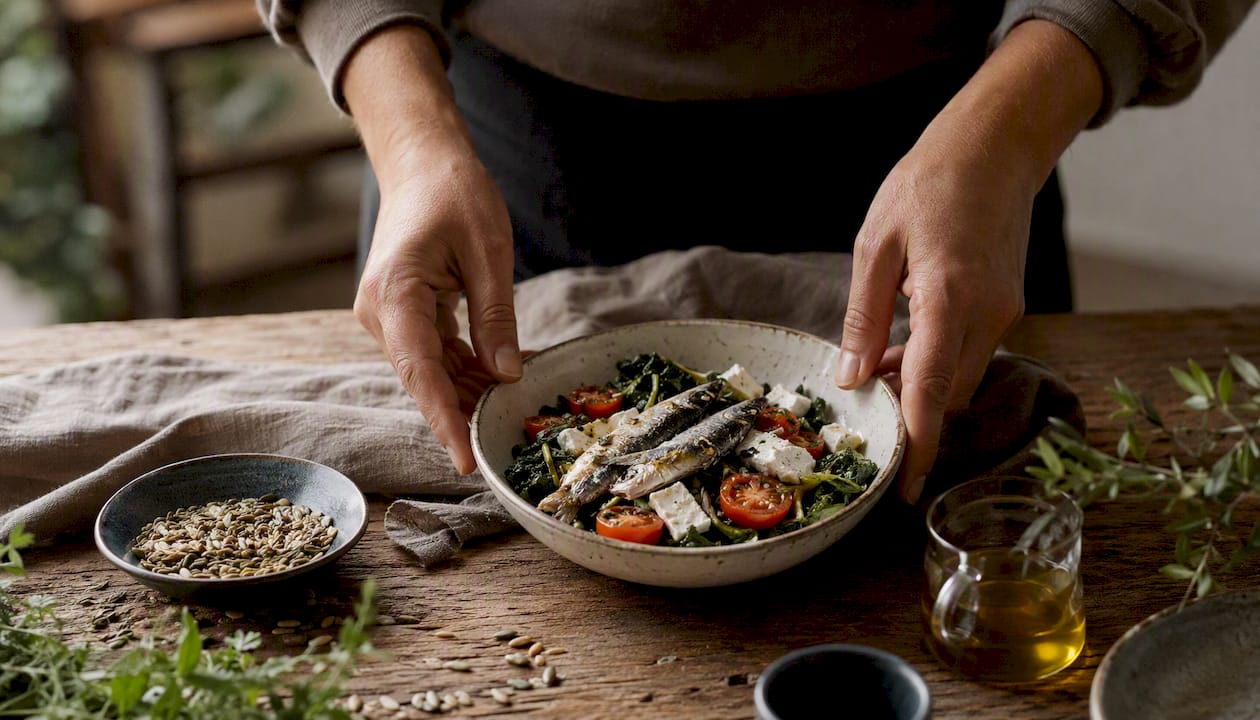
Tinned mackerel or sardines on a bed of wilted spinach with sliced avocado and a squeeze of lemon: 3 minutes, ~25 g protein, zero cooking skill required. Leftover roast chicken with cucumber, olives, and a tahini drizzle is another fast assembly that travels well. These plates are where the high-protein breakfast meat approach really earns its keep.
Grain-free baking: flour swaps, ratios, and binding tips
Swapping wheat flour is not a one-for-one substitution. Each alternative behaves differently, and knowing why saves a lot of wasted batches.
Almond flour is the most forgiving. Use it at a 1:1 ratio in most pancake and muffin recipes that call for plain flour, though the result will be denser and moister. It has a relatively low absorption rate, so batters can look wetter than expected — that is normal. University Hospitals of Leicester guidance lists almond flour among the accepted grain-free flour alternatives for people following wheat-free diets.
Coconut flour absorbs roughly four times more liquid than wheat flour. The practical rule: replace every 100 g of wheat flour with 25–30 g of coconut flour and add one extra egg per 30 g of coconut flour used. Skip this ratio and you will get a dry, crumbly result every time.
Cassava flour behaves closest to plain flour in texture and is a good choice for wraps or thicker pancakes. Use it at roughly 3/4 of the original wheat flour quantity.
Ground seeds (flax, chia, pumpkin) work well as partial flour replacements in dense bakes and as binders. A “flax egg” (1 tablespoon ground flax + 3 tablespoons water, rested for 5 minutes) replaces one egg in vegan bakes.
Pro Tip: If your grain-free batter is splitting or too loose, add 1 teaspoon of psyllium husk per 100 g of flour used. It binds without changing flavour and firms up the crumb noticeably.
Common pitfalls to avoid:
- Over-thinning batter with too much plant milk — add liquid gradually, 1 tablespoon at a time
- Skipping the resting period for coconut flour batters (rest for 3–5 minutes so the flour absorbs liquid fully before cooking)
- Using cold eggs straight from the fridge in almond flour mixes, which causes the fat to seize and creates an oily crumb
Make-ahead and 5-minute grain-free breakfasts
Batch cooking removes the morning decision entirely. These keep well and require almost no effort on the day.
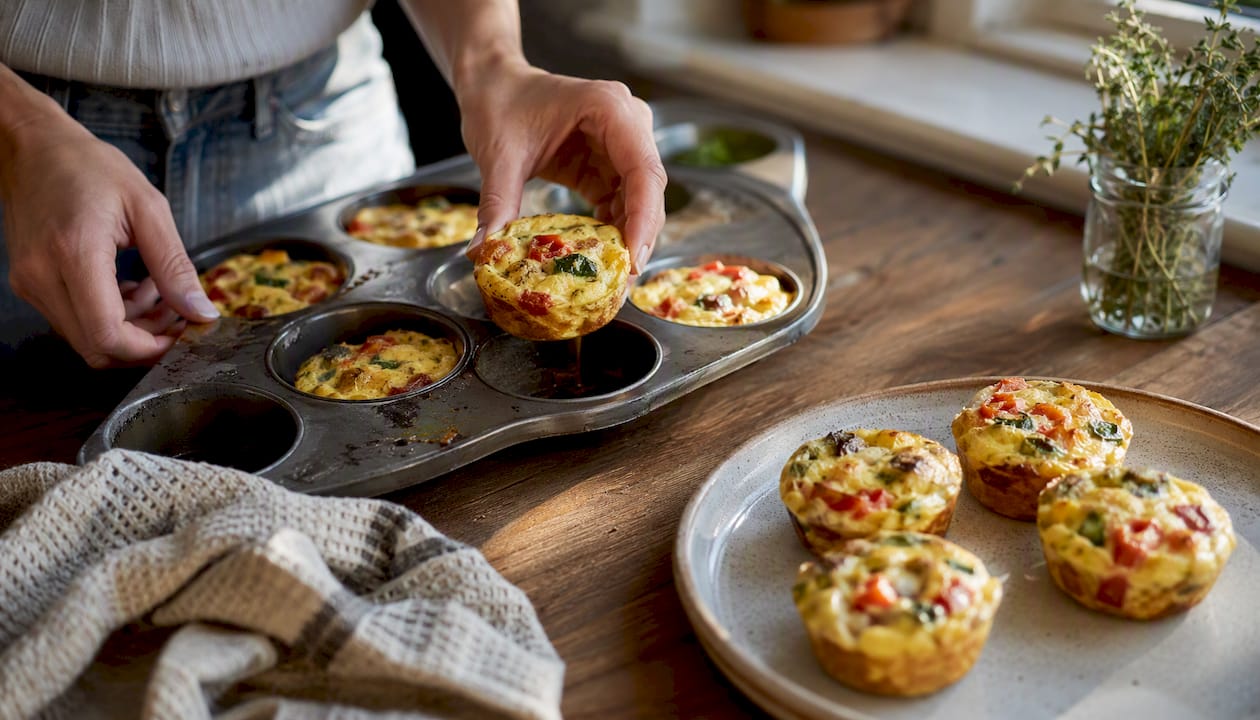
Egg muffins bake in a 12-cup tin in 20 minutes and keep for 4 days in the fridge or 2 months in the freezer. Reheat in the oven at 180°C for 8 minutes to preserve texture, or microwave for 60 seconds if speed matters more.
Chia pots take 2 minutes to assemble the night before: 3 tablespoons of chia seeds, 200 ml fortified plant milk, a teaspoon of vanilla, and whatever toppings you like. They keep for 3 days refrigerated.
Seed granola jars (toasted seeds, coconut flakes, cinnamon) stay crisp for two weeks in an airtight jar. Portion into a bowl each morning and add plant milk or a spoonful of coconut yoghurt.
Frittata slices batch-cooked on a Sunday last 4 days and reheat well. Slice into portions, wrap individually, and grab one cold if you are travelling. For readers who want to stay grain-free and dairy-free while away from home, these healthy holiday eating tips are worth a read.
For genuine 5-minute mornings, the assembly approach beats cooking entirely: pre-cooked chicken or turkey slices from the fridge, a tin of fish, pre-washed rocket or spinach, a portioned sachet of nut butter, and a handful of seeds. No heat required, and you can hit 25–30 g protein without turning on the hob.
What to stock for dairy-free, grain-free breakfasts in the UK
Most of these are available in major supermarkets (Waitrose, Sainsbury’s, Tesco, M&S), with better value and variety online or at health-food retailers such as Holland & Barrett.
Core staples to keep in:
- Almond flour and coconut flour (look for fine-milled, blanched almond flour for smoother batters)
- Chia seeds, flaxseed (ground and whole), pumpkin seeds, hemp seeds, sunflower seeds
- Tinned fish: sardines, mackerel, tuna, salmon (in spring water or olive oil, not brine with added ingredients)
- Nut and seed butters: almond, cashew, tahini, pecan — Granavitalis stocks a nut and seed butter selection that covers most formats
- Eggs (free-range, large)
- Fortified plant milks: unsweetened almond, coconut, or oat-free options — NHS guidance recommends choosing brands that explicitly state calcium content, aiming for around 120 mg per 100 ml
- Psyllium husk and baking soda (grain-free baking essentials)
- Coconut cream and coconut yoghurt (dairy-free fat sources)
Label warnings for UK shoppers: “Free-from” products are not automatically grain-free or dairy-free. Watch for milk solids, lactose, whey, casein, wheat starch, barley malt extract, and oat flour on ingredient lists. The Cambridge University Hospitals NHS guidance on milk- and wheat-free diets confirms that a varied, nutritious diet is achievable with the right substitutes — but label-reading is non-negotiable.
Budget note: seeds and tinned fish are the most cost-effective protein and fat sources in this category. Nut flours cost more per kilo than wheat flour, but a 500 g bag goes further than it looks when used at the lower coconut flour ratios.
How to hit ~30 g protein at a dairy-free, grain-free breakfast
The BDA recommends spreading protein across the day, with a morning serving in a moderate protein range to support muscle protein synthesis and satiety. For a dairy-free, grain-free breakfast, that means planning around a primary protein source rather than hoping seeds and nut butter will add up.
Practical protein values per 100 g for common breakfast ingredients:
Two sample meals that reach ~30 g:
Meal A (omnivore): 2 large eggs scrambled + 80 g smoked salmon + handful of spinach = approximately 30 g protein. Add a tablespoon of Granavitalis pecan butter on the side for healthy fats.
Meal B (plant-leaning): 150 g firm tofu scrambled with turmeric and black pepper + 30 g hemp seeds + 100 ml fortified almond milk in a smoothie = approximately 36 g protein. Swap tofu for 200 g edamame if preferred.
Calcium and fibre deserve attention when both dairy and grains are removed. BBC Food’s overview of the paleo diet notes that excluding these food groups can reduce fibre and calcium intake, making deliberate mitigation necessary. Concrete steps: choose calcium-fortified plant milks daily, include leafy greens (kale, pak choi, watercress) at least once a day, use tahini and sesame seeds regularly (tahini contains around 680 mg calcium per 100 g), and rely on seed-based fibre (chia, flax, psyllium) to replace the fibre lost from wholegrains.
Pro Tip: For a high-protein breakfast without eggs, tinned fish plus hemp seeds plus a fortified plant milk smoothie is the fastest route to 30 g — no cooking, no prep beyond opening tins.
Why nutrient-dense, grain-free breakfasts suit active modern lives
At Granavitalis, the philosophy behind every product in the range is that real nutrition starts with ingredient integrity, not clever formulation. The nuts, seeds, and clean plant proteins we source map directly onto the breakfast formats in this article: nut butters as fat and protein anchors, whole seeds as fibre and micronutrient carriers, and minimally processed flours as the base for reliable grain-free baking.
What strikes me most, having worked with these ingredients closely, is how the shift from grain-centred to protein-and-seed-centred breakfasts tends to improve energy consistency across the morning. The BDA’s vegetarian and vegan nutrition guidance supports distributing protein across meals, and breakfast is where most people leave the most protein on the table. A bowl of seed granola with fortified plant milk, or a quick tofu scramble with hemp seeds, is not a compromise — it is a genuinely better nutritional structure than most grain-based alternatives.
The Granavitalis nut and seed butter range and nibbed hazelnuts were selected precisely because they perform in these recipes: as spreads, as batter enrichers, and as quick toppings that add both flavour and measurable nutrition. If you are building a grain-free, dairy-free breakfast habit, stocking two or three of these means you always have a fast, nutrient-dense option within reach.
Sources
The nutrition guidance in this article draws on a short list of authoritative UK resources worth bookmarking for deeper reading.
- The vegan diet - NHS
- What is a paleo diet and should I try it? - BBC Food
- How much protein do I need per day? | Evidence Based Guide
- Practical guide: nutritional considerations — protein - British Dietetic Association
- Cow’s milk and wheat-free diet - Cambridge University Hospitals NHS Foundation Trust