
High protein low carb breakfast for weight loss
TL;DR:
- A high protein, low carb breakfast delivering 25–40 grams of protein effectively suppresses hunger hormones and aids fat loss. Combining whole foods like eggs, Greek yoghurt, smoked salmon, and plant proteins, along with batch cooking, promotes adherence and consistent results. This approach supports appetite control and muscle preservation during calorie deficits, making it a scientifically backed weight loss strategy.
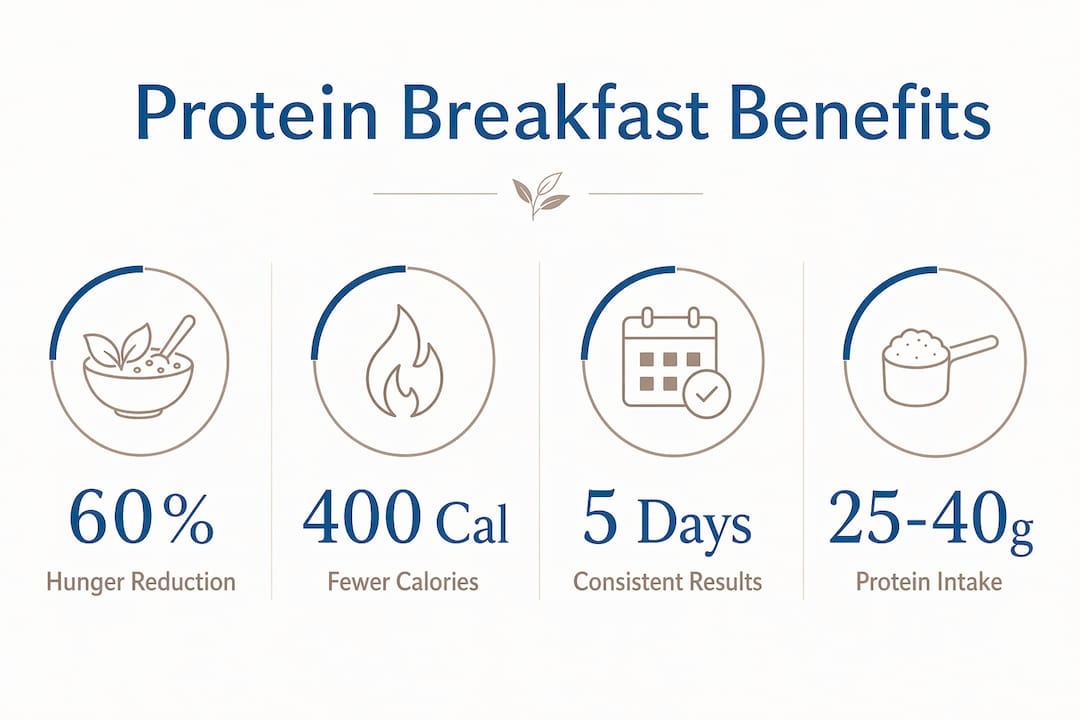
A high protein low carb breakfast for weight loss is defined as a morning meal delivering 25–40 grams of protein with minimal refined carbohydrates, proven to suppress hunger hormones and preserve lean muscle during a calorie deficit. A meta-analysis of 32 RCTs confirms that benefits plateau above 40g and weaken below 20g, making this the optimal target range. Registered nutritionist Beth Stark notes that these breakfasts work best when they are generous in both portion and flavour, which is the key to long-term adherence. The American Journal of Clinical Nutrition has consistently linked front-loaded protein intake to reduced daily calorie consumption and improved body composition outcomes.
What foods are best for a high protein, low carb breakfast?
The most effective protein-rich breakfast ideas combine whole foods that are naturally dense in protein without relying on starchy carbohydrates for bulk.
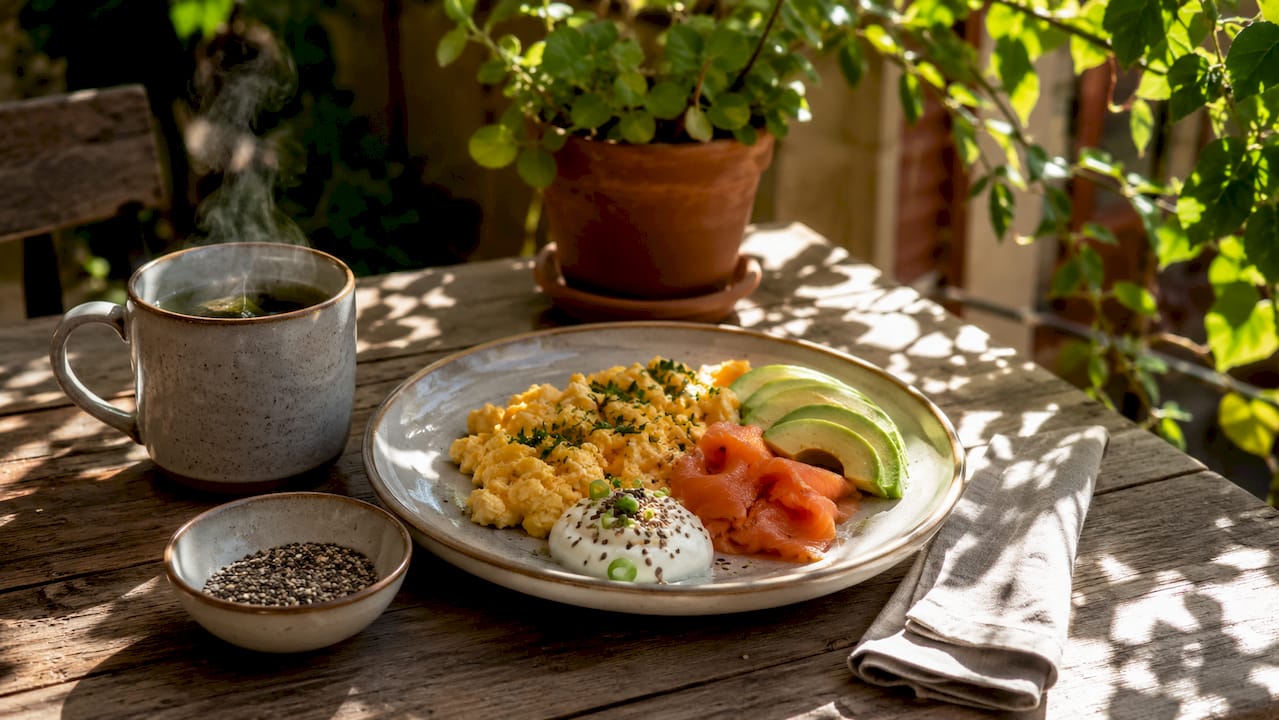
Eggs and egg whites are the most versatile foundation. One large egg provides 6g of protein at 72 calories, while one egg white delivers 4g of protein at just 17 calories. That ratio matters: egg whites allow nearly triple the protein intake of whole eggs at the same calorie count, making them ideal for aggressive fat loss phases. A three-egg-white omelette with spinach delivers 28g of protein in roughly 180 calories.
Greek yoghurt and cottage cheese are underused by most people pursuing low carb breakfast recipes. Full-fat Greek yoghurt provides around 17g of protein per 200g serving, and cottage cheese offers a similar profile with a softer texture that blends well into savoury dishes. Both are low in carbohydrates when chosen unflavoured.
Lean proteins and fish round out the category. Smoked salmon, turkey slices, and cooked chicken breast all deliver 20–25g of protein per 100g serving. Smoked salmon is particularly useful because it also provides omega-3 fatty acids, which support cardiovascular health alongside fat loss.
- Eggs and egg whites: 4–6g protein per unit, low calorie, highly versatile
- Greek yoghurt (unflavoured): 17g protein per 200g, pairs well with seeds and nuts
- Cottage cheese: 14g protein per 100g, works in both sweet and savoury combinations
- Smoked salmon: 16g protein per 85g serving, rich in omega-3 fatty acids
- Tofu (firm): 10g protein per 100g, excellent plant-based option for scrambles
- Protein powder: 20–25g protein per scoop, mixes into porridge or yoghurt
Pro Tip: Combine two protein sources at every breakfast. Pairing eggs with Greek yoghurt or smoked salmon with cottage cheese pushes you past the 30g threshold without adding significant carbohydrates, and the flavour contrast keeps meals interesting.
Healthy fats from avocado and olive oil add satiety without raising carbohydrate load. Half an avocado contributes roughly 1g of net carbohydrate alongside 7g of healthy monounsaturated fat, making it an ideal addition to any egg-based plate.
How do you consistently hit 25–40g protein at breakfast?
Consistency is the single biggest barrier to making a high protein breakfast habit stick. Most people fail not because they lack knowledge but because they rely on willpower at 7am. Batch cooking removes that variable entirely.
Pre-batching egg muffins and overnight oats standardises your intake around the 35–40g protein target without requiring any morning decision-making. Here is a practical weekly system:
- Sunday egg muffins: Whisk 12 eggs with diced peppers, spinach, and smoked salmon. Pour into a muffin tin and bake at 180°C for 20 minutes. Each muffin delivers roughly 8g of protein. Eat three to four per morning for 24–32g of protein before adding a side of Greek yoghurt.
- Protein porridge prep: Measure out five portions of oats into individual containers. Add a scoop of unflavoured or vanilla protein powder to each. In the morning, mix the powder with a small amount of cold water before stirring into the cooked oats. This technique prevents the grainy texture that puts people off protein porridge for weight loss.
- Smoked salmon and eggs: This is the fastest high-protein option on a busy morning. Three eggs scrambled with 85g of smoked salmon takes under ten minutes and delivers 30–35g of protein alongside heart-healthy omega-3s.
- Overnight Greek yoghurt bowls: Layer 200g of Greek yoghurt with a tablespoon of nut butter, a handful of seeds, and a scoop of protein powder the night before. Refrigerate and eat cold. This combination reaches 35g of protein with minimal preparation.
- Tofu scramble with black beans: Crumble 150g of firm tofu into a pan with olive oil, turmeric, and black beans. Black beans with eggs or tofu create a flavour-rich, high-fibre breakfast that supports both fullness and metabolic function.
Pro Tip: Prepare all your dry ingredients and portion your proteins on Sunday evening. Place each day’s breakfast components in labelled containers in the fridge. This single habit reduces morning preparation time to under five minutes and removes the temptation to skip breakfast entirely.
The meal prep approach also supports habit formation by creating a reliable routine. Habits form through repetition, and a prepped fridge makes the right choice the easiest choice.
What impact does a protein-rich breakfast have on appetite and fat loss?
The science behind protein-rich breakfasts and weight loss is grounded in hormonal regulation, not willpower. Protein is the most satiating macronutrient, and its effects at breakfast are measurably stronger than at any other meal.
Front-loading protein at breakfast reduces ghrelin by up to 60%, cutting daily calorie intake by over 400 calories. Ghrelin is the primary hunger hormone. When it is suppressed at breakfast, afternoon and evening cravings drop significantly, which is where most people’s calorie budgets collapse.
Protein also preserves lean muscle mass during a calorie deficit. This matters because muscle tissue burns more calories at rest than fat tissue. Losing muscle while dieting slows your metabolism and makes weight regain more likely. A breakfast delivering 35–40g of protein signals the body to retain muscle while burning stored fat.
| Mechanism | Effect | Timeframe |
|---|---|---|
| Ghrelin suppression | Up to 60% reduction in hunger hormone | Within 3–5 days |
| Daily calorie reduction | Over 400 calories less consumed per day | Consistent after 1 week |
| Lean muscle retention | Preserved during calorie deficit | Ongoing with consistent intake |
| Metabolic rate support | Higher resting calorie burn from retained muscle | Long-term benefit |
One important caveat: the hormonal effects are not immediate. Consistent high protein breakfasts require at least 5 days before appetite suppression fully manifests. Early patience is not optional. It is the mechanism itself requiring time to recalibrate.
Whole eggs, egg whites, or plant proteins: which should you choose?
The right protein source depends on your calorie target, dietary preferences, and how aggressively you are pursuing fat loss. Each option has a distinct profile.
Whole eggs provide complete protein with all nine essential amino acids, plus fat-soluble vitamins A, D, E, and K in the yolk. They are the most nutritionally complete single breakfast food available. The trade-off is caloric density: one whole egg costs 72 calories for 6g of protein.
Egg whites invert that ratio. At 17 calories per white and 4g of protein, they allow you to build a 28g protein omelette for under 200 calories. This makes egg whites the preferred choice for anyone in an aggressive calorie deficit. The downside is flavour: egg whites are bland and benefit from strong additions like smoked salmon, herbs, or spices.
Plant-based proteins including firm tofu, tempeh, and protein powders derived from pea, hemp, or brown rice are the best options for those avoiding animal products. Pea protein powder, in particular, has a complete amino acid profile and blends well into porridge and yoghurt. Combining pea protein with hemp protein covers any amino acid gaps.
| Protein Source | Protein per 100g | Calories per 100g | Carbs per 100g | Best For |
|---|---|---|---|---|
| Whole egg | 13g | 143 | 1g | Balanced nutrition |
| Egg white | 11g | 52 | 1g | Aggressive fat loss |
| Smoked salmon | 20g | 117 | 0g | Omega-3 and protein |
| Firm tofu | 10g | 76 | 2g | Plant-based diets |
| Greek yoghurt | 9g | 59 | 4g | Convenience and flavour |
| Pea protein powder | 80g | 370 | 5g | High-volume protein boost |
For most people pursuing sustainable weight loss, combining whole eggs with one additional source, such as smoked salmon or Greek yoghurt, hits the 30–40g target while providing nutritional variety. You can explore ancient grain and plant protein combinations for further variety beyond the standard options.
Key takeaways
A high protein low carb breakfast delivering 25–40g of protein is the single most evidence-backed dietary strategy for suppressing hunger, reducing daily calorie intake, and preserving lean muscle during weight loss.
| Point | Details |
|---|---|
| Optimal protein target | Aim for 25–40g of protein at breakfast; benefits weaken below 20g and plateau above 40g. |
| Ghrelin suppression | Front-loading protein reduces the hunger hormone ghrelin by up to 60%, cutting daily intake by over 400 calories. |
| Best food sources | Eggs, smoked salmon, Greek yoghurt, cottage cheese, and pea protein powder are the most effective options. |
| Batch cooking is non-negotiable | Pre-preparing egg muffins, protein porridge, and yoghurt bowls removes morning decision fatigue and builds consistency. |
| Allow five days | Hormonal appetite benefits require at least five consecutive days of consistent high-protein breakfasts to fully activate. |
Why flavour and generosity are the real weight loss secrets
People abandon high-protein breakfast plans for one reason above all others: the food feels punishing. Dry egg whites, plain cottage cheese, and flavourless protein shakes are not a sustainable foundation for any eating habit, regardless of the science behind them.
Beth Stark’s point about portion generosity resonates with everything I have observed. When a breakfast feels abundant, you do not spend the morning thinking about food. That psychological shift is as important as the hormonal one. A plate of smoked salmon scrambled eggs with half an avocado and a side of Greek yoghurt is not a diet meal. It is a genuinely satisfying breakfast that happens to deliver 38g of protein.
Maya Bennett’s observation about combining eggs with anti-inflammatory foods like smoked salmon is worth taking seriously beyond the weight loss context. Chronic low-grade inflammation is a real barrier to fat loss for many people, and omega-3 rich foods address it directly without requiring supplements.
The practical advice I give consistently is this: build your breakfast around one anchor protein, add a second source for variety, and use healthy fats to make the meal feel complete. Avocado, a tablespoon of nut butter, or a drizzle of olive oil costs very few carbohydrates and transforms a functional meal into one you actually look forward to. Adherence is the variable that determines results, not perfection on any single morning.
— Jarrod
Upgrade your breakfast with Granavitalis whole-food additions
A strong protein foundation deserves equally strong supporting ingredients. Granavitalis sources premium nut butters and superfoods that complement low carb breakfast recipes without adding unnecessary sugars or refined ingredients.

The RAWGORILLA Raw Organic Pecan Butter adds healthy monounsaturated fats and a rich, natural flavour to Greek yoghurt bowls and protein porridge. For more variety, the RAWGORILLA Organic Nut & Seed Butter Selection Box gives you multiple options to rotate through the week, keeping breakfasts interesting without compromising your macros. The Immune Booster Superfood Bundle pairs well with morning routines focused on both fat loss and overall vitality. Every product at Granavitalis is selected for purity and nutritional integrity, with no shortcuts.
FAQ
How much protein do i need at breakfast for weight loss?
The optimal range is 25–40g of protein at breakfast. A meta-analysis of 32 RCTs confirms that benefits plateau above 40g and are significantly reduced below 20g.
How quickly will a high protein breakfast reduce my hunger?
Most people notice reduced appetite within 3–5 days, but the full hormonal benefit requires at least five consecutive days of consistent intake before ghrelin suppression stabilises.
Are egg whites better than whole eggs for fat loss?
Egg whites deliver nearly triple the protein of whole eggs at the same calorie count, making them preferable during an aggressive calorie deficit. Whole eggs provide superior nutritional variety and are better suited to balanced, long-term eating patterns.
Can i hit 30g of protein at breakfast on a plant-based diet?
Yes. Combining firm tofu (150g), pea protein powder (one scoop), and black beans delivers over 30g of protein with minimal carbohydrates. Pea protein has a complete amino acid profile and blends well into porridge and smoothies.
Does a low carb breakfast mean avoiding oats entirely?
Not necessarily. A small portion of oats (40g dry weight) combined with a full scoop of protein powder creates a protein porridge for weight loss that stays within a moderate carbohydrate range while hitting the 25–30g protein target. The key is pairing oats with a high-protein source rather than eating them alone.