
A healthy plant-based breakfast you can make in minutes
The quickest healthy plant-based breakfasts combine a wholegrain base, a plant protein and a source of healthy fat, which is what gives you steady energy instead of a mid-morning slump. Your fastest options are overnight oats, porridge, a smoothie bowl, avocado toast, tofu scramble, breakfast beans, chia pudding and granola with fortified milk.
Each one should tick a simple checklist: wholegrain or high-fibre base, a plant protein, a healthy fat, some fruit or veg, and minimal added sugar.
- Overnight oats with soya yoghurt and berries
- Porridge made with fortified plant milk and seeds
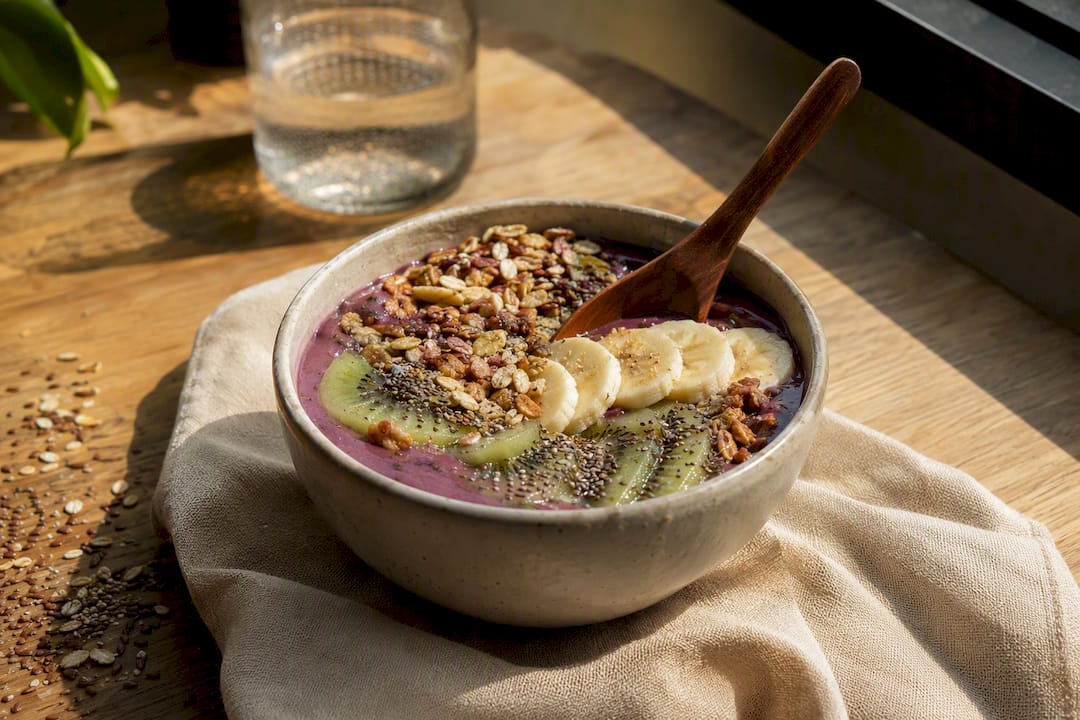
- Smoothie bowl topped with granola and nut butter
- Avocado toast on wholegrain bread with hemp seeds
- Tofu scramble with turmeric and wholemeal toast
- Breakfast beans on toast with nutritional yeast
- Chia pudding with fortified plant milk and fruit
A useful rule of thumb: breakfast should supply roughly 20 to 25% of your daily food intake, so a plate that looks generous is doing its job, not overdoing it.
Key Takeaways
A nutritionally complete plant-based breakfast pairs a wholegrain, a concentrated plant protein and a healthy fat, and closes the B12 and vitamin D gap with fortified foods.
| Point | Details |
|---|---|
| Follow the 20 to 25% rule | Breakfast should supply roughly a quarter of your daily food intake, built from wholegrains, protein and fruit or veg. |
| Aim for 30g protein | Pair tofu, pea protein or soya yoghurt with oats, beans or wholegrain toast to hit the target. |
| Fortify deliberately | Use fortified plant milks and cereals for B12, vitamin D and calcium, checking labels for vegan-friendly D2 or D3. |
| Batch-cook to save time | Pre-cook porridge, beans and pancakes on a weekend to cut weekday prep to under five minutes. |
| Use Granavitalis staples | Nut butters, plant protein powders and ancient grain flours add fat, protein and fibre to any quick breakfast. |
Table of Contents
- Healthy vegan breakfast ideas you can build in five formats
- Building a 30 gram plant-protein breakfast
- Nutrients to watch, and how to fix them fast
- Batch cooking and five-minute breakfast hacks
- Five plug-and-play breakfasts under 10 minutes
- Eating for satiety without overloading on calories
- Getting the fat-to-carb balance right for sustained energy
- Fibre-rich breakfasts for better digestion
- What to drink alongside a plant-based breakfast
- Why Granavitalis backs this approach to breakfast
- Simple ways to boost your breakfast with Granavitalis
- Frequently asked questions
- Sources
Healthy vegan breakfast ideas you can build in five formats
Most quick, healthy vegan breakfast ideas fall into five formats, and rotating through them stops breakfast becoming a chore.
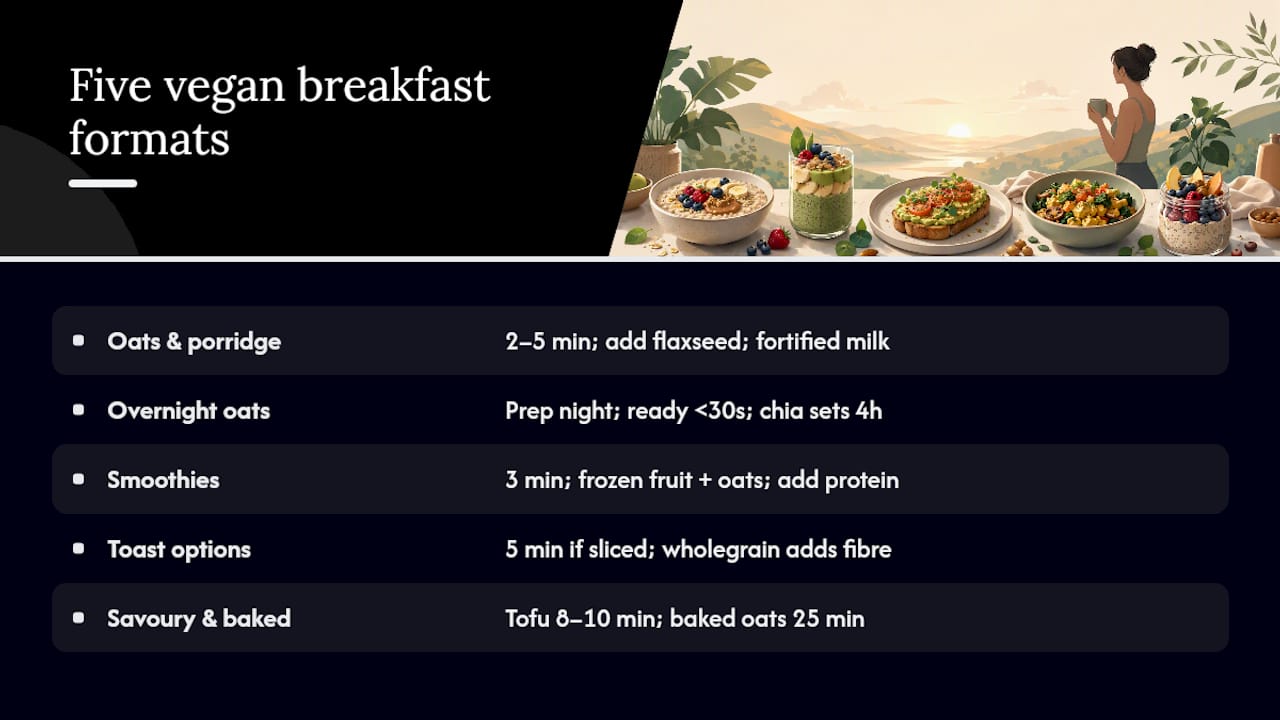
Oats and porridge. Stovetop porridge with fortified oat milk takes about five minutes; microwave versions take two. Stir in a tablespoon of ground flaxseed for omega-3s, or swap water for fortified soya milk to add protein and calcium without changing the method.
Overnight oats and chia pudding. Both are made the night before in a jar: oats or chia seeds soaked in plant milk, ready in under 30 seconds the next morning. Chia pudding sets in around four hours, so a batch made on Sunday covers two or three mornings.
Smoothies and smoothie bowls. A blender jug of frozen fruit, fortified plant milk and a scoop of oats takes three minutes flat. Smoothie bowls take slightly longer because you’re adding granola, seeds and fruit on top, but the extra minute buys real texture and staying power, a trick borrowed from seed-based recipe ideas that lean on crunch for satisfaction.
Toast-based options. Avocado toast or beans on toast are five-minute meals if your bread’s already sliced. Wholegrain or seeded bread adds fibre that white toast simply doesn’t.
Savoury bowls and baked options. Tofu scramble takes eight to ten minutes in a pan. Baked oats take longer, around 25 minutes in the oven, but you can make four portions at once and reheat through the week.
Pro Tip: Keep a jar of mixed seeds (chia, flax, hemp, sunflower) on the counter and add a spoonful to whatever you’re eating. It works on porridge, smoothie bowls, toast and salads alike, and it’s the single easiest way to raise the nutrient density of a meal without changing the recipe.
Building a 30 gram plant-protein breakfast
Hitting 30 grams of protein at breakfast means pairing a concentrated plant protein with a wholegrain and, ideally, a legume or seed. Tofu, tempeh, soya yoghurt and pea protein powder are your heavy hitters. Combine one of them with oats, wholegrain bread or beans, and you’re most of the way there without reaching for anything unusual. Dietitians often describe this as building “nutrient bridges” into a meal, pairing complementary foods so the whole plate does more work than any single ingredient could on its own, which is exactly how dietitians recommend structuring vegan meals.
Here’s roughly what that looks like in practice:
A bowl of high-protein oats made with fortified soya milk and a scoop of pea protein easily clears 30 grams. A tofu scramble on wholegrain toast with a side of beans gets you there just as reliably, and it’s one of the combinations covered in more depth here.
- Swap water for fortified soya milk in porridge or smoothies to add protein for free
- Stir a spoonful of nut butter into oats or yoghurt for both protein and healthy fat
- Keep a concentrated protein powder on hand for mornings when time is tightest
Nutrients to watch, and how to fix them fast
A handful of nutrients need deliberate attention on a plant-based diet, and breakfast is a good place to close the gap.
- Vitamin B12. Not naturally present in plant foods, so fortified cereals, fortified plant milks or a supplement are the reliable route.
- Vitamin D. UK guidance recommends a 10 microgram daily supplement for most people, alongside fortified milks and cereals.
- Calcium. Fortified plant milks can supply up to a third of your daily calcium needs in a single serving, which makes them worth choosing over unfortified alternatives by default.
- Iron. Pair iron-rich grains and legumes with a source of vitamin C, such as citrus fruit or berries, to improve absorption.
- Omega-3. Ground flaxseed and chia seeds are the easiest breakfast-friendly sources.
- Zinc. Found in oats, seeds and legumes, though soaking or sprouting pulses first improves how much your body actually absorbs.
Pro Tip: Check the label before buying a fortified product. Some vitamin D3 is derived from lanolin (an animal product), so look for D2 or lichen-derived D3 if that matters to you.
Soaking dried pulses or oats overnight also reduces phytates, compounds that otherwise block some of that iron and zinc absorption.
Batch cooking and five-minute breakfast hacks
A week of good breakfasts usually comes down to Sunday prep, not daily effort. Cook a large pot of porridge oats and refrigerate it for up to four days, reheating portions with a splash of plant milk. Batch-cook beans or lentils and freeze in portions. Roast a tray of sweet potato for savoury bowls. Freeze a stack of pancakes; they toast from frozen in under three minutes.
For genuinely rushed mornings:
- Microwave a porridge sachet or pre-portioned oat pot
- Grab a pre-made overnight oats jar from the fridge
- Blend a smoothie using a bag of frozen fruit and a splash of fortified milk
- Toast frozen pancakes and top with nut butter
Before the week starts, run through this: grains cooked, beans portioned, fruit frozen and pre-chopped, seed mix topped up. That’s most of the friction removed already, a habit worth building into a proper weekly routine.
Five plug-and-play breakfasts under 10 minutes
These five cover both sweet and savoury, and two are built specifically to hit higher protein numbers.
- Protein porridge bowl. Oats cooked in fortified soya milk, topped with a scoop of pea protein and berries. Five minutes, around 25g protein.
- Tofu scramble on toast. Crumbled firm tofu fried with turmeric, served on wholegrain toast. Eight minutes, around 20g protein.
- Berry smoothie bowl. Frozen berries, fortified milk and oats blended thick, topped with granola and seeds, in the spirit of this smoothie bowl approach. Five minutes, around 15g protein.
- Beans and avocado toast. Warmed beans and mashed avocado on seeded toast. Six minutes, around 18g protein.
- Chia and yoghurt pot. Pre-soaked chia pudding layered with soya yoghurt and fruit. Ready in under a minute if made the night before, around 22g protein.
To cut sugar, swap flavoured plant yoghurts for unsweetened versions. To raise protein further, stir in a tablespoon of nut butter or an extra scoop of powder. A fortified drink built around soya milk, protein powder and nut butter can deliver 300 to 400 calories and 14 to 20 grams of protein in one glass, useful on the mornings you genuinely have no time to chew.
Eating for satiety without overloading on calories
The breakfasts that keep you full longest aren’t necessarily the biggest. Fibre and protein together slow digestion and blunt the blood sugar spike you’d get from, say, white toast and jam alone. Oats paired with seeds or legumes produce a noticeably steadier morning blood-sugar response than refined-carb breakfasts, which matters if you’ve ever hit 11am starving despite eating a full bowl of cereal two hours earlier.
Volume matters too. A smoothie bowl with oats, seeds and fruit sits in the stomach longer than a smoothie of the same calories drunk through a straw, simply because chewing and bulk both slow gastric emptying. If weight management is the goal, favour whole ingredients over their blended or juiced equivalents, and lean on beans, lentils and oats rather than refined grains.
Portion size still counts. A tablespoon of nut butter (roughly 90 to 100 calories) adds useful fat and staying power; three tablespoons quietly triples that. The fix isn’t to avoid calorie-dense plant foods, it’s to use them as accents, not the base. A palm-sized scoop of granola works better as a smoothie bowl topping than a full breakfast bowl on its own, given how concentrated granola tends to be in oil and sugar.
Add fruit rather than fruit juice where you can. Whole fruit brings fibre that slows sugar absorption; juice mostly doesn’t. If you’re watching blood sugar specifically, pairing carbohydrate-heavy foods (oats, toast, granola) with protein and fat, rather than eating them alone, is the single most useful lever you have.
Getting the fat-to-carb balance right for sustained energy
Protein gets most of the attention, but a plant-based breakfast heavy on carbohydrate and light on fat runs out of steam by mid-morning. Healthy fats slow digestion, which spreads energy release out over hours instead of delivering it all in the first 30 minutes.
Practical fat sources for breakfast include nut butters, seeds, avocado and a drizzle of good oil in a savoury bowl. A teaspoon or tablespoon is usually enough, added to oats, spread on toast, or blended into a smoothie. Carbohydrate quality matters as much as quantity: wholegrain oats, wholemeal bread and beans release glucose more slowly than refined cereals or white bread, giving a flatter, longer energy curve rather than a spike and a crash.
A useful mental shortcut is to build each breakfast around three questions: what’s my wholegrain or fibre source, what’s my protein, and what’s my fat? If all three are present, the meal is doing its job. Skip the fat and you’ll likely be hungry again within two hours, however much protein you’ve packed in. Skip the fibre and the same applies, just faster. This is also where fortified plant milks earn their place twice over, once for the calcium and vitamin D, and once for the small amount of fat that helps carry those fat-soluble vitamins into your system.
Fibre-rich breakfasts for better digestion
Most people eating a Western diet fall short on fibre, and breakfast is one of the easiest meals to fix that in. Oats, wholegrain bread, beans, chia seeds and fruit are all naturally high in fibre, and a plant-based breakfast built around any of them will usually outperform a dairy-and-egg equivalent on this measure without any extra effort.
Soluble fibre, found in oats and chia seeds, forms a gel-like substance in the gut that slows digestion and feeds beneficial gut bacteria. Insoluble fibre, found in wholegrain bread and the skins of fruit, adds bulk that helps things move through the digestive tract more comfortably. A breakfast that includes both, porridge with berries, for instance, or beans on wholegrain toast, covers both bases without any special planning.
If you’re new to a higher-fibre plant-based breakfast, introduce it gradually. A sudden jump from white toast to a bowl loaded with oats, chia, seeds and fruit can cause bloating in the first week or two as your gut adjusts. Soaking oats or chia overnight also helps, softening the fibre structure and making it gentler to digest than eating them dry or undercooked. Drinking enough water alongside a higher-fibre breakfast matters too, since fibre needs fluid to do its job properly in the gut.
What to drink alongside a plant-based breakfast
Breakfast doesn’t stop at the plate. A glass of water first thing, before tea or coffee, rehydrates you after a night without fluids and takes the edge off any residual grogginess.
Fortified plant milks do double duty here: a glass alongside your meal, or blended into it, tops up calcium and vitamin D at the same time as quenching thirst. Unsweetened varieties avoid adding sugar you don’t need this early in the day. Tea and coffee are fine in moderation, though tannins in tea can slightly reduce iron absorption from a meal, so it’s worth leaving a 20 to 30 minute gap if you’re eating an iron-focused breakfast like fortified porridge or beans on toast. If you’re partial to a proper cup with breakfast, a well-sourced light roast coffee pairs comfortably with most of the savoury options here without overpowering them.
Herbal teas and diluted fruit juice are reasonable alternatives if you want variety beyond water and plant milk. Whatever you choose, treat it as a genuine part of the meal rather than an afterthought poured on the way out the door.
Why Granavitalis backs this approach to breakfast
Quick, nutritionally complete plant-based breakfasts work because they’re built on a handful of dependable foundations: a wholegrain, a concentrated protein, a healthy fat, and something fortified to close the B12 and vitamin D gap. That’s the same thinking behind how Granavitalis sources ancient grain flours, plant proteins and nut butters, foods chosen for what they add to a plate, not how they photograph.
The nutrient-dense staples covered here, oats, seeds, legumes, nut butters, aren’t a compromise version of breakfast. Done properly, they hold up nutritionally against anything with eggs or dairy in it.
Simple ways to boost your breakfast with Granavitalis
There are a few small swaps that make the biggest difference to how nutrient-dense your morning plate is, and most of them take seconds. A tablespoon of pecan butter stirred into porridge or a smoothie bowl adds healthy fat, natural flavour and enough calories to keep you full past 11am. A scoop of plant protein powder turns an ordinary bowl of oats into one that clears 30 grams of protein without any extra thinking. Ancient grain flours work the same trick for baked oats, adding fibre and a denser, more satisfying texture than refined flour ever will.
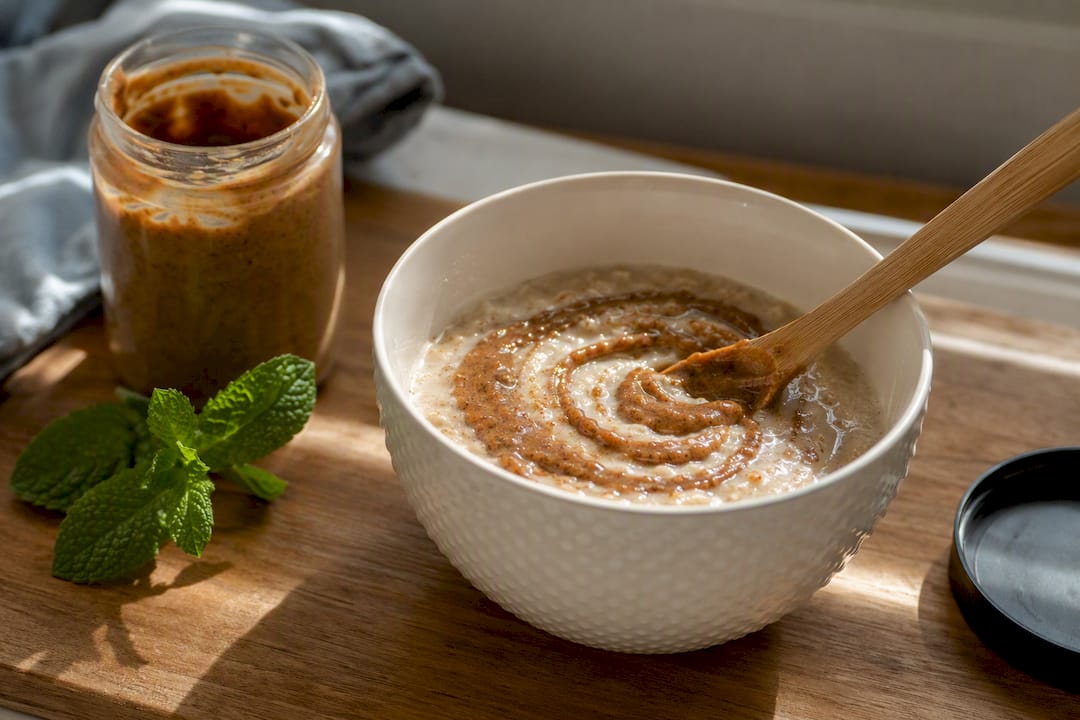
If you’re not sure which nut or seed butter suits your routine best, the Organic Nut & Seed Butter Selection Box is a straightforward way to try a few side by side, smoothie bowls one morning, toast the next, before settling on a favourite. Add a tablespoon to your usual breakfast tomorrow and see how much longer it keeps you going. Order either product today and it’s ready for your next meal-prep session.
Frequently asked questions
What is the healthiest quick plant-based breakfast? Overnight oats made with fortified soya milk, topped with seeds and berries, cover fibre, protein, fat and fortification in one five-minute assembly, and they’re ready before you’ve finished making tea.
How do I get 30 grams of protein from a vegan breakfast? Pair a concentrated protein source, tofu, pea protein powder or soya yoghurt, with a wholegrain or legume. A tofu scramble on wholegrain toast with a side of beans reaches 30 grams without much effort.
Do I need to take supplements on a plant-based diet? UK guidance recommends a 10 microgram vitamin D supplement for most people, and a reliable B12 source, whether fortified food or a supplement, is necessary since plants don’t produce it naturally.
What are good grab-and-go plant-based breakfast options? Pre-made overnight oats jars, chia pudding pots and frozen pancakes toasted straight from the freezer all work in under a minute, provided you’ve batch-prepared them in advance.
Are smoothies as filling as smoothie bowls? Not usually. The extra chewing and bulk from oats, seeds and fruit in a smoothie bowl slows digestion more than drinking the same ingredients blended thin, which is why bowls tend to keep you fuller for longer.
This article is general information, not a substitute for advice from a qualified doctor. Consult a qualified healthcare professional about your own circumstances before acting on anything here.