
Explain protein synergy: what it is and why it matters
TL;DR:
- Protein synergy enhances health by combining proteins and nutrients that work together beyond individual effects. Adequate leucine intake and resistance exercise are essential triggers, especially for older adults, to maximize muscle synthesis. Whole foods and proper food combinations support overall metabolic health, while avoiding protein washing protects against misleading marketing claims.
Protein synergy is defined as the amplified physiological benefit produced when different proteins, or proteins combined with other dietary factors, work together beyond what any single protein achieves alone. The concept sits at the heart of modern nutrition science, covering everything from muscle protein synthesis and sarcopenia management to metabolic health and gut function. Understanding how protein synergy works helps you make smarter choices about food combinations, supplementation, and exercise timing. Granavitalis builds its entire product philosophy around this principle: whole foods deliver more than the sum of their parts.
How does protein synergy work in muscle protein synthesis?
Protein synergy in muscle building depends on two simultaneous triggers: a sufficient leucine signal per meal and a mechanical stimulus from resistance exercise. Achieving both thresholds activates the mTORC1 pathway, the cellular switch that drives muscle protein synthesis. Miss either trigger and the anabolic response is blunted, regardless of how much total protein you consume across the day.
Leucine is the key amino acid that signals muscle cells to begin building. Research identifies a threshold of approximately 2.5–3.0 g of leucine per meal as the minimum needed to trigger a meaningful anabolic response. Whey protein reaches this threshold quickly because it is digested rapidly and delivers a sharp leucine spike into the bloodstream. That speed matters most in the post-exercise window, when muscle tissue is primed to absorb amino acids.
Resistance training adds a separate, mechanical layer to the synergy. Exercise physically activates the mTORC1 pathway through tension and micro-damage in muscle fibres. When protein intake and resistance training coincide, the two signals reinforce each other. A 2026 narrative review confirms that this combined protein and exercise effect is especially critical for older adults managing anabolic resistance, the reduced sensitivity to protein that comes with age.
A network meta-analysis further confirms that whey protein plus resistance exercise outperforms other protein and exercise combinations for muscle mass and strength gains in older adults. Whey’s higher leucine content compared to many plant proteins explains a significant part of this advantage.
- Leucine threshold per meal: approximately 2.5–3.0 g
- mTORC1 activation requires both protein and mechanical stimulus
- Whey protein delivers the fastest leucine spike of common protein sources
- Older adults face anabolic resistance, making both triggers even more critical
- Total daily protein quantity alone does not guarantee synergy
Pro Tip: Pair a whey or leucine-rich protein source with resistance training within two hours of your session. Consuming protein without the exercise stimulus, or exercising without meeting the leucine threshold, leaves half the synergy equation unfulfilled.
What role do protein sources and food matrix play?
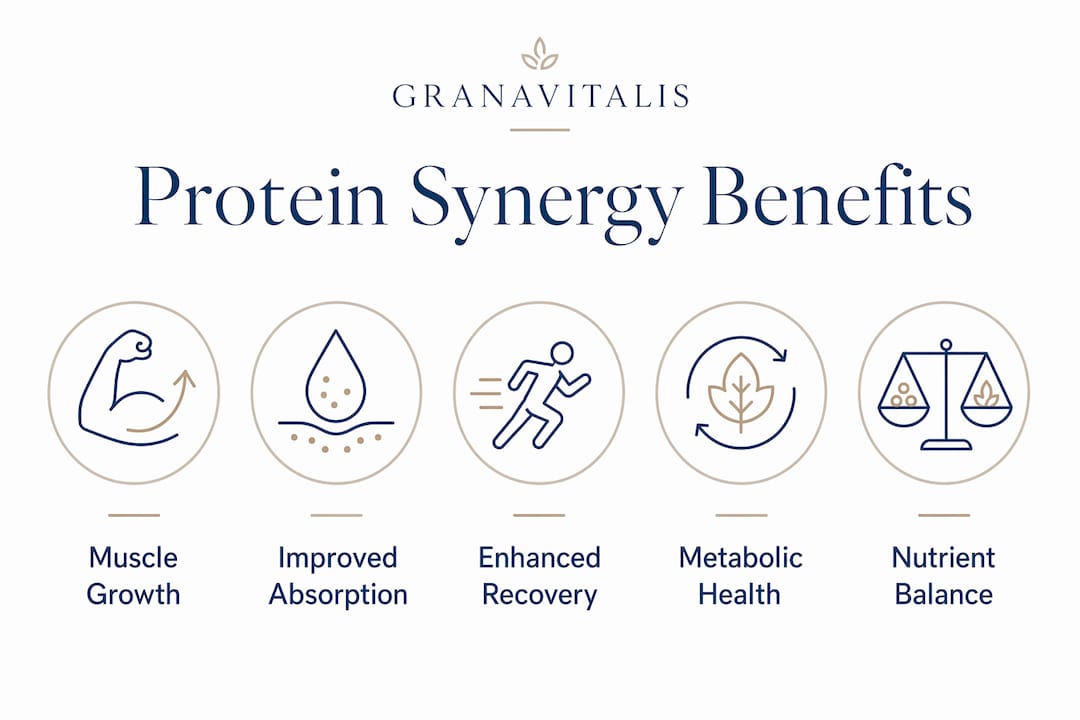
Not all proteins produce the same synergistic effects, and the gap between sources goes well beyond amino acid profiles. Plant proteins from legumes like soy deliver health benefits through both their amino acid content and the broader food matrix they arrive in, including dietary fibre, phytochemicals, and prebiotic compounds. This matrix effect is a separate dimension of nutritional protein synergy that isolated protein powders simply cannot replicate.

Whey protein generally outperforms collagen, casein, and soy in activating muscle protein synthesis after resistance exercise, primarily because of its reliable leucine delivery. Soy is the strongest plant-based alternative, with a complete amino acid profile, but its leucine content is lower than whey’s. For people following plant-based diets, the practical solution is blending complementary proteins, such as combining pea protein with rice protein, to raise the overall leucine density and cover any amino acid gaps.
The food matrix surrounding plant proteins adds a layer of synergy that extends well beyond muscle building. Fibre and phytochemicals in whole plant foods regulate satiety, energy balance, and gut microbiota through prebiotic activity. Substituting animal proteins with plant proteins in the diet is associated with improvements in weight, blood lipids, and glycaemic control. These effects are not produced by amino acids alone. They arise from the interaction between protein and its surrounding nutritional context.
| Protein source | Leucine content | Key matrix components | Primary synergy benefit |
|---|---|---|---|
| Whey protein | High | Minimal (isolated) | Rapid muscle protein synthesis |
| Soy protein | Moderate | Isoflavones, fibre | Muscle synthesis, lipid management |
| Pea protein | Moderate | Fibre, iron | Satiety, complementary blending |
| Hemp protein | Lower | Omega-3 fatty acids, fibre | Gut health, anti-inflammatory |
| Whole nuts and seeds | Variable | Fibre, phytochemicals, healthy fats | Metabolic health, sustained energy |
Whole nuts and seeds, such as those at the core of the Granavitalis range, illustrate this matrix principle well. Their protein content works alongside fibre, healthy fats, and micronutrients to produce effects that a protein isolate cannot match. For a detailed look at how plant protein sources compare in terms of cardiovascular and metabolic outcomes, the evidence is compelling.
How can you apply protein synergy in everyday diet?
Applying protein synergy practically means thinking about food combinations, meal timing, and the quality of your protein sources together, not in isolation. The following steps give you a clear framework.
- Combine complementary plant proteins at meals. Pea and rice protein together cover the full essential amino acid spectrum more effectively than either alone. Legumes paired with whole grains achieve the same result through whole food sources.
- Meet the leucine threshold per meal, not just per day. Spreading protein evenly across three or four meals, each containing approximately 25–40 g of high-quality protein, is more effective than loading most of your intake into one sitting.
- Time protein intake around resistance training. Consuming a leucine-rich protein source within two hours of a resistance session maximises the synergy between mechanical stimulus and anabolic signalling.
- Choose whole food protein sources where possible. Whole foods preserve the matrix of fibre, phytochemicals, and micronutrients that amplify protein’s effects on satiety, gut health, and metabolic function.
- Scrutinise protein supplements and fortified products. Many products add protein to an otherwise poor nutritional base. Check the full ingredient list, not just the protein gram count.
Pro Tip: When building a plant-based meal, treat protein blending as a practical tool rather than a nutritional compromise. A combination of nut butter on whole grain bread with a side of legumes delivers complementary amino acids, fibre, and healthy fats in one sitting. For inspiration, the Granavitalis guide to high-protein plant-based diets is a useful starting point.
Protein washing is the practice of adding protein to ultra-processed foods to create a health halo, without improving the overall nutritional quality of the product. Recognising this tactic protects you from spending money on products that undermine the very synergy you are trying to achieve.
What misconceptions surround protein synergy in marketing?
The biggest misconception about protein synergy is that any product labelled “high protein” automatically delivers it. Protein washing describes the practice of adding protein to ultra-processed foods that remain high in sugar, saturated fat, and salt while staying low in fibre. The protein content improves the product’s apparent health score, but the food matrix actively works against the synergistic benefits protein is supposed to provide.
Under some UK food health scoring models, high-protein labelling can boost a product’s score despite a poor overall nutritional profile. Food companies exploit this gap. A protein-enriched biscuit or snack bar may carry a credible-sounding protein claim while delivering negligible fibre, excessive sugar, and a food matrix that disrupts rather than supports metabolic health.
Watch for these red flags when reading nutrition labels:
- Protein is listed as an added ingredient rather than a natural component of the food
- The product is high in sugar, salt, or saturated fat alongside its protein claim
- Fibre content is below 3 g per 100 g, suggesting minimal whole food matrix
- The ingredient list is long and dominated by additives, emulsifiers, or flavourings
- The protein source is a cheap isolate added to an otherwise nutrient-poor base
Genuine nutritional protein synergy comes from foods where protein exists naturally alongside fibre, micronutrients, and phytochemicals. Whole legumes, nuts, seeds, and minimally processed grains all meet this standard. Nutrition science views protein within a dietary system where interactions with fibre and phytochemicals shape physiological outcomes. A product that strips away those interactions and adds back only protein grams is not delivering synergy. It is delivering marketing.
Key takeaways
Protein synergy produces its greatest benefits when leucine thresholds, food matrix quality, and resistance training all work together rather than in isolation.
| Point | Details |
|---|---|
| Leucine threshold is non-negotiable | Aim for 2.5–3.0 g of leucine per meal to trigger muscle protein synthesis effectively. |
| Exercise completes the equation | Resistance training activates mTORC1 independently; protein and exercise together produce far greater results than either alone. |
| Food matrix amplifies protein’s effects | Fibre and phytochemicals in whole plant foods improve satiety, gut health, and metabolic outcomes beyond amino acids. |
| Plant proteins benefit from blending | Combining pea, rice, soy, or other plant proteins raises leucine density and covers amino acid gaps. |
| Protein washing undermines real synergy | High-protein labels on ultra-processed foods often mask poor nutritional quality; always assess the full food matrix. |
Protein synergy in practice: what I have actually learnt
The science of protein synergy is genuinely exciting, but I have noticed that most people encounter it through the wrong end of the telescope. They read about leucine thresholds and mTORC1 and immediately reach for a whey isolate, treating protein as a pharmaceutical rather than a food. That instinct misses the point.
What years of following nutrition research have taught me is that the most durable health outcomes come from people who treat protein as one thread in a larger dietary fabric. The individuals who consistently improve body composition, metabolic markers, and energy levels are not the ones obsessing over gram counts. They are the ones eating a varied, whole-food diet where protein naturally arrives with fibre, healthy fats, and micronutrients.
The protein washing problem genuinely concerns me. The UK food environment is full of products that exploit the health halo around protein. I have seen protein-enriched crisps, biscuits, and breakfast cereals that would fail any honest nutritional audit. The food transparency conversation happening in nutrition circles right now is overdue. Consumers deserve clear information about what their food actually contains, not just what the front-of-pack headline claims.
My practical advice is simple. Build your protein intake around foods that have not been engineered to look healthy. Nuts, seeds, legumes, whole grains, and quality animal proteins all deliver protein within a matrix that supports rather than undermines your health goals. Supplements have their place, particularly around resistance training, but they should supplement a good diet, not substitute for one. Synergy is not a product feature. It is what happens when you eat real food consistently.
— Jarrod
Granavitalis and whole-food protein synergy
Granavitalis sources its products with the food matrix principle at the centre of every decision. Protein that arrives alongside fibre, healthy fats, and micronutrients is protein that actually works.

The Raw Organic Pecan Butter by RAWGORILLA from Granavitalis delivers protein within a naturally rich matrix of fibre and healthy fats, exactly the kind of whole-food synergy this article describes. For those who want to explore further, the Organic Nut and Seed Butter Selection Box by RAWGORILLA brings together complementary nut and seed butters, each contributing a different amino acid and micronutrient profile. These are not protein-washed products. They are foods built the way nutrition science says food should be built: whole, minimally processed, and genuinely nourishing.
FAQ
What is protein synergy in simple terms?
Protein synergy is the amplified health benefit produced when different proteins, or protein combined with other nutrients, work together beyond what any single protein achieves alone. The effect is most clearly seen in muscle protein synthesis, where leucine-rich protein and resistance exercise together produce far greater results than either does independently.
Does plant protein produce the same synergy as whey?
Whey protein generally activates muscle protein synthesis more effectively than plant proteins due to its higher leucine content. Plant-based diets achieve comparable synergy by blending complementary proteins such as pea and rice, and by benefiting from the additional food matrix effects of fibre and phytochemicals.
How much leucine do I need per meal for protein synergy?
Research identifies approximately 2.5–3.0 g of leucine per meal as the threshold needed to trigger meaningful muscle protein synthesis. Falling below this level reduces the anabolic signal even if total daily protein intake appears adequate.
What is protein washing and why does it matter?
Protein washing is the practice of adding protein to ultra-processed foods to create a health halo, while the product remains high in sugar, fat, or salt and low in fibre. It matters because these products undermine the food matrix interactions that make protein genuinely beneficial, as nutritionists and UK food labelling critics have highlighted.
Can protein synergy support goals beyond muscle building?
Yes. Plant proteins combined with their natural food matrix of fibre and phytochemicals improve satiety, support gut microbiota, and contribute to better blood lipid and glycaemic control. Protein synergy is multidimensional, covering metabolic health and long-term wellbeing, not only muscle growth.