
Defining clean eating principles: a balanced guide
TL;DR:
- Clean eating emphasizes whole, minimally processed foods and balanced macronutrients over restrictive or moralistic rules. It promotes a flexible, sustainable approach focused on food quality, not purity, to support long-term health. Excessive rigidity can lead to anxiety and disorders like orthorexia, so moderation and self-compassion are key.
Clean eating is a nutritional approach centred on whole, minimally processed foods, and it carries no formal medical definition despite widespread use across nutrition communities. Defining clean eating principles means understanding what the term actually stands for, separate from the restrictive or moralistic rules that wellness influencers often attach to it. The Mayo Clinic, Form Fitness, and holistic nutrition experts broadly agree: the philosophy is about food quality, not food purity. Get this distinction right, and clean eating becomes one of the most sustainable and genuinely health-supporting approaches you can adopt.
What does ‘clean eating’ actually mean?
Clean eating is defined by food quality over restriction, with the evidence pointing firmly toward minimally processed whole foods as the foundation of a healthy diet. The practical focus is on reducing ultra-processed items high in added sugars, refined fats, and synthetic additives, not on eliminating entire food groups or labelling meals as morally good or bad.
The core clean eating guidelines rest on a few clear pillars:
- Whole foods first. Vegetables, fruits, legumes, whole grains, quality proteins, and healthy fats form the base of every meal.
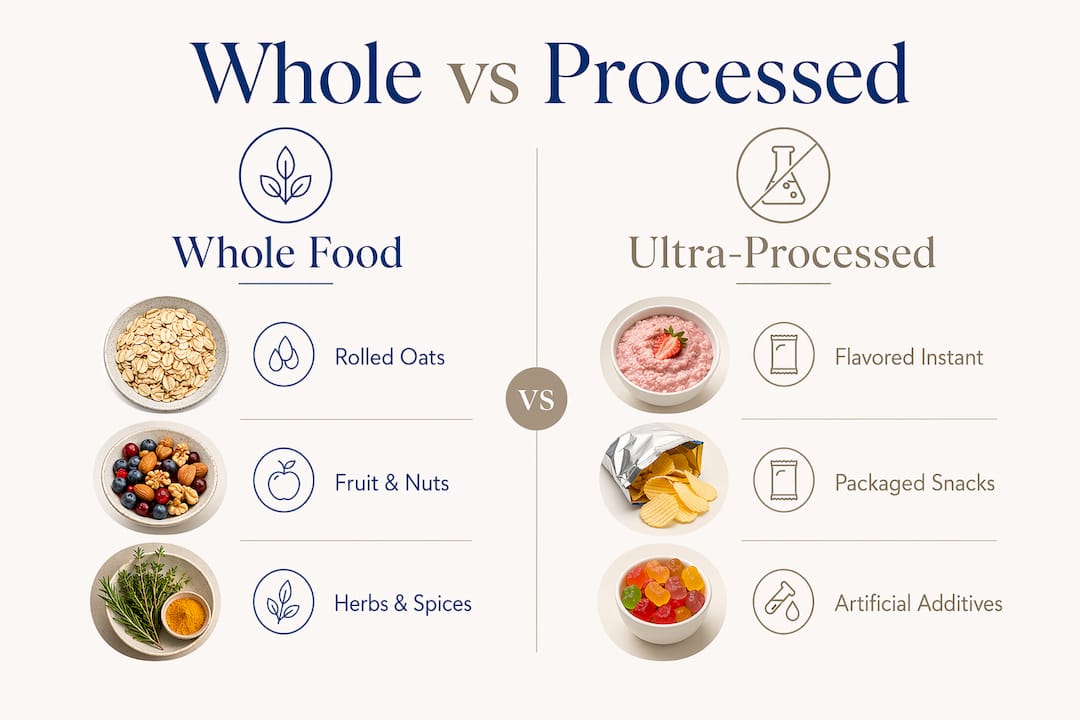
- Minimal processing. Foods close to their natural state retain more nutrients and fewer additives. Think oats, not oat-flavoured cereal bars.
- No unnecessary elimination. Removing food groups without clinical need, such as cutting dairy or gluten without intolerance, is not a clean eating principle. It is a restriction with nutritional cost.
- Reduced ultra-processed intake. Products with long ingredient lists full of emulsifiers, flavour enhancers, and refined starches are the real target, not a slice of sourdough or a bowl of pasta.
- Balanced macronutrients. Each meal should include protein, carbohydrates, and fats in proportions that support your energy and recovery needs.
The distinction between minimally processed and ultra-processed foods is evidence-based and practical, not moral. Minimally processed foods exist close to their natural state. Ultra-processed products are engineered for hyper-palatability through multiple additives and refined ingredients. That is the line clean eating draws.
Pro Tip: When reading an ingredient label, count the number of items you cannot picture in their natural form. If more than a third of the list is unfamiliar additives, emulsifiers, or syrups, the product sits firmly in ultra-processed territory.
How does clean eating differ from fad diets?
Clean eating becomes harmful when it shifts from a flexible food philosophy into a rigid set of purity rules. No formal medical definition exists for clean eating, which leaves the concept open to hijacking by wellness influencers promoting extreme restriction. The result is often anxiety, guilt, and social avoidance rather than better health.
Orthorexia nervosa is the clinical term for an excessive preoccupation with healthy eating. Symptoms include guilt, anxiety, and avoidance of social eating due to strict food purity rules. It is a recognised psychological condition, and the moralistic language of clean eating, framing food as either pure or contaminated, can accelerate its development.
Signs that your approach to clean eating may have become unhealthy include:
- Feeling intense guilt after eating a food you consider ‘impure’
- Avoiding social meals, restaurants, or travel because you cannot control ingredients
- Spending excessive time planning, researching, or worrying about food choices
- Experiencing anxiety when your usual foods are unavailable
- Defining your self-worth through what you eat or do not eat
“Psychologically framing foods as ‘clean’ or ‘dirty’ is not neutral. It assigns identity and morality to eating choices, fostering anxiety and restrictive behaviour.” — Form Fitness Nutrition
The difference between evidence-based clean eating and influencer-driven extremes is straightforward. Evidence-based clean eating focuses on the degree of food processing and nutrient density. Influencer-driven versions often promote the elimination of entire food categories, fear-based messaging around ingredients, and an identity built around dietary perfection.
Pro Tip: If a food choice makes you feel shame rather than nourishment, that is a signal to reassess the rule behind it, not the food itself. A compassionate, flexible food mindset produces better long-term health outcomes than rigid purity thinking.
Practical guidelines for sustainable clean eating habits
Sustainability and social flexibility are the most reliable predictors of long-term clean eating success. Perfection is not the goal. Consistency is. The most practical framework for achieving this is the 80:20 principle.

The 80:20 principle means 80% of your food intake comes from nutritious whole foods, while 20% allows for flexibility, social meals, and personal enjoyment. This approach maintains balance and reduces the obsessive thinking that rigid rules create. It also makes clean eating genuinely liveable across years, not just weeks.
Here is how to put clean eating into daily practice:
| Whole food option | Ultra-processed alternative |
|---|---|
| Rolled oats with fruit and nuts | Flavoured instant porridge sachets |
| Grilled chicken with roasted vegetables | Processed chicken nuggets with sauce |
| Natural nut butter on rye bread | Chocolate-flavoured spread on white bread |
| Lentil soup with herbs and spices | Tinned soup with high sodium and additives |
| Greek yoghurt with seeds and berries | Fruit-flavoured yoghurt with added sugars |
Beyond food choices, hydration and mindful eating are central to the clean eating philosophy. Drinking sufficient water throughout the day supports digestion, energy, and appetite regulation. Eating without distraction, paying attention to hunger and fullness cues, and slowing down at meals all reinforce a healthier relationship with food.
Herbs and spices deserve particular mention. Fresh basil, turmeric, ginger, cumin, and rosemary add flavour without additives, and many carry genuine anti-inflammatory properties. Simple home cooking with these ingredients is one of the most direct ways to reduce ultra-processed food intake without feeling deprived.
For dining out or travelling, clean eating stays sustainable when you focus on choosing the least processed option available rather than seeking perfection. A grilled fish dish at a restaurant is a sound choice. Refusing to eat because the kitchen uses vegetable oil is not.
What nutritional components does clean eating prioritise?
Clean eating emphasises balanced intake across all three macronutrients: protein, carbohydrates, and fats. Each plays a specific role in metabolic and musculoskeletal health, and current guidance favours flexibility and mindful eating over rigid calorie counting or strict meal timing.
Here is what to prioritise within each category:
-
Protein. Choose sources such as eggs, legumes, fish, poultry, Greek yoghurt, and quality plant proteins. Protein supports muscle repair, satiety, and metabolic function. For clean protein sources, the emphasis is on minimal processing and recognisable ingredients.
-
Carbohydrates. Whole grains including oats, quinoa, brown rice, and ancient grains provide fibre, B vitamins, and sustained energy. Refined carbohydrates in white bread or sugary cereals offer little of this nutritional value.
-
Fats. Healthy fats from avocados, olive oil, nuts, and seeds support brain function, hormone production, and the absorption of fat-soluble vitamins. These are not foods to fear or restrict.
-
Micronutrients. A varied diet rich in colourful vegetables and fruits covers most micronutrient needs. Diversity across food types is the most reliable strategy for avoiding deficiencies.
A common misconception is that eliminating dairy or gluten is a clean eating requirement. Dairy provides protein, calcium, and B vitamins. Grains support gut health and energy unless a clinical intolerance exists. Removing them without medical reason can impair nutritional balance. Clean eating does not demand this. Fad diets do.
Pro Tip: A simple swap to improve nutrient density immediately: replace a processed snack with a small handful of raw nuts or seeds. You gain healthy fats, protein, and minerals in a single, unprocessed food.
Key takeaways
Clean eating is defined by prioritising minimally processed whole foods, maintaining balanced macronutrients, and avoiding the moralistic food rules that lead to obsession rather than health.
| Point | Details |
|---|---|
| Focus on processing, not purity | Target ultra-processed foods with additives, not entire food groups or moral labels. |
| Use the 80:20 principle | Eat nutritiously 80% of the time and allow flexibility for social enjoyment and balance. |
| Avoid orthorexia triggers | Guilt, social avoidance, and food anxiety are signs clean eating has become harmful. |
| Prioritise all three macronutrients | Protein, carbohydrates, and fats each serve essential functions; do not restrict without clinical reason. |
| Consistency beats perfection | Small, daily shifts toward whole foods build sustainable habits more reliably than rigid rules. |
Why I think most people overcomplicate clean eating
I have watched the clean eating conversation shift dramatically over the past decade. What started as a sensible push toward whole foods became, in many corners of the internet, a competitive sport in dietary purity. People began removing food groups not because their bodies needed it, but because an influencer made restriction look aspirational.
The clients and community members I have spoken with who struggle most with food are rarely those eating too many processed foods. They are the ones who have internalised the idea that a single “impure” meal undoes their efforts. That thinking is the problem, not the pasta.
What actually works, in my experience, is treating clean eating as a direction rather than a destination. You move toward whole foods, better hydration, and mindful meals. You do not arrive at a perfect state and stay there. The days you eat a takeaway or share a birthday cake are not failures. They are part of a life that includes food as pleasure, culture, and connection, not just fuel.
The sustainable nutrition approach I respect most is one that gets easier over time, not harder. If your food rules are making you more anxious each month, they are not serving your health. Simplify. Cook more. Stress less. Your body responds better to consistency and calm than to perfection and pressure.
— Jarrod
How Granavitalis supports your clean eating lifestyle

Granavitalis was built around exactly the principles this article describes: whole ingredients, minimal processing, and genuine nutritional integrity. Every product in the Granavitalis range is selected because it belongs in a clean eating kitchen without compromise. The Raw Organic Pecan Butter by RAWGORILLA is a strong example: raw, organic, and made from a single recognisable ingredient. No additives, no refined oils, no hidden sugars. If you want to explore further, the Organic Nut & Seed Butter Selection Box offers a curated range of butters that make clean eating practical, flavourful, and genuinely satisfying every day.
FAQ
What is clean eating in simple terms?
Clean eating is the practice of prioritising whole, minimally processed foods while reducing ultra-processed products high in additives, refined sugars, and artificial fats. It does not require eliminating food groups or following rigid rules.
Is clean eating the same as a specific diet like paleo or keto?
Clean eating is not a specific diet. It is a broader food philosophy that can overlap with various dietary patterns, but unlike paleo or keto, it does not mandate the removal of entire macronutrient categories or food groups.
Can clean eating become harmful?
Yes. When clean eating becomes obsessive or moralistic, it can develop into orthorexia nervosa, a condition characterised by anxiety and guilt around food choices and avoidance of social eating. Flexibility and self-compassion are protective factors.
Do I need to cut out gluten or dairy to eat cleanly?
No. Removing gluten or dairy without a clinical diagnosis of intolerance or coeliac disease is not a clean eating requirement and can reduce nutritional intake of calcium, B vitamins, and fibre. Clean eating focuses on food quality, not unnecessary elimination.
What is the 80:20 rule in clean eating?
The 80:20 principle means 80% of your food intake comes from nutritious whole foods, with 20% allowing for flexibility and enjoyment. This balance supports long-term adherence without encouraging obsessive behaviour.