
The role of nutrient diversity in optimal health
TL;DR:
- Nutrient diversity involves consuming a wide range of foods to provide comprehensive nutrients for health. Recent research links high dietary diversity to a lower risk of type 2 diabetes and better gut microbiota. Focusing on variety and food synergy offers greater long-term benefits than chasing single superfoods.
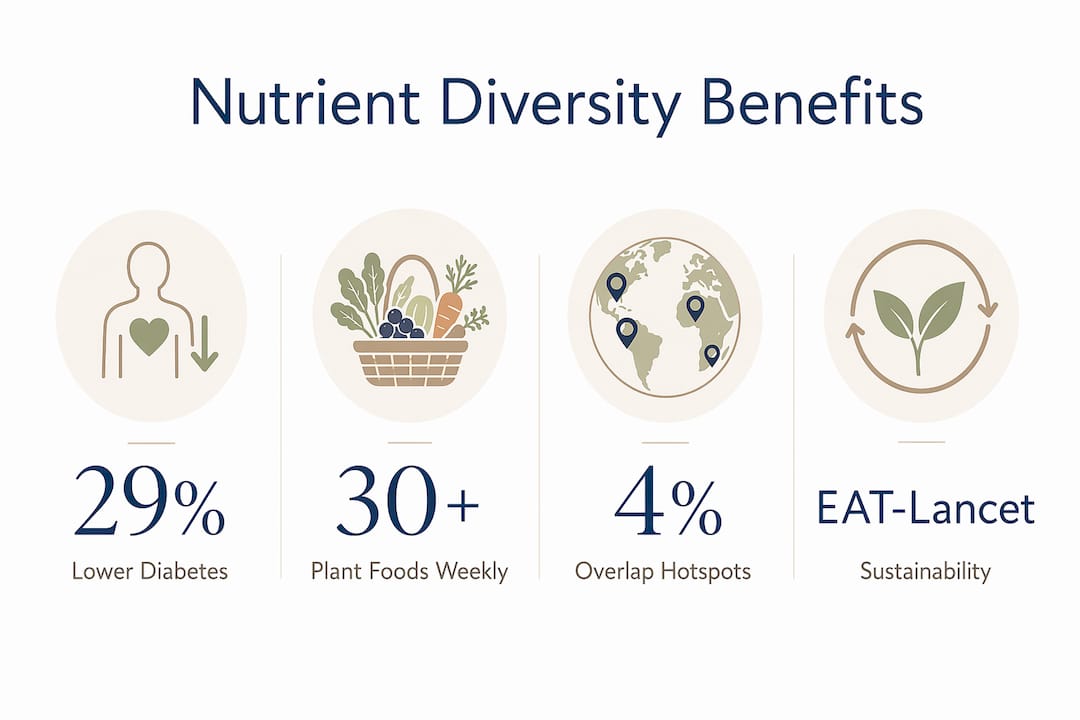
Nutrient diversity is defined as the practice of consuming a wide range of different nutrients from multiple food sources to support comprehensive biological function. Where nutrient density measures how much nutrition a single food delivers, nutrient diversity measures how many distinct nutritional signals your body receives across your whole diet. The role of nutrient diversity goes well beyond filling gaps. Research published in 2026 links high dietary diversity scores to a 29% lower risk of type 2 diabetes, driven by positive changes in gut microbiota and metabolic pathways. Granavitalis builds its entire product philosophy around this principle: real nutrition comes from variety, not from chasing a single superfood.
How does nutrient diversity improve nutritional adequacy?
Nutrient density and nutrient diversity are complementary, not interchangeable. A nutrient-dense food delivers a high concentration of specific vitamins or minerals per calorie. Nutrient diversity, by contrast, ensures your body receives the full spectrum of micronutrients, phytonutrients, and fibre types it needs to function well. Focusing only on density creates blind spots.
The mechanism behind dietary diversity is called nutrient stacking. Combining foods with complementary nutrients enhances absorption and bioavailability beyond what any single food achieves alone. Spinach paired with an iron-rich legume increases non-haem iron uptake because the vitamin C in spinach converts iron into a more absorbable form. Walnuts eaten alongside flaxseed deliver both omega-3 ALA and lignans, compounds that work together to reduce inflammation.

Nutrient stacking also supports mitochondrial function and reduces systemic inflammation over time. These are not short-term effects. They accumulate across years of consistent dietary variety. That is why longevity nutrition researchers argue that overall nutrient variety outperforms superfood upgrades for sustained health.
Key nutrient combinations worth building into your meals:
- Spinach + soybean or lentil: vitamin C boosts non-haem iron absorption
- Walnuts + flaxseed: combined omega-3 and lignan delivery
- Turmeric + black pepper: piperine increases curcumin bioavailability by a substantial margin
- Eggs + leafy greens: fat-soluble vitamins A, D, E, and K require dietary fat to absorb
Pro Tip: Rotate your protein sources across the week. Swapping between eggs, legumes, fish, and nuts delivers a broader amino acid and micronutrient profile than relying on one source daily.
What does recent research say about dietary diversity and health?
The 2026 evidence base for the importance of nutrient diversity is strong and growing across three distinct areas: disease prevention, micronutrient adequacy, and environmental sustainability.
Dietary diversity and type 2 diabetes risk
A study published in 2026 tracking two Chinese cohorts found that high dietary diversity was associated with a 29% lower risk of type 2 diabetes. The protective mechanism runs through the gut microbiome. Diverse diets enrich beneficial bacterial genera and stimulate metabolic pathways including vitamin B6 metabolism. This is not a trivial finding. It suggests that the composition of your plate, not just its calorie count, directly shapes your metabolic health.
Agricultural diversity and micronutrient deficiencies
Research examining 113 districts across India found that regions with higher agrobiodiversity showed clear reductions in protein, iron, and folate deficiencies. The implication is direct: what farmers grow shapes what populations eat, and what populations eat shapes their nutritional status. Crop diversity at the agricultural level translates into dietary diversity at the household level.
However, a critical nuance emerges from the same body of research. Only 4% of districts show hotspots for both species diversity and dietary functional diversity. High species counts in farming do not automatically produce nutritional variety. Cereals dominate production in many areas, which reduces the nutritional impact of apparent biodiversity. Functional alignment, meaning the right mix of pulses, vegetables, fruits, and grains, matters more than raw species count.
Sustainability and the EAT-Lancet connection
| Outcome | Effect of biodiverse, minimally processed diet |
|---|---|
| Nutrient adequacy score (PANDiet) | Improved by 4.12 points |
| HRD score increase | Mean rise of 13.91 points |
| Ultra-processed food substitution | 12.44% replaced with minimally processed foods |
| Carbon emissions reduction | Lowered by 1.07 kg CO2-eq per day |
Adopting a biodiverse diet aligned with EAT-Lancet guidelines improves nutritional adequacy while simultaneously reducing greenhouse gas emissions. The environmental and health benefits are not in tension. They reinforce each other.
“Synergies between food biodiversity, processing levels, and the EAT-Lancet diet show that optimising for nutrient adequacy and environmental sustainability are complementary goals, not competing ones.”
How do you measure nutrient diversity in your diet?
Measuring the impact of nutrient variety requires more than counting food groups. Several tools exist, each with different strengths and limitations.
- Dietary Variety Score (DVS): Counts the number of different foods consumed over a set period, typically one week. Simple to use but does not weight foods by nutritional contribution.
- Alternative Dietary Variety Score (ADVS): A refined version that includes whole grains as a distinct category. Japanese researchers found that including whole grains in variety indices improves accuracy across life stages, particularly for women.
- PANDiet score: Measures the probability that nutrient intake meets recommended levels. More precise than simple variety counts because it accounts for actual nutrient adequacy, not just food group presence.
- Food group frequency tracking: Logging which food groups you eat across a week. Useful as a starting point but misses intra-group variety, for example, eating only white rice within the grain group.
The core limitation of simple variety scores is that they treat all foods within a category as equivalent. Eating white bread and quinoa both count as grains, but their nutritional profiles differ substantially. Researchers recommend updating dietary variety indices to reflect modern diets more accurately, particularly by distinguishing whole grains from refined ones.
Pro Tip: Track your plant food variety across a full week, not just a single day. Aiming for 30 or more different plant foods per week is a practical target linked to better microbiome diversity and lower inflammatory markers.
Practical ways to assess and improve your variety:
- Keep a weekly food log and count distinct plant species consumed
- Use the PANDiet framework to identify specific nutrient gaps
- Check whether your grain intake includes ancient or whole grain varieties, not just refined options
- Assess protein source rotation: are you drawing from at least four distinct sources each week?
What are practical strategies to increase nutrient diversity daily?
Building genuine food diversity for health does not require a complete dietary overhaul. It requires deliberate variety within each food category.
Plant foods: the 30-plant target
Consuming 30 or more different plant foods per week strongly correlates with better microbiome diversity, lower CRP inflammatory markers, and improved glucose regulation. Thirty sounds like a lot. It is achievable when you count herbs, spices, nuts, seeds, legumes, and grains alongside vegetables and fruit. A single meal of brown rice, lentils, spinach, walnuts, pumpkin seeds, and a turmeric-black pepper dressing contains six distinct plant species.
Ancient grains as a diversity anchor
Ancient grains such as teff, amaranth, spelt, and einkorn deliver micronutrient profiles that modern hybridised wheat cannot match. Rotating across nutritious ancient grains adds zinc, magnesium, B vitamins, and resistant starch that refined grains simply do not provide. This is not nostalgia. It is nutritional strategy.
Nuts and seeds: concentrated variety
Nuts and seeds are among the most efficient vehicles for nutrient diversity. A tablespoon of mixed seeds, including hemp, chia, sesame, and sunflower, delivers distinct fatty acid profiles, mineral ratios, and phytonutrients. Nut butters made from single or blended varieties offer the same benefit in a convenient format. Understanding nutrient synergy between nuts and seeds helps you build combinations that genuinely add up.
Common pitfalls to avoid
- Eating the same “healthy” foods daily: Salmon and broccoli every night is nutrient-dense but not nutrient-diverse.
- Relying on ultra-processed “fortified” foods: Fortification adds isolated nutrients. It does not replicate the synergistic effect of whole food variety.
- Counting food groups without checking intra-group variety: Five servings of the same vegetable counts as one species, not five.
- Ignoring fermented foods: Kefir, kimchi, and live-culture yoghurt add microbial diversity alongside nutritional variety.
| Approach | Nutrient diversity outcome |
|---|---|
| Rotating 5+ grain types weekly | Broader B vitamin, fibre, and mineral profile |
| Eating 4+ protein sources weekly | Fuller amino acid and micronutrient coverage |
| Including nuts and seeds daily | Distinct fatty acids, zinc, selenium, and vitamin E |
| Replacing ultra-processed foods | PANDiet score improvement of 4.12 points |
Key takeaways
Nutrient diversity, not nutrient density alone, is the defining factor in achieving comprehensive nutritional adequacy and long-term metabolic health.
| Point | Details |
|---|---|
| Diversity beats density alone | Eating a wide range of foods delivers synergistic nutrient effects that single superfoods cannot replicate. |
| 30 plants per week | Reaching 30 different plant species weekly links to better microbiome diversity and lower inflammation. |
| Functional alignment matters | High species count in farming or diet does not guarantee nutritional variety without the right food group balance. |
| Measure with the right tools | PANDiet and ADVS scores reflect nutrient adequacy more accurately than simple food group counts. |
| Replace ultra-processed foods | Substituting minimally processed whole foods improves nutrient adequacy scores and reduces carbon emissions simultaneously. |
Why nutrient diversity is the most underrated idea in nutrition
Nutrient density gets all the attention. Every year, a new superfood tops the wellness charts, and people spend real money chasing it. I have watched this cycle repeat for years, and the pattern is always the same: the superfood delivers something, but not everything. The body does not run on one compound. It runs on thousands of them working together.
What I find genuinely exciting about the 2026 research is that it validates what traditional food cultures have always known intuitively. Diverse, seasonal, minimally processed diets built around whole grains, legumes, vegetables, nuts, and seeds produce better health outcomes than any single food ever will. The Indian agrobiodiversity data is particularly striking to me. The connection between what grows in a region and what deficiencies its population experiences is direct and measurable.
My honest caution is this: do not let variety become a numbers game. Tracking 30 plant species per week is a useful heuristic, but it means nothing if you are eating 30 varieties of crisps. Functional alignment, the right mix of food groups delivering the right nutrients, is what actually moves the needle. A diet built on nutrient-dense whole foods from genuinely diverse sources is the goal. The number is just a proxy for that goal.
The brands and products that take this seriously, including Granavitalis, are building something worth paying attention to. Ancient grains, raw nut butters, and seed blends are not marketing. They are the practical expression of a principle that the research keeps confirming.
— Jarrod
Granavitalis products that put nutrient diversity into practice
Granavitalis sources ingredients specifically to support the kind of food diversity for health that the research describes. The range includes ancient grain flours, raw nut butters, and seed blends selected for their distinct nutritional profiles, not just their flavour.

The Immune Booster Superfood Bundle brings together multiple nutrient-rich whole foods in one place, making it straightforward to add genuine variety to your daily meals. For those building a nut and seed rotation, the Organic Nut & Seed Butter Selection Box from RAWGORILLA delivers distinct fatty acid profiles, minerals, and phytonutrients across a single purchase. Every product Granavitalis stocks is chosen because it adds something the rest of your diet may be missing.
FAQ
What is nutrient diversity in simple terms?
Nutrient diversity means eating a wide range of different foods so your body receives many distinct nutrients, not just high amounts of a few. It is the variety across your whole diet, not the quality of any single food.
How does nutrient diversity differ from nutrient density?
Nutrient density measures how much nutrition one food delivers per calorie. Nutrient diversity measures how many different nutrients your overall diet provides. Both matter, but diversity addresses gaps that density alone cannot fill.
How many plant foods should I eat per week?
Consuming 30 or more different plant species weekly is linked to better microbiome diversity and lower inflammatory markers. Count herbs, spices, nuts, seeds, legumes, and grains alongside vegetables and fruit.
Does agricultural diversity affect my nutritional health?
Research across 113 Indian districts shows that regions with higher agrobiodiversity have measurably lower rates of protein, iron, and folate deficiency. What is grown locally shapes what people eat and, directly, their nutritional status.
Can ultra-processed foods undermine dietary diversity?
Replacing ultra-processed foods with minimally processed whole foods improves nutrient adequacy by 4.12 PANDiet points and reduces carbon emissions. Ultra-processed foods add isolated nutrients but remove the synergistic complexity of whole food variety.