

Balanced breakfasts for lasting energy and wellness
TL;DR:
- A balanced breakfast includes protein, complex carbohydrates, fiber, and healthy fats, supporting sustained energy and appetite control. Consuming these nutrients regularly influences hormonal responses that suppress hunger hormones and stabilize blood glucose, reducing mid-morning cravings. Building routines around whole foods aligned with European guidelines fosters long-term metabolic health and overall wellness.
Your first meal of the day does far more than silence a rumbling stomach. It sets your blood sugar trajectory, influences hunger hormones for hours, and shapes the food choices you make at lunch and dinner. Yet most people in Europe still reach for white toast, sugary cereals, or skip breakfast entirely, believing it has little bearing on how they feel by mid-morning. The reality is quite different, and the science behind breakfast balance is both compelling and practical enough to act on immediately.
Table of Contents
- What makes a breakfast balanced?
- How breakfast quality shapes your energy and appetite
- Why breakfast influences your wellness long term
- Building practical balanced breakfasts in Europe
- What most guides miss about breakfast balance
- Take your breakfast balance further
- Frequently asked questions
Key Takeaways
| Point | Details |
|---|---|
| Balanced breakfast essentials | Protein, fibre, whole grains, and healthy fats work together for steadier energy and appetite. |
| Impact on later meals | Your morning meal’s quality is linked to improved nutrient density at lunch and dinner. |
| Health risk of skipping | Skipping breakfast is associated with higher risk for metabolic syndrome and poor wellness outcomes. |
| Practical European guidance | European breakfast recommendations favour whole grains and low sugar for optimal health. |
| Personalisation matters | Balanced breakfasts should be tailored to individual goals, preferences, and routines. |
What makes a breakfast balanced?
A balanced breakfast is not simply “a healthy meal in the morning.” It is a deliberate combination of macronutrients (the broad categories of protein, carbohydrates, and fats) and micronutrients that work together to sustain energy, manage appetite, and support cognitive function. Get this combination right, and you will feel noticeably different by 11am.
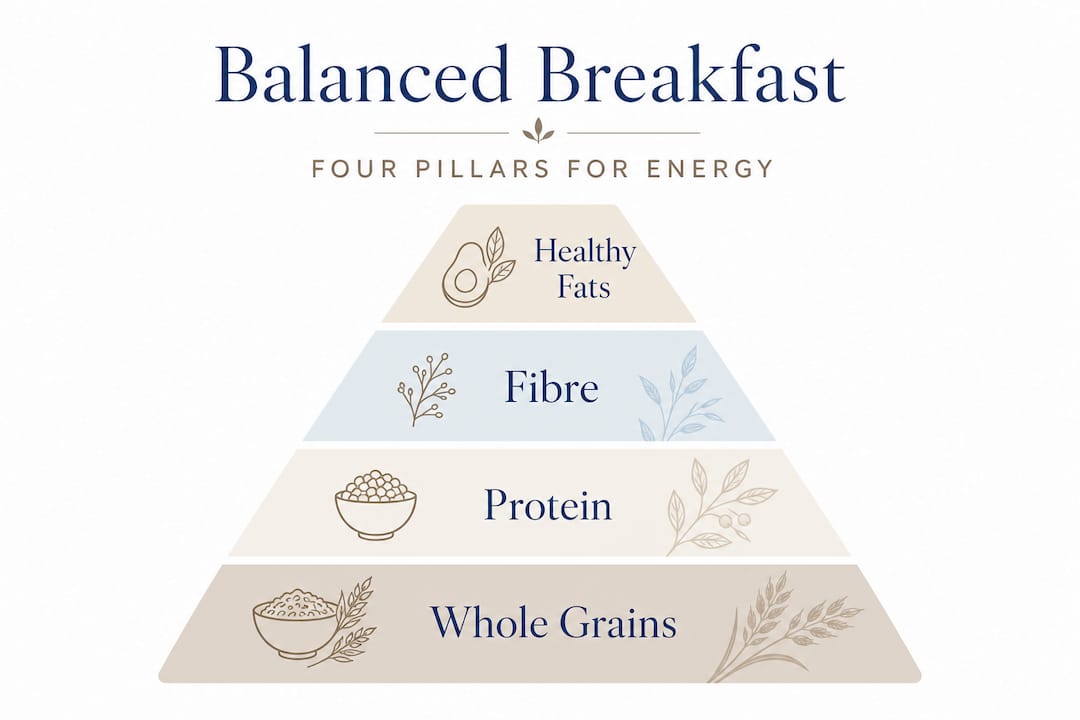
The four pillars of breakfast balance are:
- Protein: Eggs, Greek yoghurt, nuts, seeds, legumes, or plant-based protein powders. Protein slows gastric emptying and triggers satiety hormones.
- Complex carbohydrates: Whole oats, rye bread, muesli, or ancient grain porridge. These release glucose gradually rather than spiking and crashing your energy.
- Dietary fibre: Fruit, vegetables, seeds, and whole grains all contribute. Fibre feeds your gut microbiome and keeps hunger at bay.
- Healthy fats: Nut butters, seeds, avocado, or full-fat yoghurt. Fat slows carbohydrate absorption and supports brain function.
| Nutrient | Key role at breakfast | Good wholefood sources |
|---|---|---|
| Protein | Satiety, muscle repair, cognitive focus | Eggs, nuts, seeds, legumes, yoghurt |
| Complex carbs | Sustained energy release | Oats, rye, muesli, ancient grains |
| Dietary fibre | Appetite control, gut health | Fruit, veg, wholegrains, seeds |
| Healthy fats | Brain function, absorption of fat-soluble vitamins | Nut butter, avocado, flaxseed, walnuts |
| Micronutrients | Metabolic support, immunity | Berries, seeds, leafy greens |
A breakfast that leans entirely on carbohydrates (think plain toast with jam) is not balanced. It will produce a rapid glucose rise followed by a crash, leaving you hungry and irritable well before lunch. Balanced breakfast composition with protein, fibre, and a lower glycaemic impact consistently supports steadier morning appetite, energy, and cognitive performance until late morning. This is not guesswork; it is one of the clearest patterns in nutrition research.
For practical inspiration, our nutrient-dense breakfast tips walk you through building a plate that covers all four pillars without making breakfast complicated. And if protein is your priority, the full guidance on how to maximise breakfast protein is worth bookmarking. European dietary guidance also highlights the value of whole grains and varied nutrients, as outlined in the European breakfast guidance from the EU’s knowledge gateway.
Pro Tip: Pair a protein source with a high-fibre food at breakfast every day for two weeks. Most people report noticeably less late-morning hunger within the first week, often without changing anything else.
How breakfast quality shapes your energy and appetite
Now that we understand what a balanced breakfast includes, let’s look at how these choices affect your physical well-being throughout the day.
The mechanism is hormonal. When you eat protein and fibre together, your gut releases satiety hormones including GLP-1 (glucagon-like peptide-1) and PYY (peptide YY). These hormones signal to your brain that you are full and should stop eating. They also slow the movement of food through the digestive tract, meaning energy from breakfast arrives gradually rather than in one rapid surge.
Research confirms that breakfast protein suppresses hunger more effectively than low-protein, high-carbohydrate breakfasts by influencing gut hormone responses, including GLP-1 and PYY, for several hours after eating.
The difference in how you feel by mid-morning is stark. Consider these two scenarios:
- Low-protein, high-sugar breakfast: 70g of sweetened cornflakes with semi-skimmed milk. Blood glucose peaks sharply within 30 to 40 minutes, then falls. By 10am you feel tired, unfocused, and craving something sweet or starchy. Hunger hormones (ghrelin) surge earlier than they should.
- High-protein, high-fibre breakfast: 150g of Greek yoghurt with mixed seeds, a handful of berries, and a portion of whole grain muesli. Blood glucose rises modestly and holds steady. Satiety hormones remain elevated. You reach mid-morning still focused, with appetite comfortably suppressed.
| Breakfast type | Satiety by 10am | Energy stability | Ghrelin (hunger hormone) levels | Cognitive focus |
|---|---|---|---|---|
| High-protein + fibre | High | Stable | Lower | Stronger |
| Low-protein + high sugar | Low | Peak then crash | Higher | Reduced |
| Skipped entirely | Very low | Erratic | Very high | Impaired |
How a balanced breakfast affects your morning in practice:
- Protein and fibre slow gastric emptying, meaning food stays in your stomach longer and you feel fuller.
- Slow glucose release keeps insulin steady, avoiding the post-spike crash that causes fatigue.
- GLP-1 and PYY suppress appetite, reducing the urge to snack by 10am.
- Steady glucose supports neurotransmitter production, meaning sharper focus and better mood.
- A nutritious breakfast reduces the likelihood of compensatory overeating at lunch.
If you want to explore this further, our guide to high fibre high protein breakfasts has practical meal ideas for every appetite. Research published in Scientific Reports also highlights how breakfast fibre and diet quality connect across the full day. Ancient grains deserve particular attention here: our piece on how to boost energy with fibre-rich grains covers varieties like spelt, amaranth, and teff that most people have never considered for breakfast.
Why breakfast influences your wellness long term
Beyond immediate energy, breakfast choices influence your overall health and wellness in lasting ways.
Skipping breakfast regularly is not a neutral decision. Observational research consistently associates it with poorer metabolic outcomes, including a higher prevalence of metabolic syndrome. Metabolic syndrome is a cluster of conditions (raised blood pressure, elevated blood sugar, excess abdominal fat, and abnormal cholesterol) that together increase the risk of heart disease and type 2 diabetes. A published meta-analysis found that breakfast skipping is associated with higher risk of metabolic syndrome and its individual components, reinforcing why habitual breakfast consumption is considered important for cardiometabolic wellness.
Here is what the evidence links to regularly skipping breakfast:
- Greater difficulty managing appetite across the day, leading to larger and less nutritious meals later
- Higher likelihood of elevated fasting blood glucose over time
- Poorer lipid profiles, including raised LDL cholesterol in some studies
- Increased cortisol response in the morning, which can worsen stress and fatigue
- Lower overall dietary quality, including reduced intake of fibre, vitamins, and minerals
The breakfast-to-diet-quality link is particularly interesting. Nutrient density at breakfast is positively associated with the quality of meals later in the day, which means what you eat at 7am genuinely shapes what you choose at noon and 7pm. This is partly behavioural (a positive start to the day encourages better choices) and partly hormonal (a well-regulated appetite leads to more considered food decisions).
For practical ideas that bring this science into your kitchen, our collection of nutritious breakfast ideas covers everything from quick weekday options to more relaxed weekend meals. And for a policy-level view on what European health authorities recommend, the European dietary guidelines provide a useful reference on whole grain intake and sugar limits across member states.
Building practical balanced breakfasts in Europe
With the health impact clear, here is how to put balanced breakfasts into practice in your European context.

European policy guidance on breakfast is notably consistent across member states. Whether you look at Nordic, Mediterranean, or central European guidelines, the recurring message is the same: choose whole grains, limit added sugar, include varied food groups, and prioritise nutrient density. This is not bureaucratic advice for its own sake; it maps precisely onto what the science says about blood glucose management, satiety, and long-term metabolic health.
Here is a simple five-step framework to build a balanced breakfast plate:
- Start with a whole grain base. A serving of rolled oats, whole grain muesli, rye bread, or a porridge made from spelt or teff gives you complex carbohydrates and initial fibre.
- Add a quality protein source. This might be a soft-boiled egg, a spoonful of nut butter, a portion of Greek yoghurt, or a scoop of plant-based protein mixed into your porridge.
- Layer in fibre and micronutrients. Fresh or frozen berries, sliced banana, grated apple, or a handful of seeds all count. Aim for at least one fruit or vegetable portion.
- Include a healthy fat. A drizzle of almond butter, a tablespoon of ground flaxseed, or a few walnuts provide satiety and support fat-soluble vitamin absorption.
- Check your sugar. Read the label on any packaged cereal or muesli. Many European supermarket options contain more added sugar than a biscuit. Choose options with under 5g of sugar per 100g where possible.
Foods that make this easy in practice include whole grain muesli (preferably without added sugars), natural nut butters, hemp or pumpkin seeds, kefir or natural yoghurt, and fresh seasonal fruit. These are not expensive or exotic choices. They are available across Europe and take under five minutes to assemble. For inspiration on how to build these plates with fibre-rich ingredients, our guide to fibre-rich breakfast foods is a good starting point. If you follow a plant-based approach, our easy plant-based breakfast ideas cover satisfying options that hit all four nutrient pillars without any animal products. If you want an idea of what energising vegan options look like more broadly, these energising vegan snacks offer useful inspiration beyond breakfast too.
Pro Tip: Always check the ingredients list on packaged cereals, not just the nutrition panel. If sugar or glucose syrup appears in the first three ingredients, the product is likely too sweet to anchor a balanced breakfast, regardless of any health claims on the front of the pack.
What most guides miss about breakfast balance
Here is a perspective you rarely find in standard nutrition advice: breakfast balance is deeply personal, and most guides obscure this fact by presenting a single template as universal truth.
The research on breakfast is largely observational. That means studies can show correlations (people who eat balanced breakfasts tend to have better health outcomes) but cannot always confirm causation. People who eat structured, nutritious breakfasts often have other healthy lifestyle habits too: regular sleep, physical activity, and lower stress. Attributing all the benefit to breakfast alone oversimplifies a complex picture.
This matters because it means the rigid approach to breakfast (eat this exact combination at this exact time every day) is unnecessary and often unsustainable. What actually matters is building a routine that works for your schedule, your appetite, and your health goals. Some people function beautifully on an early breakfast at 6:30am. Others eat better if they wait until 8:30am when their appetite has genuinely woken up.
Protein-forward breakfasts genuinely favour people managing blood sugar, recovering from exercise, or trying to moderate calorie intake across the day. But someone with different goals and a naturally smaller morning appetite might find a lighter, fruit and seed-based breakfast more sustainable, and therefore more beneficial in the long run.
We think the honest framing is this: breakfast is most powerful when it becomes a consistent habit you actually enjoy, built around whole foods that work for your body. That might look like our plant-based breakfast options one day and a protein-rich egg and seed bowl the next. Flexibility rooted in good ingredients is more nourishing than a perfect plan you abandon by Thursday.
The goal is not perfection. It is a breakfast that genuinely supports your morning, most days of the week, with foods that are as close to their natural state as possible.
Take your breakfast balance further
Building a balanced breakfast becomes much easier when your ingredients do the heavy lifting for you.

At Granavitalis, we have brought together whole food products specifically chosen to make balanced mornings practical. Our nut & seed butter selection gives you a variety of quality fats and proteins to rotate through the week, so breakfast never becomes repetitive. Our mighty muesli chocolate chip offers a keto-friendly whole grain base that skips the added sugars you find in most supermarket options. And if you want to support your morning with an added wellness lift, our immune booster bundle pairs beautifully with any balanced breakfast routine. Real ingredients, thoughtfully sourced, ready to support your day from the first meal onwards.
Frequently asked questions
What is the easiest way to make breakfast balanced?
Aim for a breakfast with protein, whole grains, fruit or veg, and a healthy fat. A bowl of natural muesli with nut butter, seeds, and fresh berries ticks every box in under five minutes.
Does skipping breakfast affect weight management?
Skipping breakfast is associated with higher risk of metabolic syndrome and weight-related issues in observational research, though direct causation has not been definitively established for all individuals.
Is it better to eat plant-based or animal-based protein in the morning?
Both support appetite regulation effectively. Higher-protein breakfasts suppress hunger compared to low-protein options regardless of source, so choose whichever protein you genuinely enjoy and will eat consistently.
How does breakfast affect the rest of my meals?
Nutrient density at breakfast is linked to healthier choices at lunch and dinner, suggesting that a fibre-rich, low-sugar morning meal creates a positive ripple effect across the whole day.
Is it important to follow European breakfast guidelines?
European dietary guidelines recommend whole grains and limited added sugars at breakfast, which aligns closely with the scientific evidence on energy regulation and long-term metabolic health. They are a practical, evidence-backed starting point.