

Make vegan protein energy balls: the complete guide
TL;DR:
- Vegan protein energy balls are no-bake snacks made from a dry base, a protein binder, and natural sweeteners. Proper ingredient ratio, chilling, and choosing whole-food components ensure a firm texture and high protein content. These portable snacks are ideal for post-workout recovery and are easily customizable with nutrient-dense ingredients.
Vegan protein energy balls are no-bake snacks made by combining a dry base, a protein-rich binder, and a natural sweetener into bite-sized portions that deliver sustained energy without refined sugar or artificial additives. Learning to make vegan protein energy balls is straightforward once you understand the foundational ratio: 50% dry base, 30% binder, and 15% sweetener for optimal texture and nutrition. Ingredients like hemp seeds, chia seeds, and natural nut butters make these snacks genuinely protein-packed rather than just sweet. Granavitalis sources exactly this kind of whole-food ingredient, rooted in clean nutrition and real-food performance.
What do you need to make vegan protein energy balls?
The right ingredients make the difference between a ball that holds its shape and one that crumbles on contact. Every component plays a specific role, so understanding each one before you start saves time and wasted ingredients.
Dry base ingredients
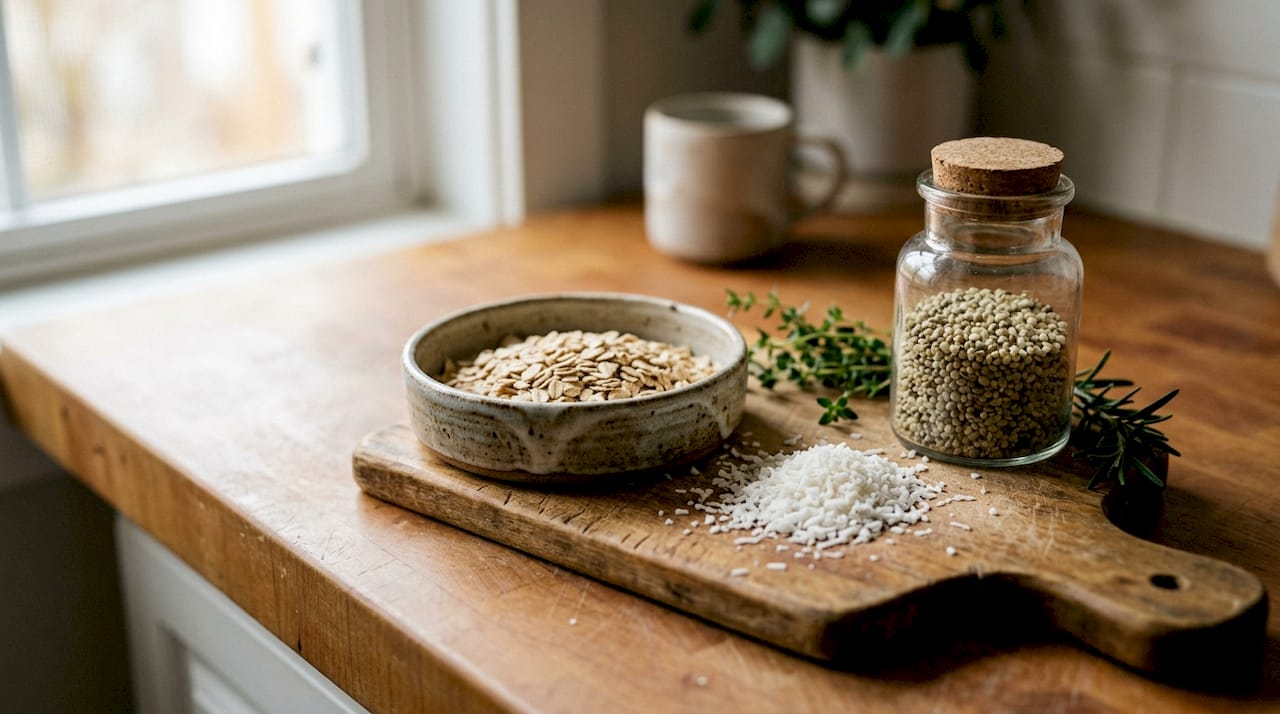
Rolled oats are the most reliable dry base. They absorb moisture evenly and give a satisfying chew. Desiccated coconut adds texture and a mild sweetness. Ground almonds or crushed nuts, such as nibbed hazelnuts, increase calorie density and add a toasted flavour that pairs well with chocolate or vanilla.
Binders
Natural nut and seed butters are the glue that holds everything together. Almond butter, cashew butter, and pecan butter all work well. Natural nut butters containing only nuts and possibly salt give the best texture and nutrition. Butters with added sugar or palm oil interfere with binding and make the mixture greasy.
Sweeteners and add-ons
Medjool dates blended smooth, maple syrup, or agave nectar provide natural sweetness. Dates also act as a secondary binder, which reduces the amount of nut butter needed. Add-ons include plant-based protein powder, chia seeds, flaxseed, cacao nibs, and warming spices like cinnamon or cardamom.
| Ingredient | Protein content | Function |
|---|---|---|
| Hemp seeds (2 tbsp) | ~10g protein | Protein boost, omega-3s |
| Rolled oats (100g) | ~13g protein | Dry base, texture |
| Almond butter (2 tbsp) | ~7g protein | Binder, healthy fats |
| Chia seeds (1 tbsp) | ~2g protein | Omega-3s, binding agent |
| Plant protein powder (1 scoop) | 15–25g protein | Concentrated protein source |
Tools you need: a large mixing bowl, measuring spoons, a spatula, and a lined baking tray. A food processor is optional but useful for blending dates or achieving a finer texture in the dry base.
How to make vegan protein energy balls: step by step
A reliable method produces consistent results every time. Follow these steps and you will have a batch of protein-packed energy bites ready within an hour, including chilling time.
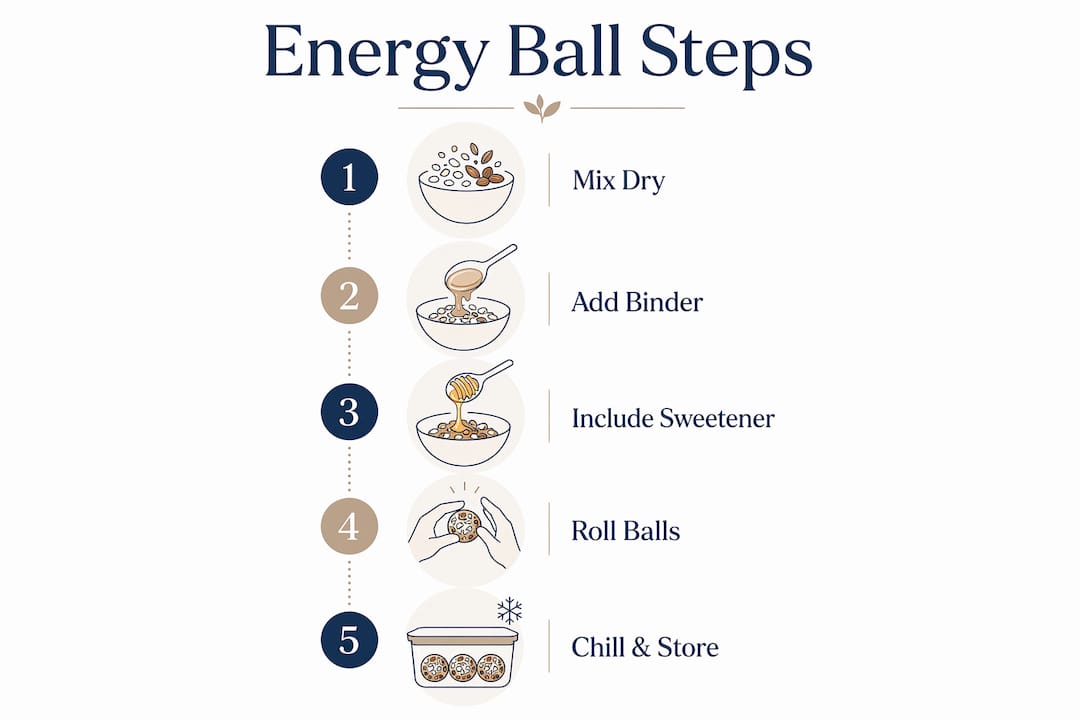
- Measure your dry base. Weigh out rolled oats, desiccated coconut, or ground nuts to form roughly half the total mixture by volume.
- Add protein boosters. Stir in hemp seeds, chia seeds, flaxseed, or a scoop of plant-based protein powder. These go in with the dry ingredients so they distribute evenly.
- Mix in the binder. Add your chosen nut or seed butter and stir thoroughly. The mixture should start clumping when pressed between your fingers.
- Sweeten to taste. Pour in maple syrup or add blended dates. Mix again until the texture is uniform and slightly sticky.
- Chill the mixture. Place the bowl in the fridge for 20–30 minutes. This firms up the fats in the nut butter and makes rolling far easier.
- Roll into balls. Scoop approximately one tablespoon of mixture per ball and roll between your palms to form a sphere roughly 3cm in diameter.
- Store correctly. Place finished balls on a lined tray and refrigerate. They keep for up to one week in the fridge or up to three months in the freezer.
Pro Tip: If the mixture sticks to your hands during rolling, lightly dampen your palms with cold water or chill them briefly. This prevents the balls from losing their shape and speeds up the process considerably.
Freezing is worth considering if you make large batches. Frozen energy balls thaw within 10 minutes at room temperature and retain a firmer texture than refrigerated ones, which many people prefer for post-workout snacks.
Why does protein matter in vegan snacks?
Plant-based diets can meet all protein requirements, but only when the right foods are chosen consistently. Vegan diets support protein needs effectively through pulses, soya products, nuts, and seeds, provided these are combined thoughtfully to create complete amino acid profiles. Energy balls are one of the most practical ways to deliver that protein in a portable, no-cook format.
Hemp seeds deliver around 10g of protein per two-tablespoon serving. That is a meaningful contribution for a snack-sized portion. Hemp is also one of the few plant sources that provides all nine essential amino acids, making it particularly valuable in vegan recipes.
Omega-3 rich super-seeds such as chia, flax, and hemp provide slow-burning energy alongside anti-inflammatory benefits. This combination of protein and healthy fats is what separates a genuinely nutritious energy ball from a glorified oat biscuit.
The top protein-rich ingredients to include in your recipe are:
- Hemp seeds: complete protein, omega-3 fatty acids, and a mild nutty flavour
- Chia seeds: high in fibre, calcium, and plant-based omega-3s
- Natural nut butters: protein, healthy monounsaturated fats, and binding power
- Rolled oats: slow-release carbohydrates with a solid protein contribution
- Plant-based protein powder: the fastest way to significantly increase protein per ball
Portion control matters here. UK dietary guidance recommends 25–50g of nuts and seeds per day due to their calorie density. A batch of energy balls is easy to overeat, so keeping each ball to roughly one tablespoon of mixture keeps portions sensible. For a broader look at plant protein sources, the full UK guide covers intake recommendations in detail.
How do you fix common problems with energy balls?
Texture problems are the most frequent issue people encounter, and nearly all of them have a simple fix. The key is adjusting moisture incrementally rather than making large additions that throw off the balance.
| Problem | Cause | Solution |
|---|---|---|
| Too crumbly | Not enough binder or sweetener | Add plant milk or nut butter, one teaspoon at a time |
| Too sticky | Excess liquid or warm nut butter | Add rolled oats or ground flaxseed in small amounts |
| Won’t hold shape | Mixture not chilled | Refrigerate for a further 15–20 minutes before rolling |
| Greasy texture | Nut butter with added oils | Switch to a single-ingredient natural nut butter |
| Bland flavour | Insufficient seasoning | Add cinnamon, vanilla extract, or cacao powder |
Adjusting moisture balance carefully is the most reliable way to rescue a batch that is not coming together. Add liquid or dry ingredients one teaspoon at a time, mix thoroughly, and test the texture before adding more.
For nut-free versions, sunflower seed butter or tahini work as direct substitutes for almond or cashew butter. Both bind effectively and have a strong flavour that pairs well with cacao or citrus zest. For gluten-free recipes, certified gluten-free oats are a straightforward swap. Buckwheat groats also work as a dry base and add a slightly earthy flavour.
Pro Tip: Take your nut butter out of the fridge 20 minutes before mixing. Room-temperature nut butter blends far more easily and distributes evenly through the dry ingredients without leaving dry pockets.
Vegan protein balls offer a more nutrient-dense alternative to many commercial protein bars. Making them at home gives you full control over ingredients, sweetness, and protein content. For inspiration on fitting these into a broader plant-based eating plan, seasonal vegan menu ideas offer practical guidance across the year.
Key takeaways
Making vegan protein energy balls successfully depends on the 50/30/15 ingredient ratio, the right binder choice, and adequate chilling time before rolling.
| Point | Details |
|---|---|
| Use the foundational ratio | Combine 50% dry base, 30% binder, and 15% sweetener for reliable texture every time. |
| Choose single-ingredient nut butters | Butters without added oils or sugar bind better and taste cleaner. |
| Chill before rolling | Refrigerate the mixture for 20–30 minutes so the fats firm up and rolling becomes easy. |
| Boost protein with hemp seeds | Two tablespoons of hemp seeds add around 10g of complete plant protein per batch. |
| Store smartly | Refrigerate for up to one week or freeze for up to three months to maintain texture. |
Why I think homemade energy balls beat anything from a packet
I have made hundreds of batches of energy balls over the years, and the single biggest lesson is this: the recipe matters far less than the ingredients you choose. A simple combination of oats, almond butter, and hemp seeds will outperform a complicated recipe built on processed nut butter and added sugar every single time.
What surprises most people is how quickly a homemade batch becomes part of a routine. I make mine on a Sunday evening. By Monday morning, I have a week’s worth of post-workout snacks sitting in the fridge, costing a fraction of what commercial protein bars would. Energy balls are an ideal way to deliver post-workout plant protein conveniently, and that convenience is genuinely hard to replicate with shop-bought alternatives.
The other thing I have learned is that experimenting with UK-available superfoods, such as milled flaxseed, hemp hearts, and raw cacao, produces results that are far more interesting than following a single recipe rigidly. Once you understand the ratio, the recipe becomes a framework rather than a fixed formula. That flexibility is what keeps the habit going long term. For anyone wanting to go deeper on protein powder options to add to their balls, the plant-based protein powder guide is worth reading before your next batch.
— Jarrod
Granavitalis ingredients for your next batch
Granavitalis sources the kind of whole-food ingredients that make homemade energy balls genuinely worth eating. Every product is chosen for purity and nutritional integrity, not convenience or cost-cutting.

The Raw Organic Pecan Butter by RAWGORILLA is an outstanding binder for energy balls. It contains nothing but raw organic pecans, which means clean binding, rich flavour, and no unwanted additives interfering with texture. For those who want to experiment across flavours and textures, the Organic Nut & Seed Butter Selection Box gives you a range of natural butters to test in your recipes. Pair either with the Immune Booster Superfood Bundle to add concentrated nutrition to every batch.
FAQ
What is the best protein source for vegan energy balls?
Hemp seeds are one of the best options, providing around 10g of complete protein per two-tablespoon serving. Plant-based protein powder is the fastest way to significantly increase the protein content of each ball.
How long do homemade vegan energy balls last?
Refrigerated energy balls keep for up to one week. Frozen balls last up to three months and retain a firmer texture upon thawing.
Can I make energy balls without a food processor?
Yes. A mixing bowl and a fork or spatula are sufficient for most recipes. A food processor is only needed if you are blending whole dates or want a very fine, uniform texture in the dry base.
Are vegan energy balls suitable as a post-workout snack?
Energy balls are a practical post-workout snack because they combine plant protein, healthy fats, and slow-release carbohydrates in a portable format. They are particularly effective when made with hemp seeds or a scoop of plant-based protein powder.
How do I stop my energy balls from falling apart?
Chill the mixture for 20–30 minutes before rolling. If the balls still crumble, add nut butter or plant milk one teaspoon at a time until the mixture holds together when pressed firmly between your fingers.