

How to substitute regular flour for gluten free
TL;DR:
- Substituting regular flour with a specially formulated gluten-free blend is achievable, but requires adjustments in binders, hydration, and resting time to ensure successful baking. Most quick breads and cakes can use a 1:1 volume substitution with commercial blends, avoiding doubled binders and properly resting batter to reduce grittiness. Understanding the roles of base flours, starches, and binders is essential to replicate wheat flour’s baking properties and produce consistent, tasty results.
Substituting regular flour for gluten-free alternatives is entirely achievable, provided you use a specially formulated blend rather than a single-ingredient flour. The process, known more precisely as gluten-free flour conversion, requires adjustments to binders, hydration, and resting time alongside the flour swap itself. Choosing the wrong flour or skipping these steps produces bakes that are gritty, crumbly, or dense. This guide covers every critical adjustment so you can adapt your favourite recipes with confidence and consistent results.
How to substitute regular flour for gluten free: choosing the right base
The single most important decision in any flour substitution is which gluten-free flour you reach for first. Not all alternatives behave the same way, and understanding their roles saves you from wasted batches.
Base flours form the structural foundation of a gluten-free blend. The most common options are:
- Rice flour (white or brown): the most widely used base, with a neutral flavour and fine texture when milled finely
- Oat flour: slightly sweet, adds softness, and works particularly well in biscuits and pancakes
- Sorghum flour: earthy and protein-rich, contributing a closer crumb to wheat than most alternatives
- Buckwheat flour: robust in flavour, excellent in pancakes and dense loaves, though it dominates milder recipes
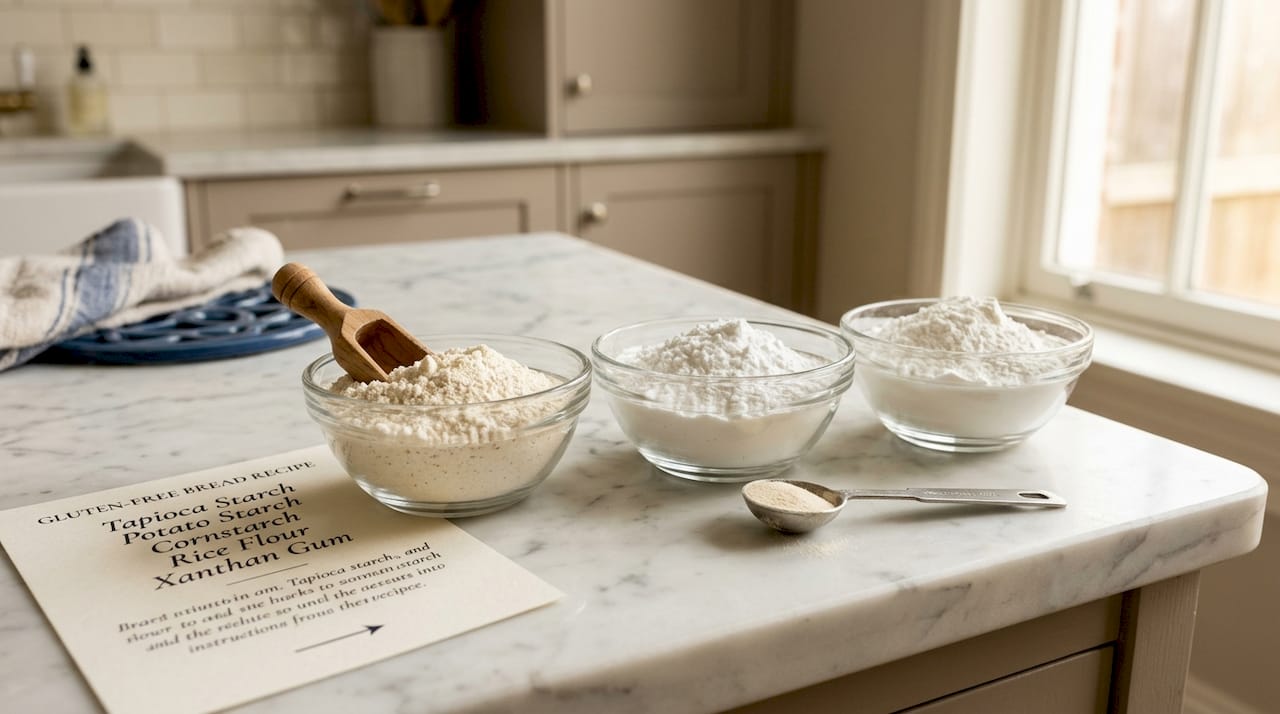
Starches lighten the texture and improve the crumb. Tapioca starch, potato starch, and cornstarch are the three most common. Used alone, starches produce gummy, structureless results. Combined with base flours, they replicate the airy quality of wheat-based bakes.
Binders hold everything together in the absence of gluten. Xanthan gum and guar gum are the standard choices. Most pre-made gluten-free blends already include one of these, which is exactly why they outperform single-ingredient flours in conversion recipes.
Single-ingredient flours like almond flour or coconut flour are not direct one-to-one substitutes for wheat flour. They are better used in recipes developed specifically around their properties. Almond flour, for example, produces moist, dense bakes with a nutty flavour. It works beautifully in almond flour recipes designed for it, but it cannot replicate the lift and structure of a wheat-based sponge cake without significant reformulation.
For most home bakers starting out, a commercial all-purpose gluten-free blend such as King Arthur Gluten-Free All-Purpose Flour is the most reliable starting point. These blends are engineered to behave like wheat flour in quick breads, muffins, and cookies, reducing the trial and error considerably.
Step-by-step guide to replacing flour in your recipes
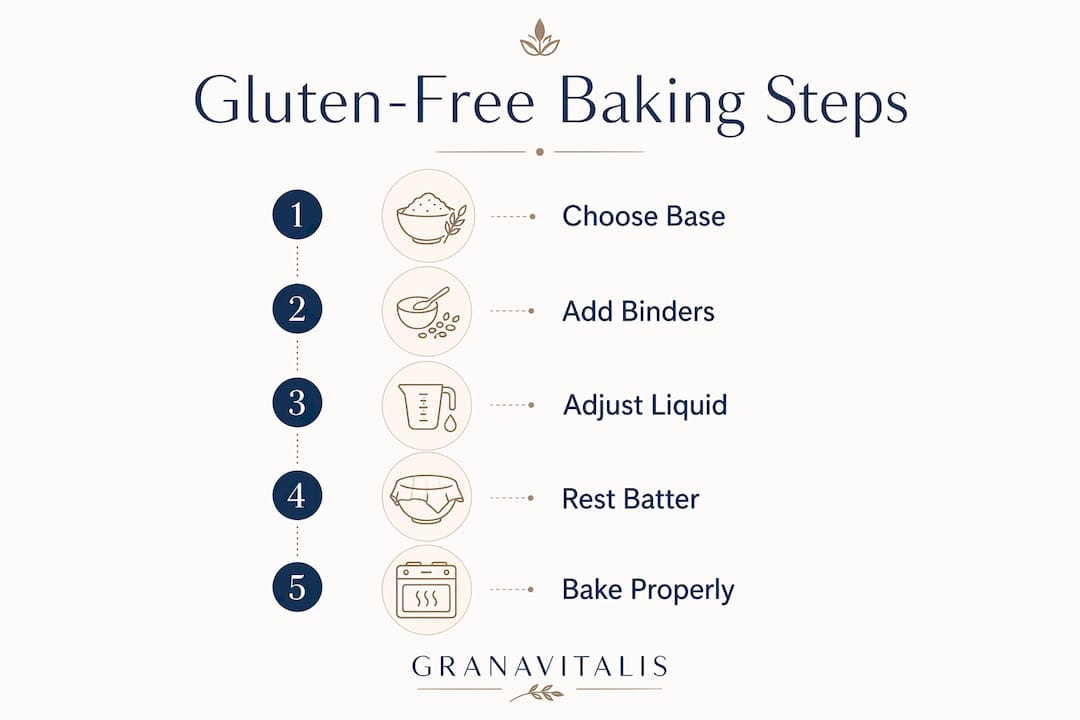
Follow these steps in order. Skipping any one of them is the most common reason a first attempt fails.
-
Start with a 1:1 volume substitution. Replace the weight or volume of regular flour with an equal amount of all-purpose gluten-free flour blend. This works reliably for cakes, muffins, pancakes, and most quick breads.
-
Check your blend for binders. Avoid adding extra xanthan gum if your blend already contains it. Doubling the gum produces a gummy, unpleasant texture rather than improving structure.
-
Increase your liquid. Gluten-free flours absorb liquid differently from wheat flour. Add an extra tablespoon or two of liquid per 120g of flour as a starting point, then adjust based on batter consistency.
-
Rest the batter. Resting batter for 10 to 30 minutes after mixing allows the flours and starches to hydrate fully. This single step reduces grittiness more than almost any other adjustment.
-
Adjust eggs and fats if needed. Adding an extra egg yolk or a tablespoon of additional fat (butter, oil, or nut butter) improves structure and moisture in recipes that feel too dry or fragile after the first attempt.
-
Do not attempt a direct swap in yeasted breads. Yeast bread recipes rely on gluten’s elasticity and gas retention to rise correctly. A direct flour swap produces a dense, flat loaf. Use a recipe developed specifically for gluten-free bread instead.
Pro Tip: Rest your batter in the fridge rather than at room temperature if your kitchen is warm. A cooler rest slows fermentation in recipes with eggs or dairy and gives the starches more time to absorb liquid evenly, producing a noticeably smoother crumb.
These six steps cover the vast majority of gluten-free baking tips you will encounter. Master them before experimenting with flour ratios or single-ingredient alternatives.
Common texture problems and how to fix them
Texture is where most gluten-free bakes fall short. The good news is that the cause is almost always identifiable and fixable.
| Problem | Likely cause | Fix |
|---|---|---|
| Dry and crumbly | Insufficient liquid or binder | Add more liquid; check blend contains xanthan gum |
| Gritty texture | Underhydrated rice flour; no resting time | Rest batter 15 to 30 minutes; switch to finely milled flour |
| Gummy or dense | Excess starch or too much xanthan gum | Reduce binder; balance starch with more base flour |
| Flat with no rise | Yeast recipe converted directly | Use a dedicated gluten-free bread formula |
| Fragile, falls apart | Low protein content in blend | Add an extra egg yolk or increase fat slightly |
The absence of gluten removes the protein network that gives wheat bakes their elasticity and crumb structure. Hydration, binders, and resting time are the three levers that compensate for this. Adjusting one without considering the others often shifts the problem rather than solving it.
Grittiness is the most common complaint from first-time gluten-free bakers. It comes almost entirely from rice flour that has not had time to hydrate. Resting batter for 10 to 15 minutes post-mixing reduces grittiness significantly. Switching to a blend that uses finely milled rice flour, rather than a coarser stone-ground variety, also makes a measurable difference.
Pro Tip: If your bake is consistently gummy despite following the recipe, reduce the xanthan gum by a quarter teaspoon at a time. Many home bakers add extra gum thinking it will improve structure, but the opposite is true once you pass the optimal amount.
Combining flours within a recipe is another effective strategy. Pairing oat flour with almond flour, for instance, balances oat flour’s lightness with almond flour’s fat content, producing a moister crumb without the density that almond flour alone can create. You can explore the full range of wheat-free flour options to find combinations that suit your preferred bakes.
Why gluten-free blends are formulated differently from regular flour
Regular wheat flour is a single ingredient. Gluten-free all-purpose blends are engineered products, typically containing two to four base flours, one or two starches, and a binder. This composition is not arbitrary. Each component plays a specific role that wheat flour handles on its own through gluten formation.
The table below shows how common blend components map to wheat flour’s functions:
| Wheat flour function | Gluten-free equivalent |
|---|---|
| Structure and elasticity (gluten) | Xanthan gum or guar gum |
| Protein content and crumb | Sorghum flour, oat flour |
| Light, airy texture | Tapioca starch, potato starch |
| Neutral base | White rice flour |
| Moisture retention | Almond flour (in small ratios) |
Gluten-free blends contain a combination of base flours, starches, and binders to approximate wheat flour’s baking performance. This means the “1-to-1” label on a commercial blend is a starting point, not a guarantee. The blend’s actual composition determines how closely it mimics wheat flour in a given recipe.
Storage matters more with gluten-free blends than with regular flour. Many contain nut-derived flours or whole-grain flours with higher fat content, which go rancid faster. Store opened bags in an airtight container in the fridge or freezer, and use within three months for best results. Stale flour produces flat, off-flavoured bakes regardless of how well you follow the recipe.
For specific baked goods, flour quality and composition directly affect the outcome. A blend heavy in tapioca starch suits delicate pastries and crepes. A blend with more sorghum or oat flour suits hearty muffins and quick breads. Matching the blend to the recipe type is the step most flour substitution guides overlook.
Key takeaways
Successful gluten-free flour substitution depends on using the right blend, checking for binders, adjusting hydration, and resting your batter before baking.
| Point | Details |
|---|---|
| Use an all-purpose blend | Commercial blends with xanthan gum most reliably replicate wheat flour in quick breads and cakes. |
| Never double the binder | Adding extra xanthan gum to a blend that already contains it produces gummy, dense results. |
| Rest the batter | A 10 to 30 minute rest after mixing allows full hydration and reduces grittiness significantly. |
| Avoid direct swaps in yeast breads | Yeasted recipes require a dedicated gluten-free formula, not a simple flour replacement. |
| Match blend to recipe type | Starch-heavy blends suit delicate bakes; sorghum or oat-based blends suit denser, heartier recipes. |
What I have learned from years of gluten-free baking
The biggest mistake I see is treating gluten-free baking as a simple ingredient swap. It is not. The first time I converted a banana bread recipe, I used a single-ingredient rice flour, skipped the resting step, and produced something with the texture of wet sand. The lesson was immediate and expensive in terms of wasted ingredients.
What actually works is patience with the process. Resting the batter feels unnecessary when you are in a hurry, but it is the difference between a gritty crumb and a smooth one. Hydration adjustments feel like guesswork at first, but after two or three attempts with the same recipe, you develop an instinct for the right batter consistency.
My honest advice: stop trying to replicate wheat flour bakes exactly. Gluten-free baking produces different textures, and some of them are genuinely better. A well-made almond flour cake is moister and richer than its wheat counterpart. A sorghum-based muffin has a depth of flavour that plain white flour cannot match. Embrace what these flours do well rather than mourning what they cannot do.
Sourcing quality blends and single-ingredient flours makes a real difference. Cheap, coarsely milled rice flour will frustrate you regardless of technique. Invest in good ingredients and the process becomes far more rewarding.
— Jarrod
Explore gluten-free flours and baking essentials at Granavitalis

Granavitalis sources gluten-free flours and wholefood baking ingredients with the same commitment to purity and quality that your recipes deserve. Whether you are working with almond flour, ancient grain blends, or looking to add richness to your bakes, the Granavitalis range is built around real ingredients with nothing unnecessary added. The Raw Organic Pecan Butter by RAWGORILLA pairs exceptionally well with gluten-free bakes, adding natural fat and flavour that improves both texture and taste. For those who want to explore further, the organic nut and seed butter selection offers a range of options that complement gluten-free recipes beautifully. Every product at Granavitalis is transparently sourced and thoughtfully chosen for bakers who take their ingredients seriously.
FAQ
Can I substitute regular flour with gluten-free flour in any recipe?
Most quick breads, cakes, muffins, and biscuits convert well using a 1:1 all-purpose gluten-free blend. Yeasted bread recipes are the exception and require a dedicated gluten-free formula rather than a direct swap.
Do I need to add xanthan gum when using a gluten-free flour blend?
Only if your blend does not already contain it. Adding extra xanthan gum to a blend that already includes a binder produces a gummy texture rather than improving structure.
Why does my gluten-free bake taste gritty?
Grittiness is caused by underhydrated rice flour. Resting your batter for 10 to 30 minutes after mixing and using a finely milled blend resolves the issue in most cases.
Is almond flour a good substitute for regular flour?
Almond flour is not a direct one-to-one substitute for wheat flour. It works best in recipes specifically developed for it, where its high fat content and dense texture are accounted for from the start.
How do I store gluten-free flour blends?
Keep opened blends in an airtight container in the fridge or freezer and use within three months. Many blends contain whole-grain or nut-derived flours with higher fat content that deteriorate faster than standard wheat flour at room temperature.