
How to pair flavours with ancient grains for healthy meals
Many people want to eat healthily but find ancient grains bland or hard to use daily. The truth is, with a few pairing principles, these nutrient-dense foundation foods become tasty, diverse meal staples. You’ll learn how to mix and match flavours for breakfast, bowls, and salads so that every bite delivers both wellness and genuine culinary satisfaction. Whether you’re new to ancient grains or looking to expand your repertoire, mastering these combinations transforms routine meals into something you’ll actually crave.
Table of Contents
- Why choose ancient grains for flavour-packed healthy meals
- Understanding flavour profiles of popular ancient grains
- The mechanics of flavour pairing with ancient grains
- How to pair ancient grains at every meal: breakfast, bowls, and salads
- Expert tips, edge cases, and common mistakes with ancient grain pairings
- Discover even more wholesome flavour—shop grain-friendly essentials
- Frequently asked questions
Key Takeaways
| Point | Details |
|---|---|
| Pair for flavour and health | Combining ancient grains with acids, healthy fats, and herbs creates tasty and nutritious meals. |
| Balance texture and taste | Contrasting grain chewiness with crunchy or creamy elements enhances each dish. |
| Choose and prep wisely | Select grains for your needs, rinse or soak as recommended, and use gluten-free options where necessary. |
| Experiment with meals | Try different grains at breakfast, in bowls, or salads to discover new favourite pairings. |
Why choose ancient grains for flavour-packed healthy meals
Ancient grains are varieties cultivated for thousands of years, largely unchanged by modern industrial hybridisation. Key examples include quinoa, farro, kamut, emmer, einkorn, barley, spelt, and buckwheat. Health-conscious eaters are rediscovering these grains because they offer superior protein, fibre, and mineral content compared to refined modern grains. This nutritional edge translates to better satiety, improved gut health, and richer flavour profiles that make meals more satisfying.
Not all ancient grains are gluten free, so it’s important to choose varieties that suit your needs. Quinoa, buckwheat, and millet work for gluten-sensitive diets, whilst farro, spelt, and barley contain gluten. The real advantage lies in rotating different grains to access a broader spectrum of micronutrients and phytochemicals. This variety supports overall wellness whilst keeping your palate engaged.
Ancient grains also bring unique textures and tastes that modern refined grains simply can’t match. Farro delivers a chewy, nutty bite. Kamut offers buttery sweetness. Quinoa provides a fluffy, mild base that absorbs surrounding flavours beautifully. These distinct profiles make ancient grains ideal building blocks for creative, flavour-forward meals that don’t sacrifice nutrition.
Pro Tip: Rotating grains brings both wellness and culinary variety. Try a different ancient grain each week to discover which flavours and textures you prefer, and to maximise the range of nutrients in your diet.
For a deeper dive into what sets these grains apart, explore our guide on ancient grains explained. You’ll also find detailed information on the micronutrients in ancient grains that support energy, immunity, and recovery. If you’re looking for recipe inspiration, BBC Good Food offers a delicious bulgur wheat dish that showcases how ancient grains shine in everyday cooking.
Understanding flavour profiles of popular ancient grains
Each ancient grain has a distinctive taste, mouthfeel, and aroma that influences how it pairs with other ingredients. Recognising these profiles helps you make intentional food matching decisions rather than guessing at combinations. Some grains are nutty and earthy, others are sweet and buttery, and a few are mild enough to take on almost any flavour you introduce.
Texture plays an equally important role. Chewy grains like farro and emmer hold up well in salads and grain bowls, providing satisfying bite. Fluffy grains like quinoa work beautifully in lighter dishes or as a base for saucy stir-frys. Creamy grains such as barley or millet become comforting porridges or risotto-style preparations. Understanding these textural differences allows you to match grains to cooking methods and meal types more effectively.
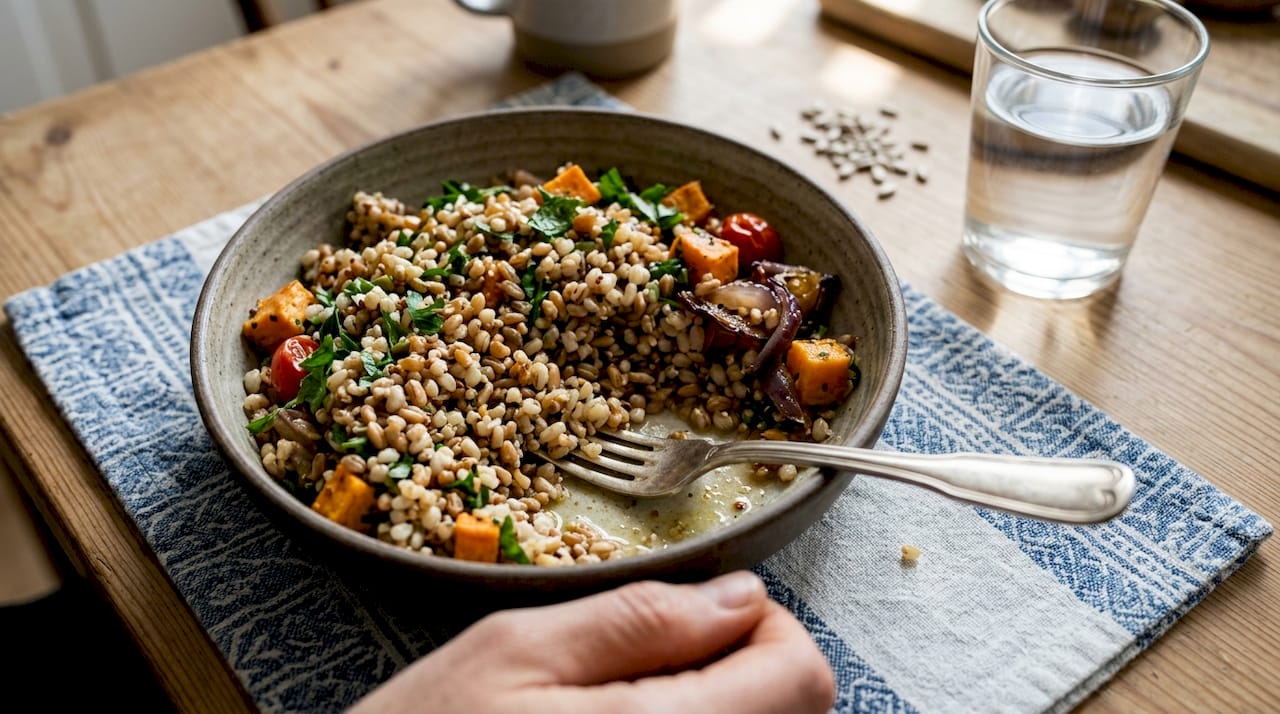
The table below offers an at-a-glance guide to the flavour, texture, and ideal pairings for popular ancient grains. Use it as a reference when planning meals or experimenting with new combinations.
| Grain | Flavour profile | Texture | Ideal pairings |
|---|---|---|---|
| Farro | Nutty, earthy | Chewy | Lemon, feta, roasted vegetables, olive oil |
| Quinoa | Mild, earthy | Fluffy | Lime, coriander, avocado, black beans |
| Kamut | Buttery, sweet | Chewy | Honey, cinnamon, fresh berries, nuts |
| Einkorn | Sweet, delicate | Tender | Herbs, garlic, mushrooms, parmesan |
| Emmer | Nutty, robust | Chewy | Balsamic, sun-dried tomatoes, rocket |
| Buckwheat | Earthy, slightly bitter | Soft | Miso, ginger, spring onions, sesame |
| Barley | Mild, slightly sweet | Creamy | Root vegetables, thyme, vegetable stock |
| Spelt | Nutty, mild | Tender | Pesto, cherry tomatoes, pine nuts |
With profiles in mind, you can make more intentional food matching decisions. For example, pairing kamut’s buttery sweetness with tart berries creates a balanced breakfast bowl, whilst farro’s earthy chew stands up to bold Mediterranean flavours like olives and capers. To learn more about the differences among ancient grains, visit our detailed comparison guide.
The mechanics of flavour pairing with ancient grains
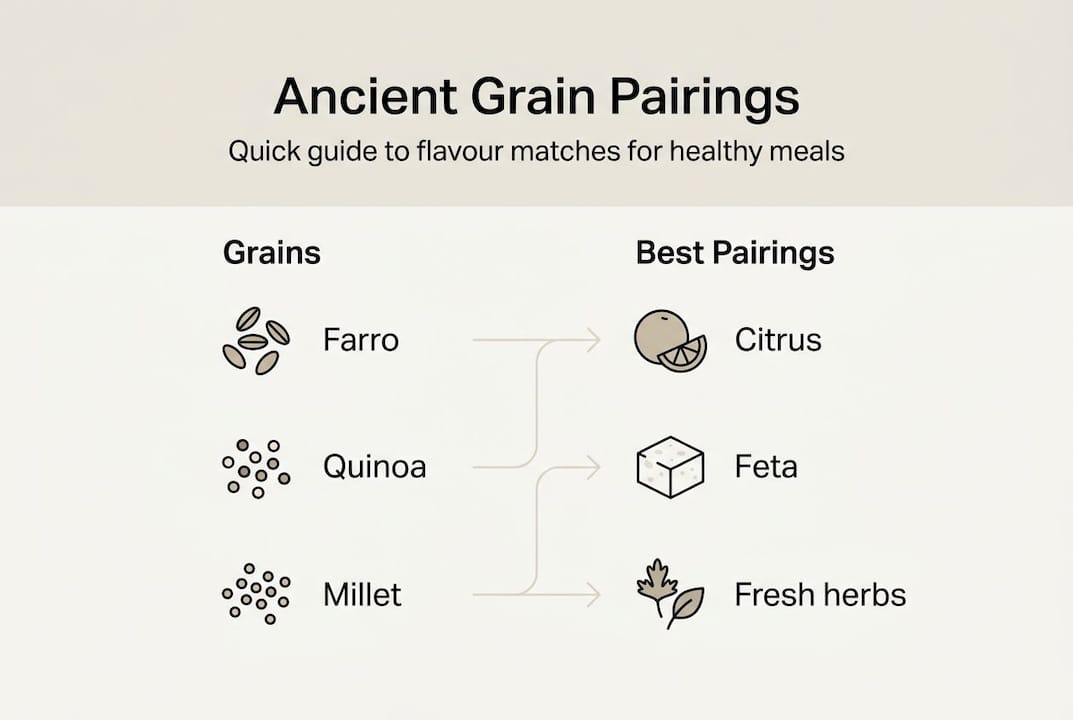
Flavour pairing relies on two core strategies: complementary and contrasting. Complementary pairings match similar flavour notes to create harmony. For instance, nutty grains pair naturally with toasted nuts, seeds, and earthy herbs like thyme or rosemary. This approach amplifies existing flavours and creates a cohesive taste experience.
Contrasting pairings introduce opposing elements to create balance and excitement. Chewy grains benefit from acidic dressings, creamy cheeses, or crunchy vegetables that provide textural and flavour counterpoints. A tangy lemon vinaigrette cuts through farro’s earthiness, whilst creamy avocado softens quinoa’s mild profile. These contrasts prevent meals from feeling one-dimensional.
Umami accents like miso, mushrooms, or aged cheeses add depth to grain-based dishes. Citrus or vinegar brings brightness and lifts heavier flavours. Healthy fats from olive oil, nuts, or avocado carry flavour compounds and improve nutrient absorption. By layering these elements, you build complexity without overwhelming the grain’s natural character.
The table below compares complementary and contrasting pairings for major ancient grains, helping you choose the right approach for your meal.
| Grain | Complementary pairings | Contrasting pairings |
|---|---|---|
| Farro | Walnuts, thyme, olive oil | Lemon juice, feta, cucumber |
| Quinoa | Coriander, cumin, lime | Pomegranate, yoghurt, mint |
| Kamut | Almonds, honey, cinnamon | Tart berries, Greek yoghurt |
| Buckwheat | Sesame oil, ginger, miso | Rice vinegar, pickled vegetables |
| Barley | Root vegetables, rosemary | Balsamic vinegar, rocket |
“Think contrast—chew against crunch, tang against earthiness—for balance. The best grain dishes layer textures and flavours so every forkful offers something new.”
You’re ready to start applying these ideas to specific meal types. For more on how ancient grains support wellness, explore our comprehensive guide that connects nutrition science to everyday eating.
How to pair ancient grains at every meal: breakfast, bowls, and salads
Building flavourful grain-based meals follows a simple five-step process that works across dayparts and dietary preferences. This framework ensures you get the best taste and nutrition from every grain you cook.
- Choose your grain based on the meal type and desired texture. Fluffy quinoa suits light salads, chewy farro works for hearty bowls, and creamy barley makes comforting porridges.
- Prep and cook properly. Rinse quinoa to remove bitterness. Soak farro for 30 minutes to speed cooking and improve digestibility. Simmer grains in vegetable stock rather than water for deeper flavour.
- Pick your flavour style. Decide whether you want complementary harmony or contrasting balance, then select ingredients accordingly.
- Add proteins, vegetables, and fruit. Layer in cooked legumes, roasted vegetables, fresh greens, or seasonal fruit to build nutritional completeness and visual appeal.
- Finish with dressing, crunch, and garnish. A bright vinaigrette, toasted seeds, and fresh herbs elevate the dish from simple to memorable.
Here are practical examples across different meal types:
- Kamut breakfast bowls: Combine cooked kamut with seasonal fruits, chia seeds, and honey for a protein-rich start. The grain’s buttery sweetness pairs beautifully with tart berries and crunchy seeds.
- Farro grain salads: Mix farro with cucumber, tomatoes, olives, feta, and lemon-Dijon vinaigrette. Add fresh mint or parsley for brightness. The chewy texture holds up well to bold Mediterranean flavours.
- Quinoa vegetable stir-frys: Toss fluffy quinoa with sautéed peppers, courgettes, and spring onions. Finish with lime juice, coriander, and a drizzle of sesame oil for an Asian-inspired bowl.
Pro Tip: Always rinse quinoa under cold water before cooking to remove saponins, which cause bitterness. Soaking farro for 30 minutes not only speeds cooking but also improves nutrient availability and digestibility.
Once you know the basics, there are some insider strategies to help you get the best results. For more inspiration on using ancient grains for modern wellness, visit our blog. You can also find creative quinoa recipe inspiration that showcases how versatile these grains truly are.
Expert tips, edge cases, and common mistakes with ancient grain pairings
Layering flavours at every step transforms good grain dishes into great ones. Infuse your cooking liquid with aromatics like garlic, bay leaves, or ginger. Dress hot grains immediately after cooking so they absorb the vinaigrette or oil whilst still warm. This simple technique amplifies flavour without adding extra ingredients or complexity.
Many home cooks make avoidable mistakes that compromise texture and taste. Skipping the soak or rinse leaves grains bitter or tough. Overcooking turns them mushy and unappetising. Using overly strong pairings masks the grain’s natural flavour rather than enhancing it. Pay attention to cooking times and taste as you go to avoid these pitfalls.
Pro Tip: Layer flavours at every step—infuse cooking liquid, dress hot grains before serving, and finish with fresh herbs. This builds complexity without overwhelming the dish.
Dietary considerations require thoughtful swaps. Gluten-sensitive individuals should choose quinoa, millet, or teff. Those managing IBS or FODMAP sensitivities may need to test individual grains, as some contain fermentable carbohydrates that trigger symptoms. Preparation techniques like soaking and thorough rinsing can improve tolerance for sensitive digestive systems.
Common edge cases include:
- Gluten-free requirements: Stick to quinoa, buckwheat, millet, and teff. Avoid farro, spelt, barley, and kamut.
- IBS and FODMAP concerns: Test grains individually. Some people tolerate certain ancient grains better than others.
- Cooking nuances: Soak farro to reduce cooking time, rinse quinoa to remove bitterness, and cook slowly to retain nutrients.
- Grain allergies: Whilst rare, some individuals react to specific proteins in ancient grains. Introduce new grains one at a time if you have a history of food sensitivities.
With these tips, you’ll avoid common pitfalls and enjoy ancient grains to the fullest. For more on the connection between grains and digestive wellness, read our guide on ancient grains and gut health.
Discover even more wholesome flavour—shop grain-friendly essentials
Ancient grains form the foundation of nutrient-dense meals, but the right accompaniments take them from good to exceptional. Nut and seed butters add creaminess, healthy fats, and concentrated flavour that complement grain-based breakfasts and bowls beautifully. A spoonful of pecan butter stirred into warm kamut porridge creates a rich, satisfying start to your day.

Our nut and seed butter selection box offers variety packs that let you experiment with different flavour profiles across your grain dishes. Almond butter pairs with quinoa breakfast bowls, whilst tahini brings Middle Eastern flair to farro salads. These butters are made from raw, organic ingredients with minimal processing, so you get maximum nutrition and authentic taste.
Ready to experiment? Complete your wellness kitchen with these delicious additions. Visit Granavitalis to explore the full range of ancient grain flours, plant proteins, superfoods, and flavour-boosting essentials that support your journey to real-food strength and clean living.
Frequently asked questions
Which ancient grains are naturally gluten free?
Quinoa, buckwheat, millet, and teff are gluten free options, whilst farro, spelt, and barley contain gluten. Always check labels if you have coeliac disease or severe gluten sensitivity.
How do you make ancient grains taste less bland?
Cook grains in vegetable stock, add acids like lemon juice, drizzle with quality olive oil, and finish with fresh herbs. These simple steps create balanced, flavourful dishes without complicated recipes.
Are ancient grains better for you than modern whole grains?
Ancient grains often have more protein and minerals, but both ancient and diverse modern whole grains offer important health benefits. The key is variety rather than relying on a single grain type.
What meals are easiest for starting with ancient grains?
Breakfast bowls and simple grain-based salads let you experiment with pairings and textures easily. Hearty soups also work well, as the grains absorb surrounding flavours whilst adding substance and nutrition.
Recommended
- How to Combine Ancient Grains Naturally for Vitality – Granavitalis
- The Hidden Cost of “Modern” Grains — And Why Ancient Grains Belong Bac – Granavitalis
- 7 nutritious ancient grains families should choose in 2026 – Granavitalis
- How to Incorporate Ancient Grains for Healthier Meals – Granavitalis
- 7 Quick Healthy Lunch Ideas for Busy People - Dietium