
Complete Guide to Differences Among Ancient Grains
Most people believe that ancient grains are little more than a health trend, but British research shows these time-tested seeds offer nutritional profiles that modern wheat cannot match. With more genetic diversity and higher micronutrient content than standard cereals, ancient grains have sparked intense debate across health and culinary circles. This guide debunks common myths and explores why ancient grains continue to matter for British diets looking for genuine nutrient-dense alternatives.
Table of Contents
- Ancient Grains Defined And Common Myths
- Types Of Ancient Grains Compared
- Key Nutritional Profiles And Benefits
- Ancient Grains In Modern Recipes
- Comparing Ancient And Modern Grains
Key Takeaways
| Point | Details |
|---|---|
| Ancient Grains Are Distinct | Ancient grains exhibit unique genetic compositions and nutritional profiles compared to modern wheat. They are not merely a marketing trend but scientifically validated alternatives. |
| Nutritional Advantages | Ancient grains boast higher micronutrient density and complex protein structures, beneficial for human health and metabolism. They also offer potential prebiotic properties supporting gut health. |
| Digestibility Myths | Not all ancient grains are easier to digest; individual responses vary significantly, challenging the notion of universal digestibility. |
| Versatile Culinary Use | Ancient grains can be creatively incorporated into modern recipes, enhancing both nutritional value and taste in contemporary cooking. |
Ancient Grains Defined And Common Myths
Ancient grains represent an extraordinary category of wholesome cereal crops that have sustained human civilisations for thousands of years before modern agricultural practices transformed grain production. These nutrient-dense seeds differ fundamentally from contemporary wheat varieties, offering a rich nutritional profile that harks back to traditional agricultural practices.
Contrary to popular misconceptions, ancient grains are not simply marketing buzzwords but scientifically distinct grain varieties with unique genetic compositions. According to research from Northumbria University, many ancient wheat varieties challenge common nutritional assumptions. For instance, the study critically examined claims about gluten content, revealing that not all ancient wheats are automatically lower in gluten as many consumers believe.
Key characteristics of ancient grains include:
- Minimal genetic modification
- Higher micronutrient density
- More complex protein structures
- Greater genetic diversity compared to modern wheat
One persistent myth surrounding ancient grains involves their digestibility. University of Reading research suggests that while these grains are nutritionally robust, they are not universally easier to digest for all individuals. Each grain variety possesses unique properties, and digestive responses can vary significantly between different types of ancient wheat.
Understanding ancient grains requires moving beyond simplistic narratives. These grains represent a nuanced nutritional landscape - not a miracle food, but a diverse group of crops with remarkable potential for supporting human health when incorporated thoughtfully into a balanced diet.
Types Of Ancient Grains Compared
Ancient grains represent a diverse family of cereal crops with remarkable nutritional profiles, each offering unique characteristics that distinguish them from modern wheat varieties. From quinoa to spelt, these grains showcase incredible genetic diversity and nutritional potential.
The landscape of ancient grains is rich and complex. Oxford Brookes University research highlights the significant variations among different ancient grain types, particularly emphasising the nutritional nuances of millet. This grain, often overlooked in Western diets, provides an excellent example of the diversity within ancient grain categories.
Key ancient grains include:
- Quinoa: A protein-rich seed from South America
- Spelt: An ancient wheat variety with complex carbohydrate structures
- Millet: A drought-resistant grain with exceptional nutritional density
- Amaranth: A protein-packed pseudo-grain with complete amino acid profile
- Einkorn: The oldest known wheat variety, with simpler genetic composition
University of Kent research further illuminates the multifaceted nature of these grains, demonstrating that their value extends beyond human nutrition. The study examined ancient grains from agricultural and livestock perspectives, revealing their potential in diverse ecological systems.
Understanding these grains requires recognising that they are not interchangeable. Each ancient grain brings its own molecular signature, nutritional blueprint, and potential health benefits. When incorporated thoughtfully, they can transform dietary approaches, offering alternatives to ubiquitous modern wheat varieties.
Key Nutritional Profiles And Benefits
Ancient grains represent more than just dietary alternatives - they are nutritional powerhouses packed with complex nutrients that modern processed grains often lack. Each variety brings a unique molecular blueprint of vitamins, minerals, and bioactive compounds that can significantly enhance human health and wellness.
Oxford Brookes University research illuminates the exceptional nutritional depth of ancient grains, particularly highlighting millet’s remarkable profile. The study reveals these grains are extraordinarily rich in polyphenols and dietary fiber, offering potent antioxidant and anti-inflammatory properties that modern wheat varieties struggle to match.
Key nutritional benefits include:
- Higher protein content compared to refined grains
- Complex carbohydrate structures with slower digestion rates
- Rich source of essential minerals like magnesium and zinc
- Significantly higher micronutrient density
- Potential prebiotic properties supporting gut microbiome health
University of Reading research further substantiates the therapeutic potential of these grains, demonstrating promising outcomes in managing metabolic syndrome and addressing gluten-related disorders. Importantly, their comprehensive analysis suggests that ancient grains are not just nutritionally superior, but potentially offer targeted health interventions for individuals with specific dietary challenges.
Understanding these grains requires recognising them as sophisticated nutritional tools. They are not mere substitutes for modern wheat, but sophisticated evolutionary products with intricate nutritional architectures that can profoundly influence human metabolic responses and overall wellbeing.

Ancient Grains In Modern Recipes
Transforming contemporary cuisine requires reimagining traditional ingredients through a modern lens. Ancient grains offer an extraordinary opportunity to elevate everyday cooking, bringing complex nutritional profiles and exciting textures to standard recipe formats.
Oxford Brookes University research highlights the remarkable versatility of ancient grains like millet, demonstrating how these ingredients can seamlessly integrate into modern culinary approaches. Their study reveals that these grains are not limited to traditional preparations but can be creatively incorporated into everything from breakfast bowls to sophisticated evening meals.
Innovative recipe adaptation strategies include:
- Using quinoa as a protein-rich salad base
- Replacing standard flour with amaranth in baking
- Creating risotto-style dishes with whole grain farro
- Developing gluten-free bread alternatives with teff
- Crafting nutrient-dense breakfast porridges with mixed ancient grains
University of Tuco procurement guidelines emphasise integrating whole, intact grains as a cornerstone of sustainable and health-conscious menu design. These recommendations underscore how ancient grains are not just nutritional powerhouses, but critical components of forward-thinking culinary strategies.
Successful recipe integration demands curiosity and experimentation. Ancient grains are not restrictive ingredients but flexible culinary tools that can transform ordinary dishes into extraordinary nutritional experiences, bridging traditional wisdom with contemporary dietary needs.
Comparing Ancient And Modern Grains
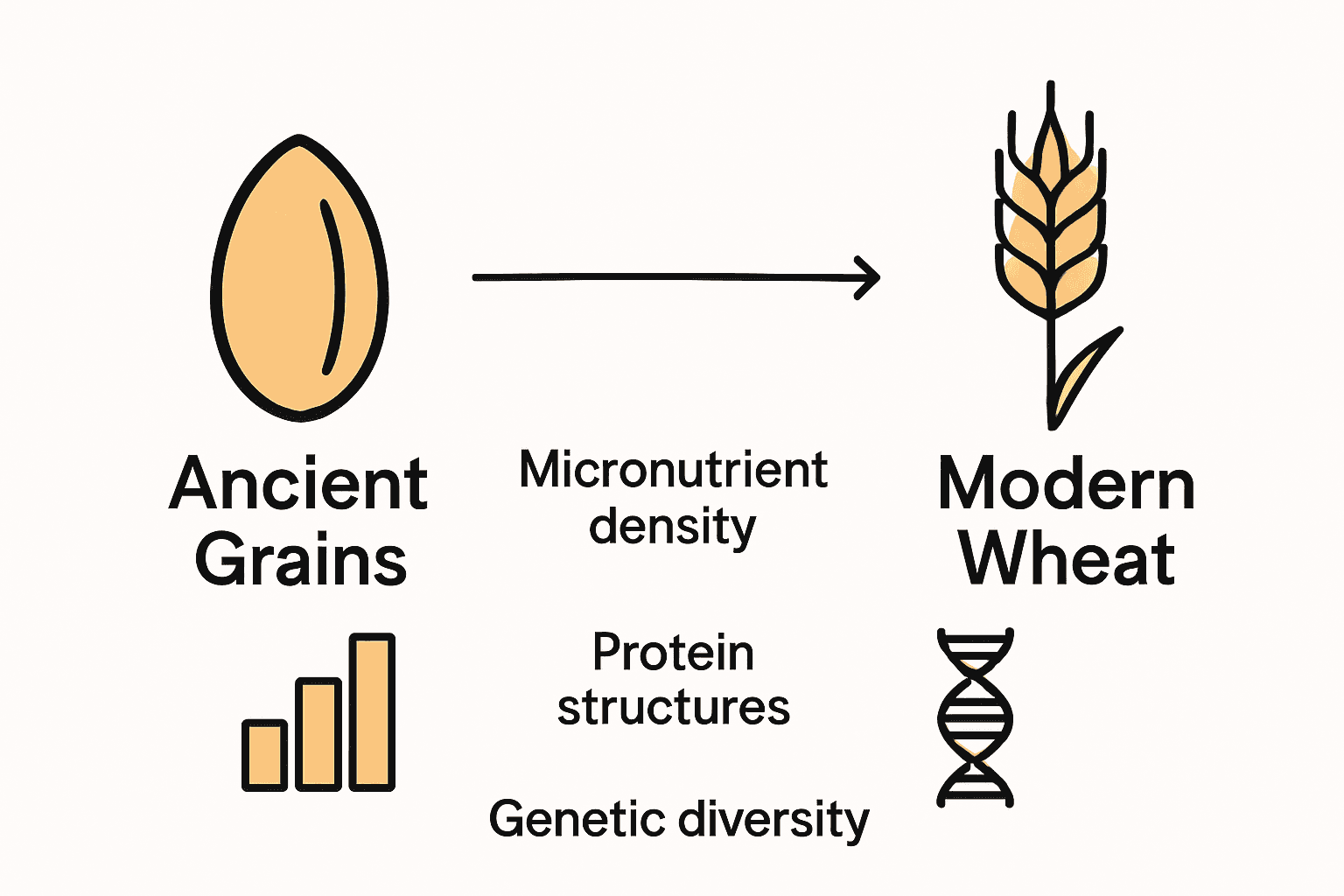
The evolution of grain production represents a profound transformation in human nutritional landscapes, with modern wheat dramatically differing from its ancient predecessors. These changes extend far beyond simple genetic modifications, impacting fundamental nutritional characteristics that influence human health and metabolic responses.
Northumbria University research critically examines the fundamental differences between ancient and modern wheat varieties, challenging widespread assumptions about gluten content. Their comprehensive study reveals that modern wheat’s genetic engineering has significantly altered protein structures, potentially contributing to increased digestive complications for many individuals.
Key comparative differences include:
- Genetic complexity and diversity
- Protein and gluten molecular structures
- Micronutrient density
- Inflammatory response potential
- Metabolic interaction mechanisms
University of Reading researchers further illuminate the nutritional landscape, demonstrating that ancient grains are not merely historical curiosities but sophisticated nutritional alternatives. Their analysis suggests modern wheat’s standardised production has inadvertently reduced genetic variety, potentially compromising nutritional complexity.
Understanding these grains requires moving beyond simplistic narratives of ‘good’ or ‘bad’. Ancient and modern grains represent different evolutionary strategies, each with unique nutritional signatures that reflect complex interactions between human agricultural practices and metabolic adaptation.
Discover the Power of Ancient Grains for Your Wellbeing
The article reveals the complex differences among ancient grains and the common myths that often leave consumers confused about their health benefits. If you want to explore nutrient-dense grains that offer rich micronutrients, complex proteins, and diverse nutritional profiles, you are not alone. Many seek authentic, wholesome ingredients that honour tradition and support modern lifestyles without compromise. Granavitalis is here to help you unlock these ancient grains’ true potential with our carefully selected premium products.
Experience the unique flavour and nutrition that ancient grains like spelt, quinoa, and millet provide. Our Grains – Granavitalis collection features thoughtfully sourced varieties that bring ancestral nourishment right to your kitchen. From flours for baking to whole grains for hearty meals, we offer the tools to transform everyday recipes into nutrient-rich delights that support lasting energy and digestive health.

Take the next step to revitalise your diet with authentic ancient grains. Visit Granavitalis today and explore our All Flours – Granavitalis as well as Gluten Free Flours – Granavitalis to find options that match your unique dietary needs. Embrace food that nourishes deeply and enjoy the lasting benefits of tradition made accessible for modern living.
Frequently Asked Questions
What are ancient grains?
Ancient grains are types of cereal crops that have remained largely unchanged over centuries, offering a rich nutritional profile distinct from modern wheat varieties. They include grains like quinoa, spelt, millet, amaranth, and einkorn.
What are the nutritional benefits of ancient grains compared to modern grains?
Ancient grains tend to be higher in protein, vitamins, and minerals while offering complex carbohydrates that promote slower digestion. They also have higher micronutrient density and may support gut health due to their prebiotic properties.
Are ancient grains easier to digest than modern grains?
Not necessarily. While many people may assume ancient grains are easier to digest, research indicates that digestibility varies across different types of ancient grains and depends on individual digestive responses.
How can I incorporate ancient grains into my diet?
Ancient grains can be included in your diet by substituting modern grains in recipes. For example, use quinoa as a salad base, replace standard flour with amaranth in baking, or create risotto-style dishes using farro.