
Hit 20–30g Protein Without Powder for Low Carb Vegan Breakfasts
Aim for 20 to 30g of protein at breakfast and build the plate around one whole-food anchor: tofu, tempeh, soya, beans, edamame or chickpea flour. The single fastest upgrade is swapping oat or almond milk for soya milk, which alone adds several extra grams of protein without adding carbs. No protein powder required, though a scoop never hurts if mornings are rushed.
TL;DR:
- Swapping oat or almond milk for soya milk adds several grams of protein per serving without increasing carbs, making it an effective upgrade.
- Tofu scramble and edamame smoothies are the most protein-dense options, each capable of providing 20g or more from a single component.
- Incorporating legumes such as black beans, lentils, or chickpea flour ensures a high fiber and protein content, helping to reduce overall calorie intake later in the day.
- Batch cooking staples like tofu, lentils, or tempeh simplifies morning routines and maintains consistent high-protein, low-carb breakfasts throughout the week.
- Achieving a daily total of 20 to 30g of breakfast protein supports muscle synthesis and satiety, with most recipes easily meeting this target without the need for protein powders.
Table of Contents
- High protein low carb vegan breakfast recipes worth repeating
- Which protein anchors and swaps actually move the needle
- Batch prep that makes protein-rich mornings automatic
- Protein and carb targets to aim for each morning
- Don’t forget fat: the third piece of the breakfast puzzle
- Getting complete amino acids without eating meat
- Where “low-carb vegan” breakfasts quietly go wrong
- Fibre-rich, low-carb ingredients for digestion and fullness
- Keeping breakfast interesting through the seasons
- The Granavitalis take on whole-food protein
- Boosting your breakfast the Granavitalis way
- Sources
- FAQ
High protein low carb vegan breakfast recipes worth repeating
These recipes all lean on the same whole-food anchors, so once you have tofu, tempeh and a tin of beans in the fridge, breakfast is mostly assembly. Protein figures below are estimates for a standard portion, and each comes with a note on keeping carbs down.
- Tofu scramble with spinach and turmeric. Crumbled firm tofu fried with turmeric, black salt and greens delivers roughly 20g protein per 200g block. Skip the toast side and serve with sautéed mushrooms instead to keep carbs low.
- Tempeh hash with peppers. Cubed, marinated tempeh fried until crisp with diced peppers and courgette gives around 19g protein per 100g. Swap potatoes for cauliflower rice to cut the carb load significantly.
- Chickpea-flour omelette. A batter of gram flour, water and a pinch of bicarbonate of soda fried like a pancake provides about 13g protein per 60g of flour. Fill it with spinach and tomato rather than starchy fillings.
- Edamame and soya smoothie. Blended shelled edamame, soya milk, a frozen banana half and cinnamon can pack 20g or more protein per glass, largely from the soya milk and edamame together. Use less banana and more ice if you want the carbs lower still.
- Soya yoghurt bowl with nut butter and seeds. A bowl of unsweetened soya yoghurt topped with a tablespoon of nut butter and mixed seeds sits comfortably above 15g protein. Choose unsweetened yoghurt and skip granola, which is where most of the sugar hides.
- Black beans in lettuce wraps. Warmed black beans with lime, coriander and avocado wrapped in cos lettuce leaves rather than a tortilla give roughly 9 to 10g protein per half-tin of beans. This is one of the easiest carb-savers on the list since the “wrap” itself carries zero carbs.
- Low-carb seed pancakes. A batter of ground flaxseed, chia and a little chickpea flour makes a dense, savoury pancake with a good fat and fibre profile, best served with a dollop of soya yoghurt rather than syrup.
- Savoury lentil pots with extra veg. Pre-cooked lentils warmed through with garlic, cumin and a handful of kale or courgette offer close to 10g protein per half-tin serving, with the vegetables bulking the meal without adding meaningful carbs.
The tofu scramble and the edamame smoothie are the two most protein-dense options on this list, both capable of hitting 20g or more from a single component. If you are short on time and only make one of these habitually, either works as a reliable anchor for the rest of the week.
For more ideas built around these same anchors, Granavitalis has a longer collection of high-protein vegan breakfast ideas worth bookmarking.
Which protein anchors and swaps actually move the needle
Some plant foods carry far more protein per serving than others, and knowing the numbers means you can build a breakfast for a target rather than guessing.
| Ingredient | Protein per typical serving |
|---|---|
| Tofu | around 20g per 200g |
| Tempeh | around 19g per 100g |
| Chickpea flour | around 13g per 60g |
| Soya milk | between 8 and 10g per glass |
| Beans or lentils | around 9 to 10g per half-tin |
These figures come from the Healthline vegan protein sources chart, and they explain why soya-based staples do more heavy lifting than most people realise. Swapping a bowl of oat-milk porridge for the same recipe made with soya milk typically adds several grams of protein for zero extra carbs, since soya milk contains notably more protein than oat or almond milk gram for gram.
Legumes bring a second advantage beyond protein: fibre. Meals built around beans, lentils or chickpeas are linked to roughly 12 to 13% lower energy intake later in the day, likely because fibre and protein together slow digestion and blunt hunger. Combine two anchors, tofu with a splash of soya milk, or tempeh with a scoop of chickpea flour in the batter, and 20 to 30g of protein arrives without touching a protein powder.
Batch prep that makes protein-rich mornings automatic
Cooking one anchor in bulk removes the biggest barrier to a consistent high protein low carb vegan breakfast habit: decision fatigue at 7am.
- Batch-scramble a full block of tofu on Sunday and store it in portions for three or four mornings.
- Cook a large batch of lentils or black beans and freeze in single-serving tubs.
- Marinate and pan-fry tempeh in bulk, then reheat slices as needed through the week.
- Build overnight soya yoghurt jars with seeds and nut butter the night before for a grab-and-go option.
A 30-minute Sunday session covering tofu and beans covers most of the week; a 60-minute session that adds tempeh marinating and smoothie-pack freezing covers all seven days.
Pro Tip: Freeze cooked lentils and beans flat in freezer bags rather than tubs. They defrost in minutes under warm water and take up a fraction of the freezer space.
Protein and carb targets to aim for each morning
Set a working target of 20 to 30g protein per breakfast rather than treating protein as an afterthought. Spreading protein evenly across the day, rather than loading it all at dinner, stimulates muscle protein synthesis around 25% more effectively than skipping breakfast protein and overcompensating later.
- Keep net carbs under roughly 15g by favouring non-starchy vegetables over grains, bread or fruit-heavy smoothies.
- Build the plate as: one protein anchor, a generous portion of non-starchy veg, and a small low-carb seed or grain addition only if you want it.
- Choose fortified soya milk and yoghurt where possible, since the NHS and Vegan Society both flag B12, vitamin D, iodine, selenium and calcium as nutrients worth watching on a vegan diet.
Don’t forget fat: the third piece of the breakfast puzzle
Protein and carbs get all the attention in this style of eating, but fat is what makes a breakfast satisfying rather than something you are hungry for again by 10am. A completely fat-stripped meal, even one loaded with protein, tends to digest fast and leave you reaching for a snack within the hour.
Nut butters solve this cleanly. A tablespoon of almond, peanut or pecan butter stirred into soya yoghurt or spread over a chickpea-flour pancake adds healthy monounsaturated fats alongside a small protein boost, and it slows digestion enough to extend fullness. Avocado does similar work in the black bean wraps, adding creaminess and fat without meaningfully raising the carb count.
Seeds pull double duty here too. A spoonful of chia, flax or hemp seeds scattered over any of the bowls above contributes fat, a small amount of protein, and fibre in one move. The goal is not to maximise fat, since these breakfasts are not built as high-fat ketogenic meals, but to include enough of it, roughly a tablespoon of nut butter or seeds per serving, that the meal feels complete rather than lean and forgettable. A breakfast built purely on lean protein and vegetables with zero fat is a common overcorrection, and it rarely keeps people satisfied until lunch.
Getting complete amino acids without eating meat
A single plant food rarely supplies every essential amino acid in ideal proportion, but a day’s worth of varied plant foods almost always does, and you don’t need to pair specific foods at the same meal to achieve it. Soya is the exception worth knowing: tofu, tempeh and soya milk are all considered complete proteins on their own, carrying all nine essential amino acids in useful amounts. That is one reason soya-based anchors do so much work in these recipes.
Beans, lentils and chickpea flour are lower in the amino acid methionine but strong in lysine, while grains and seeds tend to run the opposite way, lower in lysine, higher in methionine. Eating both across the day, beans at breakfast and a seed-topped dish at lunch, for instance, covers the gap without any need to calculate it meal by meal. Peanut butter and other nut butters add a further layer of amino acids alongside their fat content, making them a genuinely useful addition rather than just a flavour booster.
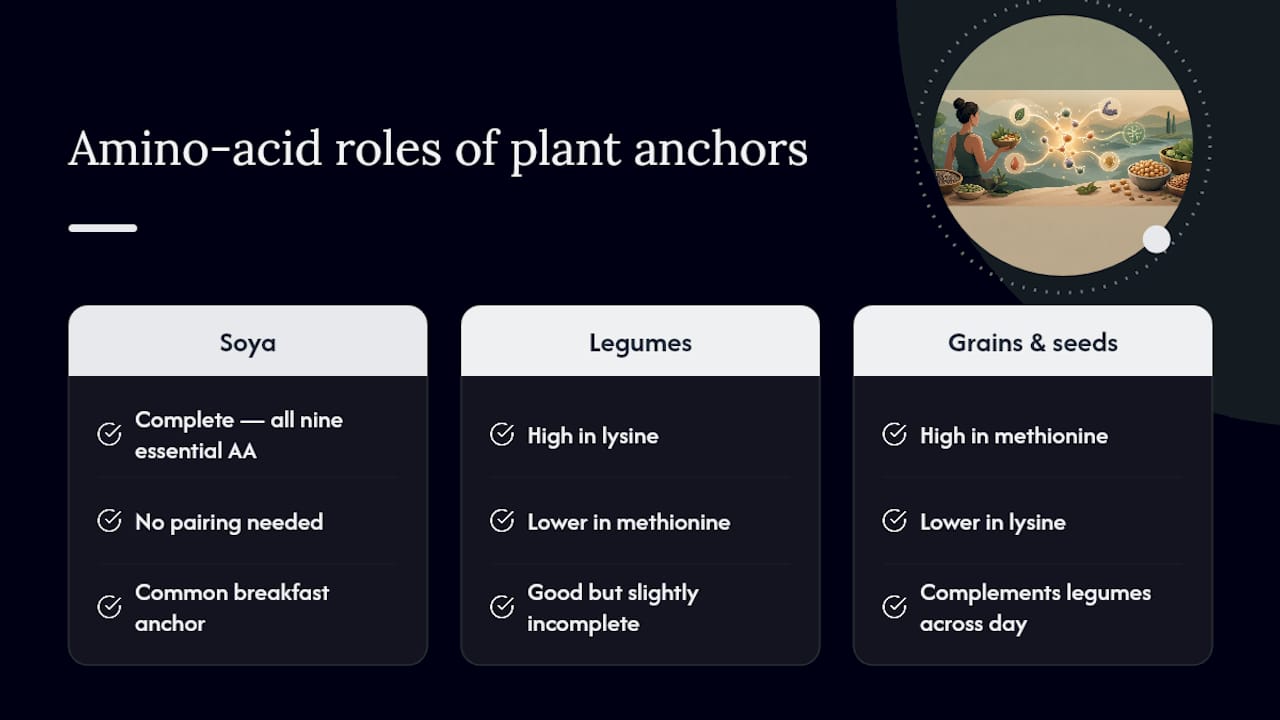
The practical takeaway: anchor most breakfasts on soya (tofu, tempeh, soya milk or soya yoghurt) since it needs no pairing, and treat beans, lentils and chickpea flour as excellent but slightly incomplete partners that even out over the rest of the day’s meals.
Where “low-carb vegan” breakfasts quietly go wrong
The phrase “low-carb vegan” gets applied loosely to plenty of products that are neither. Flavoured soya yoghurts, granola marketed as “protein-packed,” and plant-based breakfast bars are the three most common traps, often carrying 10 to 15g of added sugar per serving despite a health-conscious label on the front.
Read the ingredients list on soya yoghurt and pick the unsweetened version; the flavoured varieties routinely double the sugar content for barely any extra protein. Granola is worth avoiding almost entirely at breakfast if the goal is low-carb, since oats, dried fruit and honey coatings can carry more carbs than an entire lunch. Nut butters are usually safe, but check for added sugar or palm oil fillers in cheaper brands, since a genuinely simple nut butter should list the nut and little else.
Processed vegan “bacon” and meat-substitute breakfast sausages are another quiet pitfall: many rely on refined starches as binders, adding carbs you would not expect from a savoury, protein-branded product. When in doubt, the whole-food anchors covered earlier in this piece, tofu, tempeh, beans, edamame and chickpea flour, carry none of these hidden costs because there is nothing to hide behind a long ingredients list.
Fibre-rich, low-carb ingredients for digestion and fullness
Fibre and protein working together is one of the more useful and underused levers in a low-carb vegan breakfast. Legume-based meals are linked to meaningfully lower energy intake later in the day, a satiety effect that comes largely from fibre slowing digestion and stabilising blood sugar after the meal.
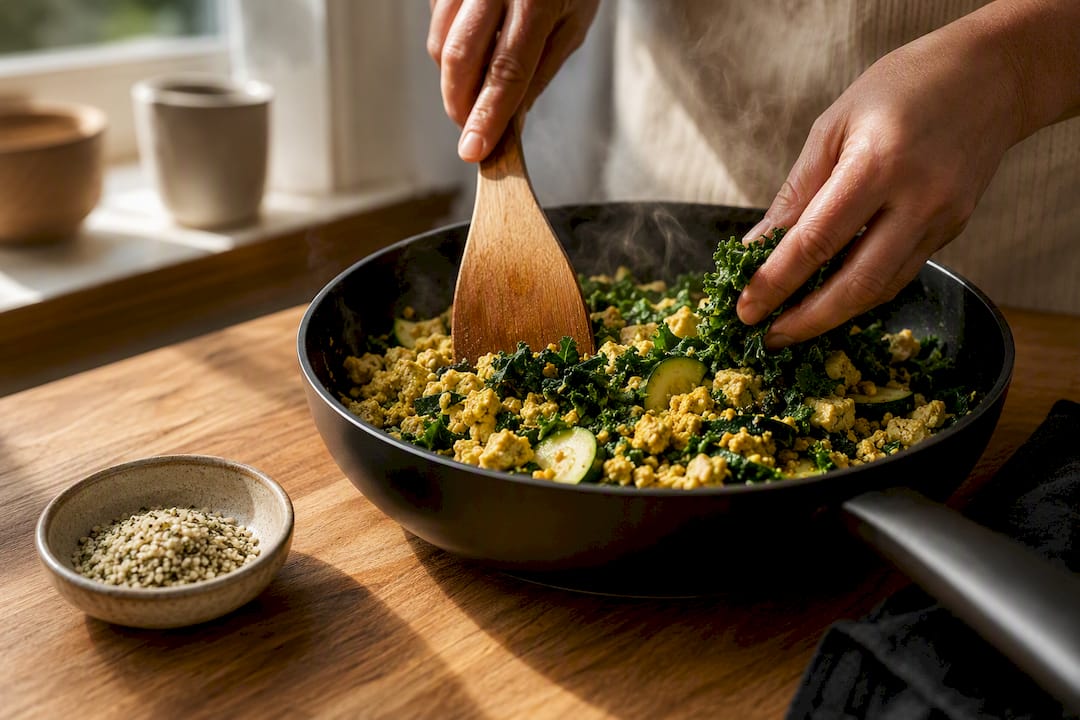
Beans, lentils, chickpea flour and edamame all deliver this fibre-protein combination in one ingredient, which is part of why they anchor so many of the recipes above rather than sitting on the side. Leafy greens and courgette, stirred into a tofu scramble or tempeh hash, add further fibre with almost no carbs at all, bulking the meal physically without moving the macros in the wrong direction.
Chia and flax seeds are worth calling out separately: both are near-zero net carb once you account for their fibre content, since a large share of their carbohydrate is indigestible fibre rather than sugar or starch. A tablespoon stirred into a smoothie or yoghurt bowl supports regularity and adds bulk that helps the meal sit with you longer.
Keeping breakfast interesting through the seasons
Rotating ingredients by season keeps a whole-food, high-protein routine from turning into the same tofu scramble on repeat, which is usually where good intentions quietly fail. Spring and summer suit lighter combinations: edamame smoothies with fresh berries, or soya yoghurt bowls topped with whatever seasonal fruit is genuinely in season rather than imported and expensive.
Autumn and winter favour the heartier dishes: tempeh hash with roasted root vegetables in smaller, carb-conscious portions, or lentil pots warmed through with extra kale and spices. Swapping the vegetable side of a tofu scramble or bean wrap by season, courgette and peppers in summer, kale and mushrooms in winter, means the core protein anchor never gets boring even when it stays the same. Partner cafés and food blogs covering seasonal vegan menu ideas are a useful source of inspiration for savoury variations built on the same tofu, tempeh and bean base covered here.
The Granavitalis take on whole-food protein
Jarrod: The honest gap in most “high-protein vegan breakfast” content is that it defaults to a scoop of powder before considering what a block of tofu or a tin of beans already does. Whole-food anchors carry fibre, fat and a fuller amino acid profile that powders strip out.
Granavitalis builds its range around ancient grains, nuts, seeds and clean plant-proteins, with purity, performance and purpose as the standard behind every product, and publishes practical recipe and nutrition guidance to back it…
— Jarrod
Boosting your breakfast the Granavitalis way
Whole-food anchors do most of the work, but a well-chosen extra can close the gap on a rushed morning or add texture where you actually want a few extra carbs. Granavitalis’s vegan protein powders are built for exactly the edamame or soya smoothie recipes covered above: a scoop blended in alongside soya milk pushes a smoothie well past the 25g protein mark in seconds, no extra prep required.

For the bowls and pancakes, a spoonful from the nut butters collection works as both a binder and a fat source, stirred into soya yoghurt or used to hold seed pancakes together. If you want a little texture back into a recipe where carbs allow for it, ancient grain flakes from the flours and flakes range add bite without the refined-grain sugar spikes typical of shop-bought granola. Browse the vegan protein powder range and pick a flavour that suits your usual smoothie base to start.
Sources
- Vegan protein sources chart — Healthline
- When to consume protein for muscle growth — USADA
- Legumes and satiety research — PubMed Central
- The vegan diet — NHS
FAQ
How can vegans get 30g of protein at breakfast?
Combine two whole-food anchors, such as tofu with a splash of soya milk, or tempeh with a chickpea-flour pancake, and you comfortably reach 20 to 30g without powder. The Healthline protein chart shows tofu alone provides around 20g per 200g, so pairing it with a soya-milk smoothie or yoghurt side closes the gap easily.
What vegan foods are high in protein and low in carbs?
Tofu, tempeh, edamame, chickpea flour, soya milk and beans all deliver strong protein per serving with a manageable carb load, especially when paired with non-starchy vegetables rather than grains or fruit. Nut butters and seeds add further protein and fat with minimal carbs.
What is a good high-protein, low-carb vegan breakfast with almost no carbs?
A tofu scramble with spinach and mushrooms, or a tempeh hash with peppers and courgette instead of potatoes, both deliver close to 20g protein with minimal carbohydrate. Skipping bread, potatoes and sweetened dairy alternatives is the main lever for keeping carbs near zero.
How can vegans reach 120g of protein a day?
Spreading protein evenly across three or four meals, roughly 20 to 30g each, rather than concentrating it at dinner is the most reliable route, and research on muscle protein synthesis supports even distribution over one large evening dose. Rotating tofu, tempeh, lentils, beans and soya-based dairy alternatives across breakfast, lunch and dinner typically gets there without relying on powders.
Do I need a protein powder for a high-protein vegan breakfast?
No. Every recipe covered here reaches 15 to 25g of protein from whole foods alone, though a scoop from the vegan protein powders range is a convenient option on rushed mornings or for boosting a smoothie further.