
High protein breakfast ideas without eggs
Six anchors do almost all the work here: Greek yogurt or skyr, cottage cheese, protein powder, smoked salmon, tofu, and legumes like lentils or chickpeas. Nut butters help too, though mostly as a top-up rather than the main event. One combo that lands almost exactly on 30g: 150g Greek yogurt (about 15g protein) plus a tablespoon of nut butter (4g) and a handful of mixed seeds (5g), topped with berries.
- Dairy anchors: Greek yogurt, skyr, cottage cheese
- Plant anchors: tofu, lentils, chickpeas, protein powder
- Pescatarian anchor: smoked salmon
Quick example: 150g cottage cheese + 90g smoked salmon + rye toast ≈ a protein-rich meal.
Everything below builds on those six anchors, whether you eat dairy, avoid it entirely, or want something you can eat on the way out the door.
Table of Contents
- High protein breakfast ideas without eggs: 12 recipes to try
- How to reliably hit 25 to 40g of protein at breakfast
- Make-ahead breakfasts for busy weekday mornings
- Why these swaps work: the nutrition case for egg-free protein
- Soya, dairy and other allergens: substitutes that still work
- Shopping list: pantry staples for egg-free protein breakfasts
- A sample week of egg-free, high-protein breakfasts
- What actually matters when you’re building an egg-free breakfast
- Stock your kitchen for effortless protein mornings
- Sources
High protein breakfast ideas without eggs: 12 recipes to try
Each of these hits at least a substantial amount of protein of protein per serving, and most clear 25g once you add a topping or two. Protein figures are estimates based on standard portion sizes and typical product labels, so treat them as a guide rather than gospel.
1. Greek yogurt and berry bowl with mixed seeds
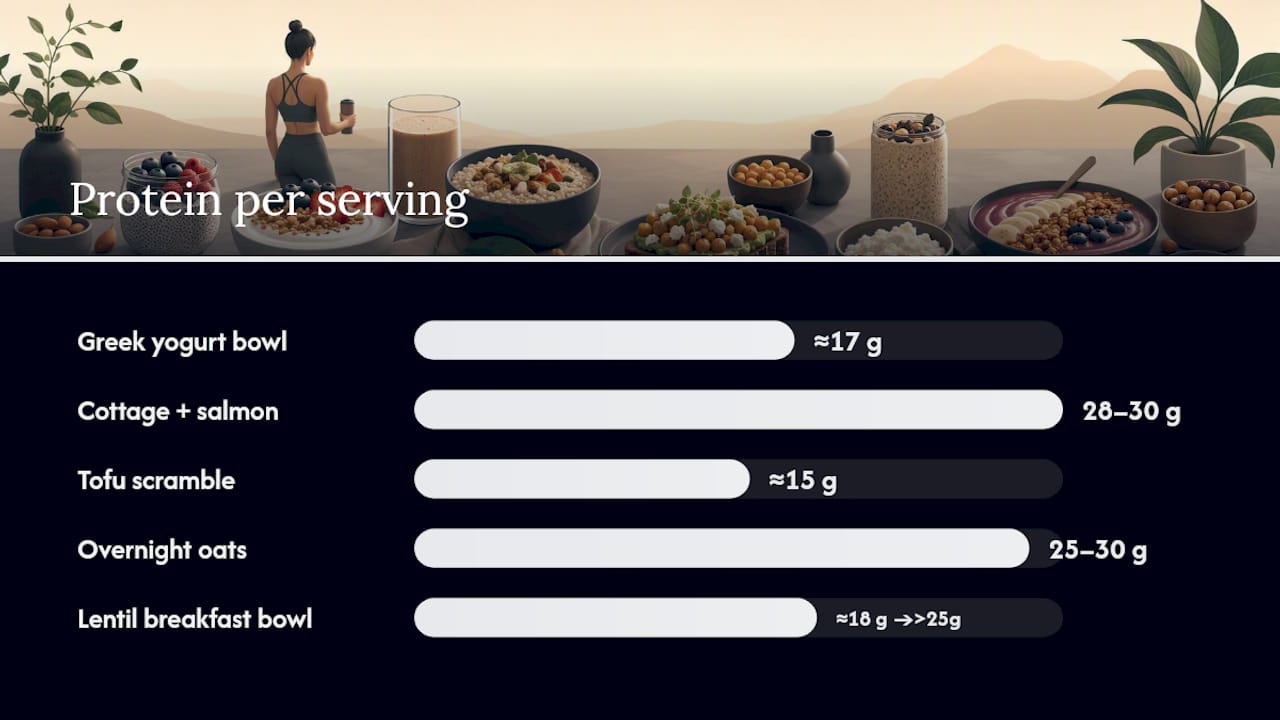
150g full-fat Greek yogurt, a handful of mixed berries, a tablespoon of pumpkin and sunflower seeds. Roughly 17–a substantial amount of protein. Swap in coconut yogurt with added pea protein for a dairy-free version, though check the label since plain coconut yogurt is protein-poor on its own.
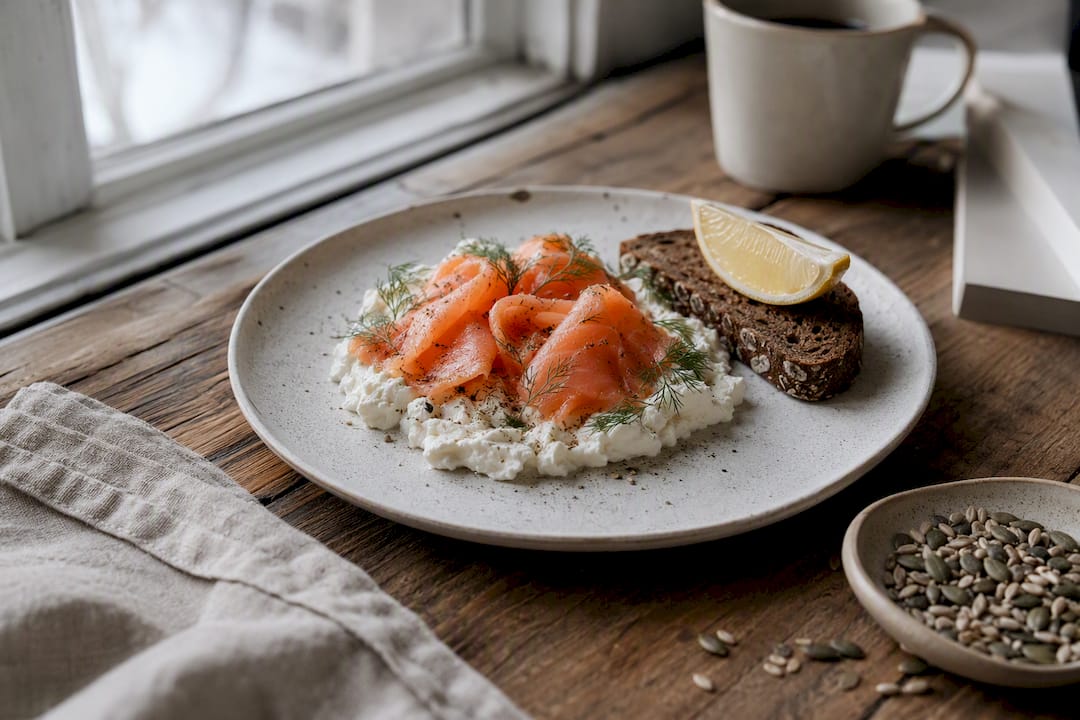
2. Cottage cheese and smoked salmon on rye
100g cottage cheese, 90g smoked salmon, one slice of dense rye toast, a squeeze of lemon. Around 28–30g protein. This one keeps well assembled separately and combined at the table, so it suits a slower weekend morning more than a rushed one.
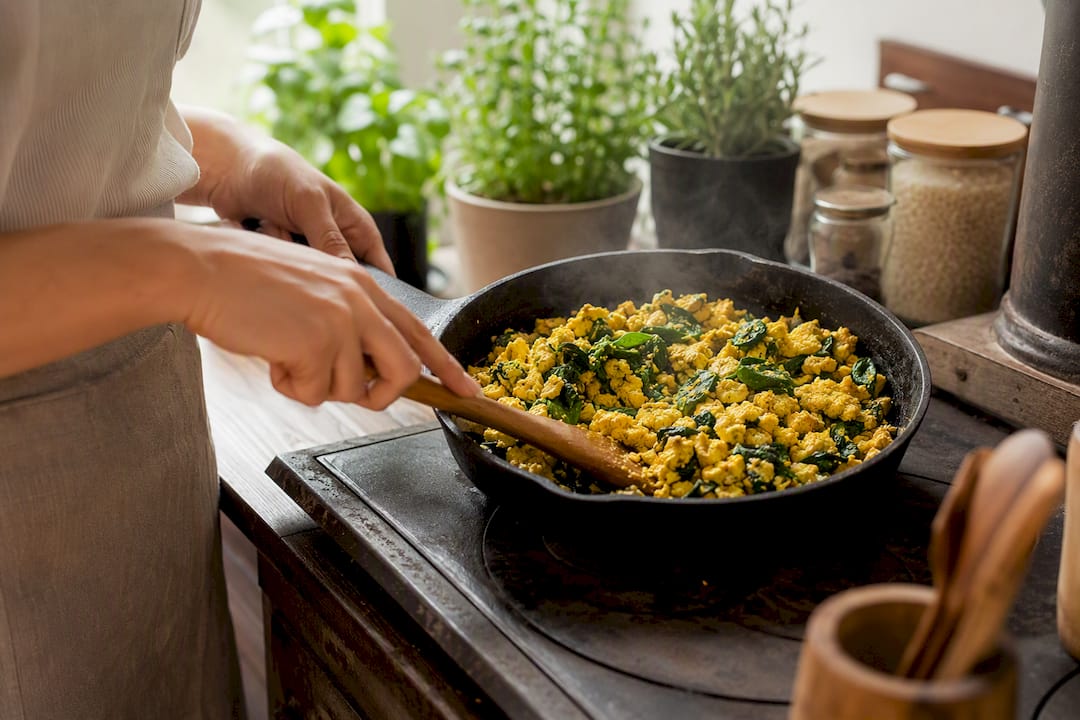
3. Tofu scramble with spinach and turmeric
150g firm tofu crumbled and pan-fried with turmeric, black salt, and wilted spinach. About 15–a good amount of protein. Make-ahead tip: pre-press and crumble the tofu the night before so it’s a five-minute job in the morning.
4. Overnight oats with protein powder and chia
40g oats soaked overnight in milk of choice, one scoop of protein powder stirred in, a tablespoon of chia seeds. Typically 25–30g protein depending on the powder used. This is the easiest entry on the list to batch, since you can make four jars on a Sunday and grab one daily all week.
5. Chickpea flour pancakes (savoury socca)
100g gram (chickpea) flour, water, a pinch of cumin, cooked as thin pancakes. Provides a moderate amount of protein per serving, entirely plant based with no substitution needed. Top with avocado or a poached lentil relish for extra bulk.
6. Lentil and vegetable breakfast bowl
200g cooked green or brown lentils, sautéed peppers and onion, a drizzle of tahini. Close to 18–a substantial amount of protein, rising past 25g with a poached piece of tofu on top. Cooked lentils freeze well in single portions, which makes this one of the more freezer-friendly options here.
7. Skyr with granola and nut butter
170g skyr (it runs higher in protein than standard yogurt), a small handful of low-sugar granola, a teaspoon of nut butter. Around 22–25g protein. Skyr’s thicker texture holds toppings better than regular yogurt, so it feels more like a proper bowl than a snack.
8. Cottage cheese pancakes
Blended cottage cheese, oats, and a mashed banana, cooked as small pancakes. Usually provides a substantial amount of protein per serving. These freeze and reheat from frozen in a toaster, which makes them one of the more genuinely grab-and-go items on this list.
9. Protein smoothie with tofu or silken tofu base
100g silken tofu blended with frozen fruit, plant milk, and a scoop of protein powder. Commonly 25–30g protein. Silken tofu adds creaminess without the chalky texture some people get from protein powder alone.
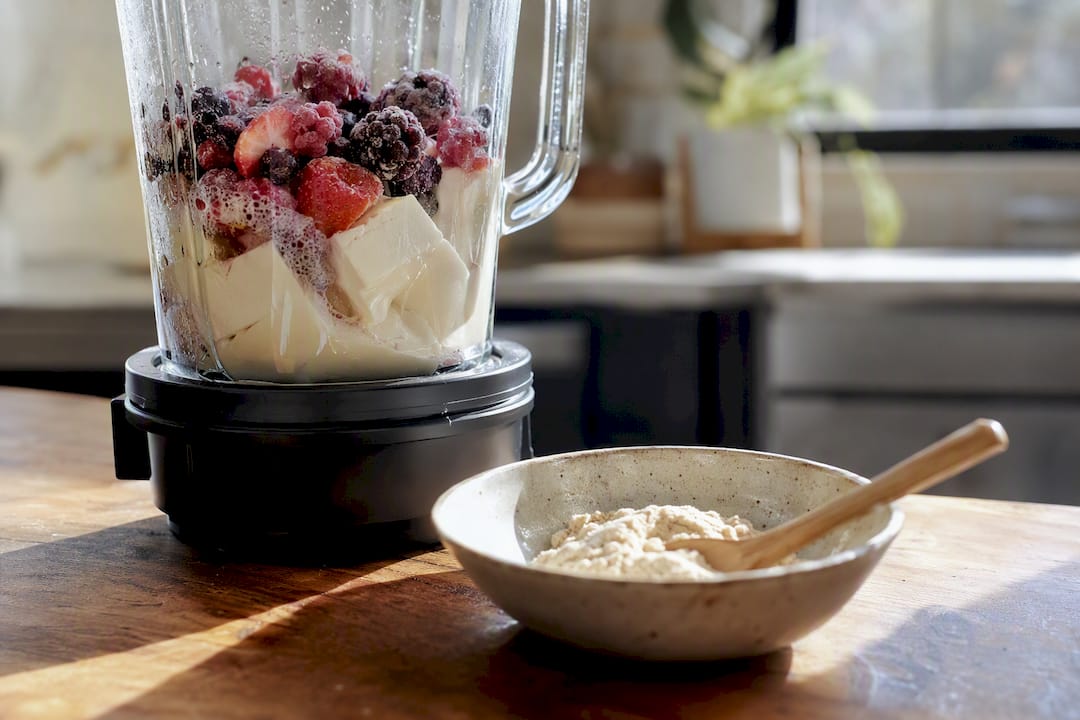
10. Smoked salmon and avocado on cottage cheese toast
A thick layer of cottage cheese spread on toast, topped with smoked salmon and sliced avocado. Around 25–protein-rich. A genuinely fast option, since there’s no cooking involved at all.
11. Warm quinoa porridge with hemp seeds
Cooked quinoa simmered in milk, sweetened lightly, topped with hemp seeds and a spoon of Greek yogurt. Provides a moderate amount of protein, with quinoa contributing a small but useful amount on its own as a complete plant protein.
12. Chickpea and spinach hash with tahini drizzle
Mashed chickpeas pan-fried with spinach, garlic, and cumin, drizzled with tahini. Roughly 15–a good amount of protein protein, which climbs past 25g with a side of yogurt or a poached tofu slice. Vogue’s UK nutrition roundup makes a similar point about egg-free breakfasts: combining pulses with dairy or soya closes the protein gap far more easily than people expect.
How to reliably hit 25 to 40g of protein at breakfast
Think of each recipe as a base plus one or two “anchors”, the ingredients doing the heavy lifting on protein. A single anchor rarely gets you to 30g on its own, but two anchors almost always do.
| Anchor | Typical portion | Approx. protein |
|---|---|---|
| Greek yogurt | 150g | 15–17g |
| Cottage cheese | 100g | 11–a good amount of protein |
| Protein powder (whey or plant) | 1 scoop | 20–22g |
| Smoked salmon | 90g | 18–20g |
| Tofu | 100–150g | 8–15g |
| Cooked lentils | 200g | 15–a good amount of protein |
Build to 25g: 150g Greek yogurt + a tablespoon of mixed seeds. Build to 30g: 150g Greek yogurt + half a scoop of protein powder + berries, an approach that lines up with MyFitnessPal’s own 30g breakfast formula of pairing a dairy base with powder and nuts. Build to 40g: 100g cottage cheese + 90g smoked salmon + a slice of rye toast with a scraping of nut butter.
Adding nuts, seeds, or a splash of milk nudges the total up without much extra volume, which matters if you’re also watching calories rather than chasing protein at any cost.
Pro Tip: If you’re vegan, swap Greek yogurt for a soya-based yogurt with at least 8g protein per 100g. Not all plant yogurts qualify. Coconut and almond versions typically have far less.
Make-ahead breakfasts for busy weekday mornings
Batch overnight oats into four or five jars on a Sunday, and they’ll keep well in the fridge for up to four days. Cook a large batch of lentils or a tofu scramble base and portion it into containers. Cooked lentils and tofu both keep safely in the fridge for around three to four days; cottage cheese and yogurt-based pots are best eaten within their use-by date once opened.
- Freeze smoothie ingredients (fruit, tofu, spinach) in bags, ready to blend with milk and protein powder each morning.
- Store cottage cheese pancakes in the freezer and reheat straight from frozen in a toaster.
- Keep a small stash of pre-portioned nut butter or seed sachets at your desk for a last-minute protein top-up.
Pro Tip: A set of five identical glass jars solves most of the meal-prep hassle. Same lid, same size, no rummaging for matching containers on a Tuesday morning.
Why these swaps work: the nutrition case for egg-free protein
UK guidance sets the reference nutrient intake for protein at roughly 0.75g per kilogram of bodyweight per day, which works out to about 45g daily for a 60kg woman and 56g for a 75kg man. Aiming for 25–30g at breakfast covers more than half that target in one sitting, supporting satiety through the morning.
Distributing protein across meals, rather than loading it all at dinner, is a principle the British Dietetic Association’s nutrition standards build into institutional menu guidance, recommending meaningful protein content at every meal rather than one large evening dose.
Anchors like Greek yogurt, cottage cheese, and protein powder work because they deliver protein in a small volume, so you’re not eating a mountain of food to reach 30g.
Soya, dairy and other allergens: substitutes that still work
Soya is the anchor to watch for two reasons: tofu and many protein powders and plant yogurts rely on it, and soya sits among the fourteen major allergens under UK food labelling law. If soya is off the table, lean harder on dairy anchors (Greek yogurt, cottage cheese) or pea and rice protein blends, which are increasingly common in non-soya protein powders.
Dairy allergy or lactose intolerance rules out yogurt, cottage cheese, and whey protein, but leaves plenty of room. Lactose-free milk, coconut or oat yogurt fortified with pea protein, plant-based protein powder, tofu, and legumes cover the same ground. Smoked salmon and lentils are naturally dairy-free, which makes the salmon and lentil bowl recipes above a safe default when you’re cooking for a mixed household.
Nut allergies mainly affect the topping layer rather than the core anchors, so swap nut butter for seed butter (sunflower or pumpkin) and use seeds instead of nuts for crunch. Gluten intolerance mostly touches the toast or granola components. Rye toast becomes gluten-free bread, and granola gets swapped for a certified gluten-free oat product, since standard oats are often cross-contaminated during processing.
Cross-check labels every time rather than assuming a product is safe because it was last time. Reformulations happen more often than most people realise.
Shopping list: pantry staples for egg-free protein breakfasts
A well-stocked fridge and cupboard make the difference between reaching for a protein-rich breakfast and defaulting to toast and jam. Keep these on hand:
Fridge staples: Greek yogurt or skyr, cottage cheese, firm and silken tofu, smoked salmon (fresh or vacuum-packed, it keeps for several days unopened), plant or dairy milk.
Cupboard staples: whey or plant-based protein powder, dried or tinned lentils and chickpeas, gram (chickpea) flour, rolled oats, quinoa, chia and hemp seeds, mixed nuts, and a jar of nut butter for quick protein top-ups.
Flavour and topping extras: frozen berries, a good seed and superberry mix for texture and antioxidants, tahini, lemons, and a decent chilli or spice blend for the savoury bowls. For more seed-forward topping ideas across meals, Wild Foodz’s seasonal seed guide is worth a browse.
Buying tinned lentils and chickpeas rather than dried ones costs a little more per gram but removes the soaking and cooking step entirely, which matters more on a Tuesday than the price difference does.
A sample week of egg-free, high-protein breakfasts
Rotating through a handful of the recipes above avoids both decision fatigue and the boredom that kills most breakfast habits within a fortnight.
Monday: Overnight oats with protein powder and chia (prepped Sunday). Tuesday: Cottage cheese and smoked salmon on rye. Wednesday: Tofu scramble with spinach and turmeric. Thursday: Greek yogurt bowl with berries and seeds. Friday: Chickpea and spinach hash with tahini. Saturday: Protein smoothie with silken tofu. Sunday: Lentil and vegetable breakfast bowl, with extra portioned for Monday’s lunch.
Batch the oats and cook the lentils on Sunday, and the whole week needs no more than ten minutes of morning effort on any given day. Swap Tuesday and Saturday for vegan versions (soya yogurt instead of cottage cheese, plant protein powder throughout) and the same plan works without a single egg or dairy product in sight.
Prose sentence: Hitting 25–30g of protein at breakfast without eggs is straightforward once you build around two anchors rather than one.
| Point | Details |
|---|---|
| Use two anchors, not one | Pairing a dairy or plant base with protein powder, nuts, or seeds reliably closes the gap to 30g. |
| Follow UK reference intakes | Aim for roughly 25–30g at breakfast, part of the 0.75g/kg daily reference intake. |
| Batch what you can | Overnight oats, cooked lentils, and tofu scramble all keep three to four days prepped ahead. |
| Watch soya and dairy substitutions | Swap tofu or whey for pea protein and lactose-free alternatives when allergies apply. |
| Stock the right pantry basics | Keep tofu, lentils, protein powder, and Granavitalis nut butters on hand for quick assembly. |
What actually matters when you’re building an egg-free breakfast
Most advice on this topic obsesses over finding the “best” single ingredient, whether that’s cottage cheese, tofu, or whatever powder is trending. That misses the point entirely. No single food gets you to 30g without either an enormous portion or a chalky aftertaste. The combination is the whole strategy, not a workaround.
The bigger failure in conventional advice is treating vegan and dairy-based readers as needing entirely separate articles. They don’t. The maths is identical: pick two anchors, check the totals, adjust with seeds or powder. Swap soya for dairy or the other way round and nothing else changes.
What I’d prioritise first, if you’re starting from scratch, is stocking two or three anchors you’ll actually eat daily rather than chasing the recipe with the highest protein figure on paper. A 25g breakfast eaten every day beats a 40g breakfast eaten once a fortnight because it required a shopping trip you never got round to. Consistency, not maximisation, is what the British Dietetic Association’s own framing around protein distribution actually supports.
— Jarrod
Stock your kitchen for effortless protein mornings
Building these breakfasts every week comes down to having the right anchors already in the cupboard, not scrambling for ingredients on a Tuesday. Granavitalis exists for exactly that gap: clean, minimally processed nut butters, protein powders, and superfood mixes designed to sit alongside your yogurt, tofu, or lentils rather than replace your own cooking.
If you’re building toward the 30g and 40g combinations covered above, the Immune Booster Superfood Bundle is a straightforward way to add nutrient density to a yogurt bowl or smoothie without extra prep time, and it suits readers who want a ready assembled option rather than sourcing five separate jars. For the nut butter swaps mentioned throughout this list, the organic nut and seed butter selection box covers several flavours in one order, useful if you’re rotating recipes daily and don’t want the same topping every morning.
Browse the full range at Granavitalis and build your own pantry staples list from there.
Sources
- Nutrition standards (British Dietetic Association)
- How to get 30 grams protein at breakfast (MyFitnessPal blog)